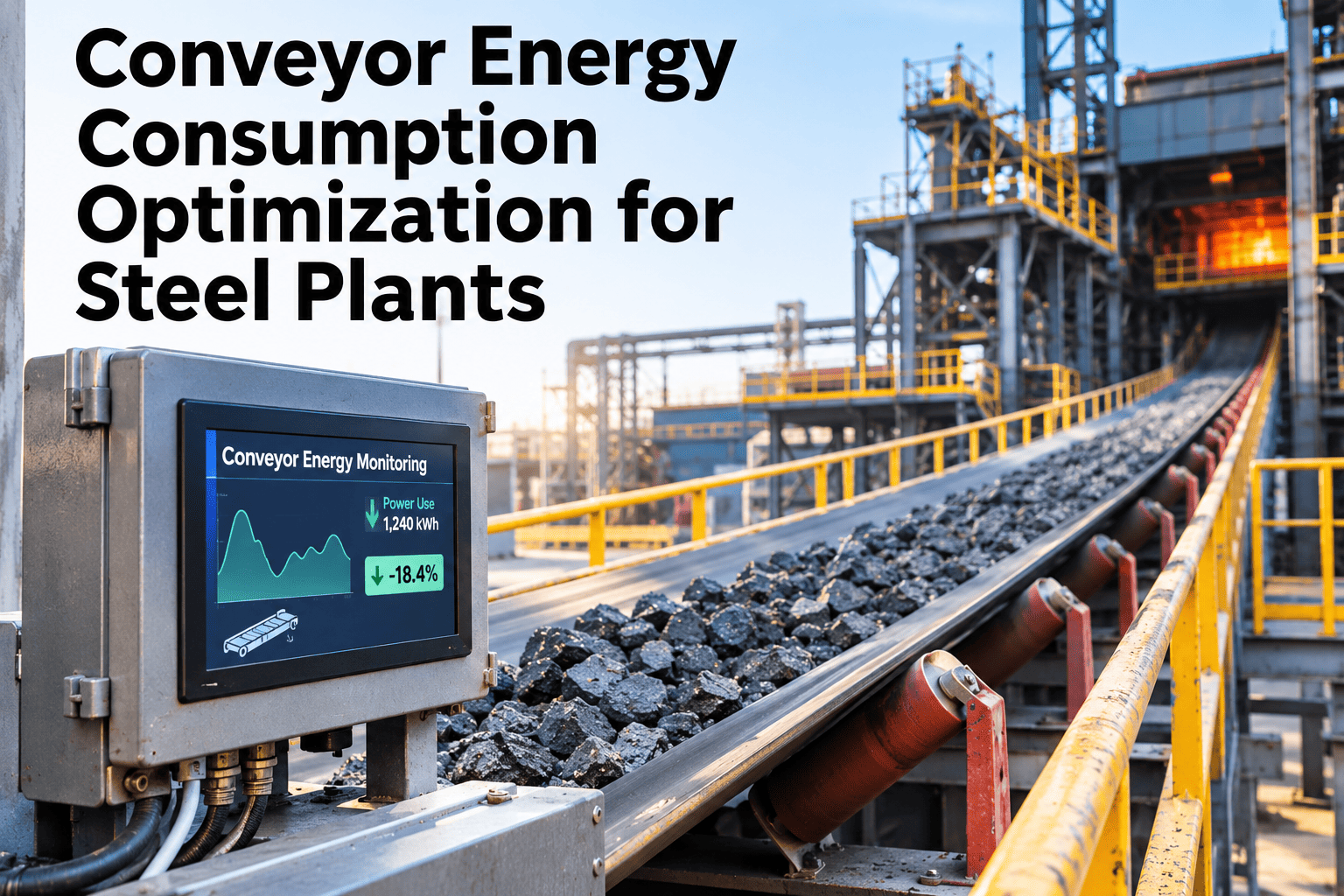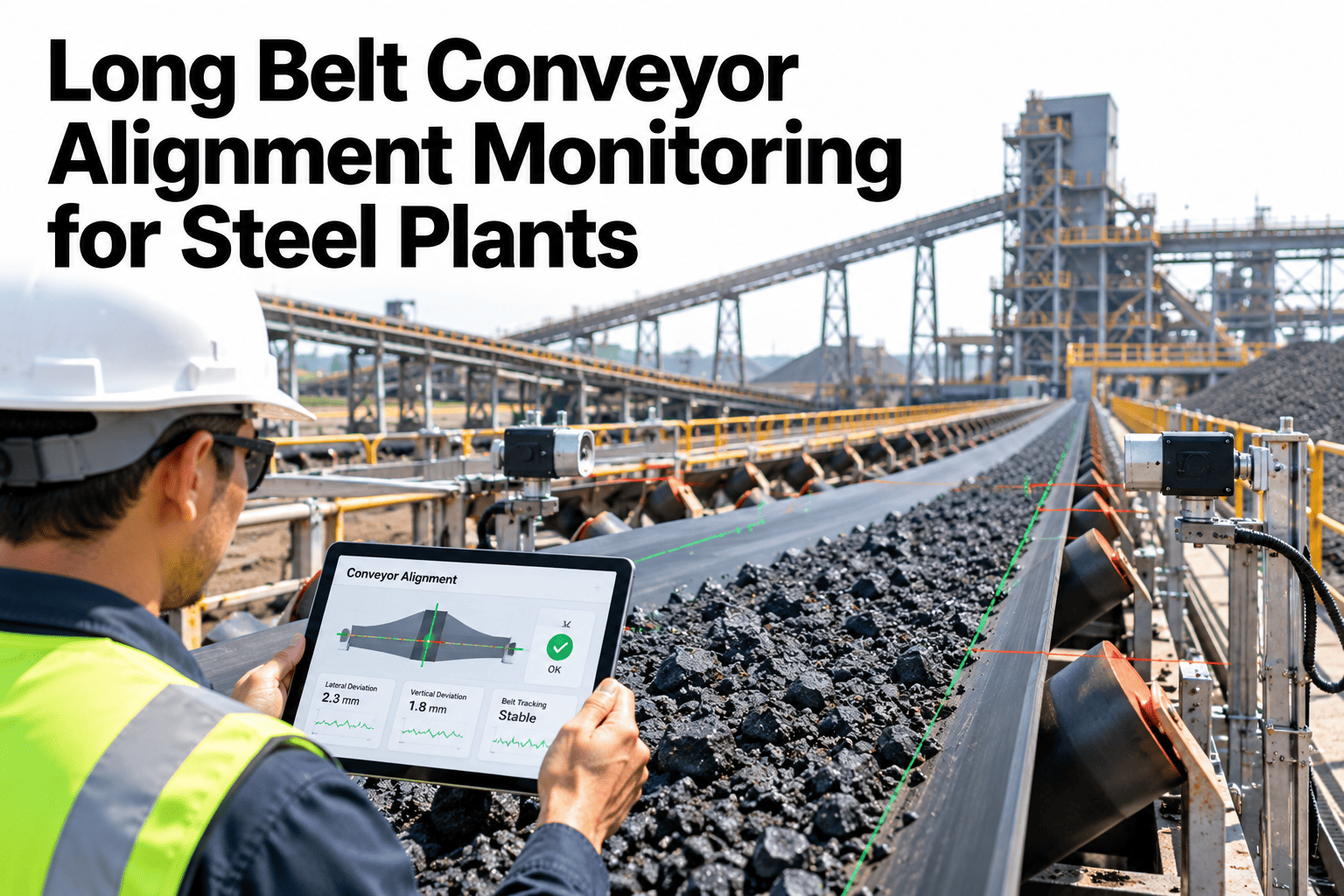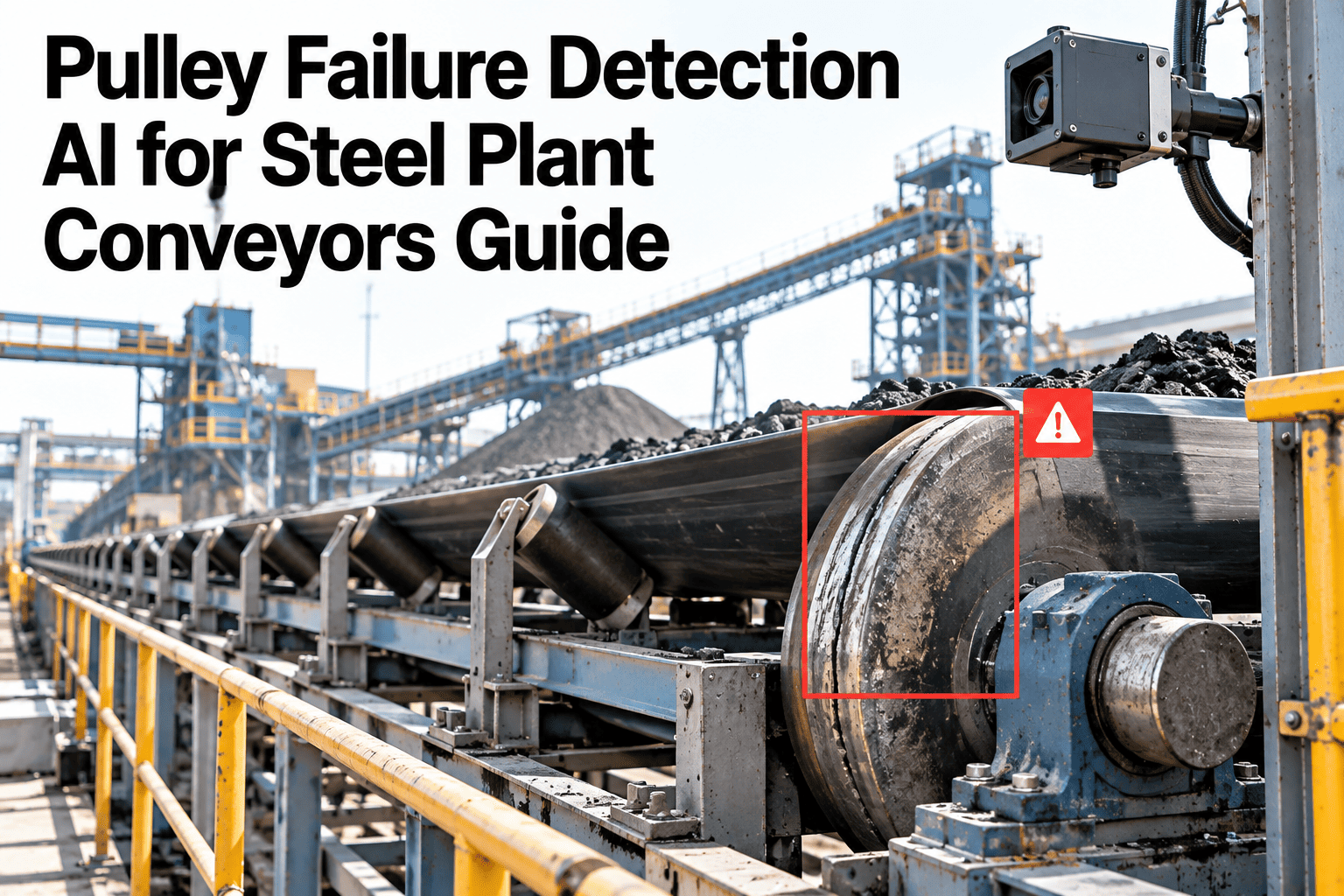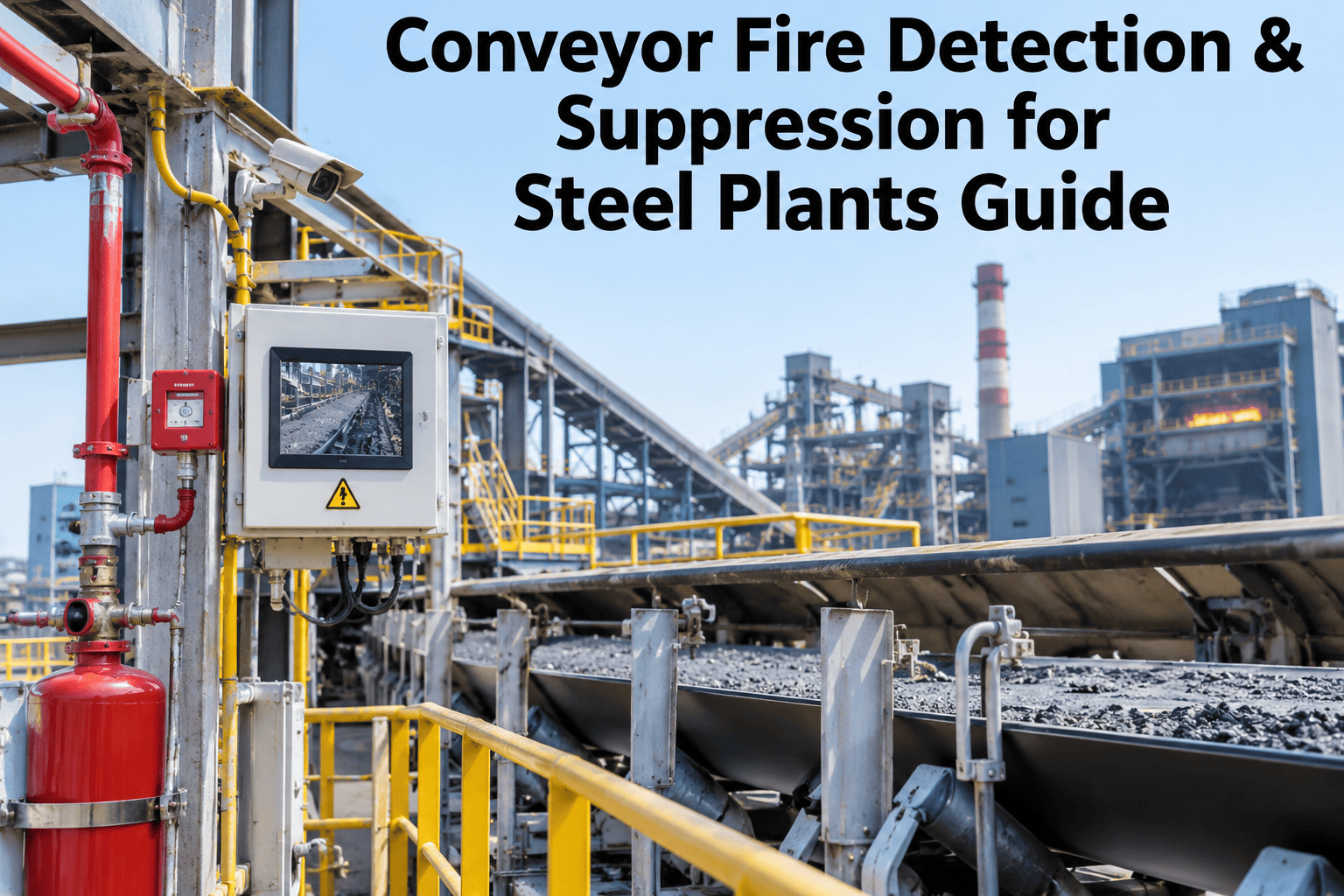
Conveyor fire detection for a steel plant is a layered system that senses heat or flame on a belt, stops the drive, raises an alarm and sprays water into the zone that is burning. It only works when detectors, belt interlocks and nozzles share the same zones and are tested together. A belt carries its own fuel, and on raw material lines a seized roller or hot material can start a fire far from anyone's view. Safety and maintenance leaders can watch a fire zone map built from their own belt layout in a short session.
Sense the Hot Roller, Stop the Belt, and Spray Only the Zone That Is Burning
iFactory AI, an on-premise industrial AI platform for steel plants, links thermal vision, acoustic and temperature sensing, and work orders so a fire response starts at the first warning sign.
What Is Conveyor Fire Detection and Suppression?
It is a safety system with four jobs: sense, stop, alarm and spray. In a steel plant it protects raw material, coke and sinter lines, where a fire can spread from the belt into hoppers and crushing areas (GIT Security). Teams can review how detection zones map to their own belts before changing hardware.
Why Do Steel Plant Conveyors Catch Fire?
Four causes appear again and again in published fire guidance.
Seized or hot rollers
A belt that halts on a red-hot roller can open a flame (Hawk Measurement Systems, 2025).
Friction and misalignment
A rubbing belt can heat dust, grease and shavings until they ignite (Movitherm).
Hot material
Burning material on a fast belt carries a fire downstream (Eurofyre).
Dust and spillage
Combustible dust gathers between belt and rollers and ignites from friction heat (Eurofyre).
Static Fire or Moving Fire: Which Detector Fits?
The type of fire decides the tool (Movitherm). Plants that want a second opinion can ask for a detector coverage review across their lines.
| Fire Situation | Typical Detector | Why It Fits |
|---|---|---|
| Static fire on a stopped belt or in housing | Linear heat detection cable | Registers abnormal temperature along the whole cable length |
| Moving fire on a live belt | Infrared emission detector or thermal camera | Sees burning material while it travels |
| Overheating roller or drive | Temperature sensing and thermal imaging | Flags heat before any flame appears |
| Fire under a weather cover | Fibre optic heat sensing on a catenary wire | Reads convection heat trapped under the cover (Hawk, 2025) |
Check Your Detection and Spray Zones Line Up
Share one belt layout and iFactory AI's team will show where detection and suppression zones match and where they leave gaps.
How Should Detection Trigger Suppression?
The sequence should stop the conveyor, raise an alarm and, after a defined delay, start water spray, with manual override kept available (Movitherm).
Does Your Detection Zone Match Your Spray Zone?
A detection zone with no matching suppression zone wastes the detection investment (Movitherm). The rows compare a matched layout with one that has a gap.
Can Two Cables Reduce False Alarms?
Some heat cables run side by side, and the alarm sounds only when both trigger (Eurofyre). Teams can discuss alarm logic for their own belts with iFactory AI's team.
Where Does iFactory AI Fit in Conveyor Fire Safety?
iFactory AI does not replace certified detection or spray hardware. It adds early warning and clear records around it.
Thermal Vision
AI vision cameras, including thermal, watch belt and roller heat along the line.
Acoustic and Heat Sensing
Acoustic, ultrasonic and thermal sensors flag a failing roller before it seizes.
Automatic Work Orders
A hot roller opens a work order with its location and priority.
Incident Records
Alarms, tests and responses are logged in incident and EHS records.
What Should a Commissioning Test Prove?
A test should prove the whole chain, not one device. Teams can request a commissioning checklist review for their lines.
Expert Review: Judging a Conveyor Fire System
Frequently Asked Questions
What is the best way to detect a conveyor fire in a steel plant?
Use layers. Linear heat cable suits static fires, while infrared detectors or thermal cameras suit burning material on a moving belt (Movitherm). Add temperature sensing at rollers and drives to catch heat early. See a layered detection plan for your belts in a short session.
Should the belt stop automatically when a fire is detected?
Yes, the usual sequence stops the conveyor, raises an alarm and, after a defined delay, starts water spray, with manual override available (Movitherm). Stopping the belt limits how far burning material travels. Review your interlock sequence with our team.
How far can one linear heat detection system cover?
One optical system is quoted at up to 10 km of belt, with a response time of 4 seconds or less (Luna LIOS product data). Cable-based systems vary by supplier and approval. Ask support how coverage maps to your route and zone limits.
Why must detection zones match suppression zones?
If a detector raises an alarm in a zone with no nozzles, the alarm cannot be followed by suppression, so the detection spend is wasted (Movitherm). Zones should be drawn once and shared by both systems. Map your zones with our team before the next audit.
Can iFactory AI replace certified fire detection hardware?
No. iFactory AI works alongside certified detectors and spray systems. It adds thermal vision, acoustic and heat sensing, automatic work orders and incident records, so warning signs are acted on sooner. Walk through how the two fit together on one belt.
Stop Belt Fires Where They Start
See iFactory AI watch roller heat, flag a failing idler and open a work order before a fire starts. Book a walkthrough on your own conveyor layout.