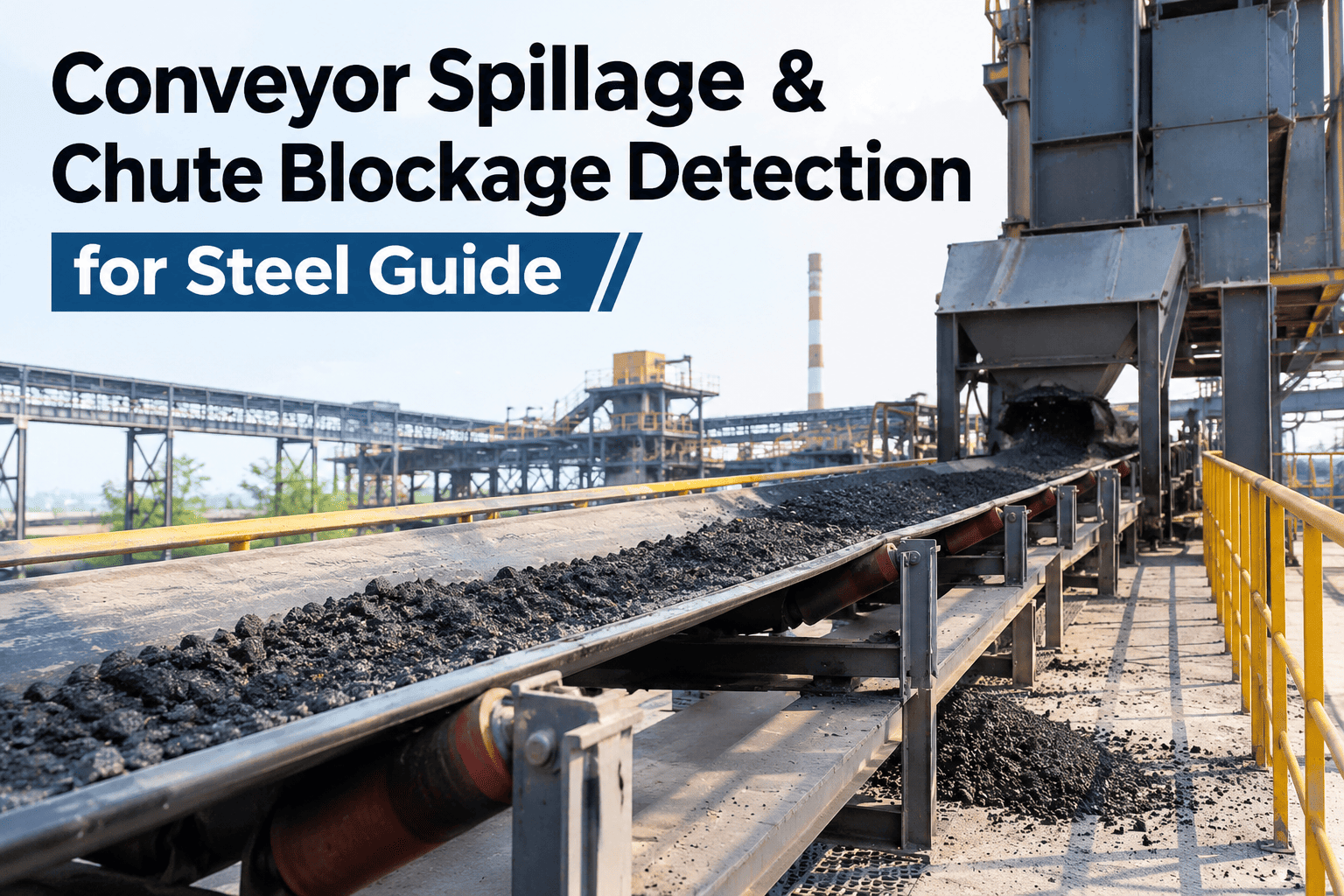
A blocked transfer chute doesn't announce itself at the point of blockage — it shows up downstream as a starved process, and by the time anyone traces the cause back to a specific chute, material has already been building up unseen for a while. iFactory, an on-premise AI platform with AI Vision Camera built in, combines level sensors, vision, and load-cell pattern recognition to catch a developing blockage at its source. Steel plant operations teams who want this coverage on their own material handling system can request a demo with our team.
A Blockage Shows Up Downstream First — Unless Something Is Watching the Chute Itself
iFactory AI combines level sensors, vision, and load-cell data to catch a developing chute blockage at its source, before it starves a downstream process.
The Symptom and the Cause Rarely Show Up in the Same Place
A transfer chute sits between two conveyors, often out of direct line of sight and rarely instrumented on its own. When it blocks, the first visible sign is usually a downstream process running short of material, which an operator reasonably investigates as a feed or process issue first — the actual chute blockage is often the last thing checked, not the first.
What Each Sensing Approach Actually Catches
Two Related but Distinct Problems
| Issue | What's actually happening | Primary risk |
|---|---|---|
| Spillage | Material escaping the intended path at a transfer point | Housekeeping cost, safety hazard, material loss |
| Chute blockage | Material accumulating and restricting or stopping flow | Downstream process starvation, potential structural load risk |
See What Your Current Spillage and Blockage Pattern Looks Like
Share your current material handling layout and known problem points, and iFactory AI will walk through what a connected detection setup would catch.
Four Common Root Causes Worth Checking First
Wet or sticky material clinging to chute walls, an undersized chute for a changed material grade, a worn or damaged liner creating an obstruction point, and simple overfeed from an upstream process all account for most recurring chute blockages — knowing which one is actually happening narrows the fix considerably compared to simply clearing the blockage and waiting for it to recur.
Four Steps From a Flagged Blockage to a Clear Chute
What a Material Handling Engineer Checks First
What Steel Plants Ask About Spillage and Blockage Detection
Detect Spillage and Chute Blockages at the Source
Book a demo to see how iFactory AI monitors your transfer points directly for material flow issues.