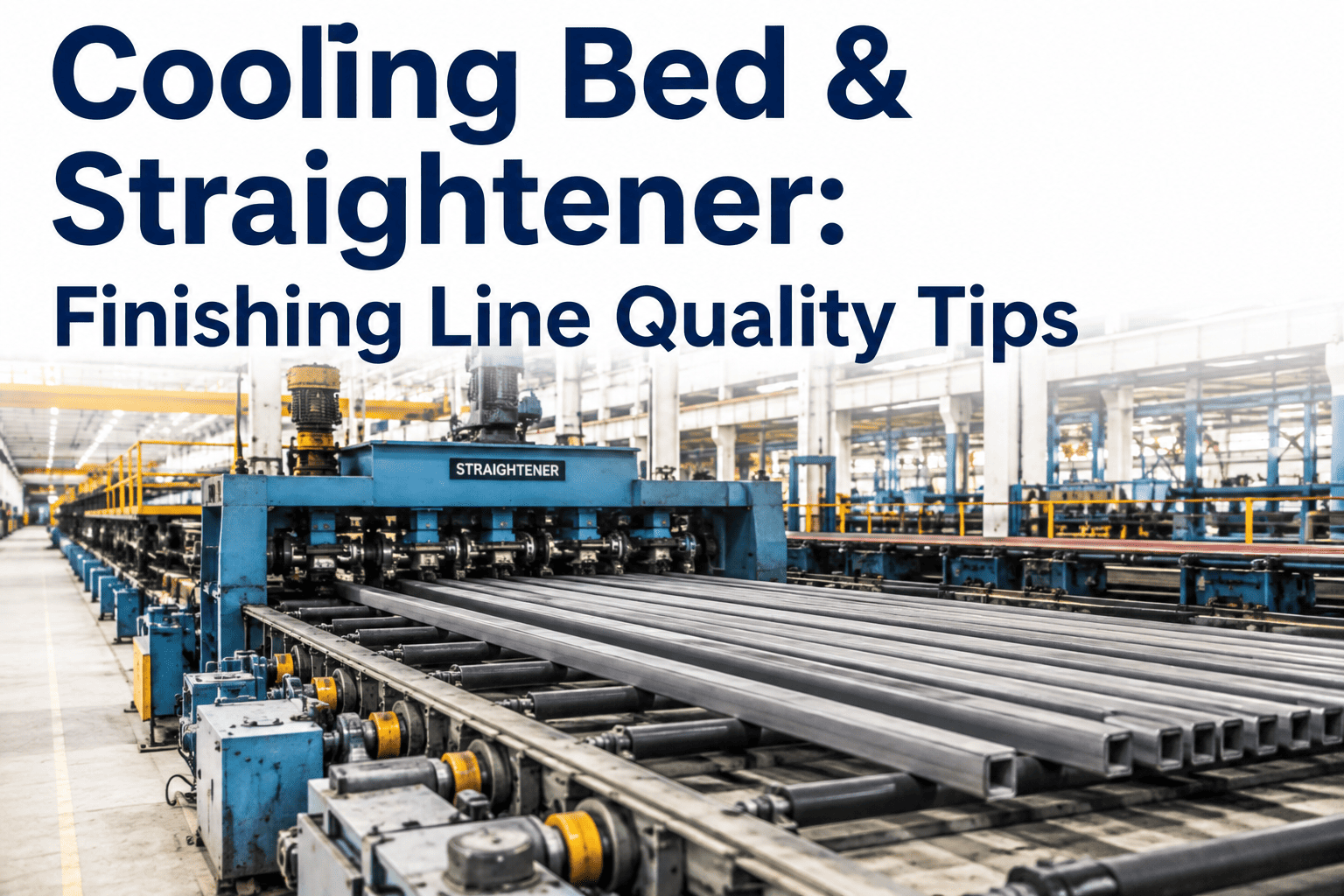
Most rolling mill quality investigations focus on the stands, yet a meaningful share of finished product complaints actually originate downstream, at the cooling bed and straightener. Uneven cooling introduces residual stress that a straightener then has to correct, and if either step drifts out of tolerance the result is a bent bar, a surface mark, or a straightness rejection that traces back to a process nobody was watching closely. Getting finishing line quality right takes the same discipline applied upstream, and iFactory's process monitoring platform extends that visibility all the way through the finishing line.
FINISHING LINE · PRODUCT QUALITY
Cooling Bed and Straightener Optimization for Finished Product Quality
Cooling uniformity, straightness tolerance, and surface marking prevention across the finishing line, where the last steps determine whether a good roll turns into a good shipment.
Where Quality Actually Fails
Finishing Line Issues by the Numbers
25-35%
of long product straightness rejections trace back to uneven cooling rather than the straightener itself
Bar-to-bar
cooling rate variation is often the earliest indicator of a developing straightness problem
2nd Chance
the straightener is often the last opportunity to correct a defect before shipment
Contact marks
from bed rollers are a leading avoidable cause of finishing line surface rejections
Cooling Bed
Getting Cooling Uniformity Right
Uneven cooling across the bed width or between adjacent bars is the most common source of residual stress that the straightener then has to fight against, often unsuccessfully once the deviation is large enough.
Bed Zone Temperature Mapping
Tracking cooling rate across different zones of the bed identifies drafts, fan imbalance, or blocked airflow paths causing inconsistent bar-to-bar cooling.
Bar Spacing Consistency
Inconsistent spacing between bars on the bed changes local cooling rates through radiant heat exchange between neighboring bars, a frequently overlooked variable.
Roller Table Condition
Worn or misaligned transfer rollers create contact marks and localized cooling differences right where the bar transitions onto the bed.
Environmental Factors
Ambient temperature and seasonal airflow changes shift bed cooling performance, meaning a fixed cooling program can drift out of tolerance across the year.
Catch Straightness Issues Before They Reach the Customer
iFactory connects cooling bed and straightener data into one finishing line view, flagging deviation before a batch gets rejected downstream.
Straightener Operation
Straightness Tolerance and Marking Prevention
Straightener Parameter Reference
Prevention Checklist
Reducing Finishing Line Rejections
1Map cooling bed zone temperatures regularly and correct fan or airflow imbalances promptly
2Inspect roller table and bed contact surfaces on a fixed schedule to catch wear early
3Correlate straightener roll pressure settings with incoming bar temperature rather than a fixed table alone
4Track straightness rejection rate by product size to spot emerging patterns before volume grows
5Feed finishing line quality data back to rolling operations when a pattern points upstream
Why This Gets Missed
Why Finishing Line Quality Is Often Under-Monitored
01
Attention Concentrated Upstream
Rolling stands typically receive the most process monitoring investment, leaving the cooling bed and straightener as comparatively under-instrumented last steps.
02
Defects Attributed to the Wrong Stage
A straightness rejection is often assumed to be a rolling issue by default, when the actual root cause was uneven cooling introduced further downstream.
03
Manual Spot Checks Instead of Continuous Data
Periodic manual straightness checks catch a problem well after it started, rather than the moment cooling rate or roll pressure first drifted.
Frequently Asked Questions
Cooling Bed and Straightener — Common Questions
How do we tell whether a straightness rejection came from cooling or from the straightener itself?
Correlating cooling rate data from the bed zone the bar passed through with the straightener's applied pressure at the time is the most reliable way to separate the two causes. If cooling rate was consistent but the rejection still occurred, the straightener settings are the more likely source, and vice versa.
What causes contact marks on finished product at the cooling bed stage?
Worn or misaligned transfer rollers, debris buildup on bed rails, and excessive dwell time in one contact position are the most common causes of cooling bed contact marking. A regular inspection schedule targeting these specific wear points prevents the majority of avoidable marking defects.
Does ambient temperature really affect cooling bed performance that much?
Yes, seasonal ambient temperature and airflow changes measurably shift cooling rate on an open cooling bed, which is why a cooling program tuned for summer conditions can produce more residual stress in colder months if it is not periodically re-validated against current conditions.
Can finishing line data be connected to the same platform as upstream rolling data?
Yes.
iFactory's platform is designed to bring cooling bed, straightener, and rolling stand data into a single view, so a quality issue can be traced across the full production path rather than analyzed in isolated stage-by-stage silos.
How often should straightener roll pressure settings be reviewed?
Settings should be reviewed whenever product size or grade changes, and periodically even for a stable product mix, since roll surface wear gradually changes the pressure required to achieve the same straightness result. Correlating settings against incoming bar temperature also helps keep them accurate across seasonal cooling variation.
FINISHING LINE · PRODUCT QUALITY
Close the Gap Between Good Rolling and Good Shipments
See how iFactory brings cooling bed and straightener data into one finishing line quality view.