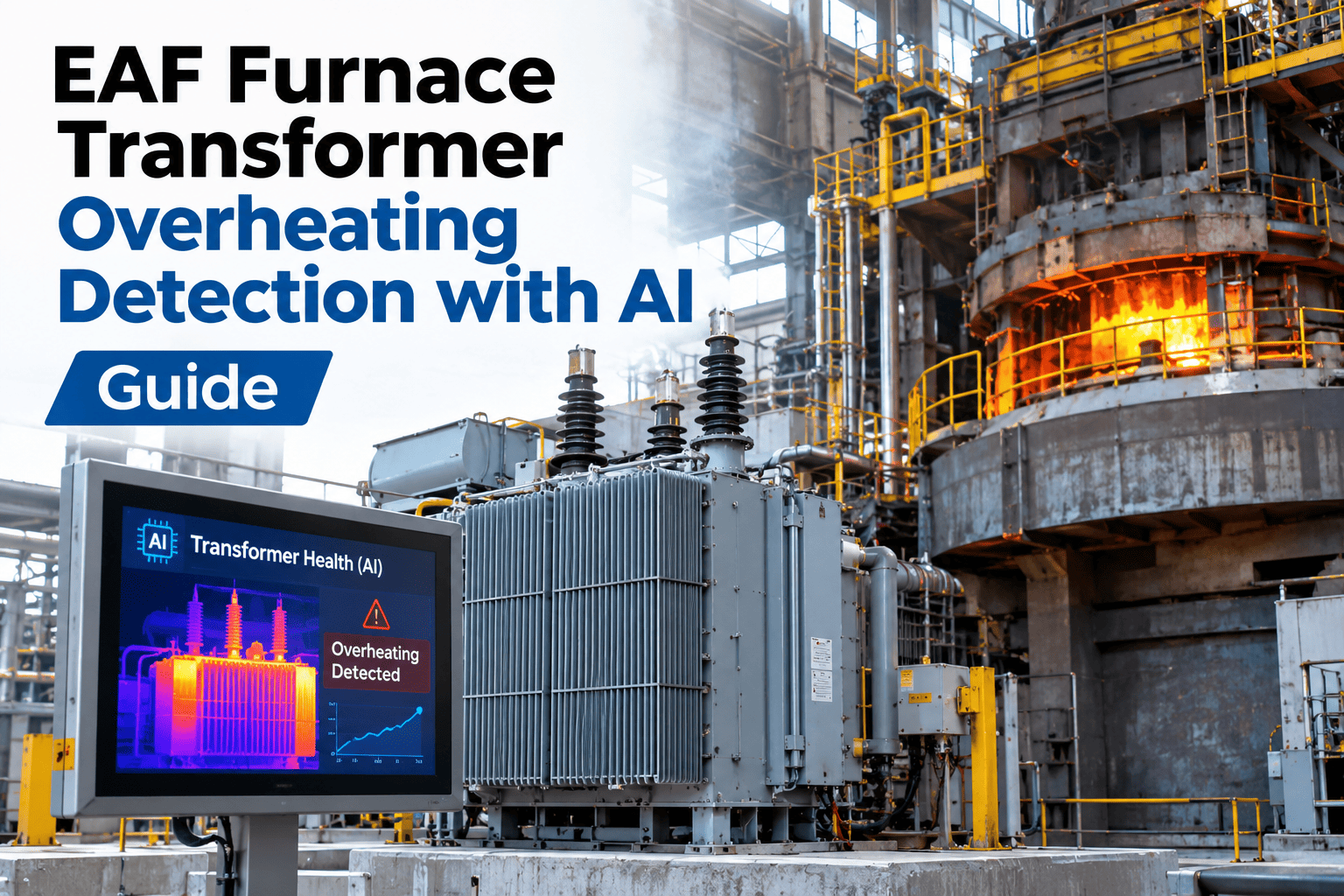
EAF Furnace Transformer Overheating Detection with AI Guide

By James Smith on November 24, 2026

eaf-furnace-transformer-overheating-detection-with-ai-guide

A furnace transformer running hotter than usual on a day of heavy scrap loads is normal; the same temperature reading on a day of light, routine loads is a warning sign, and the difference between those two situations is invisible if temperature is tracked against a flat number instead of the load it's actually under. Load-normalized winding, oil and top-oil temperature analytics separate genuine overheating from expected load-driven heat, catching a cooling system problem before it becomes an insulation-damaging event. iFactory AI, an on-premise AI platform for manufacturing, builds these load-normalized targets around a plant's own transformers, and electrical teams can see their own transformer temperatures checked against load-adjusted targets with our team.

Overheating Detection, 2027

The Same Temperature Reading, Two Different Meanings

EAF furnace transformer overheating detection with AI analyzes winding, oil and top-oil temperature with load-normalized targets, catching cooling problems before damage occurs.

Why a flat threshold misleads

Why a Single Temperature Threshold Gets the Wrong Answer

A fixed temperature alarm set at one number treats a transformer under heavy load the same as one under light load, which means it either misses a real problem during light-load periods, when a lower threshold would have caught an early cooling fault, or triggers constant false alarms during heavy, perfectly normal load swings. Load-normalized monitoring compares actual temperature against what's expected for that specific load level, which is the only comparison that actually distinguishes a developing fault from ordinary operation.

Three temperature points

What Gets Tracked and Why Each One Matters

Winding temperature
The hottest point in the transformer, most directly tied to insulation life.
Oil temperature
Bulk oil temperature reflects overall thermal load and cooling effectiveness.
Top-oil temperature
The hottest oil layer, an early signal of cooling system performance loss.
From reading to alert

How a Reading Becomes a Load-Normalized Alert

1
Load logged
Current load is recorded alongside every temperature reading.
2
Expected range calculated
The expected temperature for that specific load level is calculated from history.
3
Deviation measured
The actual reading is compared against the expected range for that load.
4
Alert if abnormal
A reading outside the expected range, regardless of absolute temperature, triggers review.

See Your Own Load-Normalized Targets Built

Share your transformer's temperature and load history, and iFactory AI will show how load-normalized targets would be calculated.

Flat threshold vs load-normalized

A Fixed Alarm Against a Load-Aware One

Flat temperature threshold
One number for every load condition
Misses early faults during light-load periods
False alarms during normal heavy-load swings
Load-normalized monitoring
Expected temperature adjusts to actual load
Catches a fault at any load level, including light load
Heavy, normal load swings don't trigger false alarms
A composite scenario

The Overheating Alert That Fired on a Light-Load Day

Picture a transformer running a routine, lighter-than-average load one afternoon, with an absolute temperature reading that looked entirely unremarkable against any fixed threshold, well below where a flat alarm would ever trigger. Against this transformer's own load-normalized expected range for that specific load level, though, the reading sat noticeably above what history said was normal, a deviation a flat threshold would never have caught precisely because the absolute number looked fine in isolation.

Investigation traced the deviation to a radiator fan that had stopped engaging correctly, reducing cooling capacity in a way that wouldn't show up as a problem until the next heavy-load day, when the same fault would have pushed temperatures into genuinely damaging territory. Catching it on a light-load day, while the absolute risk was still low, gave the team an easy window to fix the fan before it ever became an emergency.

The cooling system link

Why Overheating Often Points to Cooling, Not the Transformer Itself

A rising temperature deviation at a given load level frequently traces back to the cooling system rather than an internal transformer fault, a radiator fouling, a pump losing efficiency, or a fan not engaging as designed. Catching the temperature deviation early gives the electrical team the chance to inspect and fix the cooling system itself before the sustained extra heat accelerates insulation aging inside the transformer, which is a far more expensive and harder to reverse problem than a cooling component repair.

Common mistakes

Mistakes That Weaken Overheating Detection

1
Using a flat alarm threshold
Ignoring load context misses faults at light load and false-alarms at heavy load.
2
Tracking only one of the three temperature points
Winding, oil and top-oil temperatures each reveal a different stage of a developing issue.
3
Not investigating the cooling system first
Many overheating alerts trace back to cooling equipment, not the transformer itself.
Expert review

What an Electrical Engineer Would Check First

Load normalization is the single detail that separates a useful alert from a noisy one. Confirm the expected-temperature model is actually built from this transformer's own load history before trusting any alert it generates.
Watch for
Frequent false alarms during routine heavy-load periods, a sign the model isn't properly load-adjusted.
Do next
Pull a year of load and temperature history to validate the expected-range model before relying on it.
FAQ

What Steel Melters Ask About Overheating Detection

How much temperature deviation actually counts as a real warning?
A deviation significant enough to fall outside the statistically normal range for that specific load level, rather than an arbitrary fixed number, is what defines a genuine alert worth investigating. Ask about setting deviation thresholds for your transformer.
Can this distinguish a cooling system issue from an internal transformer fault?
The temperature pattern often gives a strong hint, a top-oil rise with normal winding behavior points more toward cooling, while a disproportionate winding temperature rise points more toward an internal issue, though a physical inspection confirms the specific cause. Ask how pattern helps narrow the cause.
Do we need new temperature sensors, or can this use what we already have?
Most EAF transformers already have winding and oil temperature sensors installed as standard equipment, so this typically builds on existing instrumentation rather than requiring new hardware. Ask about your current sensor setup.
How long does it take to build a reliable load-normalized model?
Enough history to cover a full range of load conditions, including peak summer and routine load patterns, is needed, which for most mills means several months to a year of data. Discuss timing for your own transformer.
Does seasonal ambient temperature affect this analysis?
Yes, ambient temperature is factored in alongside load, since a hot summer day and a cold winter day both shift what counts as a normal reading at the same load level. Ask about seasonal adjustment for your site.
Temperature in context, not in isolation

Catch Overheating Before It Becomes Insulation Damage

Book a session with iFactory AI to see load-normalized overheating detection built around your own furnace transformer.


Share This Story, Choose Your Platform!