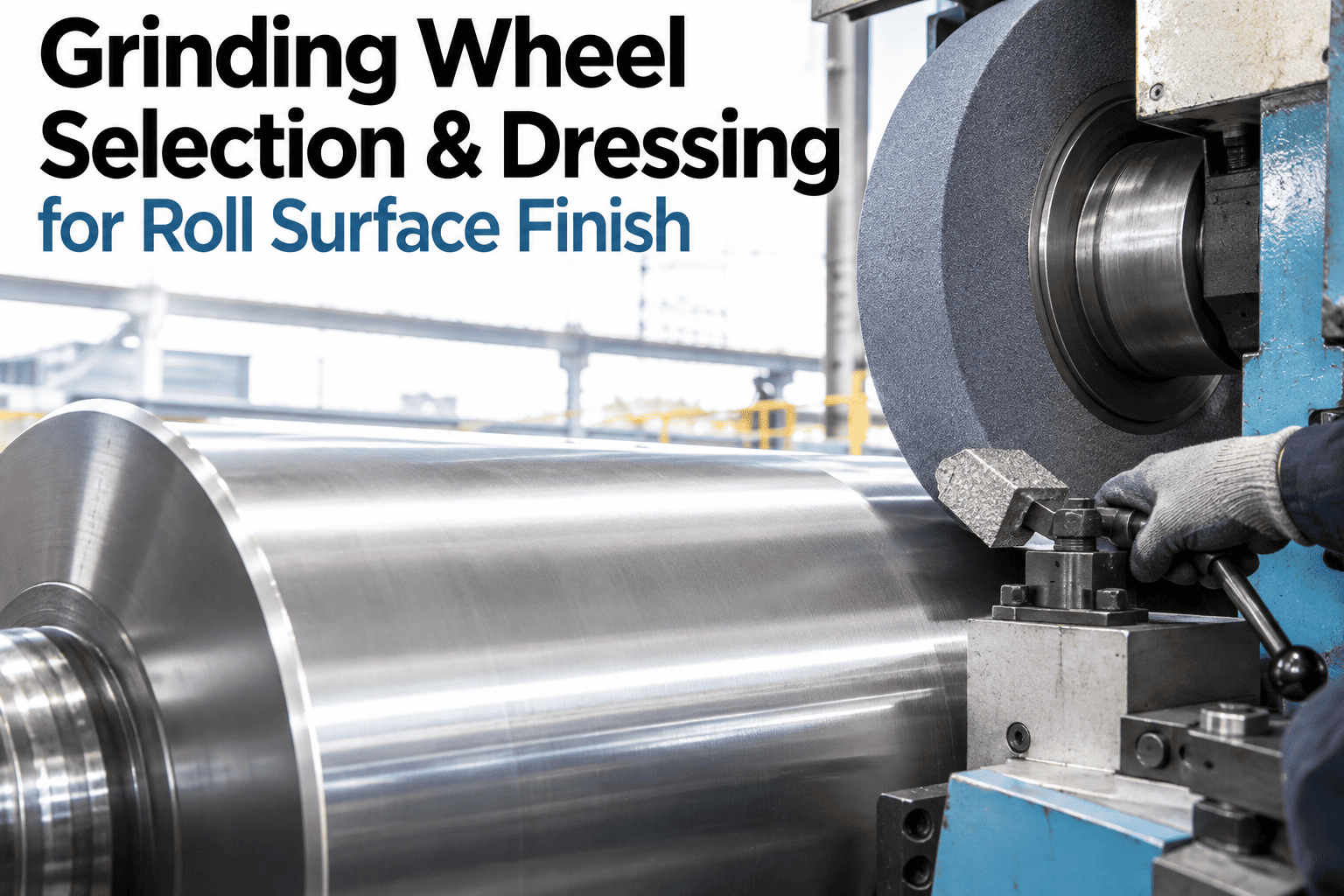
The wheel doing the actual grinding gets far less attention than the machine holding it, but abrasive type, grit size, and bond selection determine the ceiling on achievable surface finish just as much as any CNC parameter setting, and a wheel that was correct for one roll grade can be quietly wrong for the next one without anyone realizing until the Ra readings start drifting. Dressing frequency compounds this: a wheel that starts a job correctly profiled loses its cutting geometry gradually as it wears, and a dressing schedule based on a fixed interval rather than actual wheel condition either wastes wheel life dressing too early or lets surface finish degrade before dressing catches up. Shops wanting to tighten wheel selection and dressing discipline can start with a conversation with iFactory's support team about tracking Ra trend against wheel condition and dressing history.
The Wheel Sets the Ceiling on Surface Finish Before the Grinder Even Starts Moving
Abrasive type, grit size, and bond selection determine what's achievable, and dressing frequency determines whether the wheel actually delivers it on every pass.
Why a Correct Wheel Choice Can Still Go Wrong
A grinding wheel selected correctly for a job's initial roll grade does not stay correct forever if the shop's product mix shifts, and a wheel spec that was validated years ago for a grade the shop no longer runs as frequently can persist as the default choice simply because nobody revisited it after the mix changed. The wheel that was right for yesterday's dominant roll grade is not automatically right for today's, and treating wheel selection as a one-time decision rather than something reviewed against current production is a common source of surface finish drift that has nothing to do with the grinder itself.
The Three Wheel Selection Variables
Each variable addresses a different aspect of grinding performance, and the right combination depends on the specific roll material, hardness, and target finish.
Abrasive Type
Different abrasive materials suit different roll hardness ranges, and a mismatch between abrasive type and roll material can produce excessive wheel wear or poor cutting efficiency regardless of other settings.
Grit Size
Coarser grit removes material faster but leaves a rougher surface, while finer grit achieves a smoother finish at the cost of slower material removal, setting the fundamental trade-off for a given job.
Bond Selection
The bond holding abrasive grains together determines how the wheel releases dull grains to expose fresh cutting edges, directly affecting both wheel life and consistency of finish over a grinding cycle.
Match Wheel Selection to Current Production, Not Last Year's
Book a 30-minute walkthrough of how iFactory tracks Ra trend against wheel condition and dressing history by roll grade.
Dressing Approaches Compared
How a shop decides when to dress a wheel has a direct impact on both wheel life and surface finish consistency, and the approaches below represent increasing levels of precision.
| Approach | How Timing Is Decided | Typical Outcome |
|---|---|---|
| Fixed Time Interval | Dressed every set number of hours regardless of use | Simple but often mismatched to actual wear rate |
| Fixed Roll Count | Dressed after a set number of rolls ground | Better than time alone, still ignores roll hardness variation |
| Condition-Based Dressing | Dressed based on measured Ra drift or wheel wear signal | Most precise, matches dressing to actual wheel condition |
A Composite Scenario: The Surface Finish That Drifted Across a Shift
A roll shop running a fixed dressing schedule, dressing every wheel after a set number of grinding cycles regardless of roll hardness, began seeing Ra readings drift upward toward the end of shifts that happened to run a higher proportion of harder roll grades. The pattern was inconsistent enough across different shifts that it took time to notice a real trend rather than normal variation.
Analysis correlating Ra readings against the specific roll grades ground during each shift confirmed that harder grades wore the wheel's cutting geometry faster than the fixed dressing interval assumed, meaning the wheel was effectively under-dressed by the time it reached the harder rolls later in a mixed shift. Moving from a fixed-interval dressing schedule to one that also factored in the hardness mix of rolls ground since the last dressing brought Ra readings back into a consistent range regardless of shift composition, without any change to the wheel specification itself.
Mistakes That Undermine Wheel Selection and Dressing
Treating Wheel Specification as a One-Time Decision
A wheel spec chosen years ago for a since-changed product mix can persist as the default long after it stops being the right choice for current production.
Dressing on a Fixed Schedule Regardless of Roll Hardness Mix
A dressing interval that ignores the actual hardness of rolls ground since the last dressing, as in the scenario above, can leave a wheel under-dressed exactly when it matters most.
Dismissing Ra Drift as Normal Shift-to-Shift Variation
Attributing a real, traceable trend to random variation, rather than correlating it against roll grade mix, delays finding the actual explanation, exactly as happened initially in the scenario above.
Using the Same Dressing Interval Across All Wheel and Grade Combinations
Different wheel specifications wear at different rates against different roll grades, and a single blanket dressing interval cannot suit every combination equally well.
Is Your Wheel Program Actually Matched to Current Production
Wheel specification has been reviewed against current roll grade mix, not the mix from years ago
A periodic review catches the kind of drift between wheel spec and actual production mix that otherwise persists unnoticed indefinitely.
Dressing schedule accounts for roll hardness mix, not just elapsed time or roll count
Factoring hardness mix into dressing timing, as the shop in the scenario above eventually adopted, keeps surface finish consistent regardless of which grades happened to run in a given shift.
Ra trends are correlated against roll grade, not dismissed as random variation
Correlating finish readings against the specific grades ground is what turns an inconsistent-looking pattern into an actionable finding, as it did in the scenario above.
Frequently Asked Questions
How does grit size actually affect achievable Ra values?
Coarser grit sizes leave larger scratch patterns on the ground surface, producing a higher, rougher Ra value, while finer grit sizes produce progressively smoother surfaces at the cost of slower material removal rate, which is why a shop targeting a specific Ra specification needs to select grit size deliberately rather than defaulting to whatever grit was used on the last job regardless of the current target finish.
Why does dressing frequency need to account for roll hardness, not just elapsed time?
Harder roll grades wear a wheel's cutting geometry faster than softer grades over the same grinding time, so a fixed dressing interval based purely on elapsed time or roll count implicitly assumes a consistent hardness mix, an assumption that broke down in the scenario above once a shift happened to run a higher proportion of harder grades than the interval was originally calibrated for.
What signs indicate a wheel needs dressing before the scheduled interval?
A rising Ra trend, increased grinding force or power draw, or visible wheel loading are all signs that dressing may be needed earlier than a fixed schedule would call for, and tracking Ra trend continuously, rather than only checking it periodically, is what allowed the drift in the scenario above to eventually be caught and correlated back to its cause.
Can a single wheel specification work well across a wide range of roll grades?
A single wheel specification can work adequately across a moderate range of grades, but a shop running a wide hardness range is often better served by maintaining a small set of wheel specifications matched to different grade groups, rather than forcing one specification to compromise across the full range, since a wheel optimized for the middle of a wide hardness range will underperform at both extremes. Book a demo to see how iFactory tracks finish outcomes by wheel specification and roll grade combination.
What is the first step for a shop wanting to move to condition-based dressing?
The first step is establishing continuous Ra tracking correlated against the specific roll grades ground between dressing cycles, exactly the analysis that revealed the hardness mix issue in the scenario above, since this data is what reveals whether a current fixed schedule is actually matched to real wheel wear or simply a convenient assumption that happens to work most of the time. Shops wanting help setting up this kind of tracking can reach iFactory support directly.
Match Wheel Selection and Dressing to What You're Actually Grinding
iFactory tracks Ra trend against wheel condition, dressing history, and roll grade mix, catching drift before it becomes an inconsistent finish. Book a walkthrough to see it running on a live grinding operation.