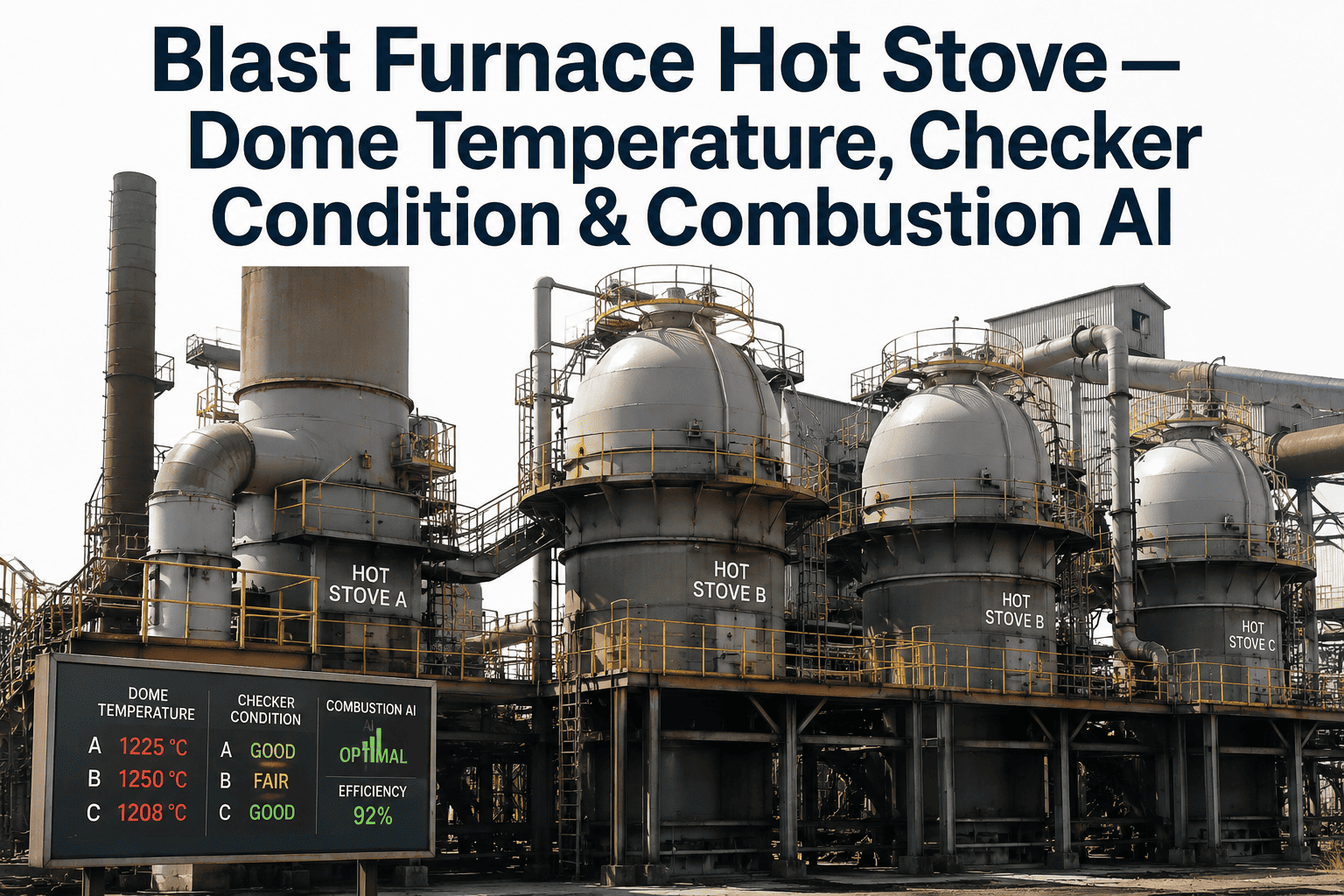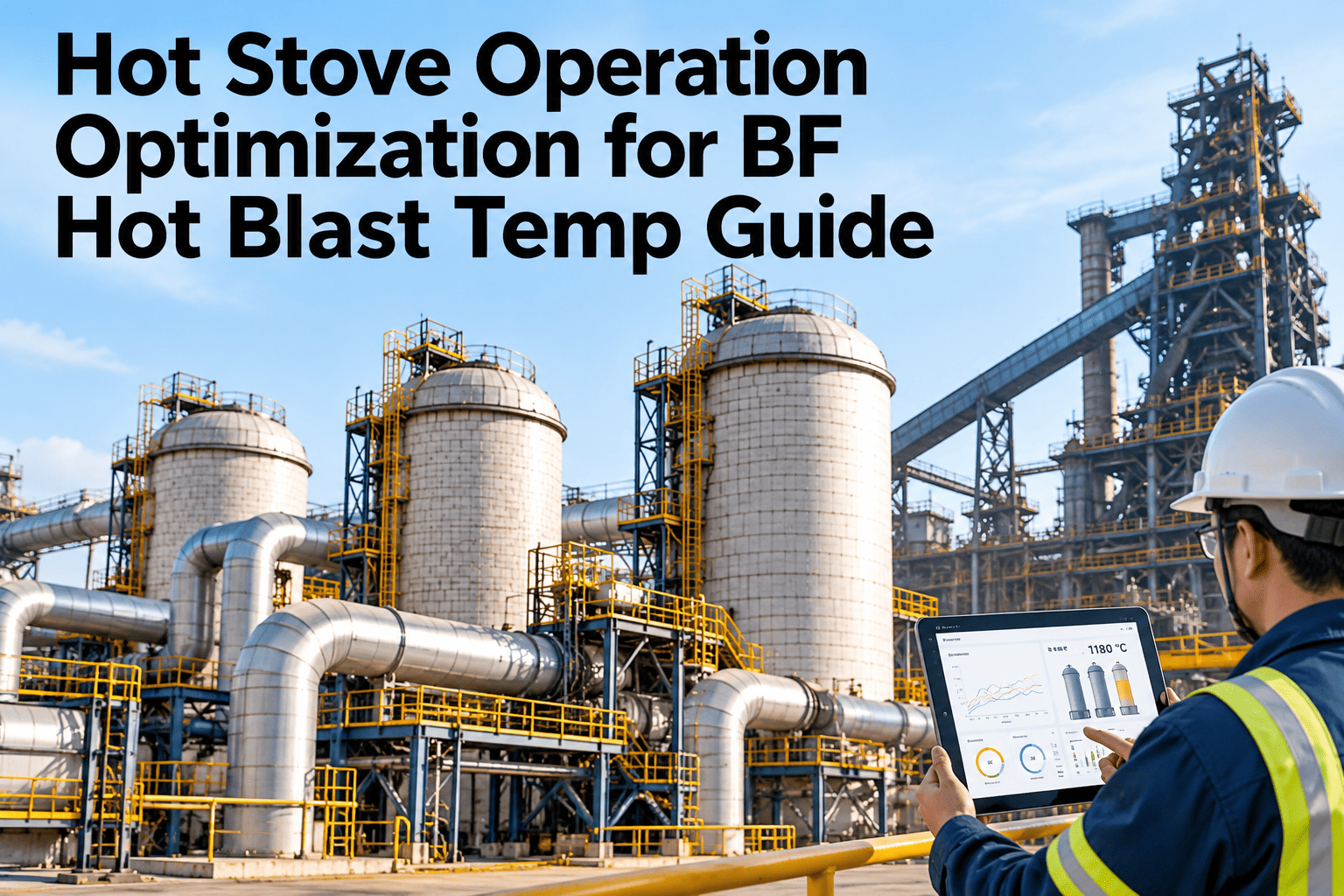
Every degree of hot blast temperature a blast furnace receives is a degree the coke rate does not have to supply through combustion in the raceway. Hot stoves exist to deliver that heat, cycling between a gas-fired combustion phase and a blast-heating phase, and the ceiling on hot blast temperature is set almost entirely by how well those cycles are run. Push combustion too hard and dome temperature limits trip early. Run cycles too short and the checker brick never reaches full capacity. Getting combustion tuning, cycle time and dome temperature working together is how a stove operation actually raises hot blast temperature instead of just burning more gas. Furnace teams can see how iFactory AI tracks stove cycle performance against hot blast temperature on live furnace data before the next campaign review.
Hot Stove Operation Optimization for BF Hot Blast Temp
Combustion tuning, cycle time and dome temperature control, working together to push hot blast temperature higher.
The Trade That Defines Every Stove Cycle
A hot stove is always balancing two competing pressures: heat the checker brick as much as possible, without exceeding the dome temperature limit that protects the refractory.
How fast and hot the gas burns, which drives how quickly the brick heats but also how fast dome temperature rises.
The hard limit protecting the stove structure, which caps how much combustion intensity is usable.
How long each on-gas and on-blast phase runs, which determines how fully the brick is used before switching.
Pushing any one of these without respecting the other two tends to produce a short-term gain that erodes refractory life or stove efficiency over the following weeks.
What Limits Hot Blast Temperature in Practice
Most plants do not hit a single hard ceiling, they run into a combination of constraints that interact with each other.
| Constraint | What It Limits | Typical Lever |
|---|---|---|
| Dome refractory limit | Maximum safe combustion temperature | Combustion tuning and firing rate control |
| Checker brick condition | How much heat the brick can store and release | Cycle time and heating uniformity |
| Stove rotation pattern | How consistently blast temperature is delivered | Number of stoves in rotation and changeover timing |
| Fuel gas quality | Available combustion heat per unit of gas | Blending and calorific value management |
Find Out Which Constraint Is Capping Your Hot Blast Temp
Book a 30-minute session and iFactory AI will show which of these constraints is actually limiting your hot blast temperature today, based on your own stove data.
Cycle Time, Sized to the Brick
A cycle that is too short wastes the stove's heating capacity. One that is too long risks overheating the dome before the blast phase even begins.
Four Signals to Watch Through a Cycle
These four, tracked together through each cycle, show whether combustion and cycle timing are actually working as intended.
How close the peak gets to the limit, and how much margin is left.
An indicator of how fully the brick has charged by end of the on-gas phase.
How quickly blast temperature falls during the on-blast phase, showing brick capacity.
Whether combustion is running steady or fluctuating through the cycle.
Coke Rate: The Payoff Downstream
The reason to push hot blast temperature in the first place is its direct effect on the furnace's own fuel demand.
Higher hot blast temperature means less heat the raceway combustion must supply.
Less combustion heat needed means coke rate can be trimmed for the same thermal balance.
A lower, stable coke rate reduces fuel cost per tonne of hot metal.
The stove operations that sustain a higher hot blast temperature over a full campaign are the ones that respect the dome temperature limit as a genuine constraint rather than a target to graze against every cycle. Running consistently close to the ceiling accelerates refractory wear in ways that do not show up immediately, and the eventual repair or rebuild cost can erase years of the fuel savings the higher temperature delivered. Track dome temperature margin as closely as the hot blast temperature itself, and treat any sustained increase in average hot blast temperature as something to confirm over many cycles, not declare after one good shift.
Where iFactory AI Fits
iFactory AI tracks combustion, dome temperature and cycle performance together across the stove rotation, so hot blast temperature gains are made without quietly trading away refractory life.
Cycle-by-cycle tracking
Dome temperature, checker outlet and hot blast decay are tracked for every cycle, not sampled periodically.
Constraint identification
The system flags which constraint, dome limit, brick condition or rotation pattern, is actually capping performance.
Coke rate linkage
Hot blast temperature trends are connected to coke rate, showing the real downstream payoff.
Ask in plain language
Ask whether this week's hot blast temperature gain is holding steady or decaying and receive a direct answer.
Frequently Asked Questions
What typically limits hot blast temperature on a blast furnace?
Most plants are constrained by a combination of dome refractory temperature limits, checker brick condition and stove rotation pattern, rather than a single clean ceiling, so the right lever depends on which constraint is actually binding at your plant. You can watch these constraints identified on sample stove data in a live session.
How do we know if our stove cycle time is well matched to the brick?
Compare checker outlet temperature at the end of the on-gas phase against hot blast temperature decay during the on-blast phase, since a cycle that is too short leaves the brick under-charged while one that is too long risks dome overheating. To review your own cycle, request a cycle review with the iFactory AI team, or ask support what stove data is needed.
How much coke rate reduction can higher hot blast temperature deliver?
The relationship is real but the exact figure depends heavily on your furnace's current operating point, burden and fuel mix, so it should be measured on your own data rather than assumed from a general rule. A short product tour of the coke rate linkage view shows how this is tracked.
Is it safe to run dome temperature consistently close to its limit?
Running close to the limit every cycle accelerates refractory wear in ways that often are not visible until a later inspection or rebuild, so most plants are better served keeping a working margin rather than grazing the ceiling continuously. See how dome temperature margin is tracked over a campaign in a guided walkthrough.
How long should a hot blast temperature improvement be observed before trusting it?
Confirm the improvement holds across multiple full rotations of the stove set, not just one good cycle or shift, since stove performance varies with fuel gas quality and ambient conditions day to day. Schedule a walkthrough of trend confirmation for stove changes to see how this is judged on your own data.
Raise Hot Blast Temp Without Risking the Dome
iFactory AI tracks combustion, cycle time and dome margin together, so a higher hot blast temperature is a sustainable gain. Book a walkthrough to see it built around your own stoves.