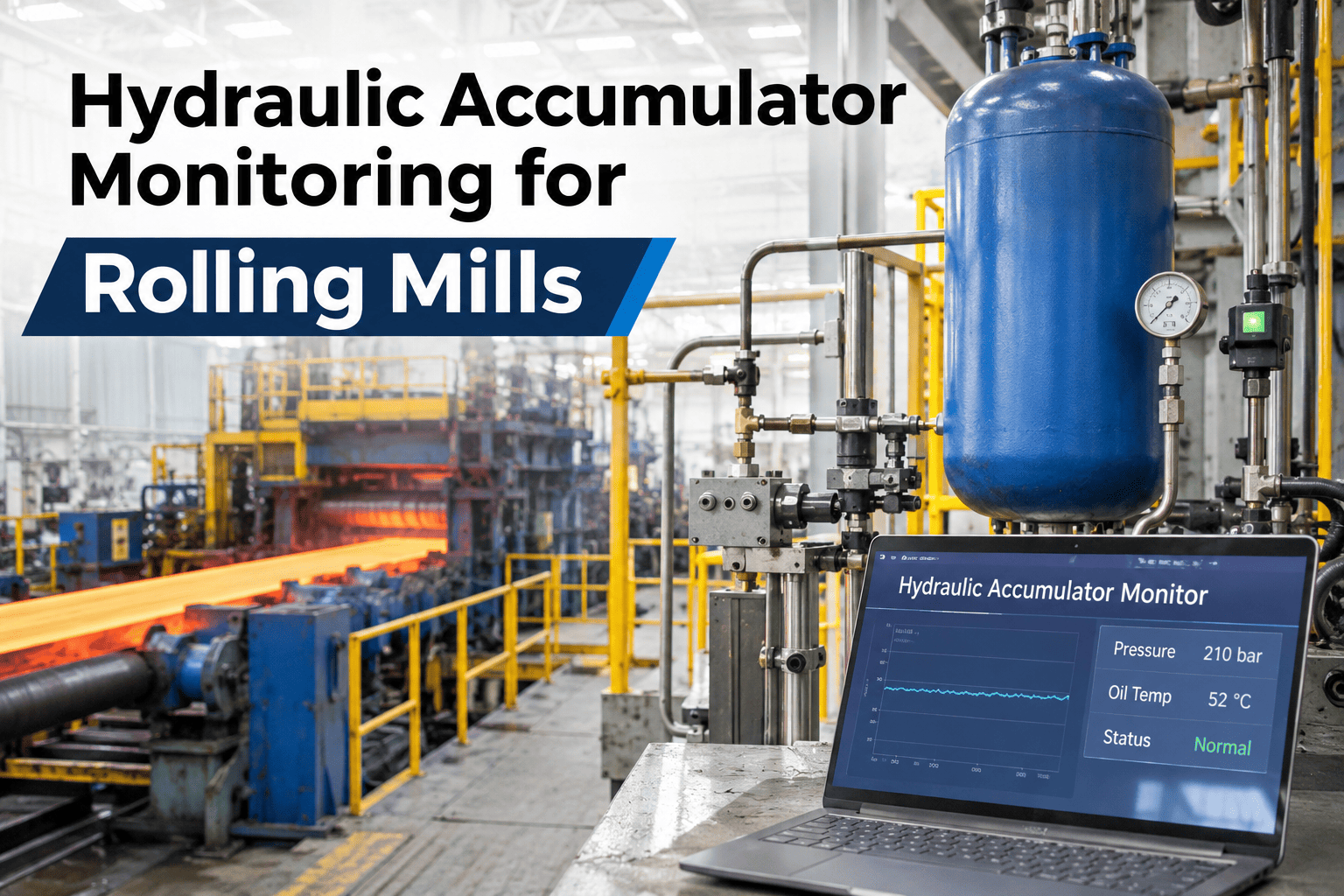
A hydraulic accumulator that loses nitrogen pre-charge gradually will still function, right up until the moment it can no longer dampen pressure pulses properly and a mill experiences an unexpected hydraulic response during a critical rolling pass. Bladder condition degrades quietly, pre-charge pressure drifts down over time, and the cumulative fatigue from thousands of pressure cycles builds invisibly until a failure happens with little warning. Tracking these three factors continuously is what keeps an accumulator reliable instead of becoming a surprise failure at the worst possible moment, and our team can walk you through how this monitoring works on your mill's hydraulic system.
Rolling mills, hydraulic system reliability
Keep Hydraulic Accumulators Reliable Instead of Discovering Failure Mid-Pass
iFactory AI tracks nitrogen pre-charge, bladder condition and pressure-cycle fatigue continuously, so accumulator failure becomes a scheduled replacement instead of a surprise.
Why this is missed
Gradual Pre-Charge Loss Does Not Announce Itself
An accumulator with slightly low pre-charge still dampens pressure pulses, just less effectively, so the degradation compounds quietly until the system response during a critical pass reveals the problem the hard way.
Pre-charge drifts down
Nitrogen loss happens slowly through the bladder over time
Function degrades gradually
Dampening performance weakens without a clear failure point
No routine check
Pre-charge is rarely verified outside scheduled maintenance
Failure during operation
The problem surfaces as an unexpected hydraulic response mid-pass
Three tracked factors
What Continuous Monitoring Actually Watches
Nitrogen pre-charge
Pressure level tracked against the accumulator's required baseline.
Bladder condition
Signals indicating bladder wear or developing permeation.
Pressure-cycle fatigue
Cumulative cycling exposure tracked against expected component life.
Check Your Current Accumulator Maintenance Schedule
Share your current pre-charge check frequency and accumulator fleet details to see what continuous monitoring would reveal.
Signal table
What Each Signal Reveals About Accumulator Health
| Signal | What it reveals | Typical response |
|---|
| Pre-charge pressure trend | Nitrogen loss rate over time | Schedule a recharge before it drops too far |
| Response time to pressure pulses | Dampening effectiveness | Flag for bladder inspection |
| Cycle count against rated life | Cumulative fatigue exposure | Plan replacement near end of rated cycles |
| Temperature at the accumulator | Operating condition affecting gas behavior | Factor into pre-charge interpretation |
Monitoring pipeline
Four Steps From Signal to Scheduled Maintenance
1
Track continuously
Pre-charge, response behavior and cycle count are logged through operation.
2
Compare against baseline
Each accumulator is checked against its own rated specifications.
3
Flag developing drift
A trend outside normal range is surfaced before it affects performance.
4
Schedule the fix
Recharge or replacement is planned during existing maintenance windows.
Common pitfalls
Three Problems With Schedule-Only Accumulator Checks
1
Pre-charge checked only at scheduled intervals
Drift between checks goes undetected until the next scheduled inspection.
2
No tracking of cumulative cycle count
Fatigue-related failure risk is not visible without knowing actual cycling history.
3
Bladder condition assumed fine until failure
Without a condition signal, bladder wear is only confirmed after it causes a problem.
Expert review
Accumulators are often treated as maintenance-free between scheduled checks, but nitrogen loss and fatigue accumulate continuously regardless of the maintenance calendar. Continuous tracking closes that gap without adding significant complexity to existing hydraulic systems.
Watch for
Accumulator-related hydraulic incidents that occurred between scheduled maintenance checks.
Do next
Pilot continuous pre-charge tracking on your most critical accumulators before expanding fleet-wide.
— iFactory steel specialists
Frequently asked questions
What Mills Ask About Accumulator Monitoring
Can this be added without modifying the accumulators themselves?
Monitoring is typically added through pressure and temperature sensors at the accumulator and its associated hydraulic lines, without requiring modification to the accumulator unit itself.
Ask about your installation.
How often does nitrogen pre-charge typically need attention?
This varies by accumulator design and operating conditions, which is exactly why continuous tracking is more reliable than a fixed interval, since it reflects the actual loss rate for each specific unit rather than an assumed average.
Discuss your current intervals.
Can this predict bladder failure before it happens?
Response behavior to pressure pulses can indicate degrading bladder condition, giving a warning sign before a full failure, though it works alongside rather than fully replacing periodic physical inspection.
Talk through bladder monitoring.
Does ambient temperature affect the pre-charge readings?
Yes, since nitrogen pressure varies with temperature, monitoring accounts for operating temperature when interpreting pre-charge trends so a reading is not misread as nitrogen loss when it is actually a temperature effect.
Ask about temperature compensation.
How many accumulators should a pilot cover?
Starting with the accumulators tied to your most critical hydraulic functions gives the clearest early value, before deciding whether to extend monitoring across the rest of the fleet.
Discuss your pilot scope.
From quiet drift to tracked condition
Stop Discovering Accumulator Problems Mid-Pass
Book a session with iFactory AI to review your hydraulic system and see how accumulator monitoring fits your mill.