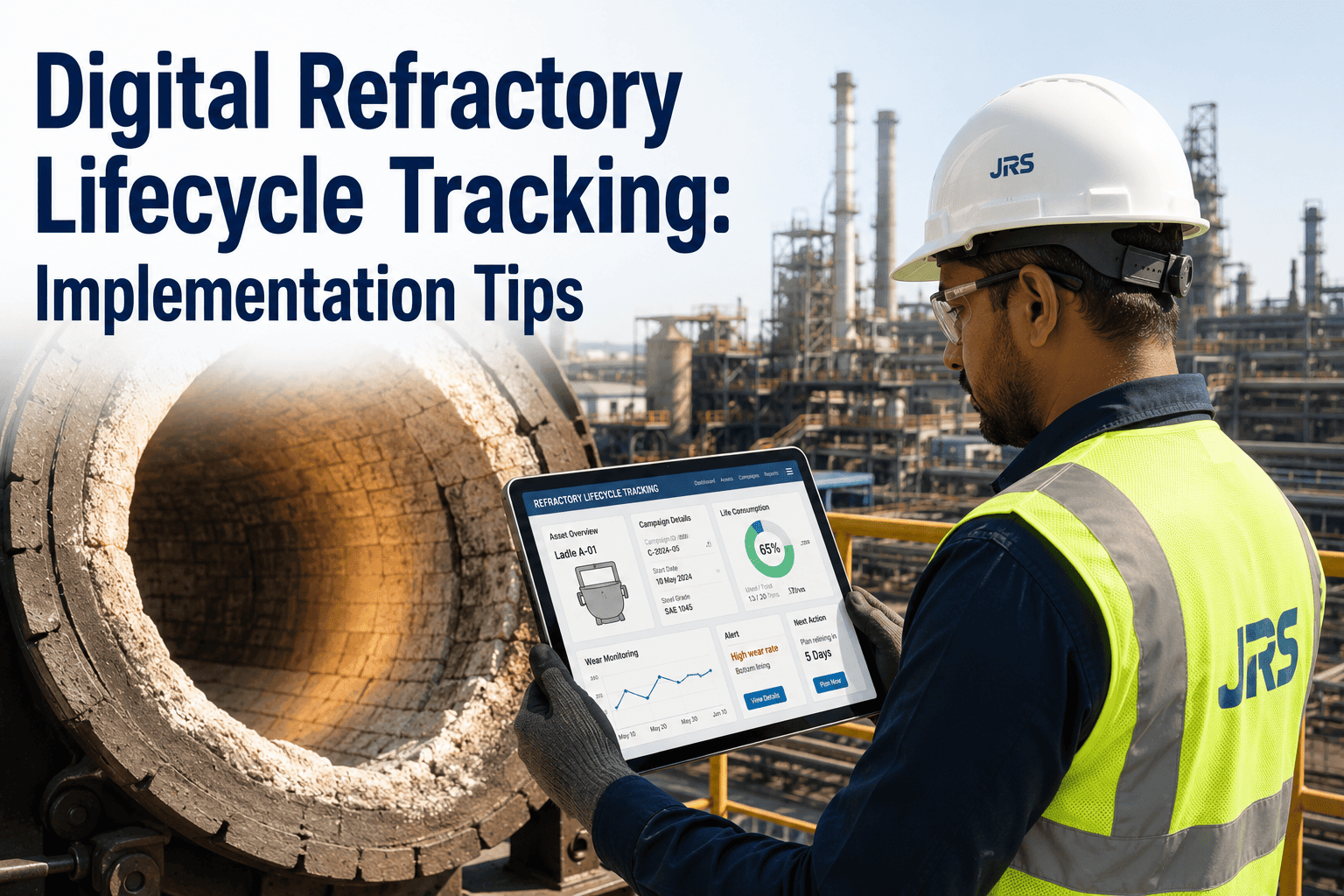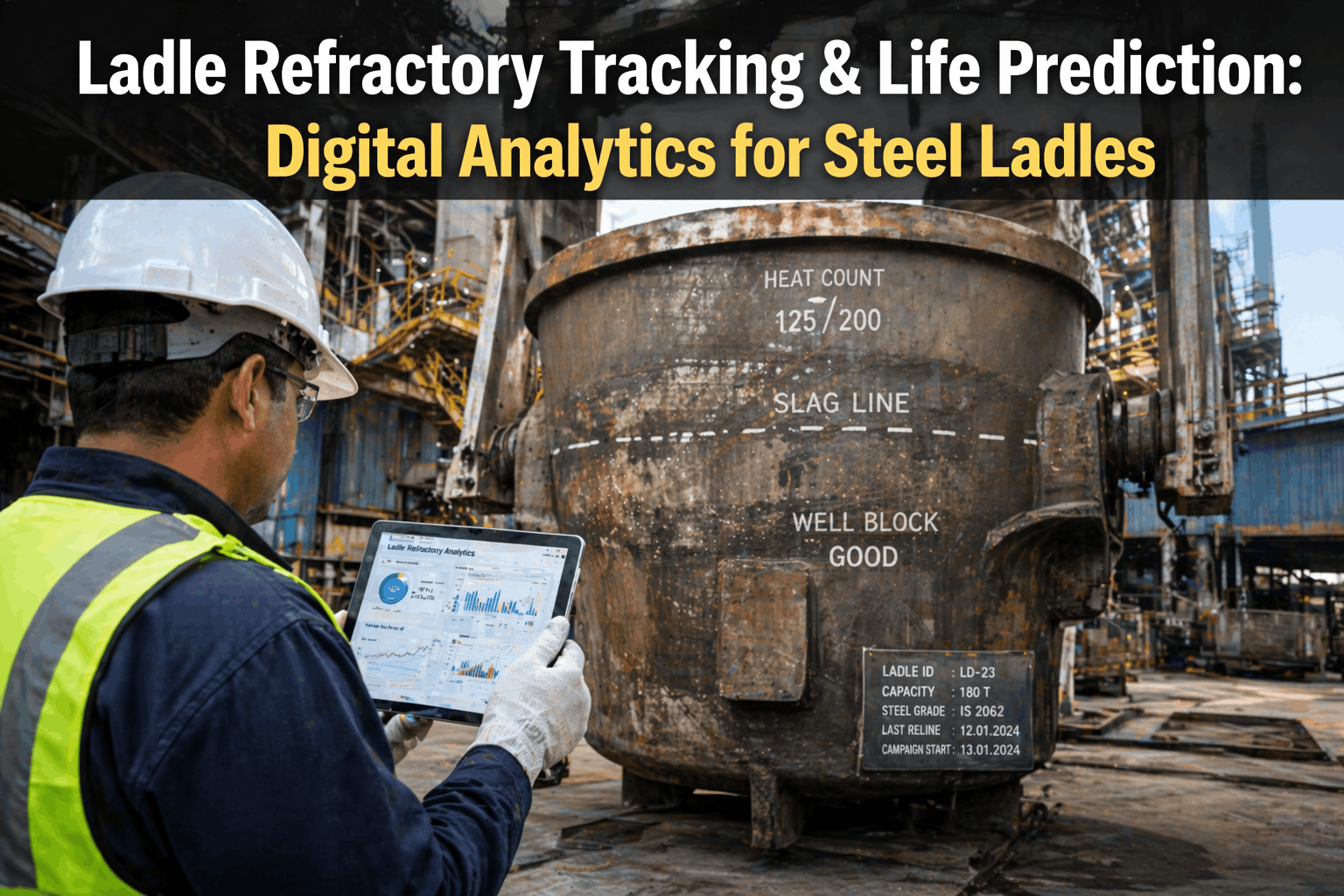
A ladle breakout is the failure every steel plant plans around and hopes never to see, because by the time molten steel finds a gap in worn refractory lining, there is no controlled way to stop it. The lining that holds back over a thousand tons of molten steel wears down campaign after campaign in a way that is genuinely difficult to see from outside the shell, which is exactly why shell temperature monitoring and remaining thickness tracking exist as a second line of defense against a failure mode that visual inspection alone cannot reliably catch in time. Plants running ladle refractory campaigns to the edge of their safe limit without continuous condition data are trusting inspection intervals to catch a wear pattern that can accelerate suddenly, and our team can walk through what continuous shell monitoring looks like against your current campaign tracking.
Know Your Lining Condition Before It Becomes an Emergency
Shell temperature monitoring, remaining lining thickness tracking, and campaign life data give ladle refractory management a continuous safety margin instead of a periodic inspection guess.
Why Refractory Wear Is Hard to Catch in Time
Refractory lining wears unevenly across a ladle's slag line, sidewall, and bottom, and the wear rate itself can accelerate suddenly under certain slag chemistry or thermal cycling conditions that periodic visual inspection was never designed to predict.
typical campaigns before a ladle relining, with wear rate varying widely across them
wear concentrated at slag line and impact zones, invisible from outside the shell
the window between a shell hot-spot appearing and a potential breakout event
acceptable margin for a breakout with molten steel in the ladle
How Continuous Shell Monitoring Works
Thermal sensors positioned around the ladle shell track surface temperature continuously across every campaign, flagging the specific pattern that indicates lining thinning in real time.
Baseline shell temperature mapping
A new or freshly relined ladle's normal shell temperature profile is established as the reference baseline.
Continuous thermal tracking
Sensors around the shell track temperature through every campaign, cycle after cycle, without manual intervention.
Remaining thickness calculation
Shell temperature rise is converted to an estimated remaining refractory thickness at each monitored zone.
Threshold alerting
A warning threshold flags any zone approaching its safe minimum thickness well ahead of the critical limit.
Campaign life decision
Data-backed relining decisions replace a fixed campaign count, extending safe life where wear is slow and retiring early where it is not.
See Shell Temperature Data on Your Own Ladle Fleet
Walk through a live example of thermal tracking, remaining thickness estimation, and threshold alerting on a ladle campaign matching your slag chemistry and duty cycle.
Fixed Campaign Limits vs Condition-Based Relining
A fixed campaign count is a conservative average applied to every ladle regardless of how that specific ladle's lining is actually wearing under its own operating conditions.
- Same relining count applied across the whole ladle fleet
- No visibility into zone-specific wear until a teardown inspection
- Conservative limit sacrifices usable life on slow-wearing ladles
- Fast-wearing ladles still risk running past a safe margin
- Relining timed to each ladle's actual measured wear
- Zone-specific thickness data available continuously, not just at teardown
- Slow-wearing ladles safely run additional campaigns
- Fast-wearing ladles flagged and retired before reaching critical thickness
Monitoring Zones Across a Ladle
Different zones of a ladle wear at different rates depending on slag contact, thermal cycling, and mechanical impact, so monitoring is applied zone by zone rather than as a single average reading.
What Continuous Monitoring Changes
Plants moving from fixed campaign counts to continuous shell monitoring report the following shift within the first two campaigns of adoption.
Frequently Asked Questions
How accurate is shell temperature-based thickness estimation compared to a physical teardown measurement?
Once calibrated against a physical teardown measurement for a given ladle and refractory type, shell temperature-based estimation tracks remaining thickness closely enough to reliably flag zones approaching their safe minimum. Periodic teardown inspections continue at scheduled relining intervals to validate and recalibrate the model, so the two methods work together rather than one replacing the other outright. Book a demo to see calibration data from a comparable ladle campaign.
Can this be retrofitted onto our existing ladle fleet, or only new linings?
Sensors can be fitted to an existing ladle shell during a scheduled relining or maintenance window, so there is no need to wait for a new ladle to be commissioned. The baseline temperature profile is established starting from whatever point the lining is currently at, and the estimation model improves in accuracy as more campaign data accumulates against known wear points.
What happens when a zone crosses the warning threshold mid-campaign?
An alert routes immediately to the refractory and operations team with the specific zone and estimated remaining thickness, giving time to plan a controlled end to the current campaign rather than an emergency response. The decision to complete the current heat, shorten the remaining campaign, or relign immediately stays with your team, but it is now based on continuous data rather than a scheduled inspection interval that may be days away. Talk to our team about setting alert thresholds for your specific refractory grade.
Does extending campaign life on slow-wearing ladles introduce additional risk?
No — extension only happens where continuous data confirms the specific ladle's wear is genuinely within safe limits, not as a blanket policy applied to the fleet. Each ladle's own thickness data drives its own relining decision, so a slow-wearing ladle earns extra safe campaigns based on its measured condition while a fast-wearing ladle is flagged and retired earlier than the old fixed limit would have caught it.
Add Continuous Monitoring to Your Ladle Fleet
Book a 30-minute call. Bring your current relining schedule and campaign history, and we will show you where continuous shell data would change your safety margin.