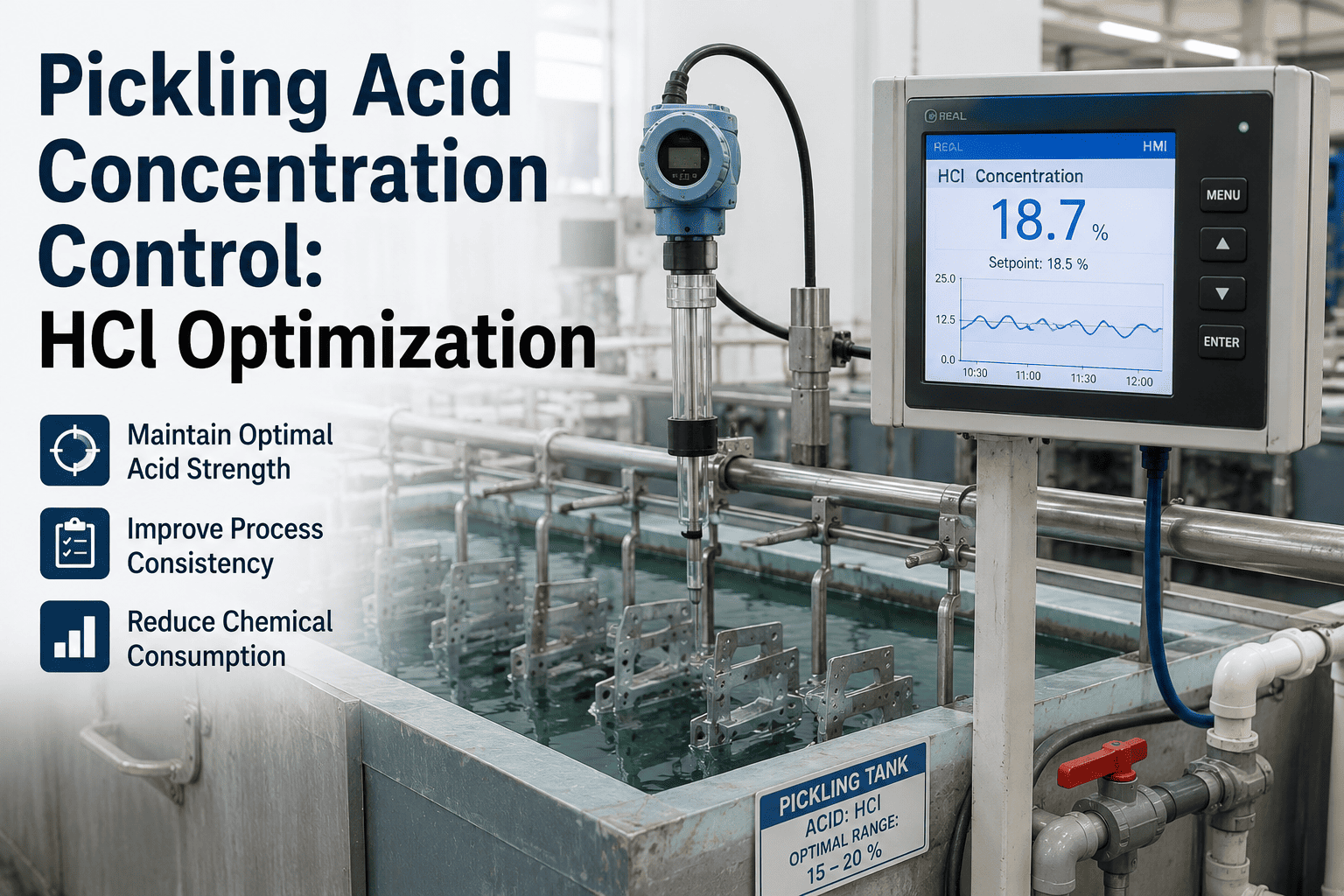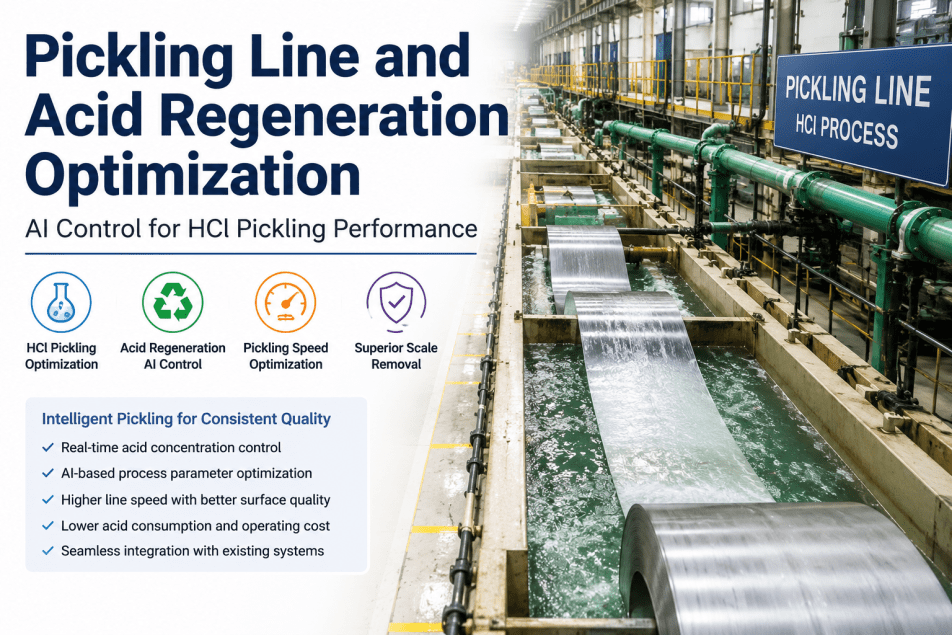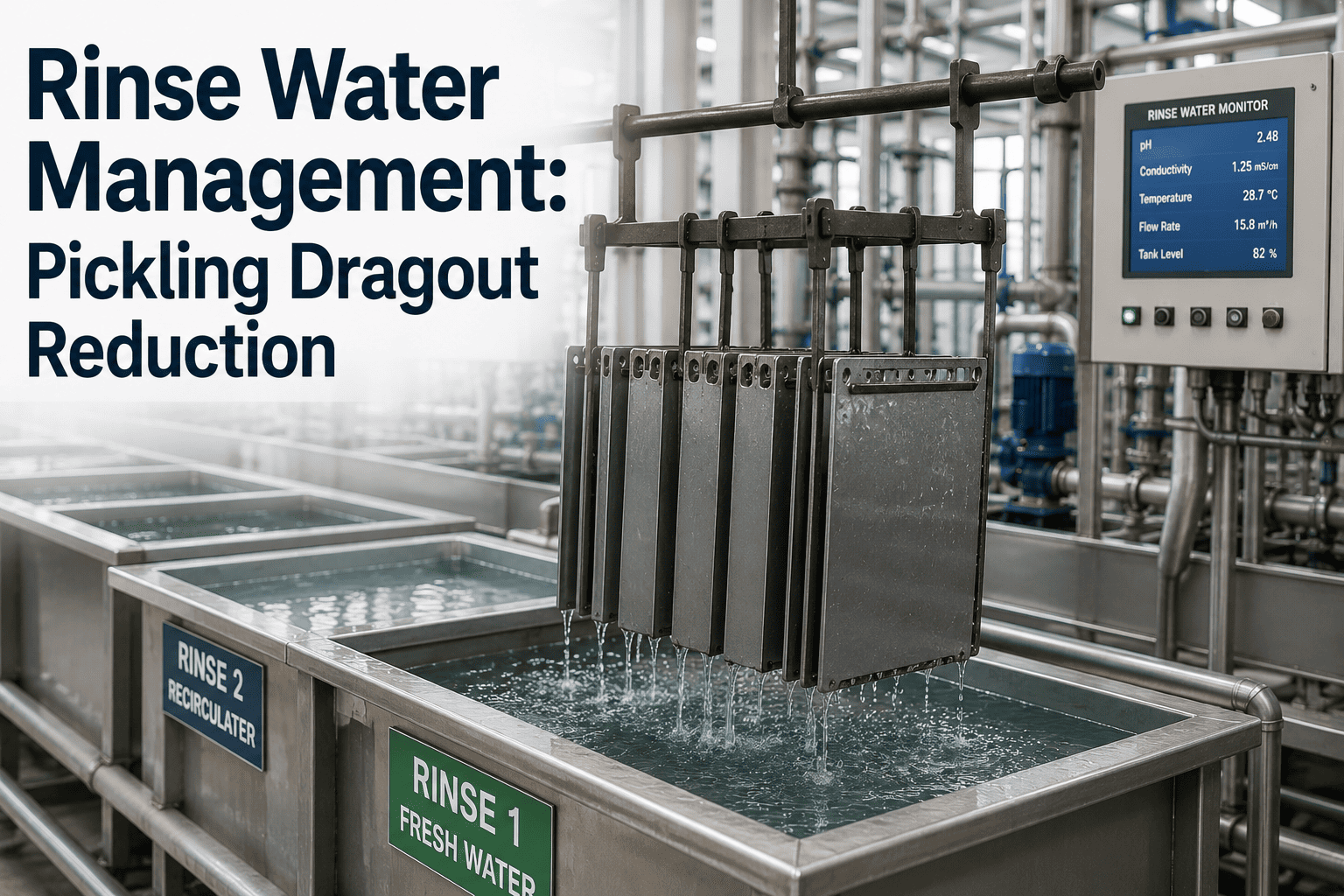
Every meter of strip that leaves a pickling tank carries a thin film of acid with it, and what happens to that film in the rinse stages downstream determines two things at once: whether the strip surface is actually clean before it moves to the next process, and how much water and treatment cost the plant burns doing it. Dragout — the acid carried out on the strip surface and coil geometry — is unavoidable, but how efficiently a rinse system recovers and manages it is entirely a design and operating choice, and it is one of the most overlooked levers in pickling line economics. Plants looking to cut water consumption without risking rinse quality can start with a conversation with iFactory's support team about what dragout tracking and endpoint monitoring look like on an active line.
Dragout Is Unavoidable — Wasted Rinse Water Is Not
Counter-current rinsing, recycling, and conductivity-based endpoint detection turn a fixed-flow rinse system into one that uses exactly the water it needs, no more and no less.
Why Dragout Is the Starting Point, Not the Problem
Dragout volume is mostly a function of line speed, strip surface roughness, and how well drainage sections between tanks are designed, and a plant that wants to cut water consumption without risking rinse quality has to start by reducing dragout at the source before touching the rinse stages themselves. Squeegee rolls, extended drip sections, and simply slowing the strip briefly as it exits the acid tank all reduce the volume of acid the rinse system has to deal with in the first place.
Rinse System Designs Compared
Once dragout is minimized at the source, the rinse system design itself determines how efficiently the remaining acid film gets removed from the strip.
Single-Stage Rinse
Simple and low capital cost, but requires the highest fresh water flow rate to reach an acceptable rinse endpoint, making it the most water-intensive option per ton of strip processed.
Counter-Current Multi-Stage
Fresh water enters at the final stage and flows backward against strip travel, so each stage does progressively less work — this design commonly cuts fresh water consumption dramatically versus single-stage rinsing for the same rinse quality.
Spray Rinse with Recycling
Atomised spray application improves contact efficiency versus a dip tank, and recycling a portion of rinse water back through filtration further reduces fresh water demand without compromising endpoint quality.
Closed-Loop with Ion Exchange
The most water-efficient approach, treating and reusing rinse water continuously, though it carries the highest capital cost and needs active management of resin regeneration cycles.
See Real-Time Rinse Endpoint Data on Your Line
Book a 30-minute walkthrough of how iFactory tracks conductivity-based rinse endpoint and dragout trend together across a pickling line's rinse stages.
How Conductivity-Based Endpoint Detection Works
A fixed rinse water flow rate is set once, usually based on a worst-case dragout assumption, and then left unchanged regardless of what the line is actually doing that shift. Conductivity-based endpoint detection instead measures the actual ionic contamination remaining on the strip or in the final rinse stage in real time, allowing water flow to track true rinse need rather than a static assumption.
| Approach | How Flow Is Set | Typical Water Usage | Main Risk |
|---|---|---|---|
| Fixed Flow Rate | Set once for worst-case dragout, rarely revisited | Consistently higher than needed most shifts | Overuse most of the time, underuse during peak dragout |
| Manual Periodic Adjustment | Operator judgement based on periodic spot checks | Moderate, dependent on operator diligence | Inconsistent across shifts and operators |
| Conductivity-Based Control | Real-time measurement of rinse endpoint condition | Lowest for a given rinse quality target | Needs sensor calibration and maintenance |
What Rinse Water Cost Actually Includes
Water consumption is only the first line item in the true cost of an inefficient rinse system, and plants that look only at the fresh water bill miss most of the actual opportunity available in tightening rinse operation.
Because all three cost drivers scale with the same underlying volume of water moving through the rinse system, a reduction in fresh water intake through better dragout control, counter-current design, or endpoint monitoring compounds into savings across intake, discharge, and chemical treatment simultaneously rather than affecting only one line item on the utility bill.
A Composite Scenario: The Water Bill That Kept Climbing
A pickling line operator noticed the plant's water treatment cost had climbed steadily over eighteen months despite no change in production volume, and initial investigation focused on possible leaks elsewhere in the plant's water system. No leaks were found, and the increase was eventually traced back to the pickling line's rinse stages, where the fixed flow rate had originally been set for a heavier gauge product mix the line no longer ran as frequently.
The current, lighter product mix produced meaningfully less dragout than the flow rate assumed, meaning the rinse system had been over-delivering water for months without anyone noticing, since the rinse quality itself was never in question — only the excess cost was invisible until someone went looking. Installing conductivity-based endpoint monitoring let the flow rate track actual dragout in real time rather than the original worst-case assumption, cutting fresh water consumption meaningfully without any change to rinse quality or line speed.
Mistakes That Quietly Waste Rinse Water
Setting Flow Rate Once and Never Revisiting It
A flow rate tuned for a past product mix or line speed rarely matches current conditions, and the gap usually shows up as cost rather than a quality problem, making it easy to miss.
Ignoring Dragout Reduction at the Source
Focusing entirely on rinse system efficiency while ignoring squeegee condition and drip section design leaves an easy, low-cost reduction opportunity unaddressed.
Running Co-Current Instead of Counter-Current Flow
A multi-stage rinse system running fresh water into the first stage rather than the last gives up most of the water efficiency benefit that counter-current design was built to provide.
Neglecting Rinse Water Recycling Opportunities
Water discharged after a single pass through the rinse stages often still has capacity for reuse in an earlier, less critical rinse stage before final treatment or discharge.
Treating Rinse Quality and Water Cost as Separate Problems
The two are directly linked, and a plant that only reviews rinse quality complaints without ever reviewing water consumption trend data misses savings that carry zero quality risk.
Skipping Sensor Calibration on Conductivity Monitors
A conductivity sensor that drifts out of calibration can silently push flow rates higher than necessary or, worse, lower than the rinse quality target actually requires.
Rolling Out Rinse Water Optimization on an Existing Line
A rinse system already in production does not need to be rebuilt to capture most of the available savings. Most plants work through a sequence that starts cheap and gets more involved only as far as the data justifies.
Audit Dragout at the Source
Squeegee condition, drip section length, and exit speed are checked first, since reducing dragout at the source lowers demand on every downstream rinse stage at effectively no ongoing cost.
Confirm Flow Direction and Staging
Existing multi-stage rinse systems are checked to confirm they actually run counter-current, since this is sometimes installed correctly but drifts to co-current operation after a piping change goes undocumented.
Add Endpoint Monitoring
Conductivity sensors are added at the final rinse stage to replace the fixed flow assumption with a real-time measurement, typically the highest-return single step in the whole sequence.
Is Your Rinse System Using More Water Than It Needs
Flow rate has been reviewed against current product mix, not last year's
A product mix shift toward lighter gauge or lower dragout material is one of the most common reasons a rinse system quietly over-delivers water for months without anyone noticing.
Rinse stages run counter-current, not co-current
Counter-current flow is one of the highest-leverage design choices available in rinse system efficiency, and confirming the actual flow direction is a quick check worth doing if it has never been verified.
Dragout reduction hardware is inspected on a schedule
Worn squeegee rolls or degraded drip sections increase the acid load the rinse system has to handle, and a routine inspection schedule catches this before it shows up as rising water demand.
Water consumption per ton is tracked as its own trend line
A rising water-consumption-per-ton figure, independent of any rinse quality complaint, is often the earliest and cheapest signal that something in the rinse system needs attention.
Frequently Asked Questions
How much water can counter-current rinsing actually save compared to single-stage rinsing?
Counter-current multi-stage rinsing commonly reduces fresh water consumption substantially compared to single-stage rinsing for an equivalent rinse quality outcome, since each stage in a counter-current design only has to remove the residual contamination left by the stage before it rather than starting from full dragout concentration every time. The exact savings depend on the number of stages and the specific dragout volume the line produces, but the design principle applies broadly across pickling line configurations.
What is dragout and why can it never be eliminated entirely?
Dragout is the thin film of acid solution that clings to the strip surface and coil geometry as it exits the pickling bath, and some amount is physically unavoidable because any wet surface leaving a liquid bath carries a film with it. The goal of dragout management is minimizing that film through squeegee rolls, drip sections, and controlled exit speed rather than attempting to eliminate it entirely, since a residual film is a physical certainty of the process.
How does conductivity relate to rinse quality on the strip?
Conductivity in the rinse water rises with the concentration of dissolved acid and iron ions carried over from the pickling bath, so measuring conductivity at the final rinse stage gives a real-time proxy for how much contamination is still present relative to the target endpoint. This measurement lets flow rate respond to actual rinse condition rather than a fixed assumption, catching both over-delivery during low-dragout periods and under-delivery during high-dragout periods that a static flow rate would miss in either direction.
Is rinse water recycling safe for strip surface quality?
Recycled rinse water is generally used in earlier, less critical rinse stages rather than the final stage before the strip leaves the rinse section, preserving the cleanest fresh water for the point where surface quality matters most. Properly designed recycling, with appropriate filtration and periodic bleed to prevent contaminant buildup, does not compromise final rinse quality when implemented correctly. Book a demo to see how iFactory tracks rinse water quality across recycled and fresh water stages together.
How can a plant tell if its current rinse flow rate is set higher than necessary?
The clearest signal is a water-consumption-per-ton figure that has not been reviewed since the line's product mix, speed, or dragout characteristics last changed, since flow rates are typically set once based on the conditions at installation and rarely revisited afterward. A conductivity-based measurement at the rinse endpoint, compared against the current fixed flow rate, quickly reveals whether the system is over-delivering water beyond what the actual rinse quality target requires. Plants wanting help running this comparison can reach iFactory support for a walkthrough.
Turn Rinse Water Into a Tracked, Optimized Process
iFactory tracks dragout, conductivity-based rinse endpoint, and water consumption together, so flow rate responds to actual conditions instead of a fixed assumption set years ago. Book a walkthrough to see it running on a live pickling line.