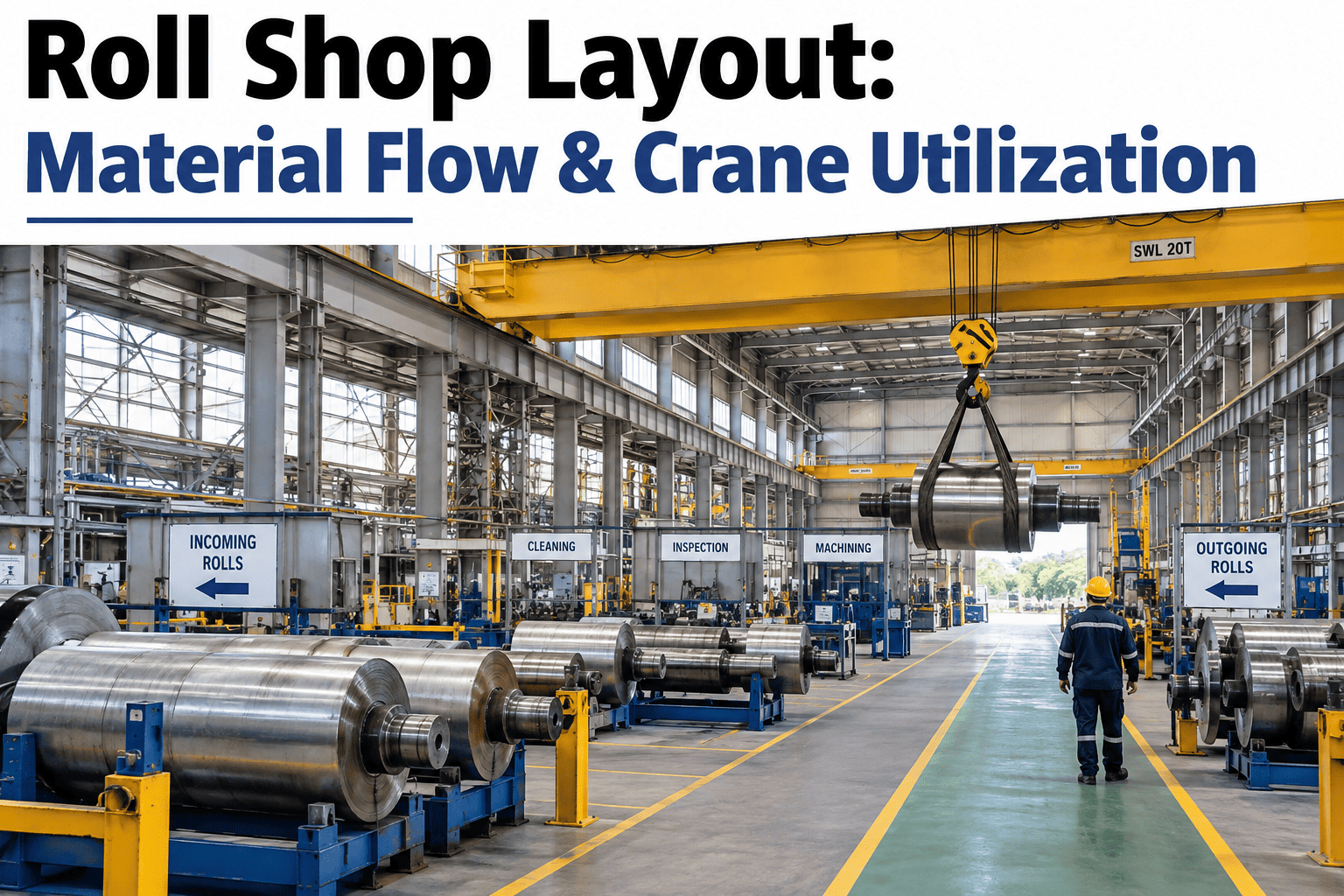
A roll shop's downtime numbers often have less to do with grinding technique than with how far a roll has to travel between the dock, storage, the grinder, and back out to the mill, and a shop that never questioned its original layout is frequently sitting on a meaningful chunk of avoidable handling time that shows up as crane hours and idle grinder minutes rather than as any single obvious bottleneck. Material flow and crane utilization are structural problems, not scheduling problems, and fixing them usually means rethinking where grinding machines, roll storage, and staging areas actually sit relative to each other rather than trying to schedule around a layout that was never designed for the shop's current roll volume. Shops evaluating their own layout efficiency can start with a conversation with iFactory's support team about tracking crane cycle time and roll travel distance as a baseline before any physical change is made.
Every Extra Meter a Roll Travels Is Crane Time and Grinder Idle Time You're Paying For
Grinding machine positioning, roll storage placement, and crane utilization determine how much of a shift goes to actual grinding versus moving rolls from one end of the shop to the other.
Why Layout Quietly Becomes the Bottleneck
A grinding machine sitting idle while a crane completes an unrelated move somewhere else in the shop looks like a scheduling gap, but it is very often a layout problem in disguise — the grinder is waiting because the crane serving it also has to reach across the shop to service roll storage, and the two demands compete for the same piece of equipment on a layout that never separated them. Shops that focus purely on grinding throughput while ignoring the physical path a roll has to travel to reach the grinder are optimizing the smaller part of the total cycle time.
The Zones That Determine Total Roll Travel Time
Every roll moves through a sequence of zones on its way from receiving to the mill and back, and the distance and crane demand between each zone compounds across the shop's daily roll volume.
Roll Storage Positioning
Storage racks placed far from the grinding bay force every roll pulled for grinding to travel that distance twice, once in and once back out, multiplying a small layout inefficiency across the shop's full roll volume.
Grinding Machine Grouping
Grinders scattered across the shop floor rather than grouped by roll type or grinding sequence increase both crane travel and the coordination burden of routing the right roll to the right machine.
Staging Area Capacity
Insufficient staging space near the grinding bay forces rolls to wait in storage until a grinder is free, adding an extra crane move that a properly sized staging buffer would eliminate.
See Where Your Rolls Actually Spend Their Time
Book a 30-minute walkthrough of how iFactory tracks crane cycle time and roll travel distance across your shop's current layout.
Layout Patterns Compared
Different shop layout philosophies trade off flexibility against travel efficiency, and the right choice depends heavily on roll mix variety and daily volume.
| Layout Pattern | Crane Travel Profile | Best Fit |
|---|---|---|
| Scattered / Ad Hoc | Highest, no consistent travel path | Shops that grew organically without a layout review |
| Linear Flow | Moderate, one-directional roll movement | Consistent, high-volume roll types with a predictable sequence |
| Cellular Grouping | Lowest, grinders and storage grouped by roll type | Shops with varied roll types needing flexible routing |
Planning a Layout Change Without Stopping Production
A full shop reorganization sounds disruptive, but most layout improvements can be phased in without a production stoppage, particularly when the change targets storage and staging areas rather than the grinding machines themselves.
Measure the Current State
Crane cycle time and travel distance are tracked under the existing layout to establish a baseline before any physical change, exactly the step that revealed the real constraint in the scenario above.
Relocate Storage in Stages
Storage racks can typically be relocated incrementally during planned downtime windows, moving the highest-volume roll types closer to the grinding bay first.
Validate the Improvement
Re-measuring crane cycle time after each stage confirms the change is delivering the expected reduction in travel time before committing to the next stage of the reorganization.
A Composite Scenario: The Grinder That Was Never the Bottleneck
A roll shop investing in a new CNC grinder to address a persistent throughput shortfall found that overall roll turnaround time barely improved after the new machine was commissioned, despite the grinder itself running well within its rated cycle time. Leadership had assumed grinding capacity was the constraint and was surprised the new investment made so little difference.
A crane utilization study revealed the real constraint: the shop's single overhead crane was spending a disproportionate share of its time traveling between a storage area at one end of the building and the grinding bay at the other, with the new grinder simply adding another destination competing for the same crane's limited hours. Relocating a portion of roll storage closer to the grinding bay and adding a dedicated staging buffer cut crane travel time substantially and finally let the new grinder's added capacity actually translate into faster turnaround.
Mistakes That Undermine Shop Layout Efficiency
Investing in Grinding Capacity Before Checking Crane Utilization
Adding grinding capacity without first understanding whether crane travel is the actual constraint, as seen in the scenario above, can produce a costly investment with little measurable benefit.
Letting Storage Placement Grow Organically Over Time
Storage areas added wherever space happened to be available, rather than positioned deliberately relative to the grinding bay, accumulate travel distance the shop pays for on every single roll.
Undersizing Staging Capacity Near the Grinding Bay
Without adequate staging space, rolls default back to distant storage between operations, adding an avoidable extra crane move that a properly sized buffer would eliminate.
Never Re-Evaluating Layout Against Current Roll Volume
A layout designed for a past production mix and volume rarely stays optimal as the shop's roll variety and throughput change over years of operation.
Is Your Shop Layout Actually Supporting Your Throughput
Crane utilization has been measured, not assumed
A measured crane utilization study, like the one that uncovered the real constraint in the scenario above, is the starting point before any capacity investment decision.
Storage is positioned close to the grinding bay, not wherever space allowed
Deliberate storage placement relative to grinding operations avoids the accumulated travel distance that an organically grown layout tends to produce.
Staging capacity is sized against actual roll volume, not a rough estimate
Adequate staging space near the grinding bay reduces the extra crane moves that undersized buffer capacity forces back onto distant storage.
Frequently Asked Questions
How can a shop tell if crane utilization, rather than grinding capacity, is its real bottleneck?
Tracking how a crane's total operating hours split between productive lifts and travel time between zones is the most direct way to find this out, and a shop where a large share of crane hours go to travel rather than lifting, similar to the scenario above, usually has a layout problem masquerading as a capacity problem. Comparing grinder utilization against crane utilization side by side often makes the actual constraint obvious once the data is in front of leadership.
What is the difference between a linear flow layout and a cellular grouping layout?
A linear flow layout moves rolls through a consistent, one-directional sequence of zones, working well for shops with a predictable, high-volume roll type, while a cellular grouping layout organizes grinding machines and storage by roll type or grade, offering more flexible routing for shops handling a wider variety of roll types where a single linear sequence would not fit every product.
How much can relocating roll storage actually improve turnaround time?
The improvement depends heavily on how far storage currently sits from the grinding bay and how much of total crane time is spent traveling that distance, but shops that have never reviewed their layout, similar to the scenario above, often find a substantial reduction in crane travel time available simply by relocating storage closer to where rolls are actually processed, without any change to grinding equipment itself.
Should a shop invest in a second crane instead of relocating storage?
A second crane addresses crane capacity directly but at significant capital cost, while relocating storage addresses the travel distance driving that capacity shortfall in the first place, and shops that measure their actual crane travel pattern before deciding, as recommended above, frequently find that a layout change delivers most of the benefit a second crane would provide at a fraction of the cost. Book a demo to see how iFactory models the impact of a layout change before any physical work begins.
What is the first step for a shop wanting to evaluate its own layout efficiency?
The first step is establishing a baseline measurement of crane cycle time and roll travel distance under the current layout, exactly the kind of study that revealed the actual constraint in the scenario above, before any physical layout change is planned. Without this baseline, it is difficult to know whether a proposed change will actually address the real bottleneck or simply move it somewhere else. Shops wanting help establishing this baseline can reach iFactory support directly.
Find Out Whether Your Layout Is Costing You Grinding Capacity
iFactory tracks crane cycle time and roll travel distance across your shop, revealing whether layout or grinding capacity is the real constraint. Book a walkthrough to see it running on a live roll shop.