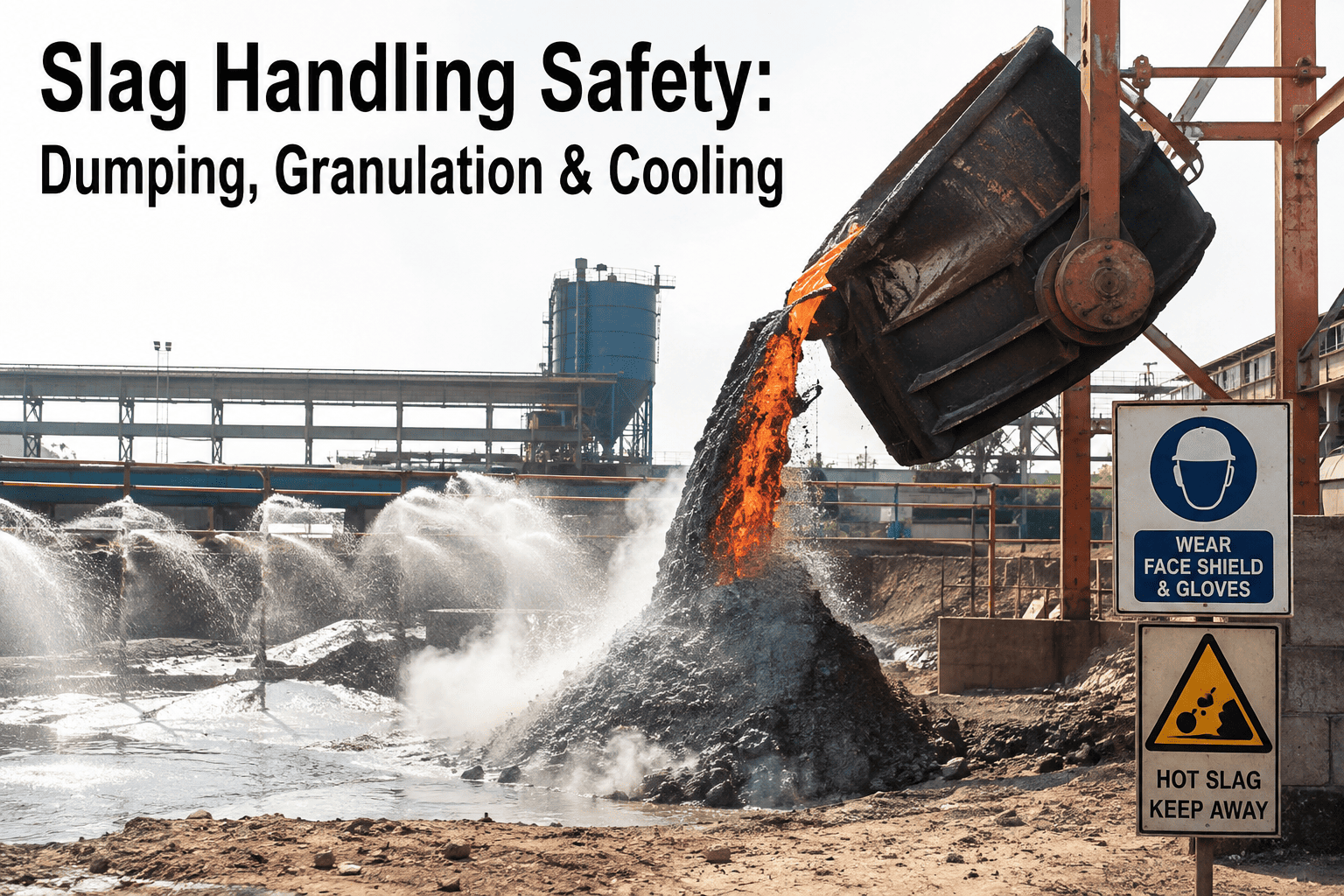
Slag looks like waste, which is exactly why it tends to get less rigorous safety oversight than the molten metal it came from, even though a slag pot mishandled during dumping, an uncontrolled reaction during granulation, or a stockpile that has not actually finished cooling can each produce a serious incident on their own. Slag is still a liquid or semi-liquid material at extreme temperature when it leaves the furnace, and every step between that point and final disposal carries a version of the same risks associated with molten metal, just less often discussed. Our team can help you review your current slag handling process at ifactory support.
Slag Is Not Waste Until It Has Actually Finished Cooling
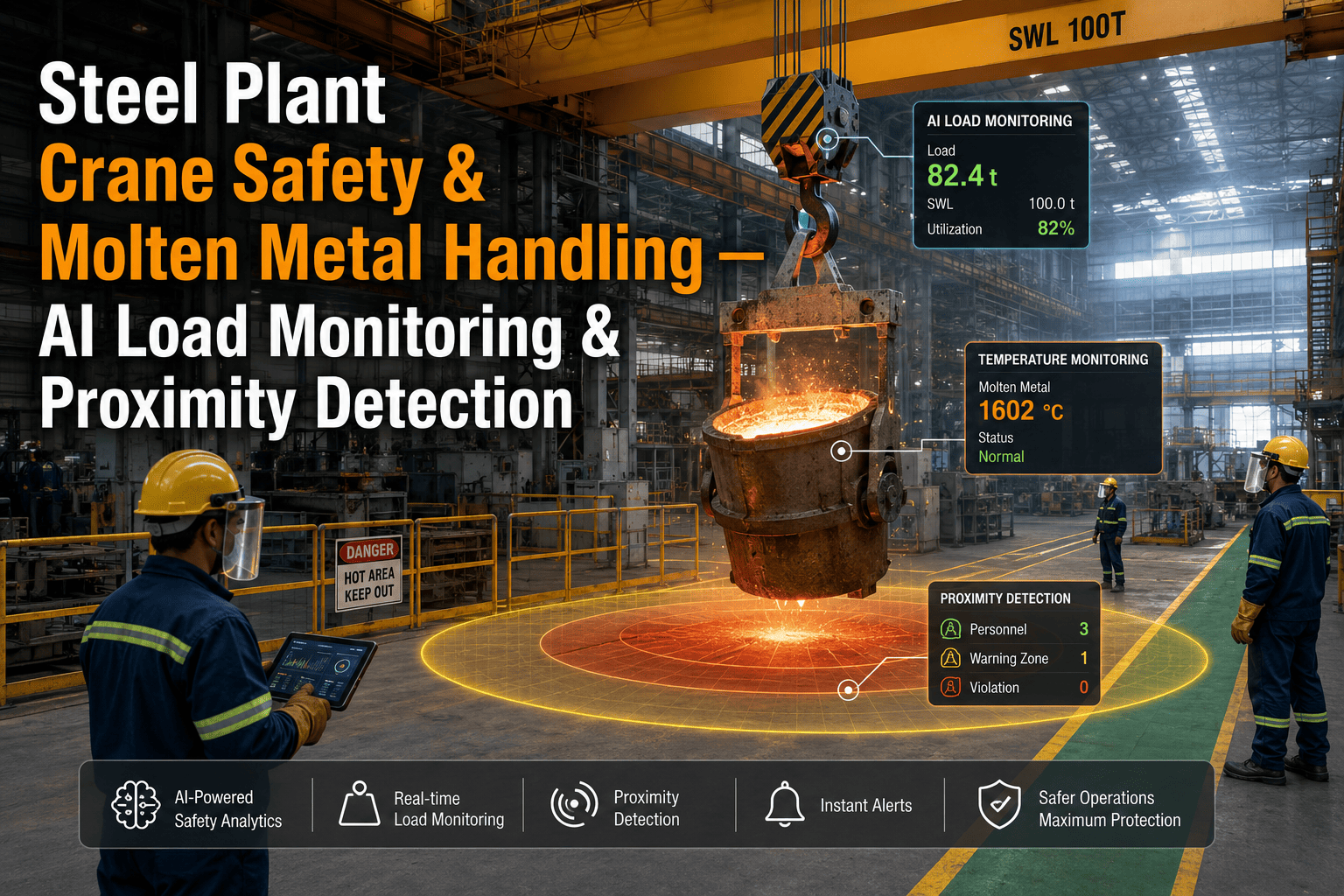
AI-based slag process monitoring tracks pot temperature, granulation water reaction behavior, and stockpile cooling status across every batch, so a slag handling step is verified safe before the next one begins.
Why Slag Handling Gets Treated as Lower Risk Than It Should Be
By the time slag reaches the dumping or granulation stage, it has already been separated from the steel it came from, and that separation creates a subtle but consequential shift in how people perceive its risk. The primary hazardous material, the steel itself, is gone, and what remains looks like a byproduct rather than the main event. In reality, slag at the point of tapping is still at a temperature well above a thousand degrees Celsius, still capable of causing severe burns on contact, and in some processes still capable of an energetic reaction if it contacts water or moisture under the wrong conditions.
Each stage of slag handling, dumping the pot, granulating with water, and cooling a stockpile before final processing, carries its own version of this same underlying hazard, and each one has failure modes that are specific enough to deserve their own dedicated attention rather than being folded into a general "hot material handling" category.
Three Stages, Three Distinct Failure Modes
The Cooling Stage Hides the Most Underestimated Risk
A freshly dumped slag pile forms a solidified crust on the surface within a relatively short time, and that crust is where most visual risk assessment stops. Below the surface, a large slag pile can retain substantial heat for hours or even days depending on volume and ambient conditions, and a worker or vehicle moving across what looks like a cooled pile can break through that crust into material still hot enough to cause a severe burn or ignite nearby combustible material.
Cooling Verification Methods Compared
| Method | What It Confirms | Depth Covered | Limitation |
|---|---|---|---|
| Visual Inspection | Surface appearance only | Surface only | Cannot detect heat retained below the crust |
| Elapsed Time Rule | Standard cooling duration assumption | N/A, time-based only | Does not account for pile size or weather variation |
| Spot Thermal Check | Temperature at a limited number of points | Points checked only | May miss hotter zones between check points |
| Continuous AI Thermal Monitoring | Full pile thermal profile over time | Surface and subsurface trend | Requires thermal imaging coverage of the slag yard |
Find Out How Your Current Cooling Verification Actually Holds Up
Bring your current slag handling procedure and cooling timelines to the call. We will walk through how thermal monitoring would apply to your slag yard.
Why Granulation Water Control Deserves Its Own Protocol
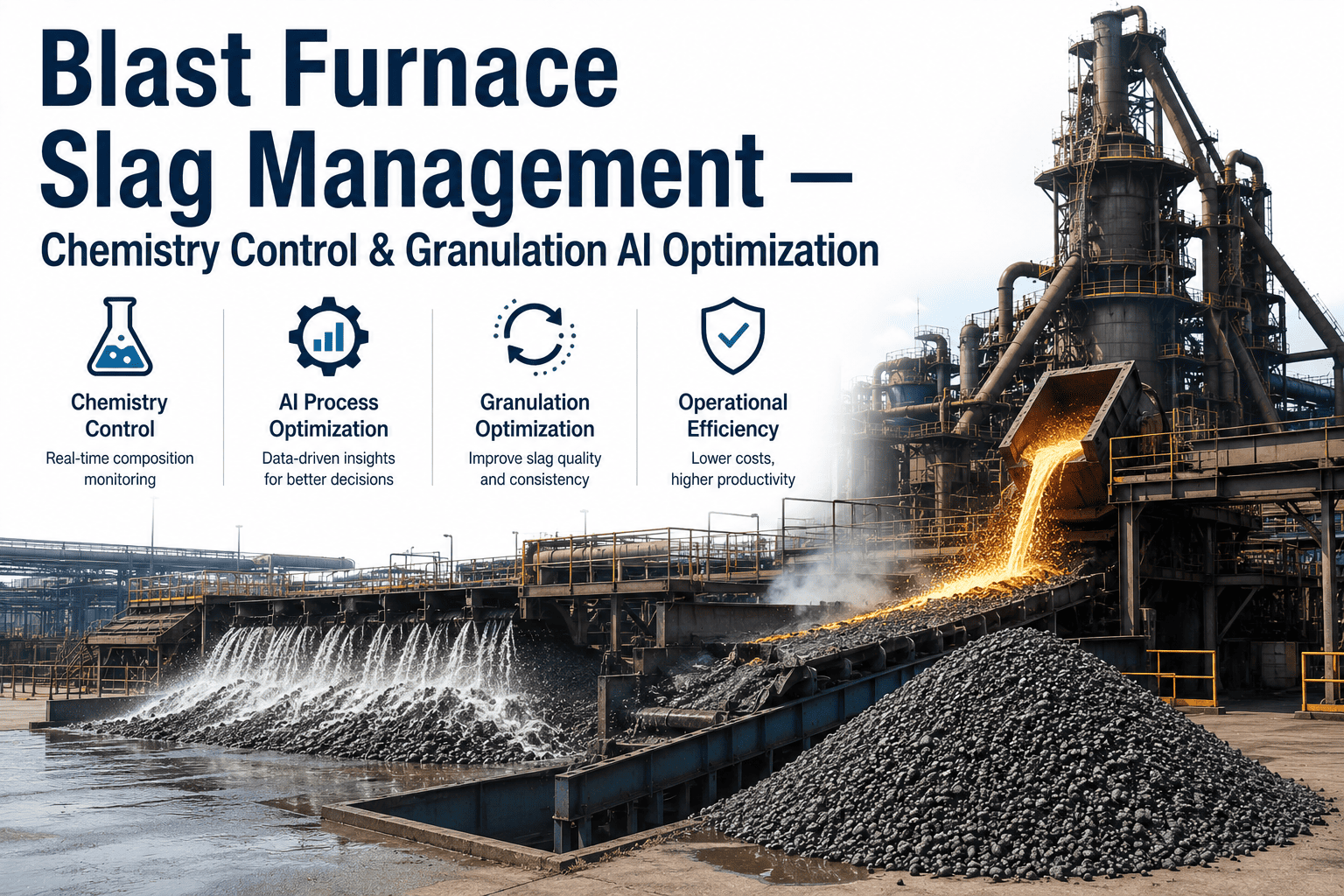
Granulation intentionally brings molten slag into contact with large volumes of water to produce a rapidly cooled, glassy granulate product, and the process is designed around a specific ratio and sequencing of water to slag flow. The risk arises not from water contact itself, since that is the intended mechanism, but from a deviation in that ratio or sequence, such as slag flow suddenly increasing beyond what the water system is configured to absorb, or water flow being interrupted momentarily while slag continues to discharge. Either deviation can produce a more violent reaction than the process is designed to safely contain.
Monitoring the actual flow rates and ratios in real time, rather than relying on the granulation system's default configuration to hold steady indefinitely, is what catches this kind of deviation before it produces an uncontrolled event. A system that alerts on a ratio drift, not just a hard equipment failure, gives operators time to intervene before the imbalance becomes significant.
Four Mistakes That Increase Slag Handling Risk
Who Should Own Each Stage of Slag Handling Safety
Frequently Asked Questions
Get Continuous Visibility Across Your Slag Handling Process
Bring your current dumping, granulation, and cooling procedures to the call. We will walk through where continuous monitoring would close real gaps.