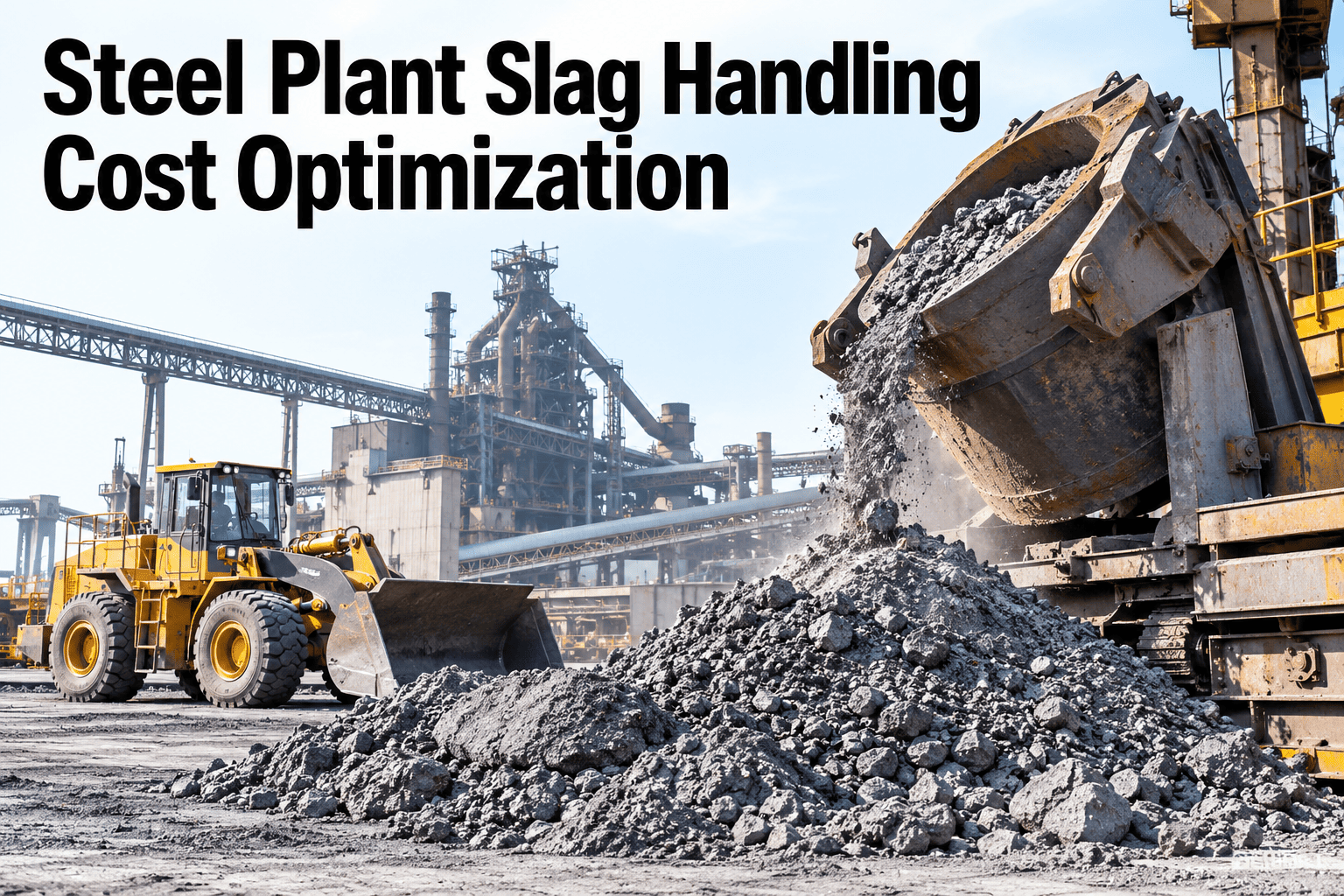
Slag is one of the few byproducts in a steel plant that can swing from a cost line to a revenue line depending on how it is handled, and most plants leave that swing on the table simply because granulation and air-cooling decisions get made by habit rather than by tracking which process actually captures more byproduct value for the slag volume on hand. The chemistry and cooling rate decide whether slag sells as cement-grade material or gets landfilled at a cost. See a slag cost-to-revenue breakdown for your own plant.
Turn Slag From a Cost Line Into a Revenue Line
iFactory AI tracks slag volume, chemistry, and cooling process to show where granulation captures more byproduct value than air-cooling, tonne by tonne.
Why the Cooling Choice Matters More Than It Seems
Granulated slag, cooled rapidly with water, forms a glassy structure cement makers want. Air-cooled slag crystallizes and mostly ends up as lower-value aggregate or landfill.
The difference in revenue per tonne between the two processes is large enough that a plant running the wrong process on a given heat can turn a profitable byproduct into a net cost without anyone noticing on a monthly report.
Process Comparison
Granulation and air-cooling trade off capital cost, water use, and byproduct value differently.
| Factor | Air-Cooled | Granulated | Decision Driver |
|---|---|---|---|
| Byproduct value | Lower, aggregate-grade | Higher, cement-grade | Slag chemistry and buyer specs |
| Capital requirement | Minimal | Water and handling system | Existing plant infrastructure |
| Processing time | Slower cooling cycle | Rapid, continuous | Production schedule fit |
| Water use | Minimal | Significant, often recycled | Site water availability |
See Your Own Slag Revenue Gap by Heat
Book a 30-minute session and iFactory AI will show where granulation would have captured more value on your recent heats.
What Determines Byproduct Value
Four factors decide whether a given heat's slag sells for a premium or barely covers handling cost.
Basicity Ratio
CaO to SiO2 ratio is the first filter cement buyers check against spec.
Cooling Rate
Rapid granulation locks in the glassy structure buyers pay a premium for.
Contamination Level
Metal carryover or refractory contamination downgrades even well-cooled slag.
Local Buyer Demand
Cement plant proximity and demand cycles affect realized price per tonne.
A Composite View Across a Month
Twenty heats tracked by chemistry fit and process choice. Darker cells show heats where the process matched the chemistry well.
How the Process Decision Works
The decision is made before tapping, based on predicted chemistry and current buyer demand.
Predicted slag chemistry for the heat is checked against buyer specs on file.
Current cement buyer demand and pricing are factored into the process recommendation.
Granulation or air-cooling is recommended ahead of tapping, not decided by default.
Realized revenue is tracked back against the recommendation to refine future calls.
Rolling It Out at the Plant
iFactory AI arrives turnkey, built to connect to existing slag handling and byproduct sales records.
Frequently Asked Questions
Do we need granulation equipment already in place?
The process recommendation works with whichever cooling methods your plant already has available. If granulation capacity is limited, recommendations factor that constraint in rather than assuming unlimited capacity. Support can walk through fit for your current setup.
How accurate is the chemistry prediction before tapping?
Predictions are calibrated against your furnace's own history and current charge composition, so accuracy improves as more heats are tracked through the system during rollout.
Does this account for changing cement buyer demand?
Yes, current buyer demand and pricing are factored into the process recommendation, since granulating slag that has no immediate buyer can tie up handling capacity without capturing value. See how buyer demand factors in during a walkthrough.
What data do we need to get started?
Furnace chemistry data, slag handling records, and byproduct sales history are the core inputs. Most plants already hold these across lab and sales systems, and rollout focuses on connecting them by heat.
How does this roll into cost per tonne reporting?
Realized slag revenue offsets total cost per tonne, so a better process match shows up directly in plant-wide cost tracking. Ask support how slag revenue is reported in your cost system.
Stop Leaving Slag Revenue on the Table
iFactory AI matches the cooling process to slag chemistry before tapping, so more of every heat's slag sells rather than gets landfilled. Book a walkthrough to see it on your own plant.