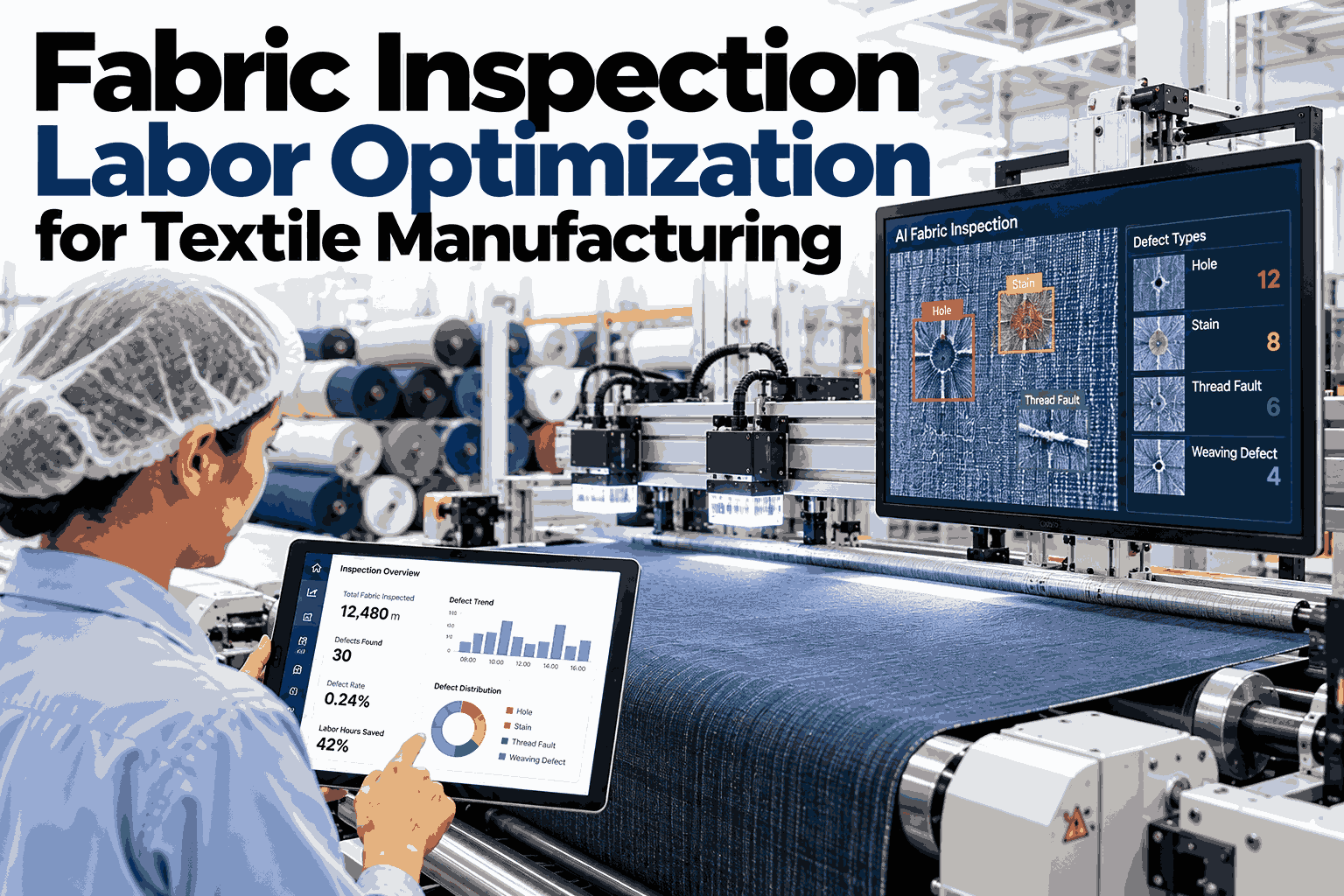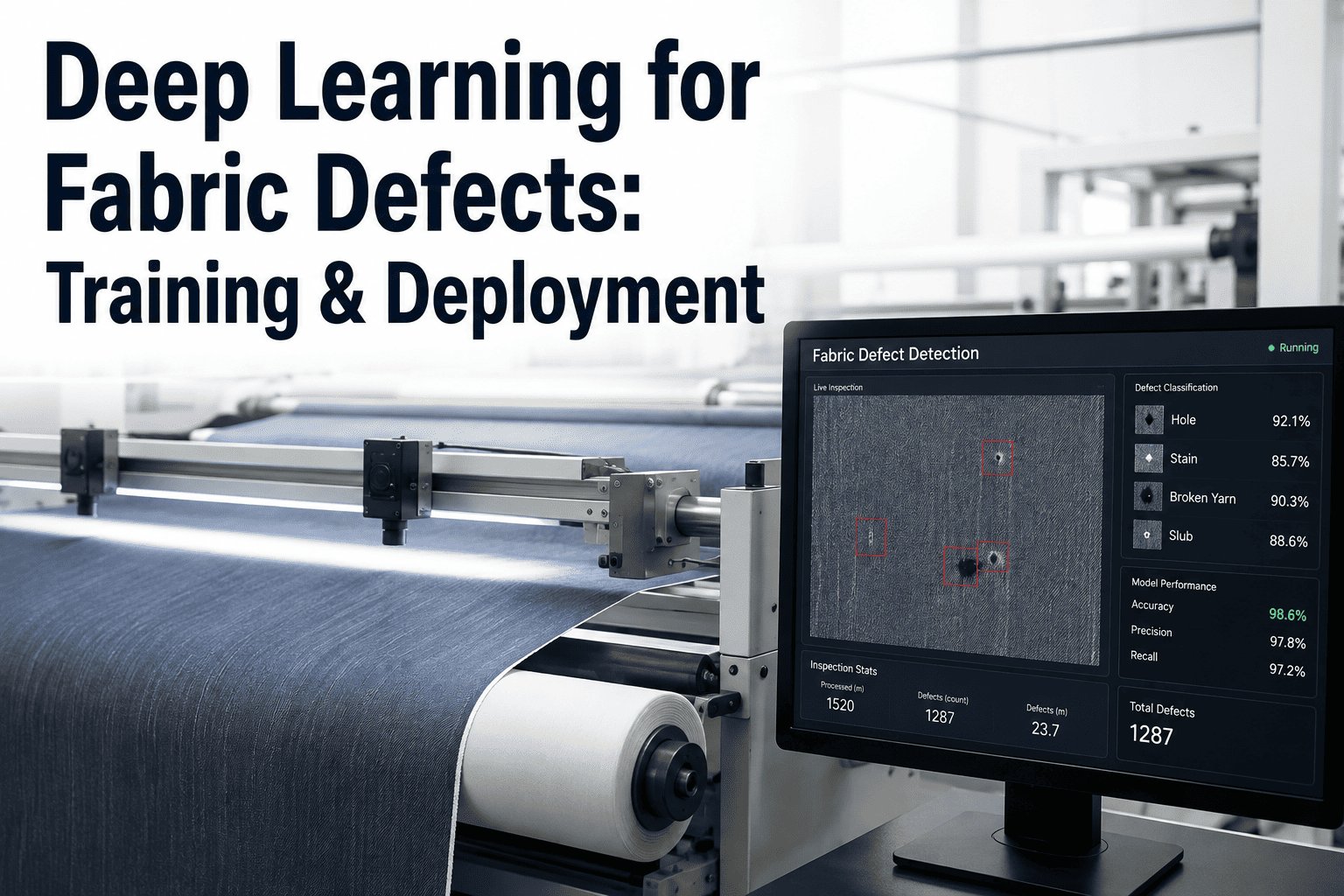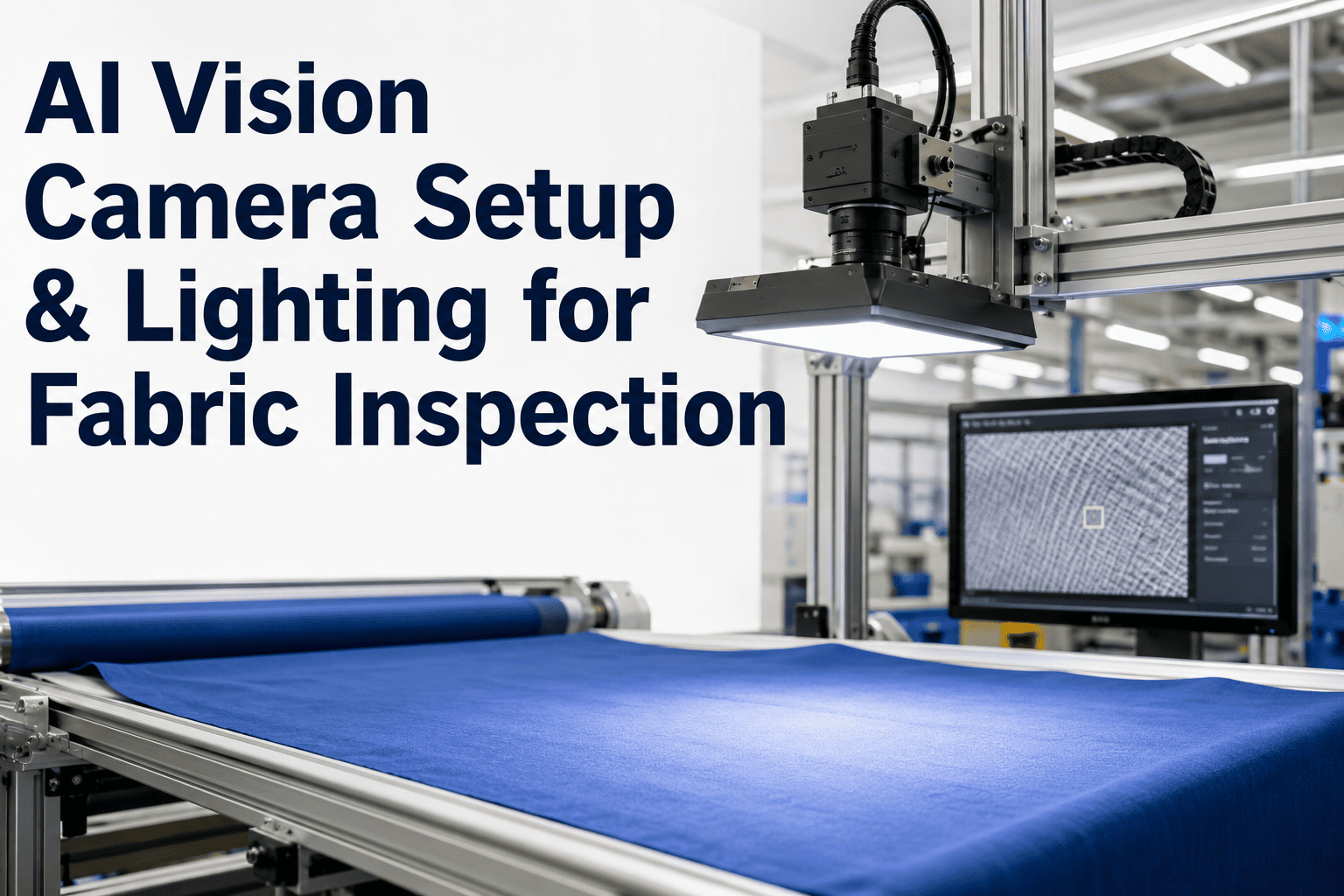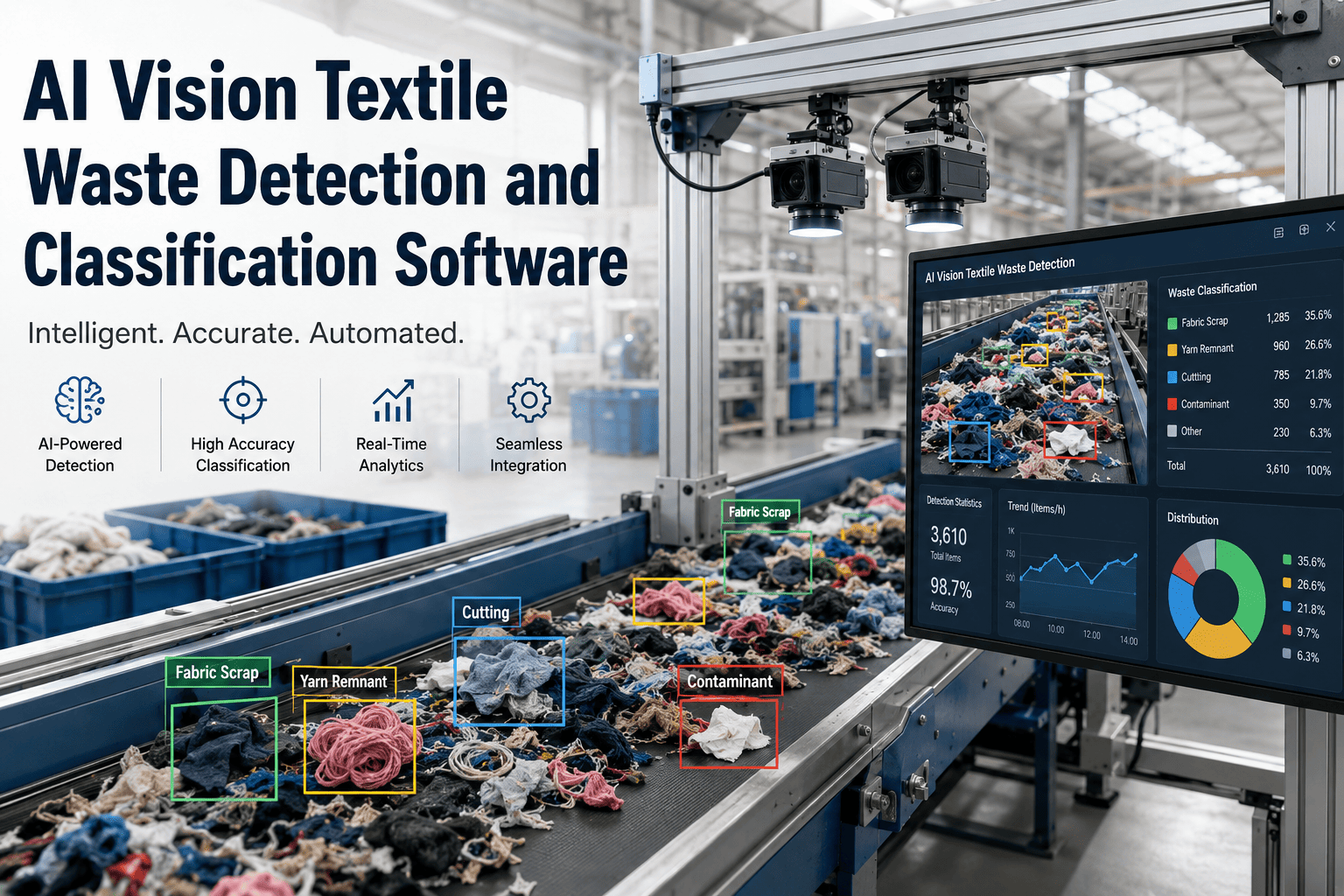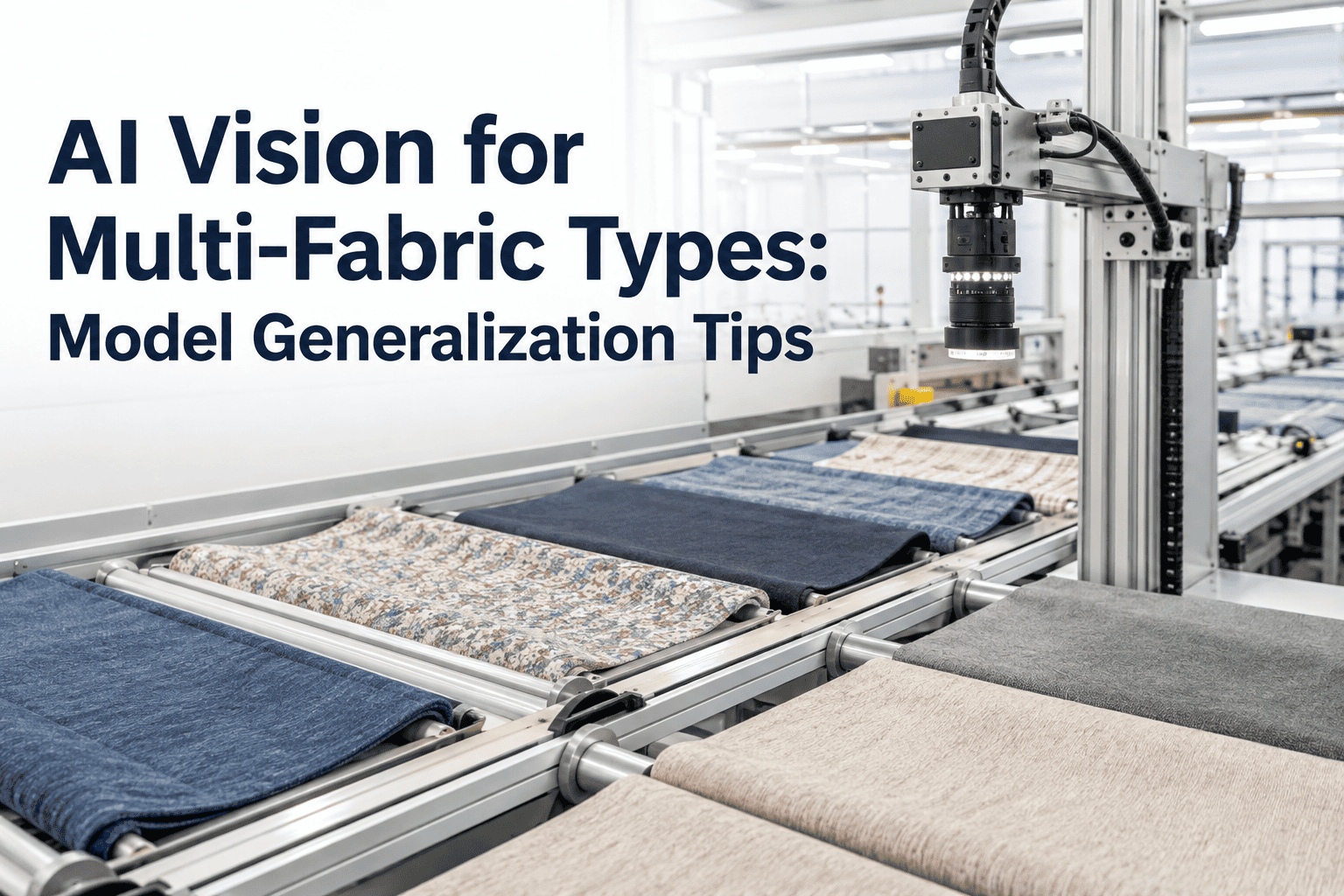
A mill running denim on one line, a lightweight cotton voile on another, and a technical polyester blend on a third doesn't get to run one AI vision model across all three and hope for the best. Weave density, surface texture, color depth, and light reflectance vary so much between fabric types that a model trained only on denim will misread voile constantly — flagging normal weave texture as a defect, or worse, missing a real flaw because it doesn't match the pattern the model actually learned. Building a model that generalizes across fabric types without needing a from-scratch retrain for every new product line is a specific engineering problem with specific solutions. iFactory builds multi-fabric generalization into the model architecture from day one, not as an afterthought.
One Model, Every Fabric on the Floor — Without Retraining From Zero Each Time
Multi-fabric generalization is what lets a single AI vision system hold accuracy across denim, knits, technical blends, and everything in between, instead of needing a separate model — and a separate accuracy collapse risk — for every product line a mill runs.
Why a Single-Fabric Model Breaks the Moment the Product Mix Changes
A model trained exclusively on one fabric type learns that fabric's specific visual signature — its weave pattern, its baseline texture, its typical color range — as the definition of "normal." Anything outside that signature reads as anomalous by default, which is exactly backward when the anomaly is simply a different, equally normal fabric the model was never shown during training.
This is a particularly acute problem in textiles compared with many other manufacturing sectors, because product mix diversity is often the rule rather than the exception. A mill serving apparel, home goods, and technical textile customers simultaneously might run a dozen or more distinct fabric constructions in a given month, and a model architecture that assumes one stable, unchanging product isn't built for that reality — it's built for a manufacturing pattern most textile operations don't actually have.
Weave Structure Variation
Plain weave, twill, satin, and knit constructions each produce a distinct baseline texture pattern, and a model tuned to one reads the others as irregular by default.
Surface Reflectance Differences
A high-sheen synthetic and a matte cotton reflect light entirely differently under the same fixture, shifting what the camera actually captures even when nothing about the inspection setup changed.
Color Depth and Pattern Complexity
A solid-color fabric and a printed or patterned one present completely different visual baselines, and a defect that stands out clearly against a solid color can hide easily within a busy print.
Three Approaches to Generalization, Ranked by What They Actually Solve
Mills researching this problem run into three broad technical approaches, and they aren't interchangeable — each solves a different piece of the generalization challenge, and most production deployments end up combining more than one rather than picking a single silver bullet.
Vendors sometimes market these three approaches as competing options, when in practice they address different stages of the same problem and work better layered together than chosen from. Transfer learning speeds up adapting to any single new fabric. Domain generalization builds resilience to fabrics the model has never explicitly seen at all. Multi-class architecture prevents the compromise that comes from forcing every fabric type through one shared decision boundary. A mature multi-fabric deployment typically uses all three at once rather than treating the choice as either-or.
Faster Training on New Fabric Types
Starting from a model pretrained on a large, general image dataset rather than from scratch dramatically speeds up training and improves accuracy when adapting to a new fabric type with limited labeled data.
One Model, Many Fabric Domains
Training on a deliberately diverse set of fabric types at once, rather than one fabric per model, produces a model that holds accuracy reasonably well on fabric types it wasn't explicitly trained on.
Fabric-Type-Aware Detection
A model that first classifies the fabric type, then applies fabric-specific defect detection logic, avoids forcing one universal definition of "normal" across fundamentally different materials.
A Model Trained on Denim Alone Will Misread Every Other Fabric on Your Floor
iFactory builds generalization into the model from the start, so switching product lines doesn't mean starting inspection accuracy over from zero.
Transfer Learning: Why Starting From Zero Is the Wrong Default
Textile defect datasets are almost always smaller than what a deep learning model would ideally want to train on from scratch, since collecting and labeling thousands of defect images for every fabric type a mill runs is expensive and slow. Transfer learning solves this specific constraint by starting from a model already trained on a large, general-purpose image dataset and adapting it to the fabric-specific task, rather than teaching a model to recognize edges, textures, and patterns from nothing.
The intuition behind why this works maps reasonably well to how a skilled human inspector transfers experience between fabric types. An inspector who has spent years learning to spot irregularities in denim doesn't start from zero when they're handed a lightweight knit for the first time — they already understand what a defect generally looks like, what a clean edge looks like, what fabric consistency looks like, and they apply that general visual judgment to the new material while learning its specific quirks. Transfer learning gives a model roughly that same head start.
Pretrained Base Model
A model already trained on millions of general images has learned to recognize edges, textures, and shapes — visual building blocks that transfer to fabric inspection without needing to be relearned.
Fine-Tuning on Fabric Data
The pretrained model is then trained further on a smaller, fabric-specific labeled dataset, adapting its general visual knowledge to the specific defect types and textures relevant to textile inspection.
Faster Convergence, Better Accuracy
Documented comparisons consistently show transfer learning reaching higher accuracy in fewer training cycles than training an equivalent model from scratch on the same limited fabric dataset.
The practical implication for a mill adding a new fabric type to its product line is meaningful: a transfer-learning-based approach can typically get a new fabric type to production-ready accuracy with a fraction of the labeled data and training time a from-scratch model would require.
Domain Generalization: Training for Fabrics the Model Has Never Seen
Transfer learning speeds up adapting to a known new fabric type. Domain generalization tackles a harder and different problem: building a model that performs reasonably well on a fabric type it was never explicitly trained on at all, by exposing it to enough variety during training that it learns fabric-general defect patterns rather than fabric-specific ones.
The mechanism behind why exposure to diversity helps is worth understanding, because it isn't simply "more data is better" — it's specifically about what the model is forced to learn when the training set spans multiple fabric domains at once. A model trained only on denim can take a shortcut: it can partially rely on denim-specific texture cues that happen to correlate with defects in that fabric but wouldn't generalize anywhere else. A model trained across denim, knits, and technical blends simultaneously can't rely on any single fabric's quirks as a shortcut, which pushes it toward learning defect characteristics — irregular edges, discontinuities, color anomalies — that actually hold up across material types.
Model trained exclusively on one fabric type's images
Achieves very high accuracy on that specific fabric
Accuracy drops sharply the moment a new fabric type is introduced
Model trained on a deliberately varied set of fabric types simultaneously
Slightly lower peak accuracy on any single fabric type compared to a specialist model
Meaningfully better baseline accuracy on fabric types outside the training set
The tradeoff is real and worth naming honestly: a domain-generalized model rarely beats a fabric-specific specialist model on that specialist's own home turf. What it offers instead is a floor — a level of usable accuracy on new or infrequently run fabric types that a narrow specialist model simply doesn't have, which matters enormously for mills running frequent product changeovers or small custom orders where training a dedicated model for every fabric isn't practical.
A Specialist Model Is Excellent on One Fabric and Useless on the Next
iFactory combines transfer learning and domain generalization so accuracy holds across your full product mix, not just your highest-volume fabric.
Multi-Class Detection: Teaching the Model to Ask "What Fabric Is This" First
The third approach restructures the detection pipeline itself rather than only changing how the model is trained. Instead of asking one model to define "normal" across every fabric type simultaneously, a fabric-type classification step runs first, and defect detection logic downstream adapts based on which fabric type was identified.
This restructuring matters more than it might initially sound, because it changes what the model is actually being asked to learn. A single universal model has to compress the visual definition of "acceptable" across every fabric type into one shared decision boundary, which inevitably means some compromise — a threshold loose enough to accept a valid rougher-textured fabric will also miss some real defects in a smoother one, and a threshold tight enough to catch fine defects in the smooth fabric will falsely reject perfectly normal texture in the rougher one. Splitting fabric-type classification out as its own explicit first step removes that forced compromise entirely.
Fabric-Type Classification
A lightweight initial classifier identifies the fabric type — weave structure, weight class, or material family — before any defect analysis begins.
Fabric-Specific Thresholds
Detection sensitivity and defect definitions adjust automatically based on the classified fabric type, rather than applying one universal threshold across materials that behave very differently.
Shared Defect Vocabulary
Common defect categories — holes, stains, weave irregularities — are still recognized consistently across fabric types, while the specific visual signature of each is interpreted correctly for that material.
This architecture tends to be the most robust of the three approaches in production, precisely because it doesn't ask a single model to silently reconcile fundamentally different visual baselines — it makes the fabric-type distinction explicit and lets detection logic branch accordingly.
A Composite Scenario: The Model That Failed on Its Second Product Line
A composite mixed-portfolio mill running both heavyweight denim and lightweight rayon blends deployed an AI vision inspection system trained entirely on denim images, since denim represented the highest-volume product at the time of initial rollout. Accuracy on denim held above 98% from day one. When the mill added a rayon blend line three months later, using the same model without retraining, false reject rates on the new fabric climbed above 20% within the first production week — the model was reading the rayon's naturally softer drape and lighter weave density as texture irregularities it had never seen classified as normal.
Rather than training an entirely separate model for rayon from scratch, the mill's vendor applied transfer learning against the existing denim-trained base model, fine-tuning it on a comparatively small labeled rayon dataset collected over two production weeks. False reject rates on the rayon line dropped to a low single-digit percentage within days of the fine-tuned model going live, reaching parity with the denim line's accuracy inside a month — a fraction of the time a from-scratch model would have required to reach the same result.
Assumptions That Undercut a Multi-Fabric Deployment
A model that performs well on one fabric type will perform reasonably well on similar fabrics without any adaptation.
Even fabrics that look visually similar to a human inspector can differ enough in weave density, texture, or reflectance to meaningfully degrade a model's accuracy, which is why testing on the actual target fabric matters more than assuming similarity is close enough.
Adding a new fabric type always requires collecting a full-size labeled dataset before deployment.
Transfer learning from an existing trained model typically needs a substantially smaller labeled dataset than training from scratch, which shortens the path to production-ready accuracy on a new fabric considerably.
A single universal model is always the right architecture for a multi-fabric operation.
A fabric-type classification step feeding into fabric-specific detection logic often outperforms a single universal model in production, particularly when the product mix includes fabrics with very different visual baselines.
A Checklist Before Adding a New Fabric Type to Production
The new fabric's weave, texture, and reflectance have been compared to the training set
A quick visual and technical comparison against the existing model's training data flags likely accuracy risk before it shows up as false rejects in production.
A small labeled dataset for the new fabric has been collected for fine-tuning
Even a modest set of labeled images, used for transfer learning, meaningfully improves accuracy compared to deploying the existing model completely unchanged.
The model runs in shadow mode on the new fabric before going live
Comparing the model's calls against manual grading on a trial run catches accuracy problems before they affect real production decisions.
A fallback plan exists for fabrics the model hasn't been adapted to yet
A brief return to manual or higher-scrutiny inspection for a genuinely novel fabric type is a safer default than trusting an unadapted model's calls.
Frequently Asked Questions
How much labeled data is needed to adapt an existing model to a new fabric type?
Transfer learning typically requires a substantially smaller labeled dataset than training a new model from scratch — often a few hundred to a couple thousand representative images depending on defect complexity — since the base model already understands general visual patterns and only needs fine-tuning on the fabric-specific detail. Visit support to scope the right dataset size for a specific fabric.
Can one AI vision system handle a mill running ten or more different fabric types?
Yes — a multi-class architecture that classifies fabric type before applying detection logic scales to a large and varied product mix more reliably than trying to force one universal model to cover every fabric type equally well.
Does domain generalization mean giving up accuracy on the highest-volume fabric?
Not necessarily — combining approaches, such as a domain-generalized base model further fine-tuned on the highest-volume fabric specifically, can preserve strong accuracy on the primary product while still holding a usable baseline on less common fabric types. Book a demo to see how this combination performs on a specific product mix.
How long does it typically take to bring a new fabric type up to production accuracy?
Using transfer learning against an existing trained model, most fabric additions reach production-ready accuracy within a few weeks of collecting representative labeled data, compared to a considerably longer timeline for training an equivalent model completely from scratch.
What happens if a genuinely novel fabric type is introduced with no similar fabric in the existing training data?
A domain-generalized model still typically provides a usable accuracy floor even on fabrics outside its specific training set, though running in shadow mode against manual inspection during the initial period is the safer approach until fine-tuned accuracy is confirmed. Contact support to plan a rollout for a genuinely new fabric category.
One Inspection System, Every Fabric Your Mill Runs
iFactory combines transfer learning, domain generalization, and fabric-aware detection so adding a new product line doesn't mean starting your inspection accuracy over from zero.