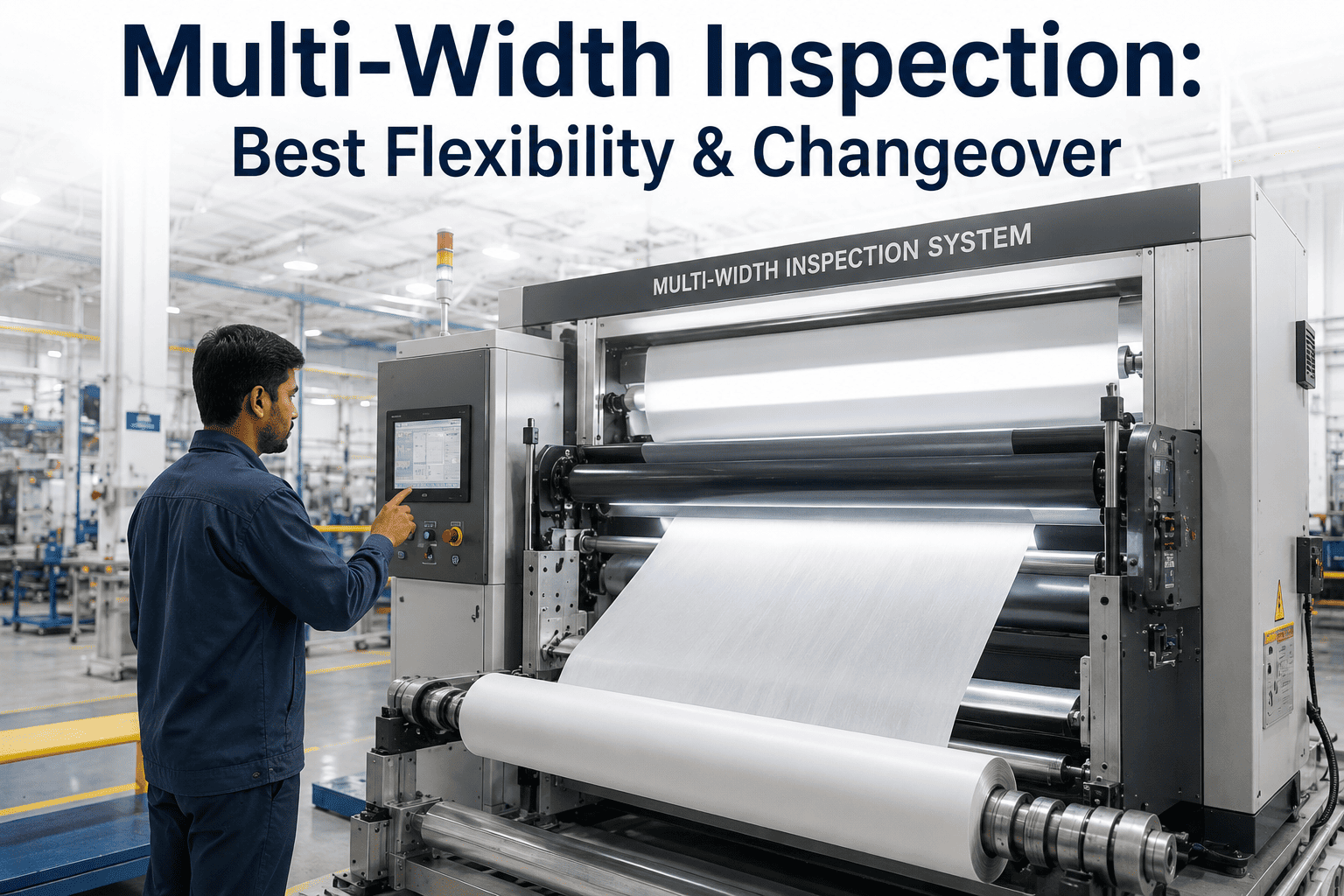
A mill running 60-inch shirting cotton on one order and 110-inch home textile sheeting on the next doesn't get to treat inspection as a fixed station with fixed settings. Every width change means recalibrating camera coverage across the roll. Every speed change — a slower, denser weave versus a faster, lighter one — means resynchronizing how fast the inspection system can actually keep up without missing defects or blurring the image. Mills that treat changeover as a five-minute afterthought lose far more in cumulative downtime and inspection gaps over a year than the changeover time itself ever shows on a single shift report. iFactory builds changeover flexibility into the inspection system from the start, not as a workaround bolted on later.
Every Width Change and Speed Change Is a Chance for Coverage to Quietly Fail
A fabric inspection system built for one width and one speed only works until the next order changes either one — and mills running high product variety need camera coverage and speed synchronization that adapt in minutes, not a re-engineering project every changeover.
Why Width and Speed Are Two Separate Problems, Not One
It's tempting to treat "flexibility" as a single feature a fabric inspection system either has or doesn't. In practice, width and speed create two distinct engineering challenges, and a system can handle one well while struggling badly with the other — which is exactly why evaluating them separately matters when specifying equipment for a genuinely mixed production floor.
The distinction matters most at procurement time, because vendors often market "flexible inspection" as a single capability without clarifying which axis it actually addresses. A system with excellent width adjustability but a narrow speed range solves half the problem for a mill running varied widths at a consistent pace, but leaves that same mill exposed the moment it takes on a faster-running order. Asking a vendor to specify width range and speed range as two separate numbers, rather than accepting one blended "flexibility" claim, avoids that gap.
Width: A Coverage Problem
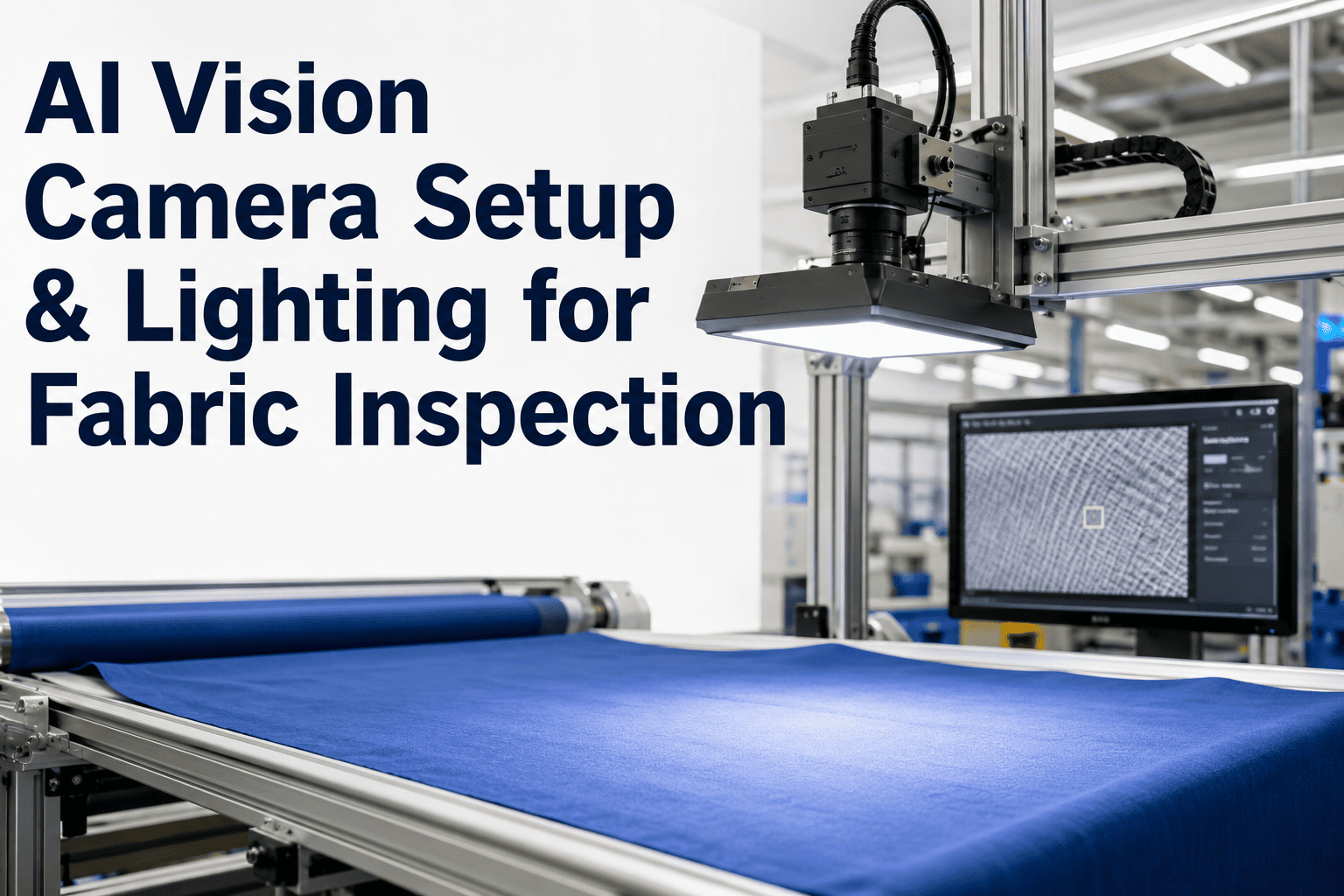
Every fabric width needs full-width camera coverage with no gap at the edges, which means either physically repositioning cameras or using a system architecture that adjusts field of view without a manual rebuild.
Speed: A Timing Problem
Every line speed needs the camera's frame rate and lighting to keep pace, since a system tuned for a slow, dense weave can produce blurred, unusable images the moment a faster run starts.
The Width Challenge: Coverage That Doesn't Leave the Edges Blind
Textile production commonly spans a wide range of finished widths — narrow specialty ribbon and trim on one end, wide home textile and upholstery fabric on the other, with standard apparel widths filling the middle. A fixed-camera-position inspection setup built around one common width leaves a real coverage problem the moment a much narrower or much wider roll runs through it.
Edge coverage deserves specific attention here, because it's the part of the frame most likely to get shortchanged when a system is stretched beyond its comfortable range. A camera or line-scan sensor calibrated for a mid-range width, then pushed to cover a significantly wider roll without adjustment, often loses resolution or drops out of focus at the outer edges of the frame first — precisely where selvage defects, edge curl, and width-related weaving faults are most likely to occur. A coverage gap concentrated at the edges is easy to miss in a spot-check but shows up reliably in claim data over time.
Under 60 Inches
Ribbon, trim, and narrow specialty fabrics often run well under standard apparel width, risking wasted camera field of view if the system wasn't designed to narrow its coverage accordingly.
60 to 72 Inches
The most common apparel and general-purpose fabric width range, and the width most fixed-configuration inspection systems are originally built and calibrated around.
Over 100 Inches
Home textile, upholstery, and sheeting fabrics frequently run past 100 inches, sometimes approaching 180 inches on the widest commercial looms, requiring either multiple cameras spanning the roll or a repositionable single-camera setup.
Two architectural approaches solve this differently. A multi-camera array spanning the full maximum width the mill ever runs simply activates only the cameras needed for a given roll, leaving the rest idle rather than repositioned. A single repositionable camera or line-scan sensor on a motorized rail instead physically moves or adjusts its field of view to match the current roll width, trading a smaller hardware footprint for a changeover step that has to happen correctly every time.
A Camera Calibrated for 60-Inch Fabric Doesn't Automatically Cover a 110-Inch Roll
iFactory configures inspection coverage to your actual width range, not a single assumed standard.
The Speed Challenge: Why a Faster Line Isn't Just "The Same Inspection, Sooner"
Line speed governs how much time the inspection system has to capture and process each section of fabric, and a system that performs well at one speed can degrade sharply at another if it wasn't built with a wide operating range in mind. The core issue is straightforward physics: faster fabric movement means each point on the roll spends less time in the camera's field of view, which either demands a faster frame rate or introduces motion blur that hides exactly the fine defect detail inspection depends on.
This is where the choice between area-scan and line-scan camera architecture stops being a minor technical detail and becomes the decision that determines whether a system will actually hold up across a mill's real speed range. An area-scan camera essentially takes a series of still photographs, and the faster the fabric moves between shots, the more area either gets missed entirely or gets captured with enough blur to be functionally useless for fine defect detection.
Capture full-frame snapshots at fixed intervals, which creates coverage gaps and motion blur once line speed exceeds roughly a few meters per second
Documented research shows this approach can miss on the order of 15% of total surface area at higher production speeds
Capture a single continuous line of pixels synchronized to fabric movement, scaling coverage to whatever speed the line is actually running
Eliminates the gap-and-blur tradeoff that limits area-scan systems at higher throughput
Line speed on inspection equipment varies widely across the industry depending on fabric type and machine class, with published equipment specifications ranging from roughly 0 to over 100 meters per minute — a range wide enough that a single fixed frame rate genuinely cannot serve both ends of it without either wasting processing capacity at the slow end or losing coverage at the fast end.
Synchronizing Speed and Width at the Same Time
The genuinely hard version of this problem isn't width alone or speed alone — it's both changing together on the same changeover, which is the normal situation on a high-mix floor running different fabric constructions back to back. A wide, slow-moving heavyweight fabric and a narrow, fast-moving lightweight one both need correct coverage and correct timing, and neither setting can be treated as fixed while the other adjusts.
The failure mode worth watching for here isn't dramatic — it rarely shows up as an obvious system error. It shows up as a subtle mismatch where coverage width is correct but timing lags slightly behind actual line speed, or vice versa, producing inspection results that look plausible but are quietly less reliable than they should be. This is precisely why treating width and speed as a single coordinated configuration, driven from one source of truth like the production order, is more robust than adjusting each setting independently through separate manual steps.
Production Order Reads Fabric Specification
Width, weight class, and target line speed are already known from the production order before the roll ever reaches the inspection point.
Inspection Profile Loads Automatically
A pre-configured profile matching the fabric's width and expected speed range activates without requiring an operator to manually reposition cameras or adjust frame rate settings.
Line Encoder Confirms Actual Speed
A shaft encoder or equivalent sensor tracks the real, current line speed continuously, letting the inspection system's timing stay synchronized even as speed varies within a run rather than only at the start.
Width and Speed Both Change Every Order. Your Inspection Settings Shouldn't Need a Manual Rebuild Each Time.
iFactory ties inspection configuration directly to the production order, so coverage and timing adjust automatically at every changeover.
What Slow Changeover Actually Costs Beyond the Downtime Clock
The obvious cost of a slow changeover is the line sitting idle while cameras get repositioned and settings get manually re-entered. The less obvious cost, and often the larger one, is what happens in the minutes after production restarts but before inspection settings have actually caught up to the new fabric — a window where defects can pass through uninspected or where good fabric gets falsely flagged because the system is still calibrated to the previous roll.
Multiply that per-changeover cost by how often it actually happens on a genuinely high-mix floor, and the annual total becomes significant even when each individual instance looks minor on a shift report. A mill running several changeovers a day, every operating day of the year, accumulates a very large number of these transition windows — each one a small, largely invisible risk that a slow or manual changeover process repeats without ever showing up as a single, attention-grabbing incident.
Idle Changeover Time
Manual camera repositioning and settings reconfiguration directly consumes production time that a faster or automated changeover process would recover.
Post-Changeover Coverage Gap
A brief window running with settings still tuned to the prior fabric risks either missed defects or false rejects until the new configuration is confirmed correct.
Operator Configuration Errors
Manual re-entry of width and speed parameters at every changeover introduces a real, recurring chance of human error that an automated, order-linked profile system removes entirely.
A Composite Scenario: The Mill That Cut Changeover From Twenty Minutes to Three
A composite mixed-portfolio mill running apparel-width cotton and wide-format home textile sheeting on the same inspection line had been manually repositioning cameras and re-entering speed settings at every width change, a process the floor team estimated at roughly twenty minutes per changeover across an average of four to six changeovers a day. Beyond the direct downtime, the mill's quality team had noticed a recurring pattern of elevated false rejects in the first several minutes after a changeover to a narrower width, traced to camera field-of-view settings that hadn't been precisely readjusted from the prior wider roll.
The mill implemented an order-linked inspection profile system, tying camera positioning and speed synchronization directly to the production schedule rather than requiring manual entry at the machine. Changeover time dropped to roughly three minutes — largely the physical time needed to thread the new roll — with camera and speed settings loading automatically in the background. The post-changeover false reject spike disappeared entirely once settings were consistently correct from the first meter of the new roll rather than being manually approximated.
Assumptions Worth Checking Before Specifying a Flexible Inspection System
A single fixed camera and frame rate setting can be tuned to a "good enough" middle ground that works across a mill's full width and speed range.
A middle-ground setting typically underperforms at both extremes of the range, leaving coverage gaps on the widest rolls and motion blur risk at the fastest speeds rather than serving either well.
Faster changeover is mainly a labor training issue — operators just need to get quicker at manual reconfiguration.
Tying inspection configuration to the production order removes the manual reconfiguration step almost entirely, which delivers a larger and more consistent time saving than operator speed training alone.
Line-scan cameras are only necessary for very high-speed production and are unnecessary overhead for a mill running moderate speeds.
Line-scan architecture removes the width-versus-speed tradeoff area-scan systems face even at moderate speeds, and a mill anticipating any future speed increase benefits from specifying it upfront rather than replacing hardware later.
A Specification Checklist for a High-Mix Inspection Line
The full width range the mill actually runs has been documented, not just the most common width
Specifying camera coverage around a typical order rather than the true minimum and maximum leaves the extremes of the product mix under-covered.
Line speed range is confirmed against the fastest fabric type the mill runs, not the average
A system speced to average speed will struggle on the fastest, lightest fabric in the product mix, which is exactly where motion blur risk is highest.
Inspection profiles are tied to production orders rather than requiring manual entry
Automated profile loading removes both the changeover time cost and the configuration error risk that manual re-entry introduces at every product change.
A shaft encoder or equivalent live speed feedback is part of the specification
Confirming actual line speed continuously, rather than assuming the target speed holds steady, keeps inspection timing accurate through speed variation within a single run.
Frequently Asked Questions
What fabric width range can a single inspection system realistically cover?
Published equipment specifications commonly span roughly 1,800 to 3,600 millimeters, though the practical range for any specific installation depends on the camera architecture chosen and how the mill's own product mix compares to that range. Visit support to confirm the right coverage range for a specific product mix.
Does a wider inspection range come with a tradeoff in defect detection accuracy?
Not inherently — a well-specified multi-camera or line-scan system maintains consistent resolution across its full working range, since the architecture is designed to scale coverage rather than stretch a single fixed field of view thinner across a wider roll.
How much changeover time can automated inspection profiles realistically save?
Mills tying inspection configuration to the production order commonly report changeover time dropping to a small fraction of the manual reconfiguration baseline, often down to whatever physical time is needed to thread the new roll rather than any inspection-specific setup step. Book a demo to see automated profile switching in action.
Can an existing fixed-configuration inspection system be retrofitted for width and speed flexibility?
In many cases yes, though the scope depends on the existing camera architecture — a system already using multiple cameras or a repositionable mount is generally easier to adapt than one built around a single completely fixed camera position.
What happens to inspection accuracy during the brief transition between two different fabric widths or speeds?
A system with order-linked automated profiles minimizes this transition window since settings load before the new roll physically reaches the inspection point, whereas manual reconfiguration leaves a longer gap where settings may not yet match the fabric actually running. Contact support to review transition handling for a specific line setup.
Inspection That Adapts to Every Order, Not Just the Common One
iFactory configures camera coverage and speed synchronization to your full production mix, so changeover stops being a recurring source of downtime and coverage gaps.