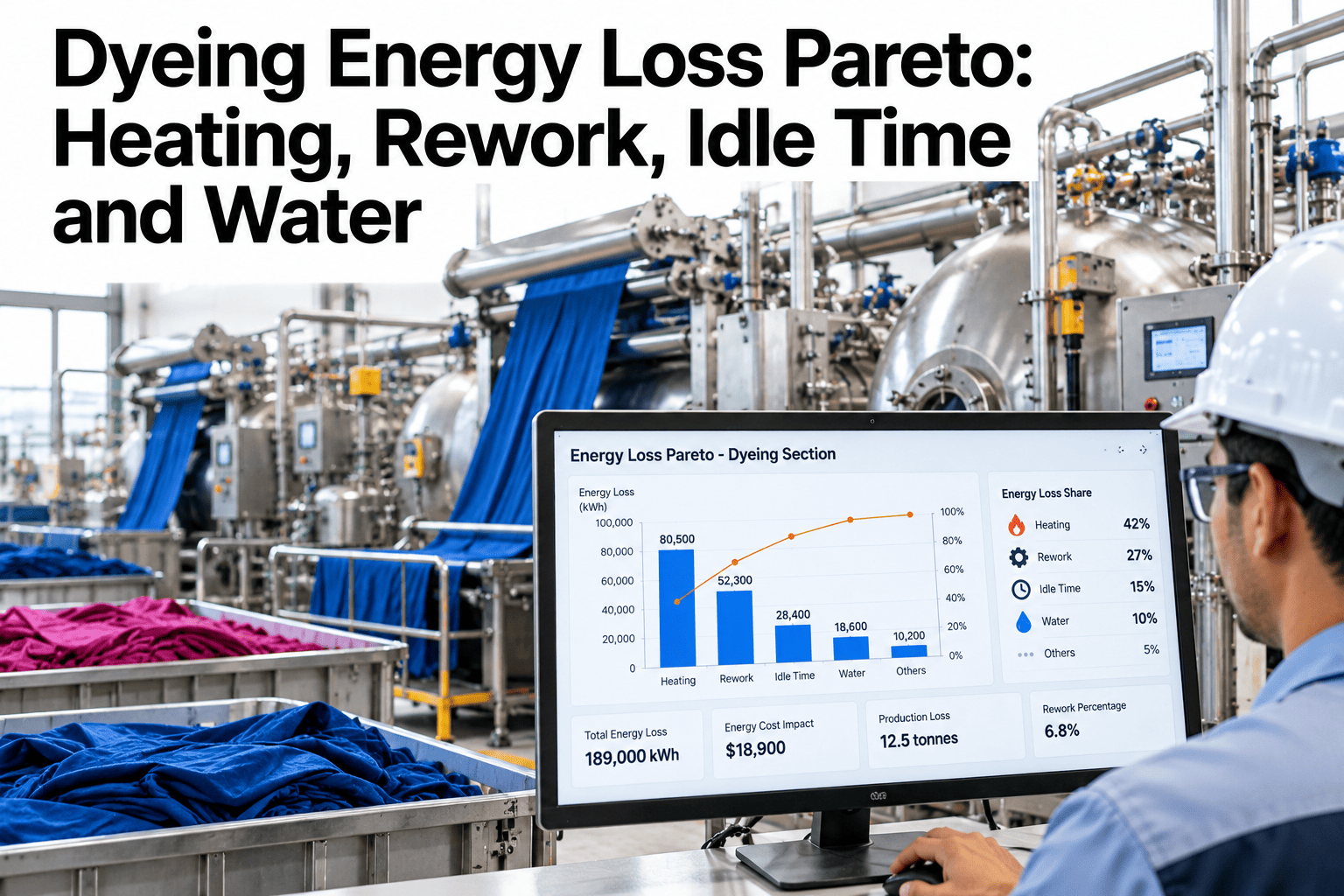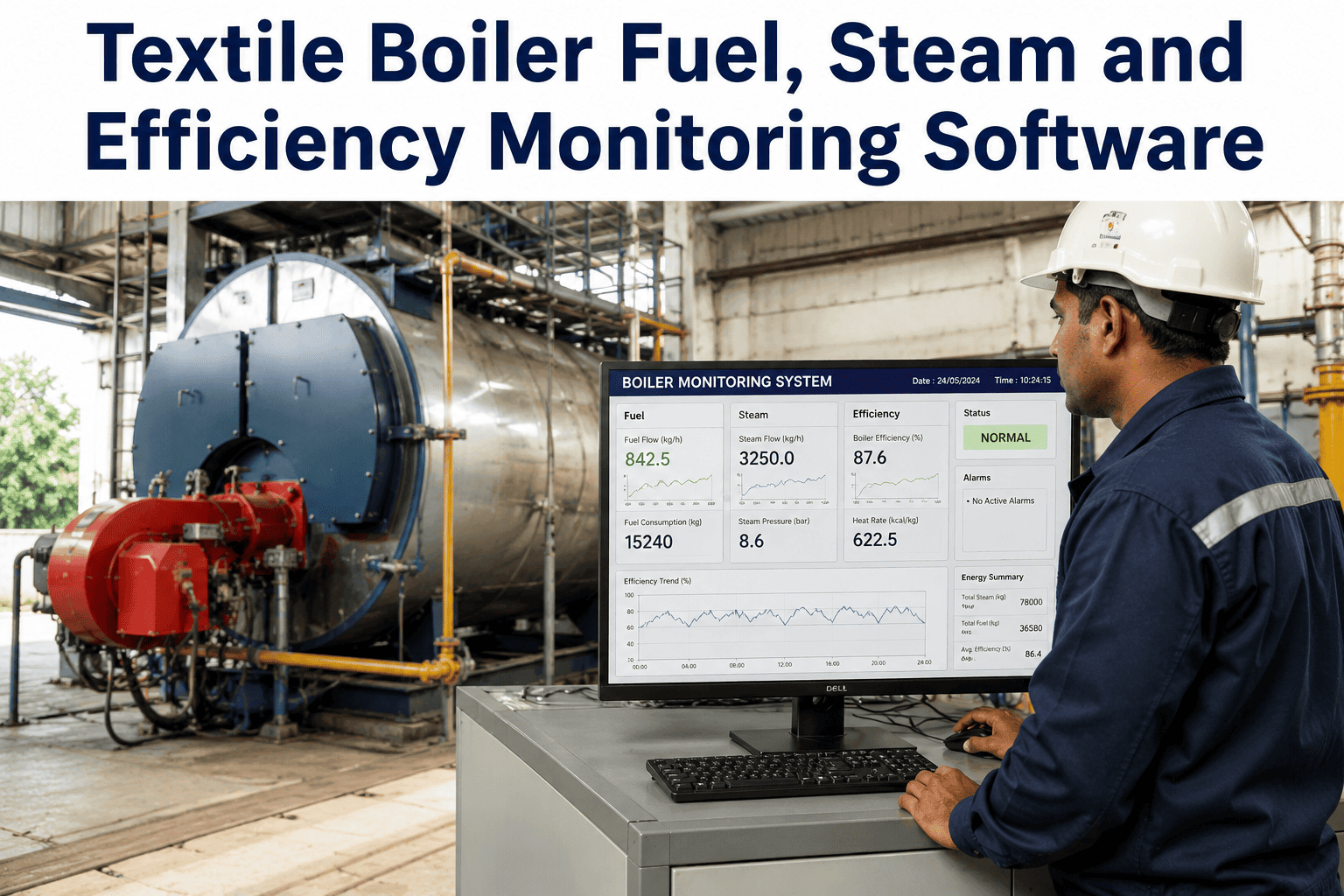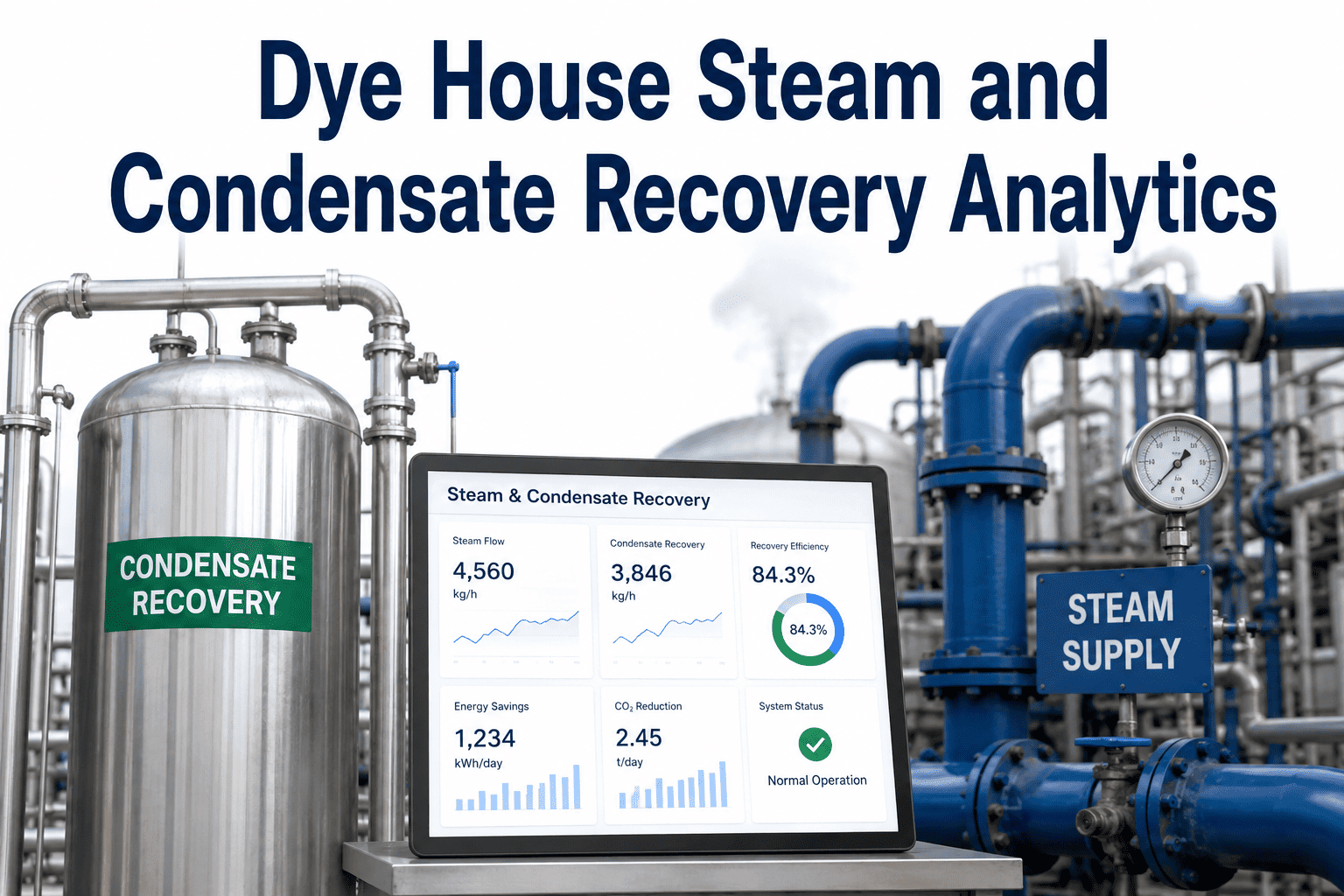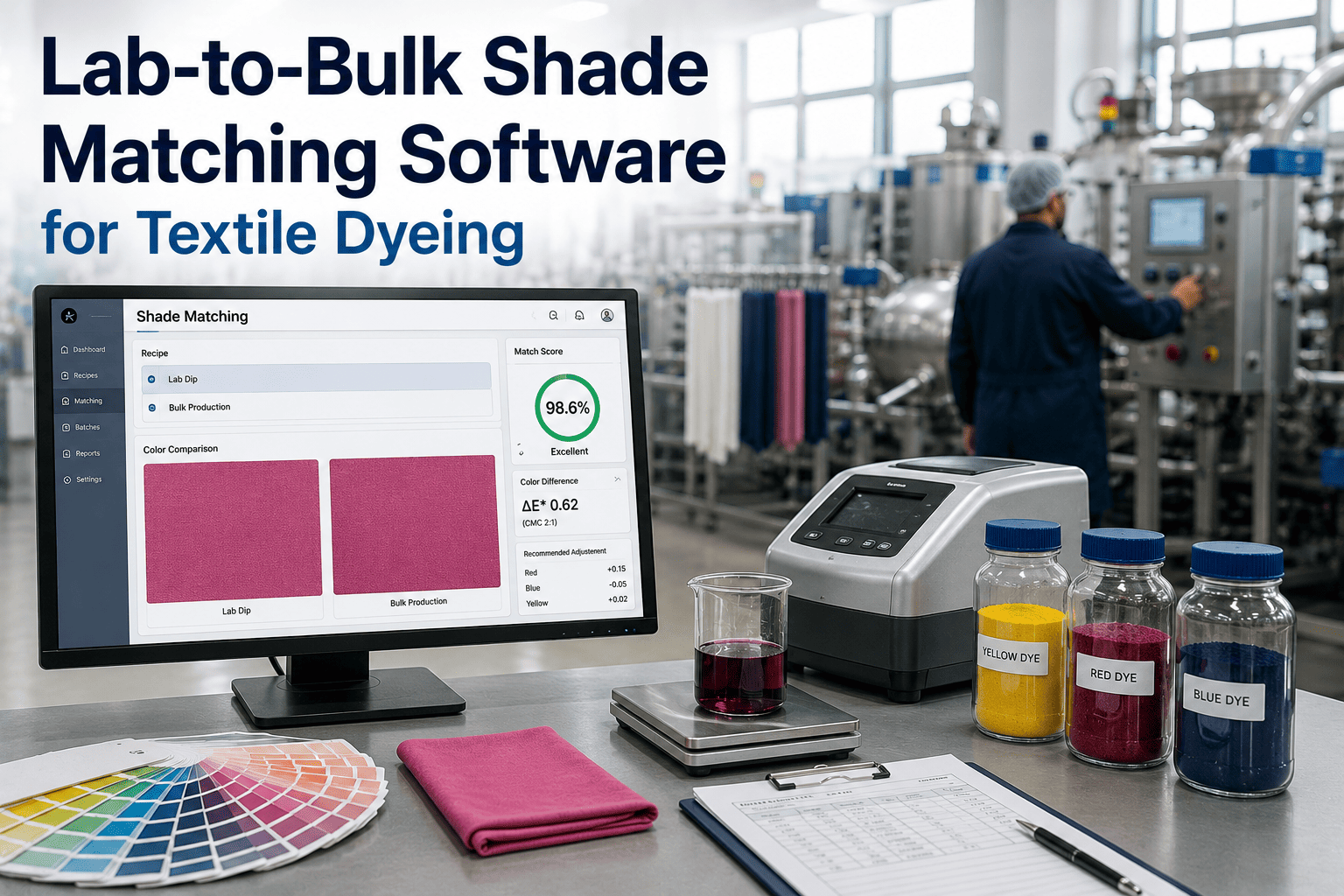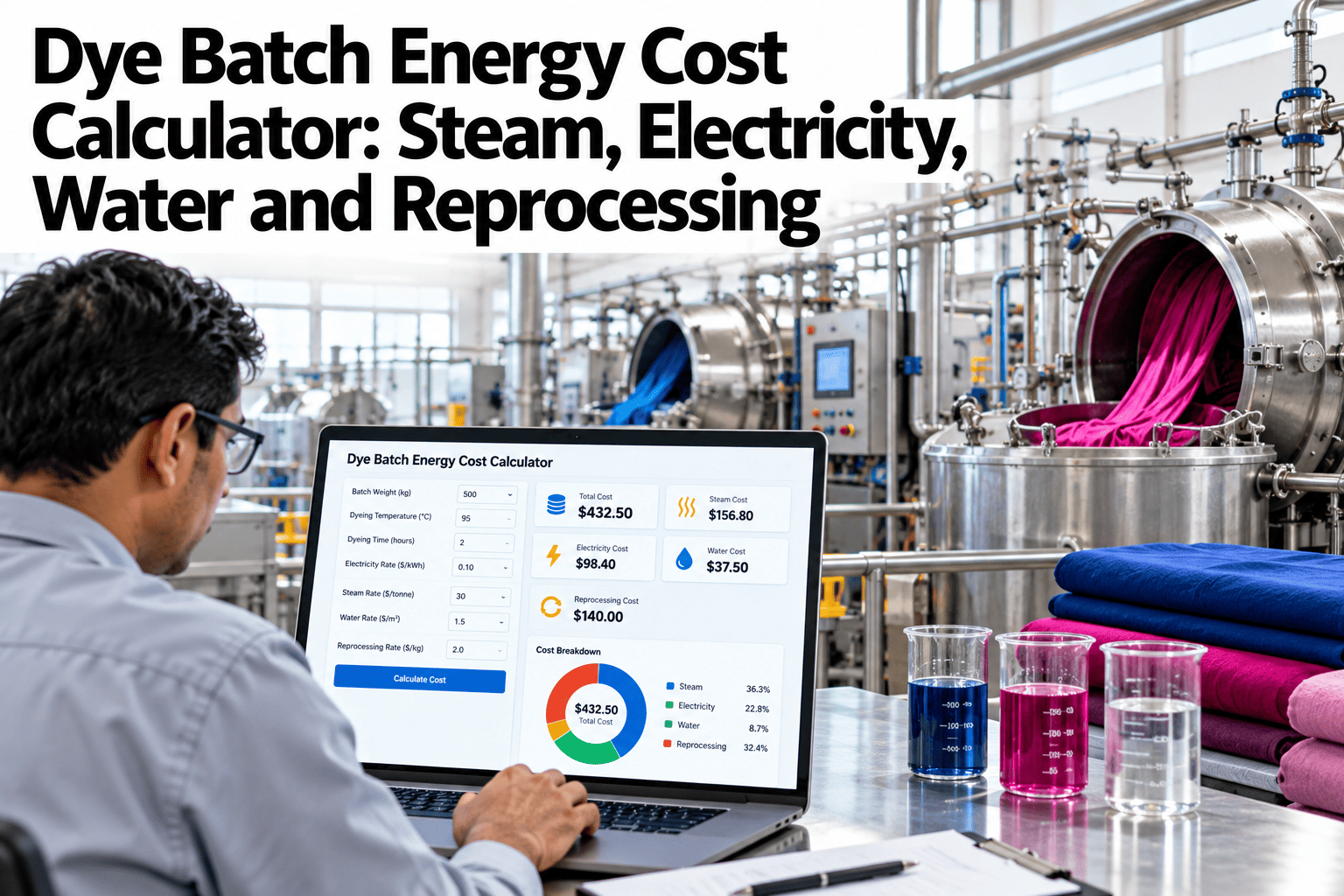
A dyed batch's real cost is never just the dye and the labor. Steam, electricity, water and the cycle time all add up quietly, and when a batch has to be re-dyed because of a shade miss, that cost doubles without anyone writing down the second bill separately. A batch energy cost calculator pulls these four inputs together into one figure per batch, so a quality failure shows up as a dollar amount, not just a rework note. This guide covers how that calculation is built. Dye houses ready to see their own batch costs calculated can book a demo with the iFactory AI team.
Dye Batch Energy Cost Calculator: Steam, Electricity, Water and Reprocessing
Calculate dye-batch energy cost using steam, electricity, water, cycle time and reprocessing data to expose the true cost of variation.
Why Batch Cost Stays Hidden
Steam comes from a boiler house meter, electricity from a machine feeder, water from a separate utility bill, and reprocessing gets logged, if at all, as a quality note rather than a cost line.
Pulling all four into a single per-batch figure is what finally makes the cost of a shade miss visible in the same terms as the cost of the original batch.
Four Inputs to the Calculation
Each input carries its own unit and its own source, and all four need to be converted to the same currency figure before they can be summed.
| Input | Source | Converted To |
|---|---|---|
| Steam | Boiler house flow meter, batch-attributed | Cost using steam rate |
| Electricity | Machine feeder meter | Cost using electricity rate |
| Water | Water meter plus heating energy | Cost using water and energy rate |
| Reprocessing | Linked second batch cycle, if any | Full additional batch cost |
From Meter Data to Batch Cost
The calculation runs through a short sequence that turns four separate readings into one trusted figure.
See What a Shade Miss Really Costs
Book a 30-minute walkthrough and see your own batch cost calculated from steam, electricity, water and rework.
A Sample Reprocessed Batch, Illustrative
The figures below are invented to show the shape of a reprocessed batch, not to benchmark your dye house.
Common Batch Costing Mistakes
The same gaps repeat across dye houses building their first per-batch cost figure.
Where Batch Cost Gets Used
Once every batch carries a true cost figure, the number feeds decisions beyond the energy team's own reporting.
Commercial teams use it to understand true margin on difficult shades that tend to need rework. Quality teams use the same figure to justify investment in better shade-prediction tools by pointing to the real cost of the misses they prevent.
Frequently Asked Questions
Do we need separate meters on every dye machine?
Not always. Many dye houses already meter steam and electricity at the machine level, and the calculator mainly needs those readings matched to batch start and end times rather than new hardware. Ask support what your current metering supports.
How is a re-dye cycle identified automatically?
A second cycle on the same lot or order within a short window is typically flagged as a re-dye, though the exact matching rule can be tuned to how your mill tracks reprocessing today.
Can labor cost be added to the calculation too?
Yes, labor and chemical costs can be layered in alongside the energy figure, giving a more complete true batch cost where that level of detail is useful. Book a demo to see a fuller cost breakdown.
Does this connect to our existing costing or ERP system?
In most cases, yes. iFactory AI can feed calculated batch costs into existing ERP or costing systems rather than maintaining a separate record.
Put a Real Number on Every Dyed Batch
iFactory AI calculates true batch cost from steam, electricity, water and reprocessing data. Book a walkthrough built around your dye house.