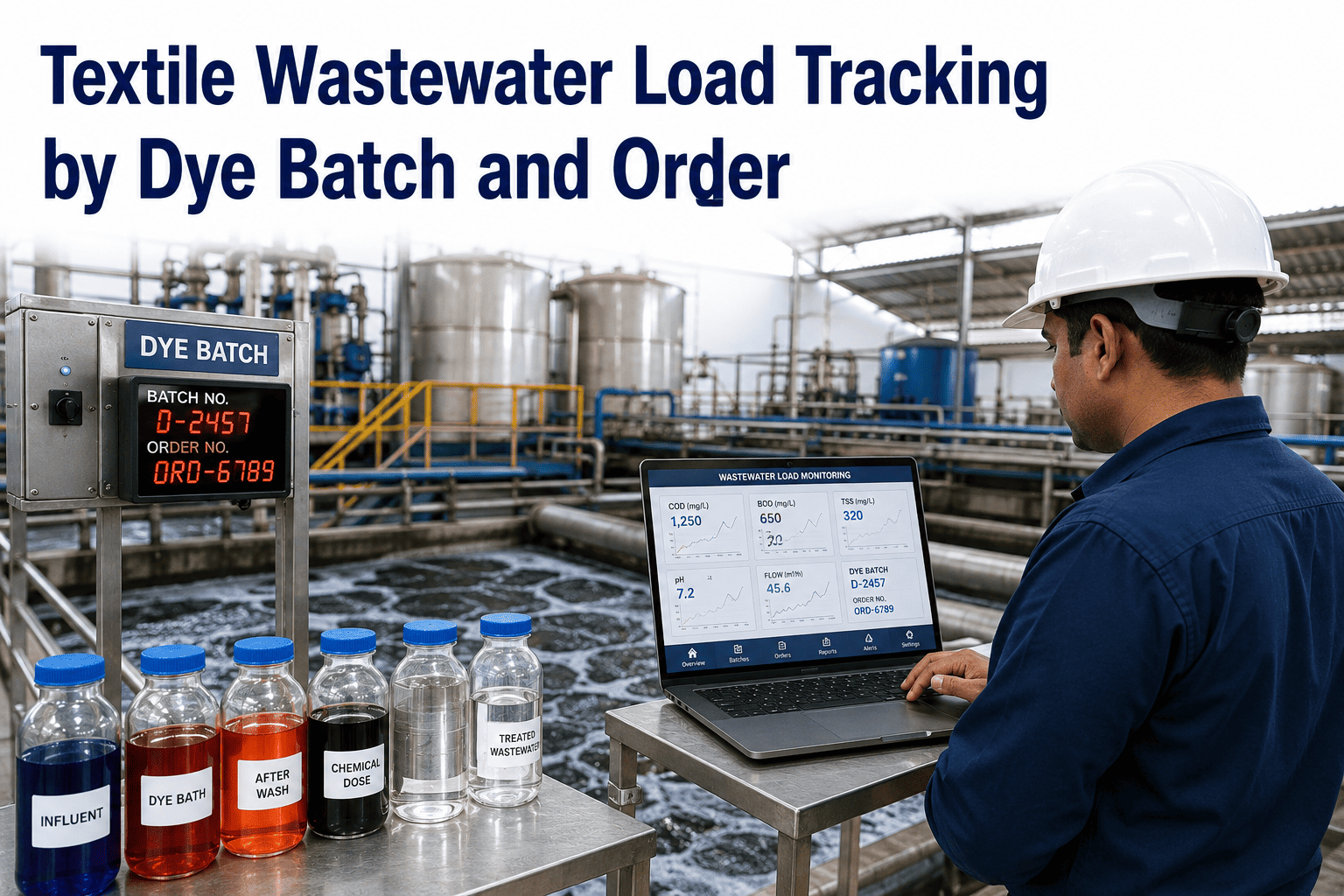
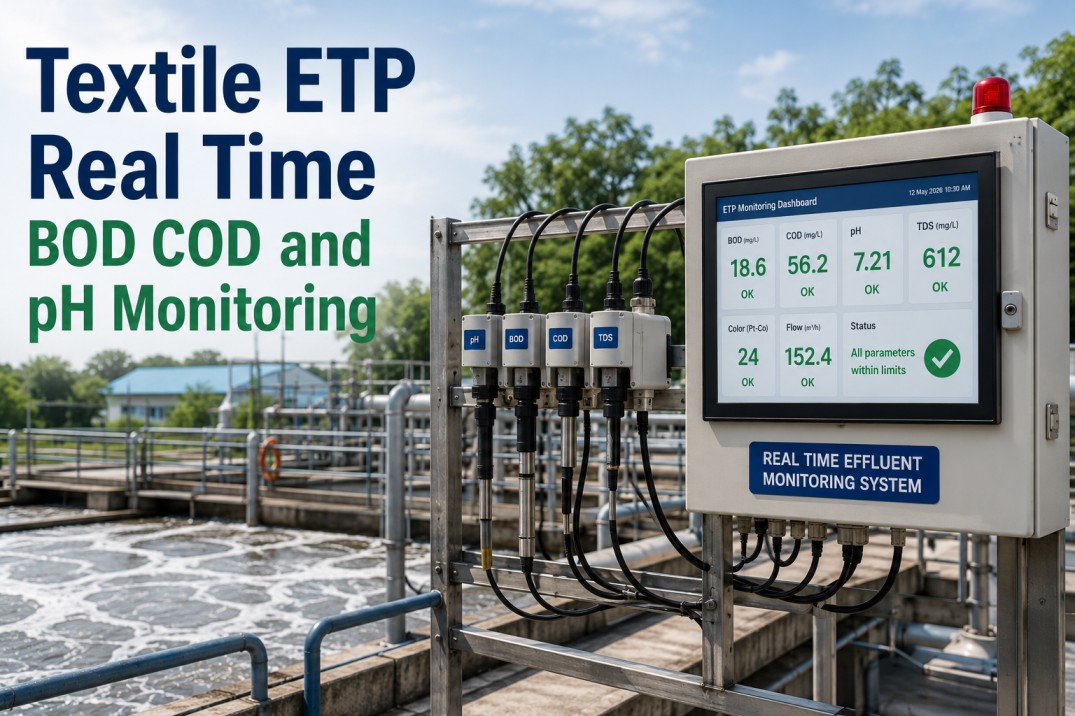
A textile mill can run a flawless dye range and still fail a pollution board inspection, because the discharge water tells a different story than the fabric does. Reactive dyes pass through cellulosic fibre largely unfixed, sizing chemicals wash off in preparation, and the combined stream arrives at the ETP with a BOD, COD, and colour load that no single treatment stage can handle alone. See how iFactory tracks ETP influent load, treatment stage performance, and discharge compliance in one connected view with a Book a Demo.
Textile Effluent Is Rarely Treatable By One Method. Most ETPs Fail Because They're Sized For One.
A textile ETP typically runs through three distinct stages, each responsible for removing a different class of pollutant. Undersizing or skipping any one of the three is the most common reason mills end up out of compliance on BOD, COD, or colour even after investing in treatment infrastructure.
The Three-Stage Treatment Train, Stage By Stage
Textile wastewater carries suspended solids, dissolved organic load, and persistent dye colour, and each of the three treatment stages is built to target one of those three problems specifically rather than all of them at once.
Physical & Chemical Separation
Screening, equalization, and pH neutralization remove floating and settleable solids while homogenizing a highly variable batch discharge into a consistent feed for the stages downstream.
Biological Treatment
Aeration and activated sludge processes let microorganisms consume biodegradable organic matter, typically taking BOD from several hundred mg/l down toward single digits when the system is properly loaded.
Polishing & Colour Removal
Advanced filtration, coagulation-flocculation, or membrane processes remove the residual dissolved solids and dye colour that biological treatment alone cannot break down.
Discharge Failures Rarely Trace To One Bad Sample. They Trace To One Undersized Stage.
iFactory tracks influent load, stage-by-stage BOD/COD reduction, and sludge performance so an out-of-spec discharge event is explained, not just flagged.
Why Dye Colour Survives Biological Treatment
Reactive and other synthetic dyes are engineered to be chemically stable so they resist fading on the finished fabric, and that same stability makes them extremely difficult for microorganisms to metabolize during secondary treatment. A biological stage can bring BOD and COD down substantially while barely touching colour, which is exactly why a physico-chemical or tertiary polishing stage is not optional for a mill that needs to meet a visual clarity or colour-unit discharge limit, even if the BOD and COD numbers already look compliant on paper.
Why Pretreatment Comes Before Biology
Certain dyeing and finishing auxiliaries are toxic to the microbial population in a biological reactor, so a physico-chemical pretreatment stage is often necessary to protect the biological stage rather than to reduce its workload.
Why Equalization Matters More Than It Looks
Batch dyeing produces highly variable discharge in both volume and chemical load, and an undersized equalization tank sends spikes straight into the biological stage that it was never designed to absorb.
What Each Stage Is Actually Designed To Remove
Sizing an ETP correctly starts with knowing which parameter each stage is responsible for, since applying a blanket safety margin across all three stages equally tends to oversize the cheap stage and undersize the expensive one.
| Stage | Primary Target | Typical Process |
|---|---|---|
| Primary | Suspended solids, oil and grease | Screening, equalization, pH control |
| Secondary | Biodegradable organic load (BOD/COD) | Activated sludge, aeration |
| Tertiary | Residual colour, dissolved solids | Coagulation-flocculation, filtration, membranes |
COD to BOD ratio analysis at the design stage directly determines reactor volume, retention time, and expected sludge production, which is why a mill switching dye chemistry or fibre mix should revisit ETP sizing rather than assume the existing plant will absorb the change.
Zero Liquid Discharge Starts With Knowing Exactly What Each Stage Is Removing
iFactory connects lab sample data, sludge age, and stage throughput so ZLD and compliance targets are managed against real numbers, not periodic spot checks.
Where Textile ETPs Most Often Fall Short Of Discharge Limits
Plants that struggle to hold consistent compliance tend to share a small number of design or operating gaps, most of which are cheaper to fix at the operating level than by adding new treatment capacity.
Undersized Equalization
Batch discharge spikes overwhelm downstream biological treatment when the equalization tank cannot buffer peak flow and peak load at the same time.
Skipping Pretreatment For Toxic Auxiliaries
Certain finishing and dyeing chemicals suppress the microbial population in the biological stage, silently reducing treatment efficiency without any obvious operational symptom.
Treating Colour As A Biological Problem
Assuming biological treatment will eventually reduce dye colour the way it reduces BOD leads to persistent discharge colour violations that a tertiary stage was needed to resolve from the start.
No Visibility Into Sludge Age
A biological stage running with aging, understocked sludge treats far less effectively than the design specification assumes, and this degradation is rarely visible without dedicated tracking.
What Mills Typically See After Adding Stage-Level ETP Monitoring
Mills that move from periodic lab sampling to continuous, stage-level tracking of their treatment train tend to see improvement in both compliance consistency and treatment cost per unit of effluent processed.
Frequently Asked Questions
Q: Why does a mill still fail colour compliance even when BOD and COD readings look fine?
Synthetic dyes, particularly reactive dyes used on cellulosic fibres, are chemically engineered for stability, and that same property makes them highly resistant to biological breakdown during secondary treatment. A plant can achieve strong BOD and COD reduction through biological treatment alone while residual dye colour remains almost entirely intact, since colour removal depends on a separate physico-chemical or tertiary process rather than on the biological stage working harder. Reach out through Support Contact if your plant is seeing this exact compliance gap.
Q: Is a physico-chemical treatment stage necessary if biological treatment is already installed?
In most textile applications, yes, and the two are typically combined rather than treated as alternatives. Physico-chemical treatment is usually placed before biological treatment specifically to protect the microbial population from auxiliary chemicals that would otherwise be toxic to it, and it also handles a portion of the colour and suspended solids load that biological treatment cannot address on its own. Skipping the physico-chemical stage to save cost is one of the more common reasons a plant ends up unable to meet either BOD/COD or colour limits consistently.
Q: How does equalization tank sizing affect downstream treatment performance?
Textile discharge is highly variable in both flow rate and chemical load because dyeing and finishing run in batches rather than continuously, and an undersized equalization tank passes that variability straight through to the biological stage. A biological reactor performs best under a relatively steady organic load, so a sudden spike in BOD concentration can temporarily overwhelm the microbial population and reduce treatment efficiency for hours or days afterward. A Book a Demo session can walk through how load trending helps confirm whether an existing equalization tank is actually sized for current production volume.
Q: What does the COD to BOD ratio actually tell an ETP designer?
The ratio indicates what fraction of the organic load is biodegradable versus resistant to biological breakdown, which directly determines how much of the pollutant load the secondary biological stage can realistically remove versus how much must be handled by pretreatment or tertiary polishing. A high COD relative to BOD signals a wastewater stream with a significant non-biodegradable fraction, meaning reactor volume and retention time calculated purely from BOD figures will undersize the plant relative to its actual COD removal requirement.
Q: What is Zero Liquid Discharge and does every textile mill need to design for it?
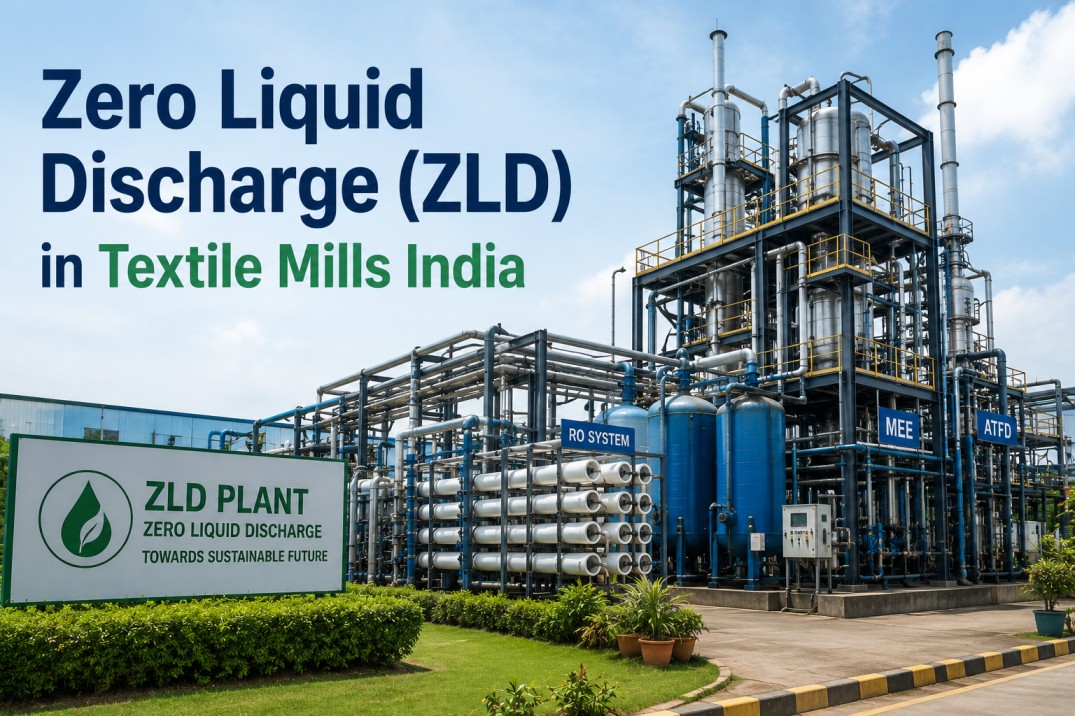
Zero Liquid Discharge means no liquid effluent leaves the plant boundary, typically achieved by combining the standard three-stage treatment train with additional evaporation or membrane concentration steps that recover water for reuse and leave only solid waste for disposal. Whether a specific mill needs to design for ZLD depends heavily on local regulatory requirements and water stress in the region, since ZLD systems carry substantially higher capital and energy costs than a conventional discharge-compliant treatment train.
Stop Reacting To Failed Discharge Samples. Start Tracking The Stage That Caused Them.
iFactory gives your ETP team one connected view of influent load, treatment stage performance, and lab compliance data.