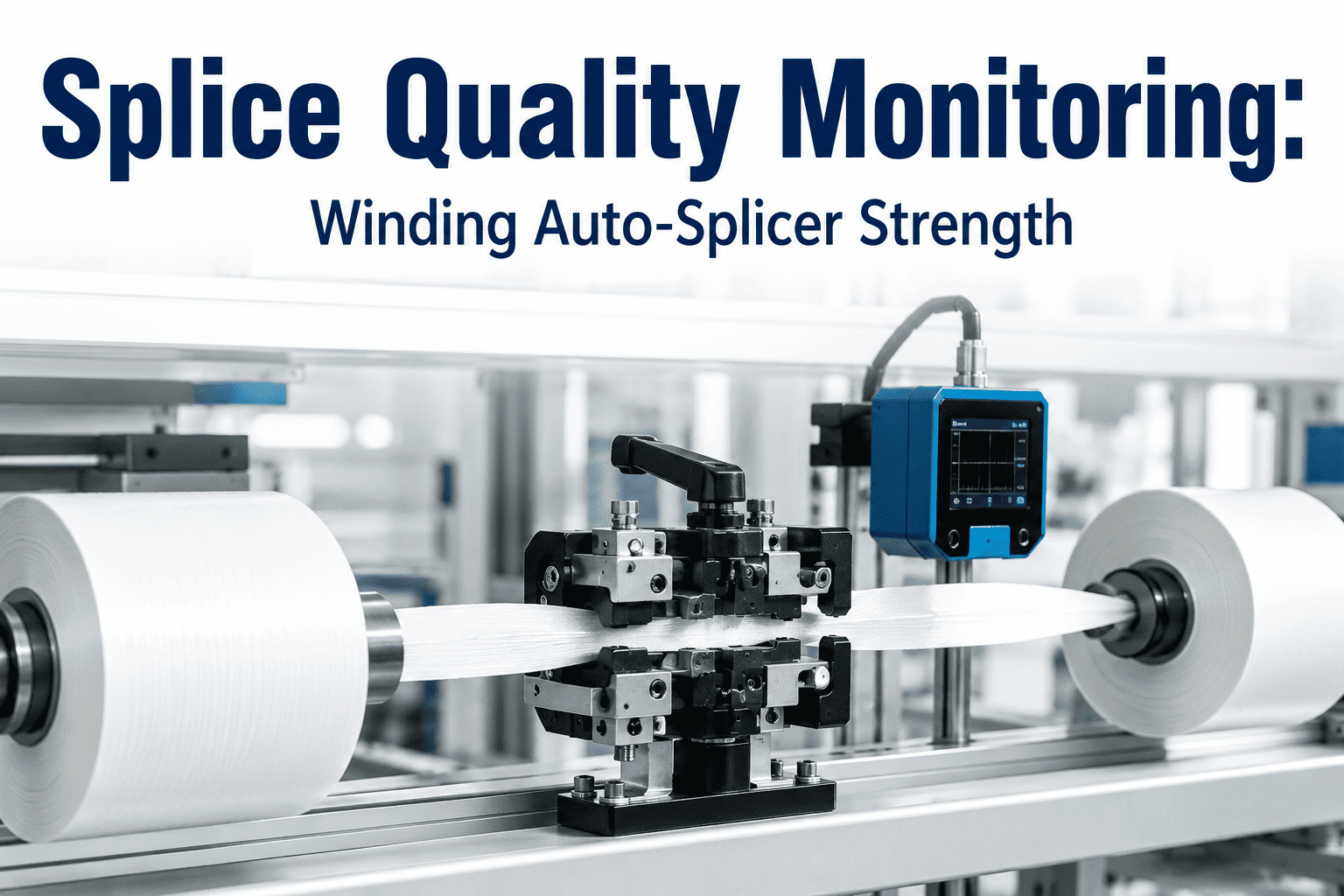
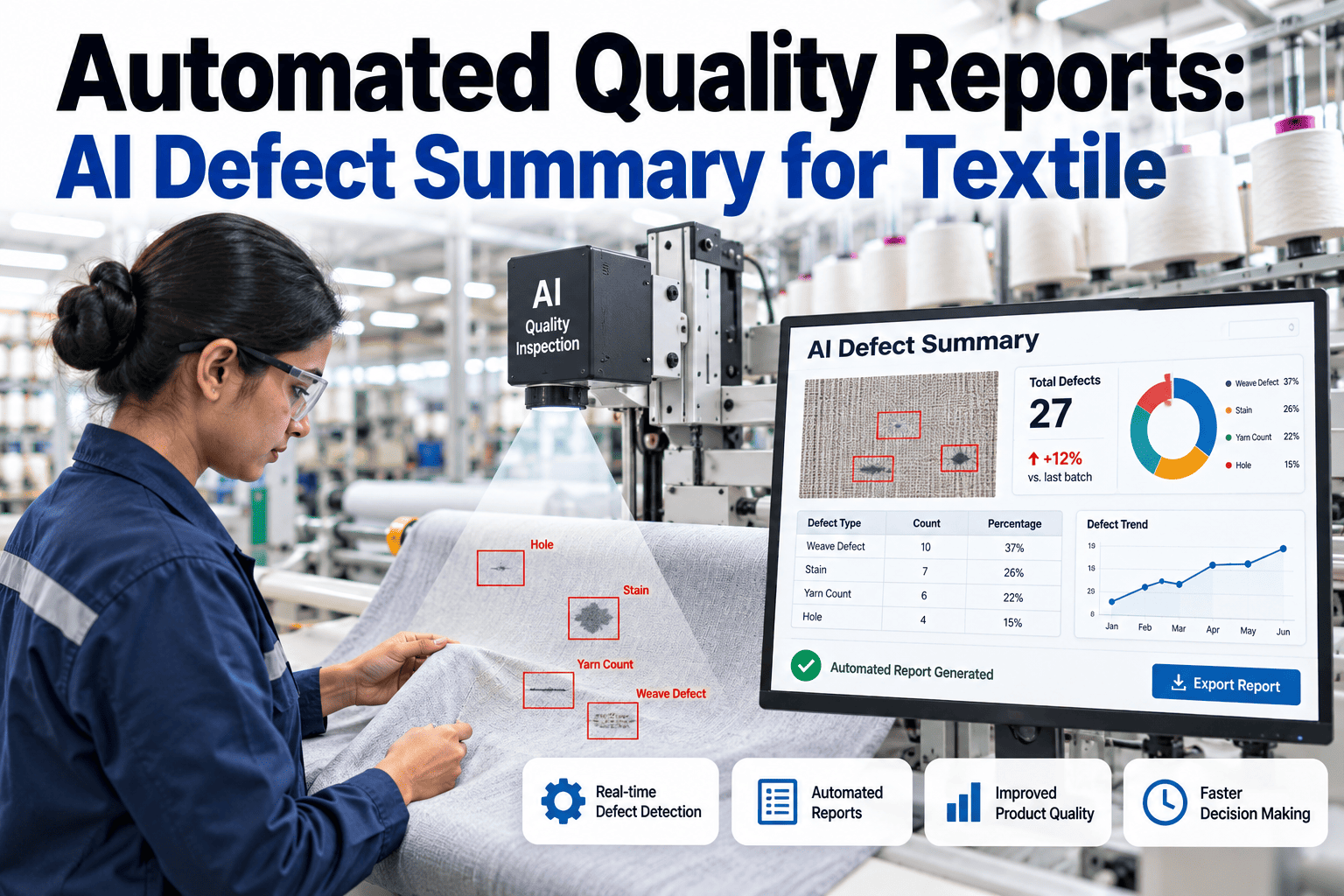
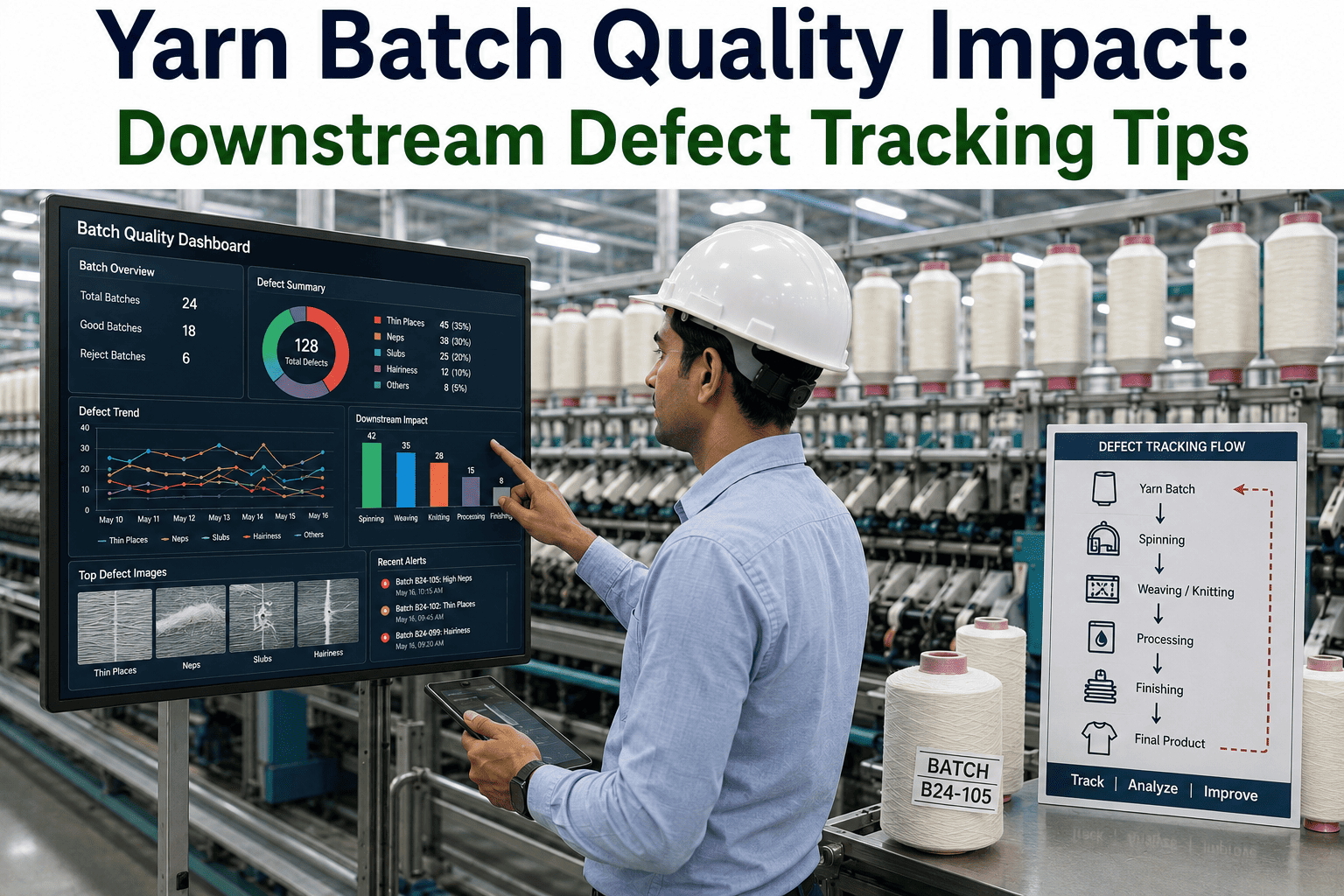
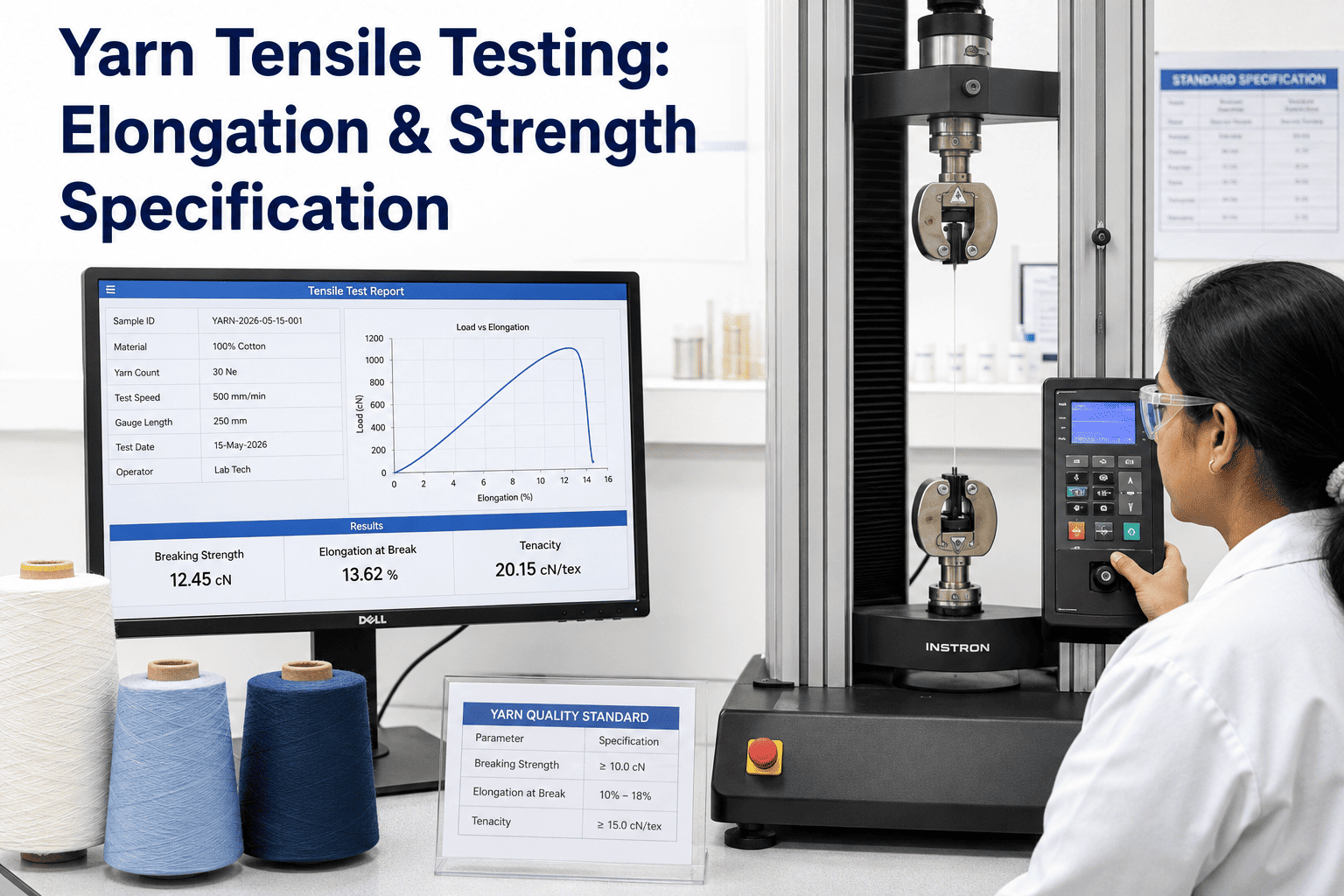
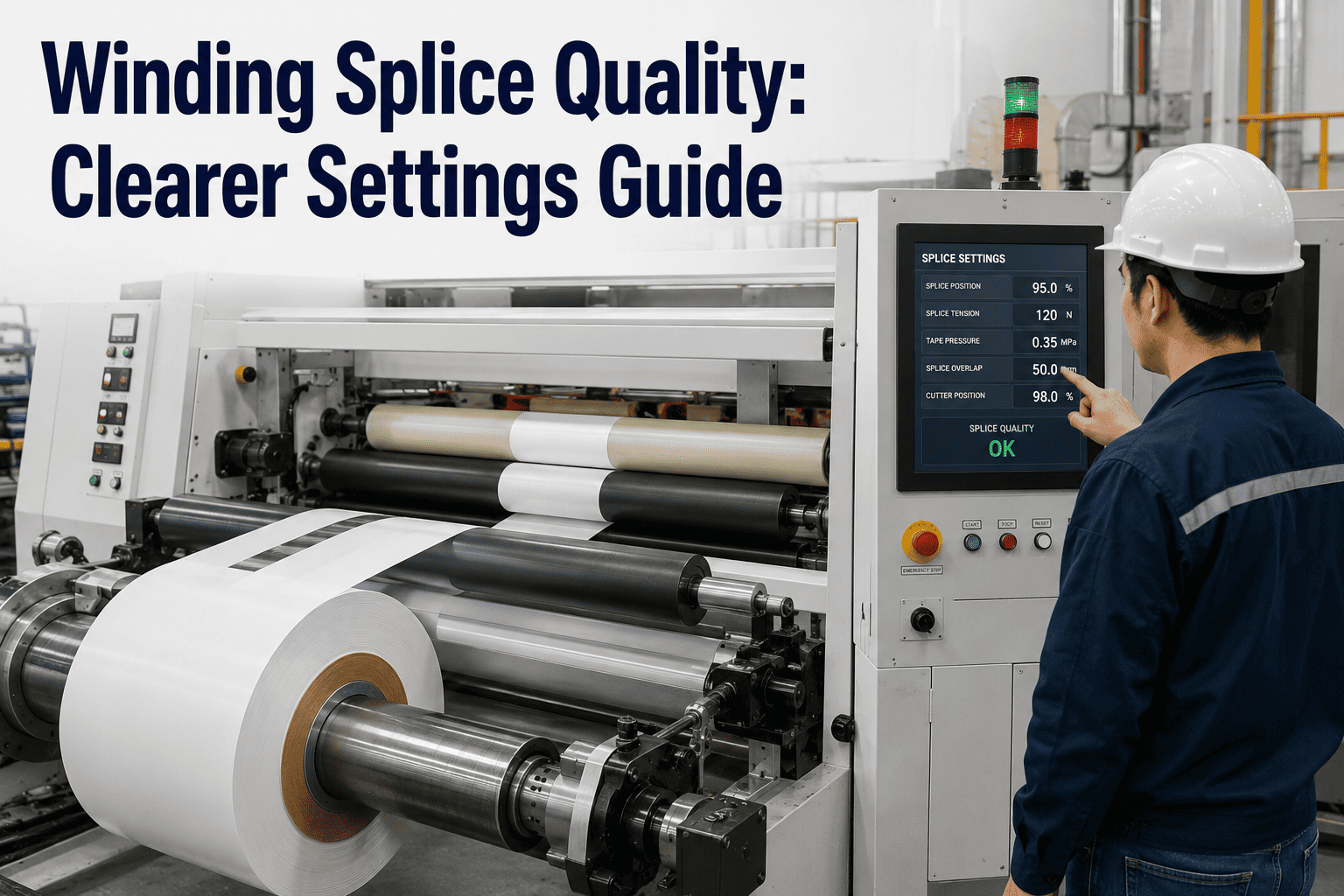
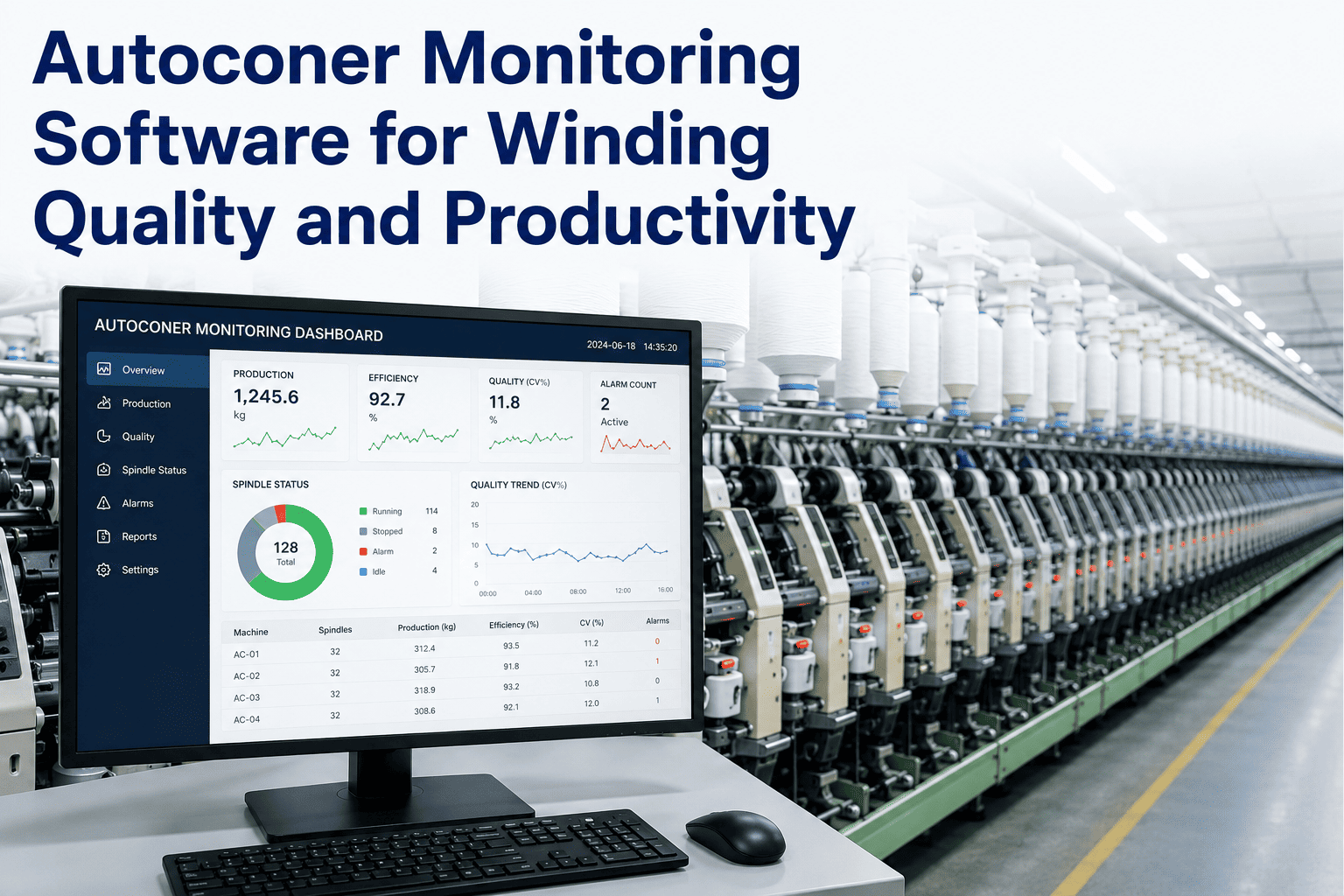
A splice that looks fine on a winding bobbin can still fail three processes later, in a loom or knitting machine nobody thinks to connect back to a splicer setting from days earlier. Splice strength and splice appearance are related but not the same thing, and a splicer drifting out of tolerance usually shows a visible appearance problem well before it shows a strength problem — if anyone is actually checking either one on a schedule instead of by chance. Book a demo to see splice quality tracked automatically across every auto-splicer on your winding floor.
Winding · Splice Quality
The Splice That Fails Downstream Was Never Checked at the Splicer
Continuous splice strength testing, appearance assessment, and splicer condition monitoring built to catch drift before a bad splice reaches weaving or knitting.
Strength and Appearance: Two Different Splice Quality Signals
A splice can pass a visual check and still be mechanically weak, and it can be mechanically sound while looking rough enough to catch on a guide downstream. Neither metric alone tells the full story.
Splice Strength
Measured against the base yarn's own tensile strength, typically targeting a defined percentage retention so the splice does not become the weakest point in the yarn.
Splice Appearance
Assessed for diameter uniformity, length, and surface smoothness, since an oversized or uneven splice can snag on guides or create a visible fabric defect.
Why a Splice Failure Rarely Gets Traced Back to the Splicer
The Failure Happens Processes Later
A splice made during winding often fails during weaving or knitting, by which point the connection to a specific splicer is already lost.
Splicer Drift Is Gradual
Splicer condition degrades slowly through normal wear, so no single splice looks dramatically different from the one before it.
Spot Checks Miss the Pattern
Manual sample testing catches individual bad splices but rarely reveals which specific splicer head is trending out of tolerance.
Know Which Splicer Head Is Drifting Before a Bad Splice Reaches the Loom.
iFactory links every splice back to the specific splicer head that made it, tracking strength and appearance trends so drift is caught head by head, not discovered downstream.
The Splicer Maintenance Factors That Actually Move Splice Quality
| Maintenance Factor | Effect on Splice Quality |
| Splicing Chamber Wear | Worn chamber surfaces produce inconsistent splice diameter and reduced strength retention over time |
| Air Pressure Consistency | Pneumatic splicers depend on stable air pressure; drift here directly affects both strength and appearance |
| Yarn Preparation Length | Incorrect untwisting length before splicing is one of the most common causes of a weak but visually acceptable splice |
| Cutter Blade Sharpness | A dull cutter creates ragged yarn ends that weaken the splice regardless of how well the rest of the cycle performs |
We had a recurring loom stoppage pattern that our maintenance team spent weeks chasing as a loom problem, checking tension settings and beam quality without finding a consistent cause. It turned out the failures were concentrated on yarn packages that had all passed through two specific splicer heads on the winding machine, both overdue for chamber maintenance. Once we started tracking splice strength by splicer head instead of just sampling packages at random, the pattern was obvious within days, and loom stoppage from splice failure dropped sharply after servicing those two heads.
— Winding Department Head, Cotton Spinning and Weaving Mill, Coimbatore
A Practical Splice Verification Routine
Consistent, structured verification catches drift long before it becomes a downstream problem large enough to investigate on its own.
1
Sample Every Splicer Head Regularly
Rotate strength testing across every individual splicer head on a fixed schedule, not just the machine as a whole.
2
Track Strength Retention Percentage
Record splice strength as a percentage of base yarn strength, so drift is visible relative to the yarn itself, not an absolute number.
3
Log Appearance Alongside Strength
Record diameter and length data for the same sample splices, since appearance often drifts ahead of strength.
4
Trigger Maintenance on Trend, Not Failure
Service a splicer head once its trend crosses a tolerance line, rather than waiting for a downstream complaint to arrive.
Splice Quality Monitoring — Frequently Asked Questions
What is a reasonable splice strength retention target relative to base yarn strength?
Targets vary by yarn type and end use, but many mills aim for splice strength retention in a range that keeps the splice comparable to, or only modestly below, the base yarn's own tensile strength, so the splice is not the predictable weak point in every package. The exact acceptable percentage should be set against your specific yarn count and downstream process tolerance, since a splice acceptable for one fabric construction may be inadequate for a more demanding one.
Contact support for help setting a retention target for your yarn types.
How can a downstream loom or knitting stoppage be traced back to a specific splicer head?
This requires linking package identity through the production chain, from the winding machine and splicer head that created each package to the loom or knitting machine that later ran it. Without that traceability, a splice failure downstream is essentially untraceable, since by the time the fabric or yarn fails, there is no visible record of which splicer produced the connection. Automated tracking that tags packages at winding and follows them through subsequent processes is what makes this kind of root cause analysis possible.
Does splice appearance really predict strength problems, or are they unrelated?
They are related but not perfectly correlated, which is exactly why both need to be tracked rather than relying on one as a proxy for the other. An oversized or uneven splice often does indicate a strength problem, since both can stem from the same root cause, such as incorrect yarn preparation length or a worn splicing chamber. However, some strength issues, particularly from pressure inconsistency, can occur without an obvious visual sign, which is why appearance checks alone are not sufficient on their own.
How often should individual splicer heads be serviced based on quality trend data?
Rather than a fixed calendar interval, the more reliable approach is servicing based on when a specific head's strength or appearance trend crosses a defined tolerance line, since wear rates vary significantly between heads even on the same machine depending on usage and yarn type run through them. A head running a coarser, more abrasive yarn will typically need attention sooner than one running a finer, smoother yarn, and trend-based servicing accounts for that difference automatically.
Is manual spot-check sampling enough for most winding operations, or is continuous monitoring necessary?
Manual spot-checking can catch individual bad splices, but it rarely samples evenly enough across every splicer head to reveal which specific head is trending toward failure, since sampling is often random or convenience-based rather than systematic. Continuous or high-frequency monitoring, tied to a specific head rather than the machine as a whole, is what turns splice quality data from an occasional snapshot into an early warning system that catches drift while it is still a minor issue.
Stop Finding Out About Bad Splices From a Loom Stoppage.
Track splice strength and appearance by individual splicer head, so drift is caught and corrected before it ever leaves the winding floor.