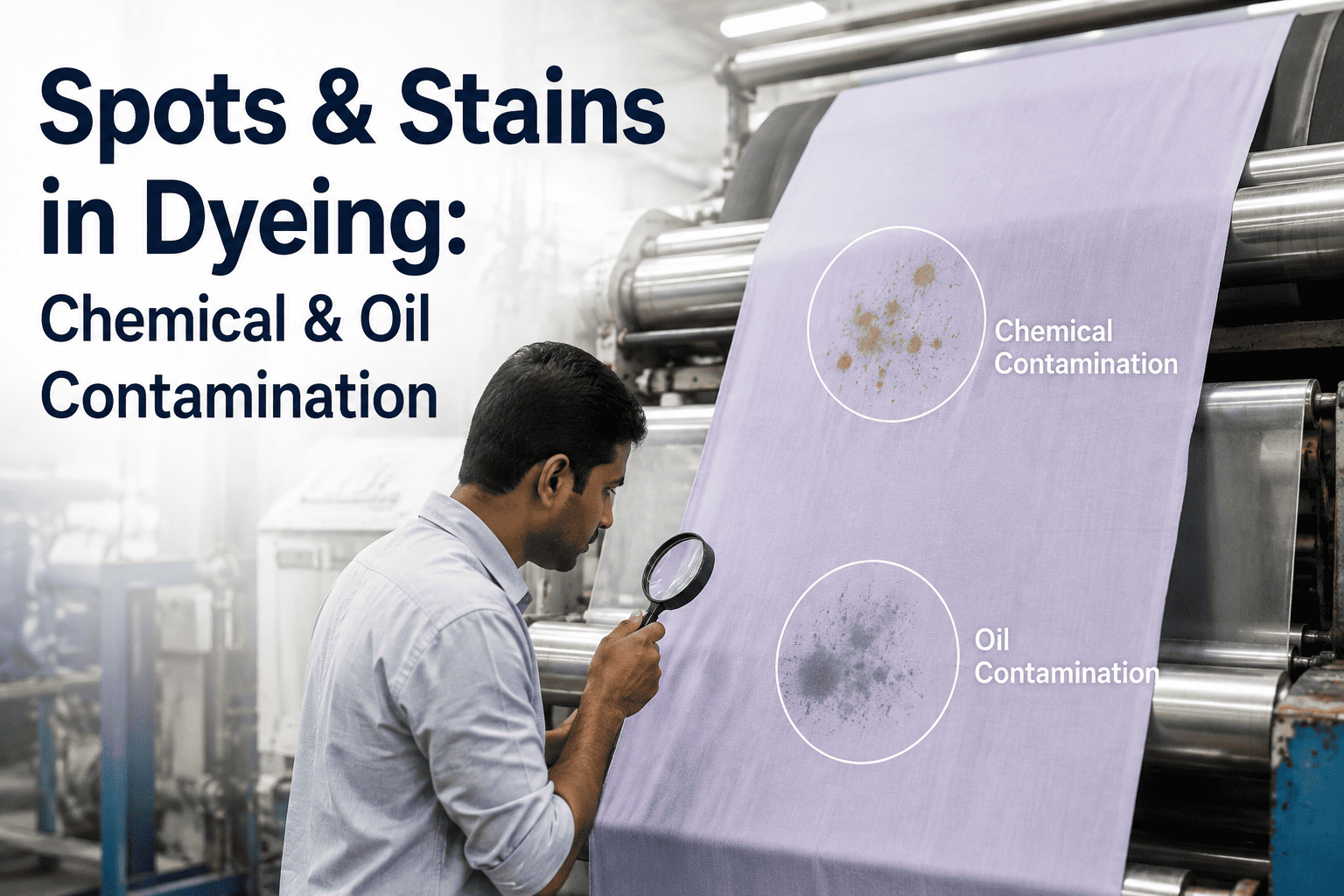
A fabric roll can come out of dyeing with a perfectly even shade across 99% of its surface and one small oil stain that gets the entire lot rejected at final inspection, and the frustrating part is that these spots rarely come from the dye recipe itself. Most spots and stains in dyed fabric trace back to contamination — machine oil, grease, foreign chemicals, or process residue — that had nothing to do with the actual dyeing chemistry but interfered with it at exactly the wrong moment. See how iFactory tracks contamination sources and inspection data across every batch through a Book a Demo.
Trace Every Spot And Stain Back To Its Actual Contamination Source
iFactory connects machine maintenance records, chemical handling logs, and inspection results, so quality teams can identify exactly where contamination is entering the process instead of guessing batch after batch.
Not All Spots Are The Same Defect Wearing A Different Face
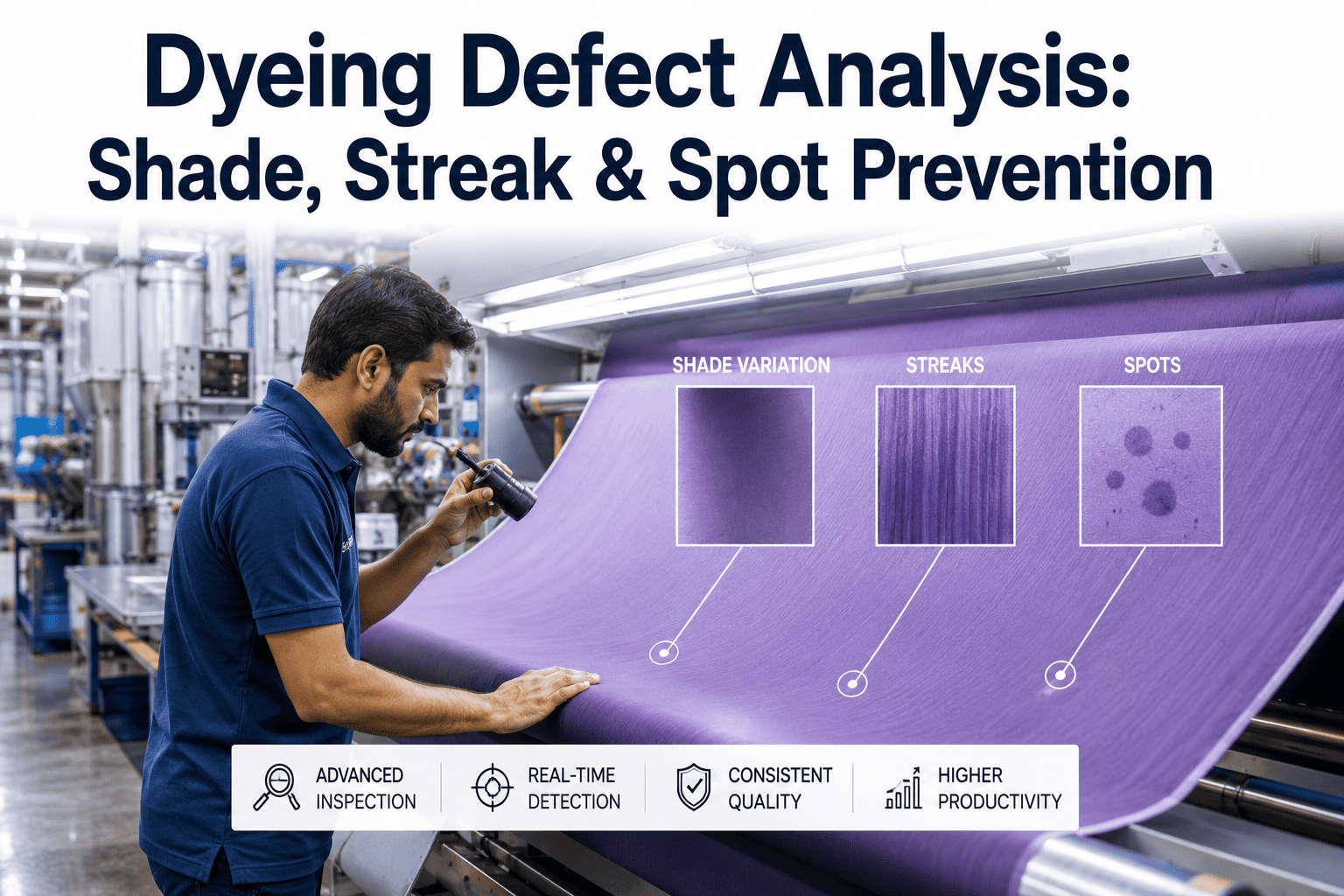
Spots and stains get lumped together as a single defect category in most inspection reports, but the underlying contamination sources are quite different from one another, and correctly identifying which type of contamination produced a given spot is the first step toward finding where it actually entered the process. Oil and grease spots typically come from mechanical sources — bearings, chains, and moving parts — while chemical spots often trace back to auxiliary chemicals that were not fully dissolved or dispersed before entering the dye bath, and foreign substance contamination can come from something as simple as fiber or dust from an entirely different fabric run left inside the machine from a previous cycle. Treating all three as interchangeable "contamination" in a quality log flattens exactly the information needed to fix the problem, since a maintenance team chasing a chemical dosing issue will look in entirely the wrong place if the actual defect log simply says "spot" without specifying which of the three distinct mechanisms was actually responsible.
Machine Oil And Grease
Leaks or drips from bearings, gearboxes, and moving mechanical parts land directly on fabric passing through or near the affected component.
Undissolved Chemical Auxiliaries
Chemicals added to the bath without complete dissolution can deposit concentrated particles directly onto the fabric surface at the point of contact.
Cross-Contamination From Prior Batches
Residue, fiber, or chemical carryover left in a machine from a previous run can transfer onto a completely unrelated fabric in the following cycle.
Find Where Contamination Enters Before It Reaches Fabric.
iFactory ties maintenance and chemical handling data to inspection results so contamination sources are traceable, not guesswork.
A Structured Way To Trace A Spot Back To Its Source
When a spot or stain shows up during inspection, the investigation needs to move quickly, since the machine that produced it is often already running the next batch and any physical evidence of the contamination source can disappear within hours. A structured investigation sequence helps narrow down the source systematically rather than guessing at likely causes.
Why Chemical Dosing Discipline Matters As Much As Machine Maintenance
Undissolved chemical spots are frequently treated as a lesser concern than mechanical contamination, since there is no visible leak or obvious mechanical failure to point to, but poor chemical handling practices are just as capable of producing costly rejections. Auxiliary chemicals that are added directly to a bath without proper pre-dissolution, mixed in the wrong order, or dosed through equipment with inconsistent flow can all deposit concentrated particles directly onto fabric at the exact point of contact.
Pre-Dissolution Before Dosing
Auxiliary chemicals prone to clumping or slow dissolution should be fully dissolved in a separate vessel before being introduced into the main bath, rather than added directly as a powder or concentrate.
Correct Addition Sequence
Some chemical combinations only dissolve cleanly when added in a specific order, and deviating from that sequence can cause localized precipitation that later shows up as a spot on the fabric.
Filtered Dosing Lines
Inline filters on chemical dosing systems catch particulates before they reach the bath, providing a mechanical safeguard even when upstream mixing has not been perfectly executed.
Turning Contamination Prevention Into A Standing Practice
A one-time cleanup effort after a bad batch rarely holds up over the following months, since the same production pressures that caused the original lapse tend to reassert themselves once the immediate concern fades from attention. Building contamination prevention into a standing, repeatable practice requires a few structural commitments that hold regardless of production pressure.
Where Prevention Effort Pays Off Most
Because contamination sources are so varied, prevention needs to cover multiple points in the process rather than relying on a single safeguard. The table below outlines the prevention measures most directly tied to each major contamination type.
| Contamination Type | Primary Prevention Measure | Supporting Practice |
|---|---|---|
| Machine Oil And Grease | Scheduled preventive maintenance and leak inspection | Drip trays and guards on components near fabric path |
| Undissolved Chemicals | Pre-dissolving auxiliaries before bath addition | Filtered chemical dosing lines to catch particulates |
| Cross-Contamination | Standardized machine cleaning between dissimilar batches | Dedicated equipment for high-risk chemical processes |
| Airborne Dust And Fiber | Controlled air filtration in the processing area | Covered fabric transport between process stages |
Preventive maintenance consistently ranks as the highest-value single investment for oil and grease contamination specifically, since a leak caught during a scheduled inspection costs nothing beyond routine maintenance time, while the same leak discovered through a rejected fabric batch costs the full value of the affected production run plus any rework, and in many cases also costs the mill a delivery delay that ripples into the customer relationship long after the actual stain has been resolved.
Why Contamination Defects Are More Expensive Than They Look
A single visible spot rarely means only that small area of fabric is affected — in most rope and jet dyeing processes, the entire batch has been in continuous contact and circulation, meaning contamination introduced at one point can transfer across a much larger portion of the total fabric length than the original visible stain suggests. This is why a small contamination incident often results in a disproportionately large rejection, and why inspectors trained to treat every confirmed contamination finding as a signal to check the full batch length, not just the immediate area around the visible spot, catch far more of the true extent of the defect than a spot check alone would reveal.
Where Contamination Control Programs Fall Short
Even mills with a documented maintenance and cleaning schedule continue to see recurring contamination issues, usually because of gaps in how consistently the schedule is actually followed rather than gaps in the schedule itself.
Maintenance Deferred Under Pressure
Scheduled maintenance windows get pushed back during high-output periods, extending the interval between inspections exactly when machines are running hardest and most likely to develop a leak.
Inconsistent Cleaning Between Batches
Cleaning procedures between dissimilar chemical processes are sometimes shortened to save changeover time, leaving residue that contaminates the next fabric loaded into the same machine.
No Traceable Link Between Incidents
Without a record connecting each contamination incident to its confirmed source, a recurring problem on a specific machine can go unnoticed for months, treated each time as an isolated event.
Turning Scattered Contamination Incidents Into A Visible Pattern
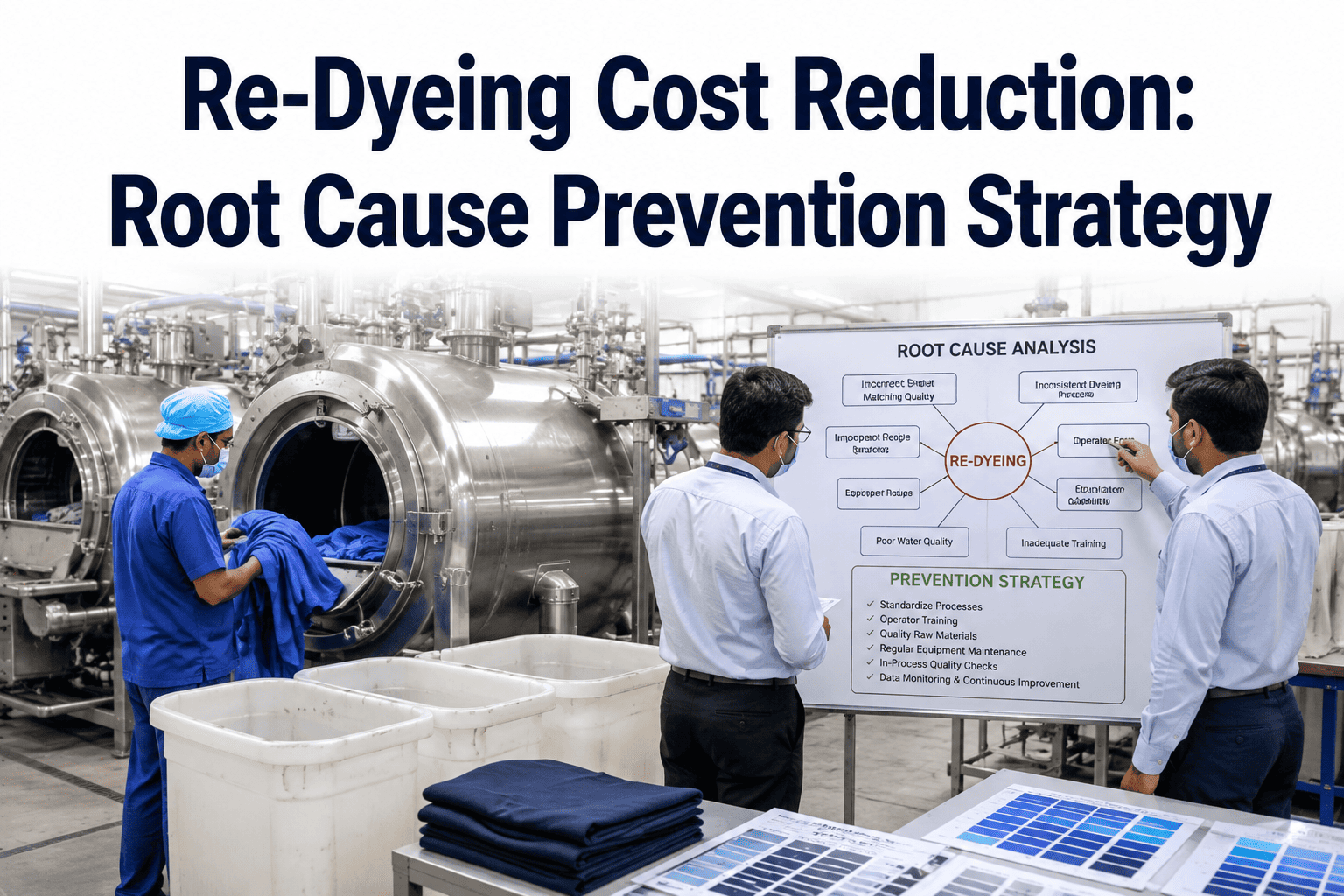
The single biggest obstacle to solving a recurring contamination problem is that the evidence needed to spot the pattern usually lives in three separate places — a maintenance log, a chemical handling record, and a quality inspection report — that are rarely reviewed together. A maintenance technician might know a particular machine has had a minor oil seep for weeks without realizing it has been quietly contributing to a string of spot rejections that quality has been logging as unrelated incidents. Connecting maintenance records, chemical dosing data, and inspection results into a single view makes these patterns visible immediately rather than requiring someone to manually notice the correlation across separate systems. This is the kind of connected quality layer iFactory adds across dyehouse operations, linking every contamination incident back to the machine, process step, and time window it actually originated from, so a recurring source gets identified and fixed permanently instead of being treated as a fresh mystery every time it resurfaces. Over time, this connected record also strengthens preventive maintenance planning itself, since technicians can prioritize inspection attention on the specific machines and components that have historically produced contamination incidents rather than spreading maintenance effort evenly across equipment regardless of its actual defect history. It also gives production planning a useful input when scheduling high-value or highly visible orders, since a machine with a recent contamination history can be deliberately routed away from a sensitive order until its root cause has been confirmed resolved, rather than discovering the risk only after the order is already running.
We had oil spots showing up on maybe two or three batches a month, always on different fabric types, and every time it looked like a one-off incident with no clear pattern. When we finally started logging exact spot position against machine ID, it turned out almost all of them traced back to a single guide roller on one of our older jet machines that had a slow bearing leak nobody had caught during routine checks. That roller had been quietly costing us rejected batches for who knows how long before the pattern became obvious once we had the data lined up.
Frequently Asked Questions
Q: Can an oil or grease stain be removed from fabric after dyeing is complete?
In many cases, an oil or grease stain can be treated with a solvent scouring step targeted specifically at the affected area or the full batch, depending on how widespread the contamination turns out to be once traced through the fabric length. Success depends heavily on how long the stain has been set and whether the fiber type tolerates the solvent treatment without affecting the dyed shade elsewhere on the fabric, so results vary and prevention remains far more reliable than after-the-fact removal. Fabrics dyed with disperse or vat dyes tend to tolerate solvent-based spot treatment somewhat better than those dyed with more sensitive direct dye formulations, which is another reason the dye class decision made early in production carries downstream consequences for how recoverable a contamination incident actually turns out to be. Reach out through Support Contact to discuss options for a specific contamination case.
Q: Why do the same type of spots keep appearing on different fabric types across different batches?
Recurring spots across different fabric types almost always point to a shared piece of equipment or a shared process step rather than anything related to the fabric itself, since the fabric type is simply what happens to be passing through the contaminated point at the time. Tracking spot occurrences against machine ID rather than fabric type is usually the faster way to spot this kind of pattern, since a chart organized by fabric would make the shared machine connection much harder to see.
Q: How can we tell the difference between an oil stain and an undissolved chemical spot during inspection?
Oil and grease stains typically appear as a translucent or darkened area with a slightly different sheen than the surrounding fabric, sometimes with a visible edge gradient where the contamination spread outward from a contact point. Undissolved chemical spots more often appear as a sharply defined spot with a distinct shade difference rather than a sheen change, since the chemical interfered directly with dye uptake at that specific location rather than simply sitting on top of the dyed surface. A Book a Demo session can walk through building a visual reference guide for your inspection team.
Q: Is cross-contamination between batches really common enough to worry about as a major cause?
Yes, cross-contamination is one of the more commonly underestimated contamination sources, particularly in facilities running a wide variety of chemical processes through shared equipment without dedicated machines for higher-risk applications. A machine that recently ran a heavily chemical-intensive process can leave residue behind even after a standard cleaning cycle if that cycle was not specifically validated for the chemicals involved, which is why standardized, documented cleaning procedures between dissimilar batches matter more than general good housekeeping alone. Facilities running a genuinely wide chemical variety through shared equipment benefit from maintaining a documented compatibility reference showing which chemical combinations require an extended or specialized cleaning cycle, rather than relying on individual staff to remember which processes carry a higher cross-contamination risk from one shift to the next.
Q: What is the single most cost-effective step a mill can take to reduce contamination-related rejections?
Consistent preventive maintenance on mechanical components in direct or near contact with fabric consistently delivers the best return relative to its cost, since most oil and grease contamination traces back to a leak or wear issue that a routine inspection would have caught well before it affected production. Pairing this with a simple documented cleaning checklist between dissimilar batches addresses the two contamination sources responsible for the large majority of spot and stain rejections in most dyehouses.
Stop Guessing At Where Contamination Is Coming From.
iFactory connects maintenance, chemical handling, and inspection data so every spot traces back to its real source.