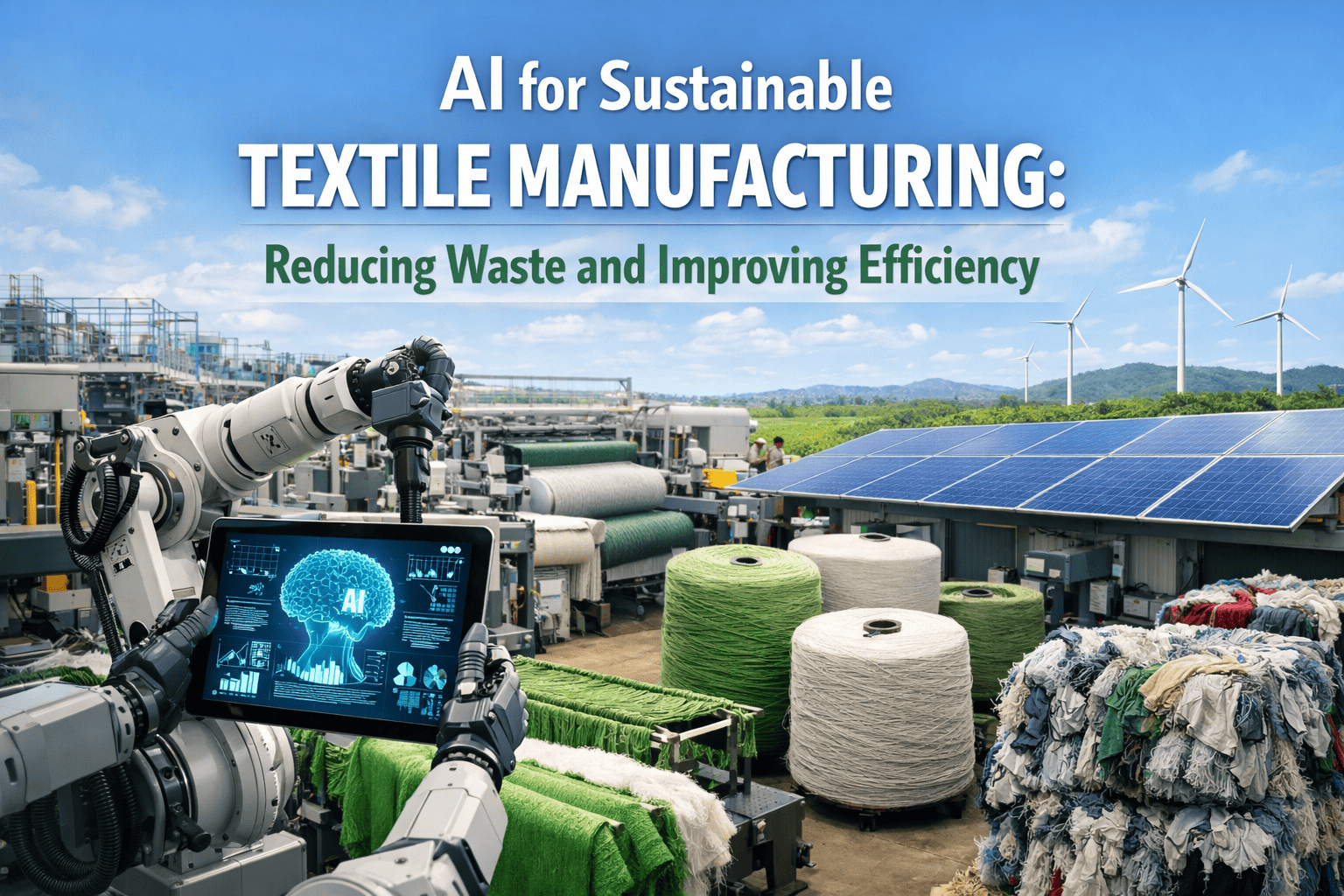
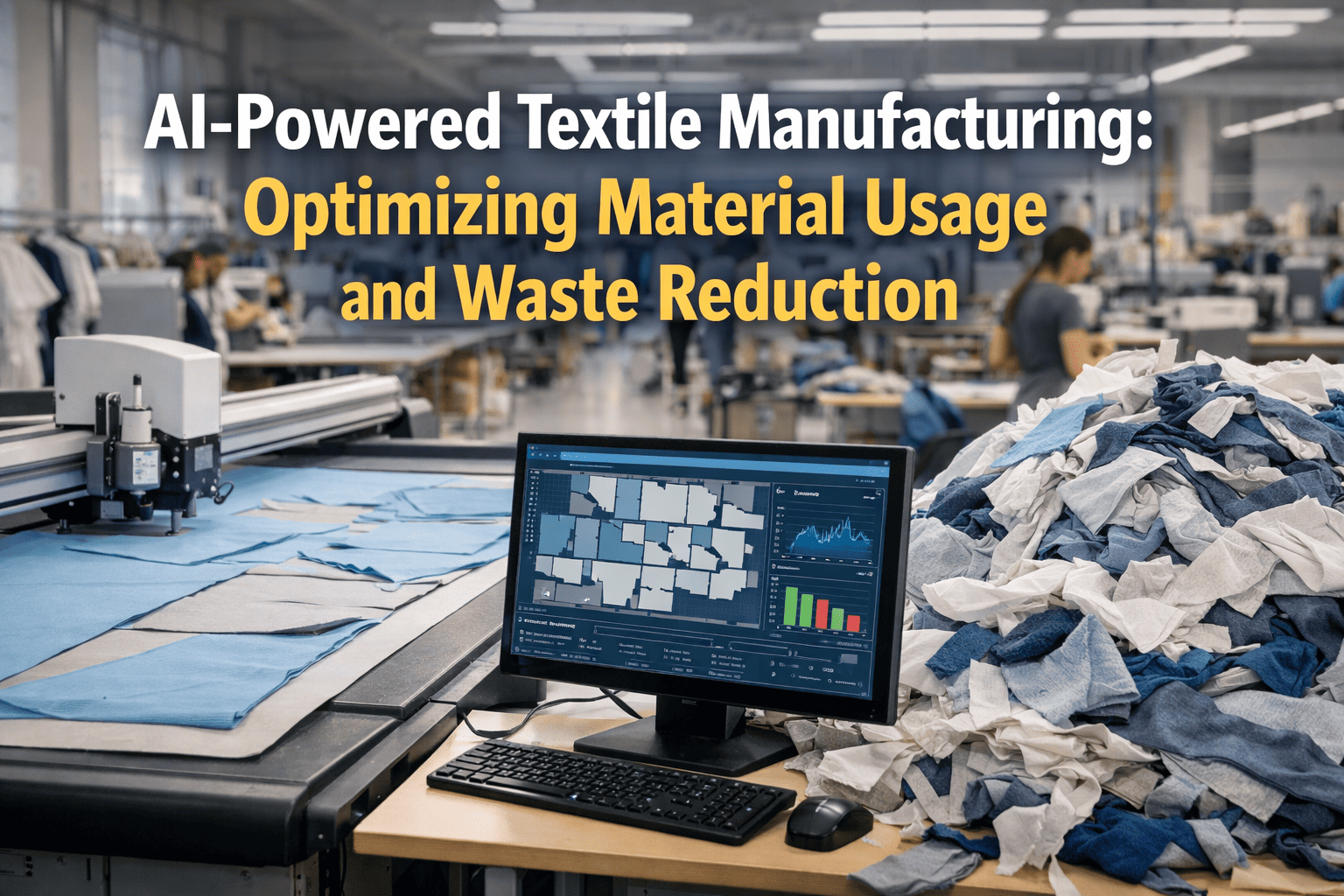
Sustainability and quality management get treated as separate initiatives in most textile manufacturers — a sustainability team tracking water usage and eco-certifications, a quality team tracking defect rates and customer complaints, each reporting up through different channels with little overlap. That separation misses an obvious connection: a defect is wasted material, wasted water, wasted energy, and wasted labor all at once, which means every improvement in quality is inherently a sustainability improvement too. Aligning these two functions is the focus of this guide, reflecting the same integrated approach iFactory takes with textile manufacturers pursuing both goals together.
SUSTAINABILITY & QUALITY
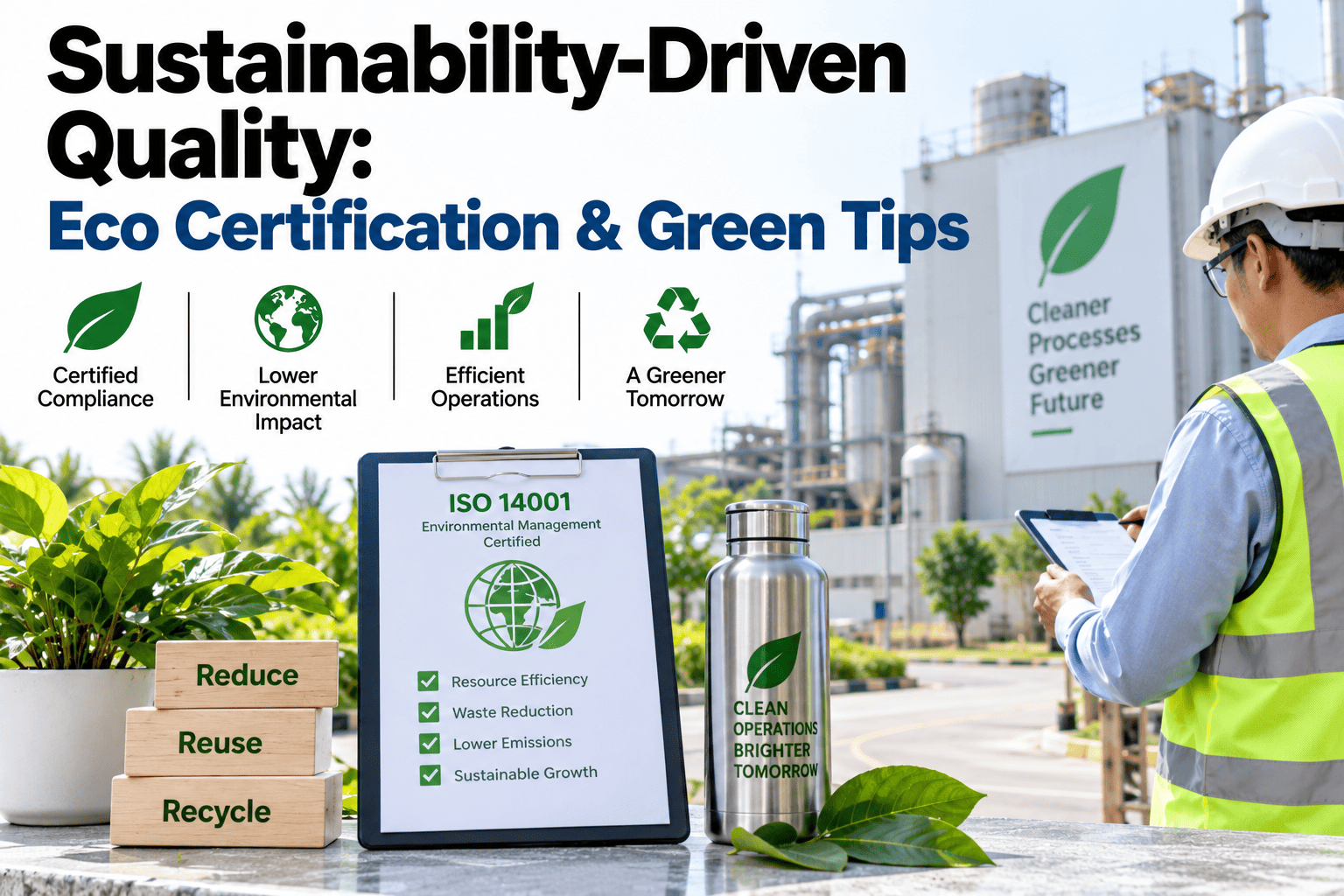
Sustainability-Driven Quality: Eco Certification & Green Manufacturing
Align quality management with sustainability goals through eco-certification integration and waste reduction driven directly by quality improvement, not a separate parallel initiative.
32%
Waste Reduction From Quality Gains
Why Quality and Sustainability Are the Same Data, Viewed Differently
Every defective unit that gets scrapped, reworked, or returned represents material, water, energy, and labor that was consumed without producing a saleable product. A quality team tracking defect rate and a sustainability team tracking waste-to-landfill or water consumption are frequently measuring the downstream consequences of the exact same underlying production events, just through different reporting lenses. Recognizing that overlap turns quality improvement work into sustainability progress automatically, rather than requiring two separate improvement programs pursuing overlapping outcomes independently.
Where Quality Improvement Directly Reduces Environmental Impact
The connection between defect reduction and environmental impact isn't abstract — it maps to specific, measurable resource categories that both a quality manager and a sustainability officer would recognize immediately.
MATERIAL WASTE
Fewer Scrapped Units
Every reduction in defect rate directly reduces raw fabric and finished goods sent to waste, cutting material consumption per saleable unit produced.
WATER USAGE
Less Rework & Reprocessing
Dyeing and finishing rework consumes significant water; catching defects earlier in the process avoids the water cost of correcting them downstream.
ENERGY CONSUMPTION
Reduced Reprocessing Cycles
Each reprocessing cycle for a defective batch consumes additional energy; higher first-pass quality reduces total energy per finished unit.
RETURNS & LOGISTICS
Fewer Customer Returns
Returned goods carry a full reverse logistics environmental cost on top of the original production impact, avoidable through better outbound quality.
Integrating Eco-Certification Requirements Into the Quality System
Many eco-certification standards — covering water treatment, chemical management, and waste tracking — share documentation and monitoring requirements with standard quality management systems. Building these into one integrated system, rather than parallel tracking efforts, reduces duplicated administrative work in the same way certification sequencing does for quality-only standards.
| Eco-Certification Area | Overlapping Quality System Requirement | Shared Benefit |
|---|
| Chemical management documentation | Incoming material inspection and supplier approval records | Single supplier audit trail serves both purposes |
| Water usage and treatment tracking | Process monitoring and corrective action records | One data source supports both compliance reports |
| Waste stream categorization | Defect and rework tracking by category | Quality defect data directly informs waste reporting |
Connect Your Quality and Sustainability Data
iFactory helps textile manufacturers build a quality system that feeds eco-certification and sustainability reporting directly, rather than tracking the two separately.
Moving Toward a Zero-Defect Mindset as a Sustainability Strategy
Framing defect reduction explicitly as a sustainability initiative, rather than a purely cost-driven quality metric, tends to unlock a different level of organizational investment and attention. The steps below reflect how manufacturers successfully make that reframe.
1
Translate Defect Rate Into Resource Impact
Report defect reduction in terms of material, water, and energy saved, alongside the traditional cost figure, to connect it directly to sustainability goals.
2
Prioritize Defects With the Highest Resource Cost
Not every defect carries equal environmental impact; prioritize improvement efforts on defects driving the most water, energy, or material waste.
3
Share Metrics Across Both Teams
Give sustainability officers visibility into real-time quality data, and give quality teams visibility into resource cost per defect category.
A Sustainability Manager on Reframing Quality as an Environmental Lever
"
Our sustainability reporting and our quality reporting used to come from two completely separate teams that barely spoke to each other, which in hindsight is a strange way to run things given how directly connected the two areas actually are. When I started translating our quality team's defect reduction wins into water and energy terms for our sustainability reports, it became clear that our biggest quality improvement project of the previous year, a dye process rework reduction initiative, had actually been one of our largest water savings wins too, and almost nobody had connected those two facts before. Once we started sharing data between the teams regularly, quality started prioritizing certain defect categories differently, specifically weighting ones with high water or energy cost even when they weren't necessarily the highest-cost defects in pure dollar terms. That shift genuinely changed our sustainability numbers in a way that a standalone sustainability initiative, disconnected from quality's daily work, never would have achieved on its own.
— Sustainability Manager, Textile Manufacturing Company · Aligned Quality and Sustainability Reporting Across 4 Facilities
Frequently Asked Questions
How do we calculate the environmental impact of a specific defect category?
This typically starts with mapping each defect category to the specific rework or scrap process it triggers, then applying your facility's known resource consumption figures — water per reprocessing cycle, energy per production hour, material weight per unit — to that specific process. This calculation doesn't need to be perfectly precise to be useful; even a reasonable estimate is enough to meaningfully prioritize which defect categories carry the highest environmental cost and deserve focused improvement attention first.
Which eco-certifications have the most overlap with standard quality management requirements?
Certifications with strong chemical management, water treatment, and traceability components tend to overlap most significantly with standard quality management system requirements, since both are fundamentally asking for similar documentation discipline, supplier oversight, and corrective action processes, just applied to different specific outcomes. The exact overlap varies by certification body, so mapping your specific eco-certification requirements against your existing quality system documentation is worth doing explicitly rather than assuming a generic level of overlap.
Does prioritizing defects by environmental impact ever conflict with prioritizing by cost?
Occasionally, yes — a defect category might carry a moderate dollar cost but a disproportionately high water or energy footprint, or vice versa, which is exactly why sharing both cost and environmental impact data across teams matters rather than optimizing for just one dimension. Most organizations find that a combined prioritization approach, weighting both cost and environmental impact together, produces a more balanced improvement roadmap than either metric considered in isolation.
How do we get quality and sustainability teams to actually share data on an ongoing basis?
A shared dashboard or reporting system that both teams access, rather than separate reports each team maintains independently, tends to be the most durable solution, since it removes the manual effort of periodically exchanging data that easily falls by the wayside during busy periods. Establishing a recurring joint review meeting, even a brief one, also helps maintain the connection between the two functions over time rather than relying solely on a shared system that nobody actively discusses together.
Can iFactory help us build a quality system that supports both certification and sustainability reporting?
Yes — iFactory works with textile manufacturers to design quality management systems that capture data supporting both traditional quality certifications and eco-certification requirements from a single source, reducing duplicated documentation effort across both reporting streams. To discuss integrating your quality and sustainability data,
book a demo with our team.
Turn Quality Improvement Into Your Sustainability Strategy
Every defect avoided is material, water, and energy saved. iFactory helps textile manufacturers connect quality data to sustainability reporting, so improvement work counts toward both goals at once.