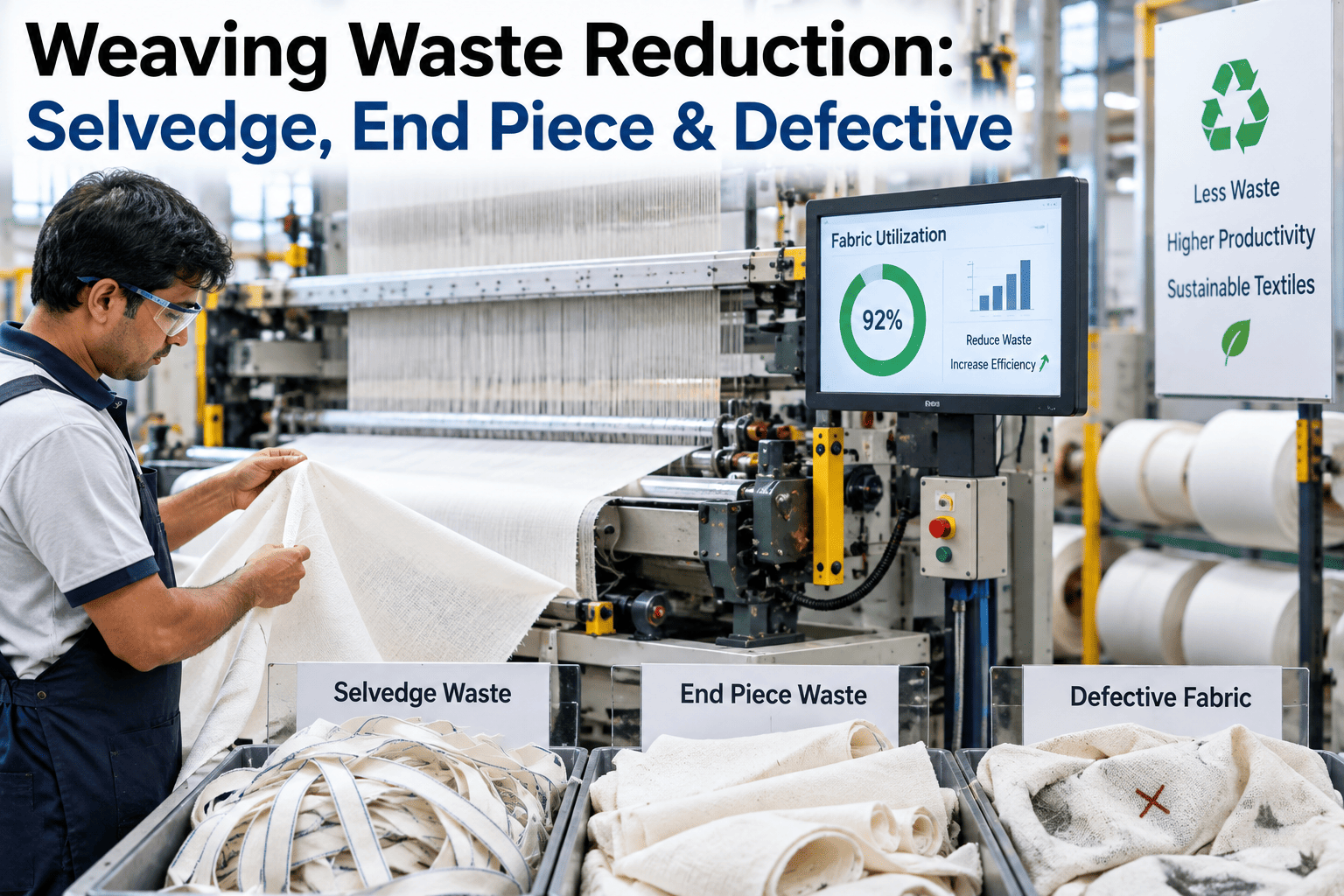
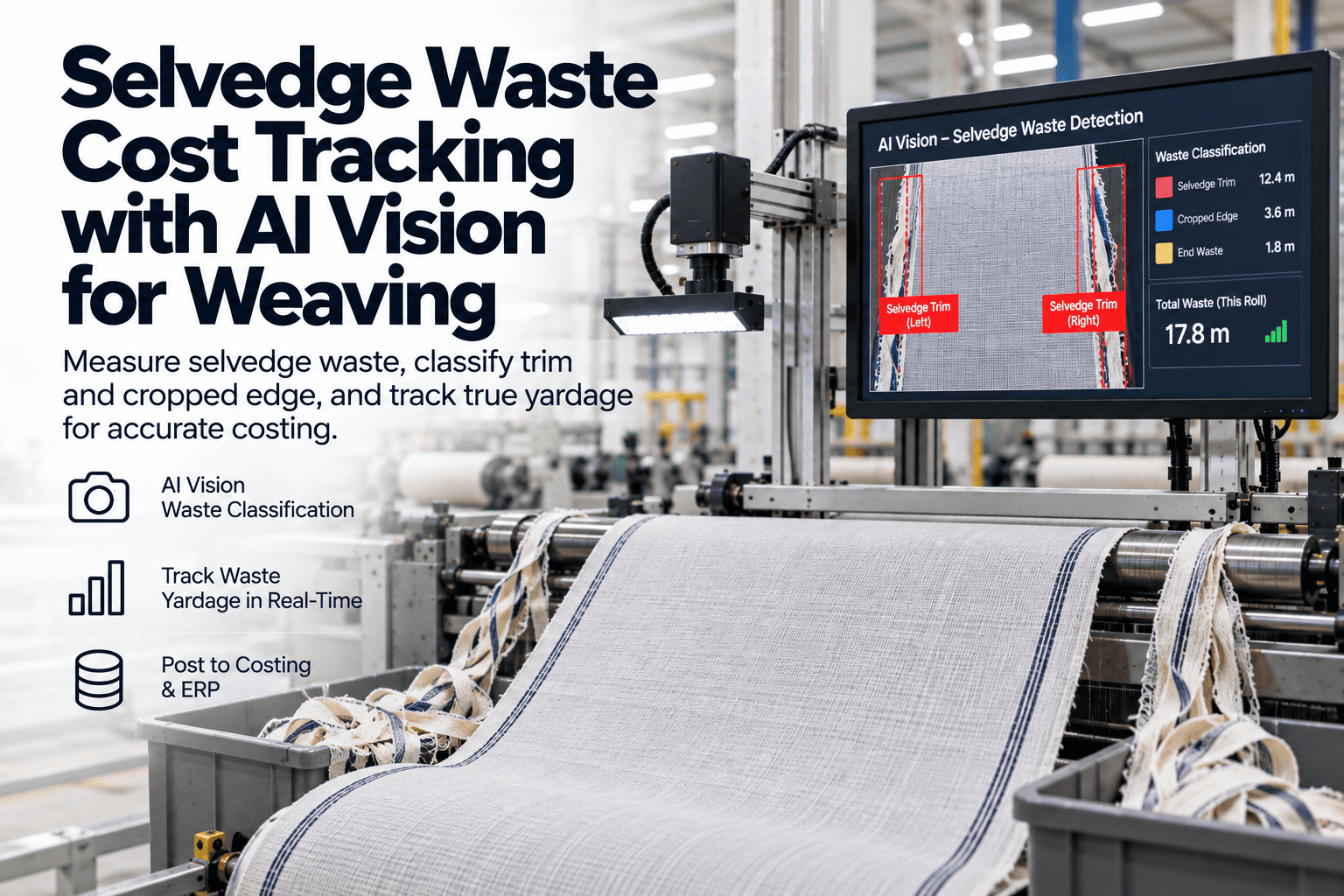
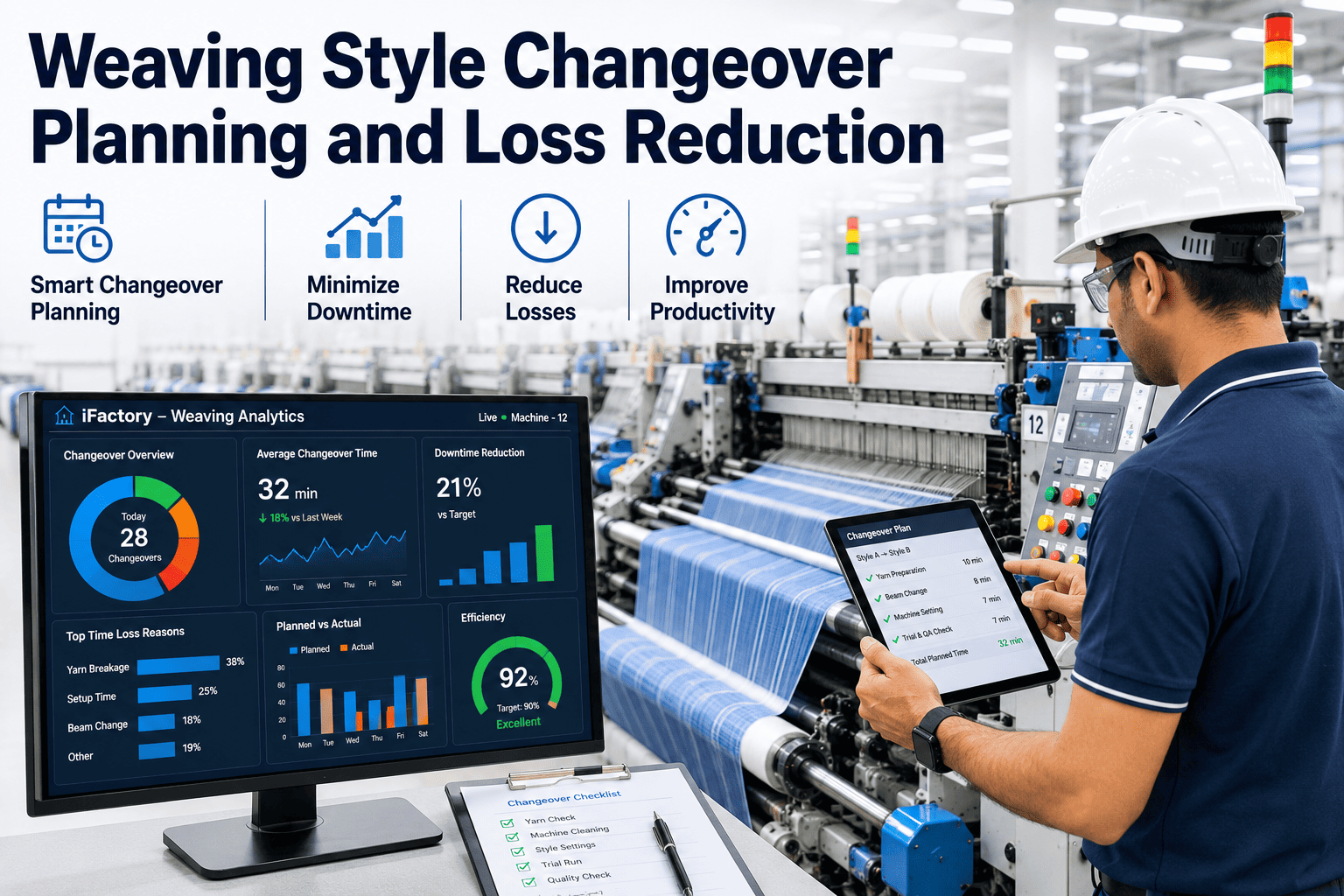
Weaving waste rarely gets the same scrutiny as spinning waste, even though it often represents a larger dollar value per kilogram since the material has already absorbed the full cost of yarn production before it is lost. Selvedge trim gets treated as an unavoidable cost of the weaving process, end pieces from beam changes get written off as a rounding error, and defective fabric gets tracked as a quality metric rather than a waste metric, even though all three represent the same thing: fully processed material that never becomes sellable fabric. This inconsistent treatment means the true total cost of weaving waste is almost never visible in one place to the people making budget and improvement decisions, even at mills that are otherwise disciplined about tracking cost in other parts of the operation. Because these three waste types are tracked in different systems by different departments, most mills have no single view of total weaving waste cost, let alone a per-loom breakdown that would reveal which specific machines or operators are driving the losses. Bringing selvedge, end piece, and defective fabric waste into one tracked view, broken out by loom, is what turns weaving waste from an accepted cost of doing business into a real reduction target. If your mill tracks these three waste types separately or not at all, you can book a demo to see how iFactory brings them together automatically.
WEAVING WASTE · SELVEDGE, END PIECE & DEFECTIVE FABRIC
Track Every Weaving Waste Type in One View, By Loom
iFactory unifies selvedge trim, end piece loss, and defective fabric into a single per-loom waste view, revealing which machines and shifts are actually driving your weaving waste cost.
THE THREE WASTE TYPES
Selvedge, End Piece, and Defective Fabric Each Have a Different Root Cause
Each of these three weaving waste types is generated through a distinct mechanism and typically tracked, if it is tracked at all, by a different part of the organization. Understanding each one separately is the first step toward reducing total weaving waste cost, and it is worth noting that the department currently responsible for tracking each type, where tracking exists at all, is rarely the department best positioned to actually fix the underlying cause, which is part of why these three waste streams tend to persist unaddressed even at otherwise well-run mills.
01
Selvedge Trim
Fabric edge material trimmed away during finishing, driven by loom width setting relative to the finished fabric specification and selvedge construction method.
02
End Piece Loss
Material lost at the start and end of each warp beam, driven by beam length planning, changeover procedure, and how tightly the loom runs down to the last usable length.
03
Defective Fabric
Fully woven fabric rejected during quality inspection, driven by the same mechanical, tension, and material factors that cause fabric defects generally.
PER-LOOM TRACKING
Why Waste Needs to Be Tracked by Loom, Not Just by Mill Total
A mill-wide weaving waste percentage hides enormous variation between individual looms, shifts, and operators. The table below illustrates the kind of variation that per-loom tracking typically reveals once a mill starts breaking waste down below the plant-wide average. This variation is usually far larger than mill managers expect before they see the actual data, and it is precisely this hidden variance that a single plant-wide average is mathematically designed to smooth over and conceal.
In this representative example, Loom 11 is running meaningfully above average on both selvedge and defective fabric waste, while Loom 7 is specifically driving up end piece loss. A plant-wide average of these figures would obscure both of these loom-specific problems entirely, leaving maintenance and process teams with no clear starting point for investigation.
See Which Specific Looms Are Driving Your Weaving Waste
iFactory breaks selvedge, end piece, and defective fabric waste down by individual loom, revealing exactly where to focus your next investigation.
REDUCTION LEVERS
Practical Interventions for Each Weaving Waste Type
Once a specific waste type is identified as the priority for a given loom or shift, the interventions below represent the most common and effective levers weaving operations use to reduce each category.
Reducing Selvedge Waste
Reviewing loom width settings against actual finished fabric specification, optimizing selvedge construction to minimize trim width while maintaining edge integrity through finishing.
Reducing End Piece Loss
Optimizing beam length planning against order quantities, standardizing changeover procedures to run beams down to a consistent, tighter minimum usable length.
Reducing Defective Fabric
Addressing the underlying tension, mechanical, and material root causes identified through defect pattern analysis specific to each loom and fabric style.
MEASURED RESULTS
Outcomes From Mills That Unified Weaving Waste Tracking by Loom
The figures below reflect aggregated results from weaving operations that moved from siloed, department-level waste tracking to a unified, per-loom view across all three waste types.
2.3 pts
Average Reduction in Total Weaving Waste
Targeting the specific looms and waste types identified through per-loom breakdown outperformed general, mill-wide reduction initiatives.
31%
Reduction in End Piece Loss
Standardizing changeover procedures at the specific looms identified as outliers produced a meaningful, isolated improvement.
19%
Reduction in Defective Fabric Rate
Root cause investigation on the specific looms driving above-average defect rates addressed the actual mechanical and tension issues involved.
FREQUENTLY ASKED QUESTIONS
Questions Weaving Operations Teams Ask About Waste Tracking
How is selvedge and end piece waste actually measured per loom without manual weighing at every machine?
Selvedge waste can typically be calculated from the known relationship between loom reed width, finished fabric width specification, and total fabric length produced, since these parameters together determine the expected trim quantity without requiring individual weighing at each loom, while end piece loss is calculated from beam length planning data compared against actual usable fabric length produced, both of which are usually already captured in existing production records. Periodic physical sampling and weighing is used to validate and calibrate these calculated figures against actual measured waste, ensuring the ongoing automated tracking stays accurate over time as fabric styles and loom settings change.
Book a demo to see how measurement works for your specific loom fleet.
How do we determine whether a high-waste loom needs mechanical attention or operator retraining?
The most reliable diagnostic approach compares waste patterns for the same loom across multiple operators over different shifts, since a waste rate that stays consistently high regardless of which operator is running the machine points toward a mechanical or settings issue specific to that loom, while a waste rate that varies significantly depending on which operator is running the same loom points toward a technique or training gap for that specific individual. This comparison requires per-loom, per-shift tracking granularity rather than a simple per-loom average, which is why breaking waste data down to this level of detail is valuable beyond just identifying the problem loom.
Contact support to discuss diagnostic reporting for a specific high-waste loom.
Can this tracking help us decide on optimal beam length when placing yarn orders?
Yes, historical end piece loss data segmented by beam length and fabric style reveals the relationship between beam length and waste percentage for your specific equipment and changeover procedures, which can directly inform more efficient beam length decisions when placing future yarn orders, since a beam length that is too short relative to changeover overhead generates disproportionately high end piece waste as a percentage of total production. This is one of the more directly actionable findings that per-loom, per-beam tracking typically surfaces, since beam length is a purchasing decision that can be adjusted going forward without any capital investment.
Book a demo to review beam length optimization using your own historical data.
Does unified waste tracking integrate with our existing quality management system for defective fabric?
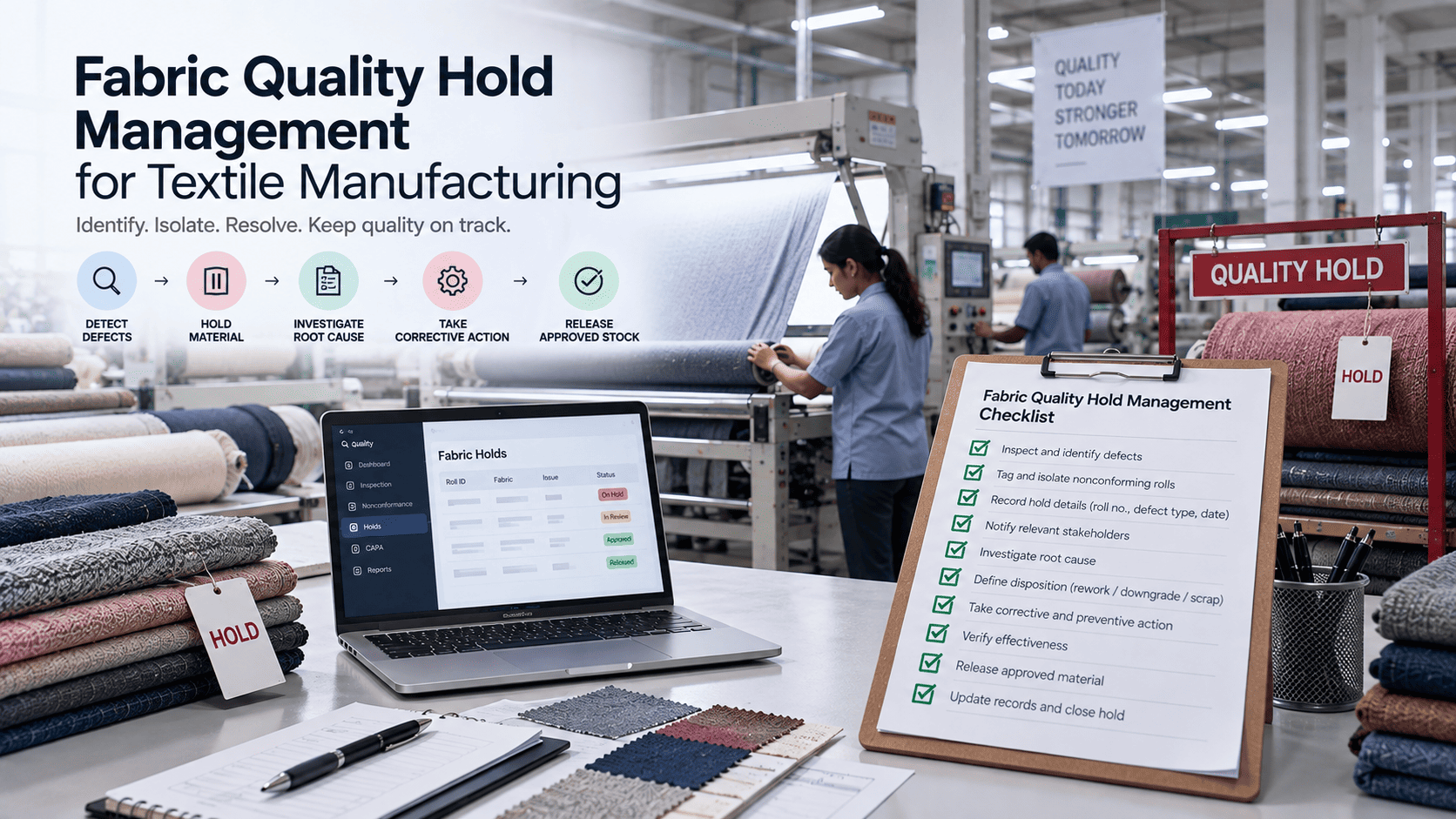
Yes, defective fabric data already captured in an existing quality management or inspection system can be connected into the unified waste view rather than requiring a separate, duplicate defect tracking process, allowing the defective fabric category to sit alongside selvedge and end piece data in the same per-loom report without disrupting existing quality workflows your team already relies on. This integration is generally the fastest of the three categories to stand up, since most mills already have structured defect data available and the main work is connecting that existing system to the unified reporting view rather than building new measurement capability from scratch.
Contact support to discuss integration with your existing quality system.
How do we prioritize which loom or waste type to address first once we have the full breakdown?
The most effective prioritization combines the size of the gap between a specific loom's waste rate and the mill average with the fabric value being run on that loom, since a moderate waste percentage on a high-value fabric can represent a larger dollar cost than a larger percentage gap on a lower-value fabric, meaning raw percentage variance alone is not always the right ranking criterion. Once loom-level dollar impact is calculated this way, most mills find a small number of looms, typically two to four out of a larger fleet, account for a disproportionate share of total addressable weaving waste cost, making the first improvement project a clear and well-justified choice.
Contact support to build a prioritized action list from your own loom data.
Stop Treating Weaving Waste as an Accepted Cost of Doing Business
iFactory unifies selvedge, end piece, and defective fabric tracking into one per-loom view so your next reduction project is evidence-based. Book a demo to see it running.