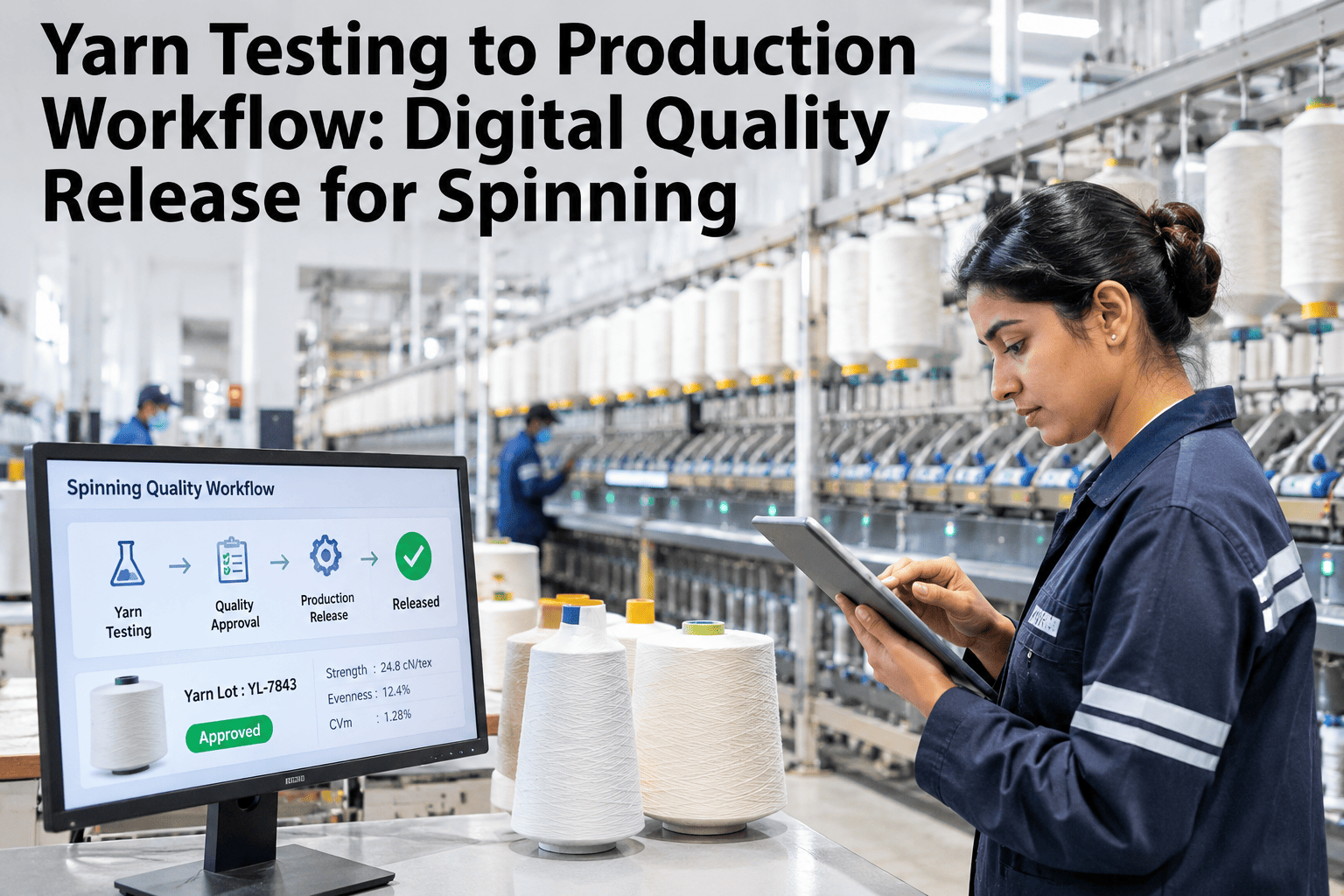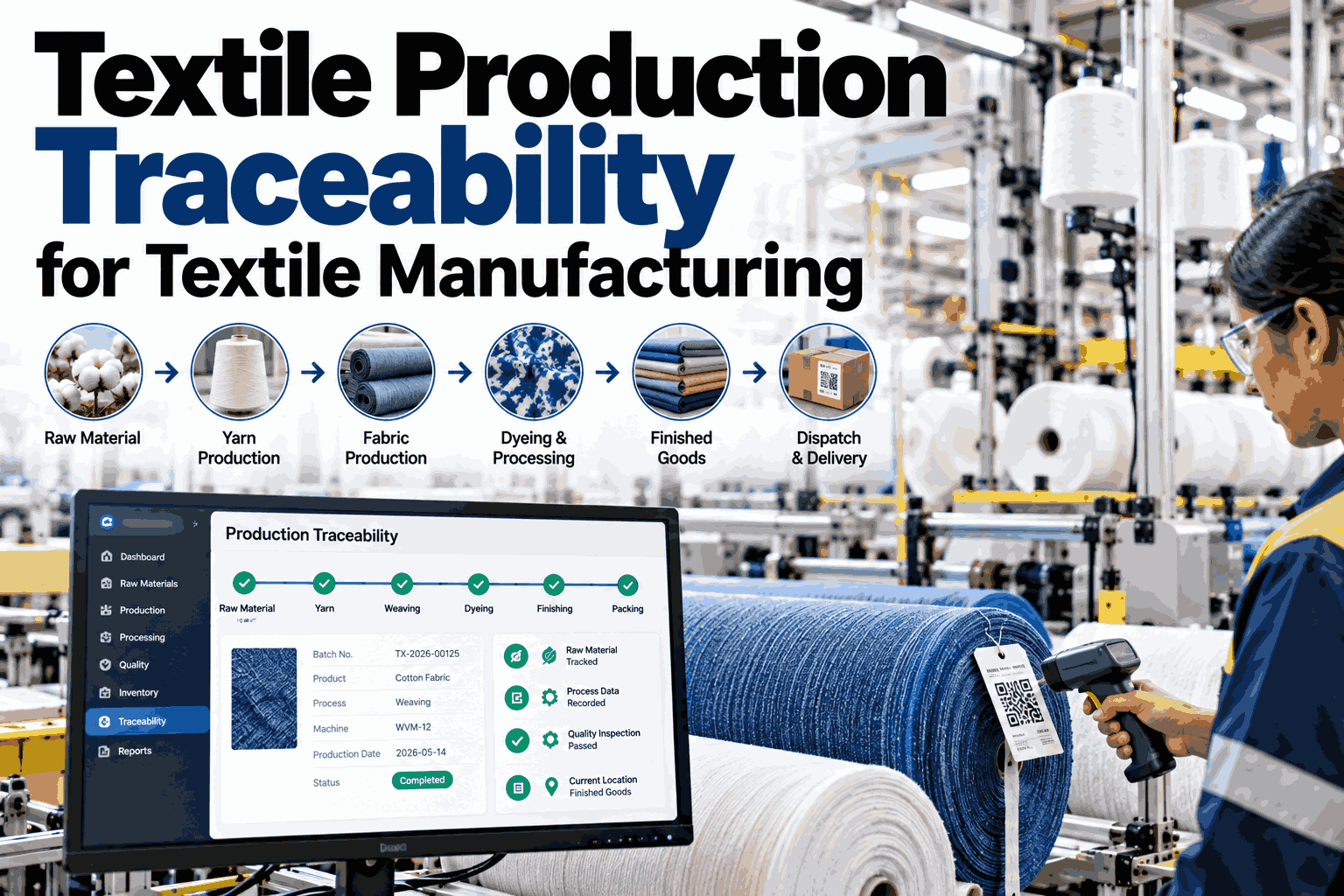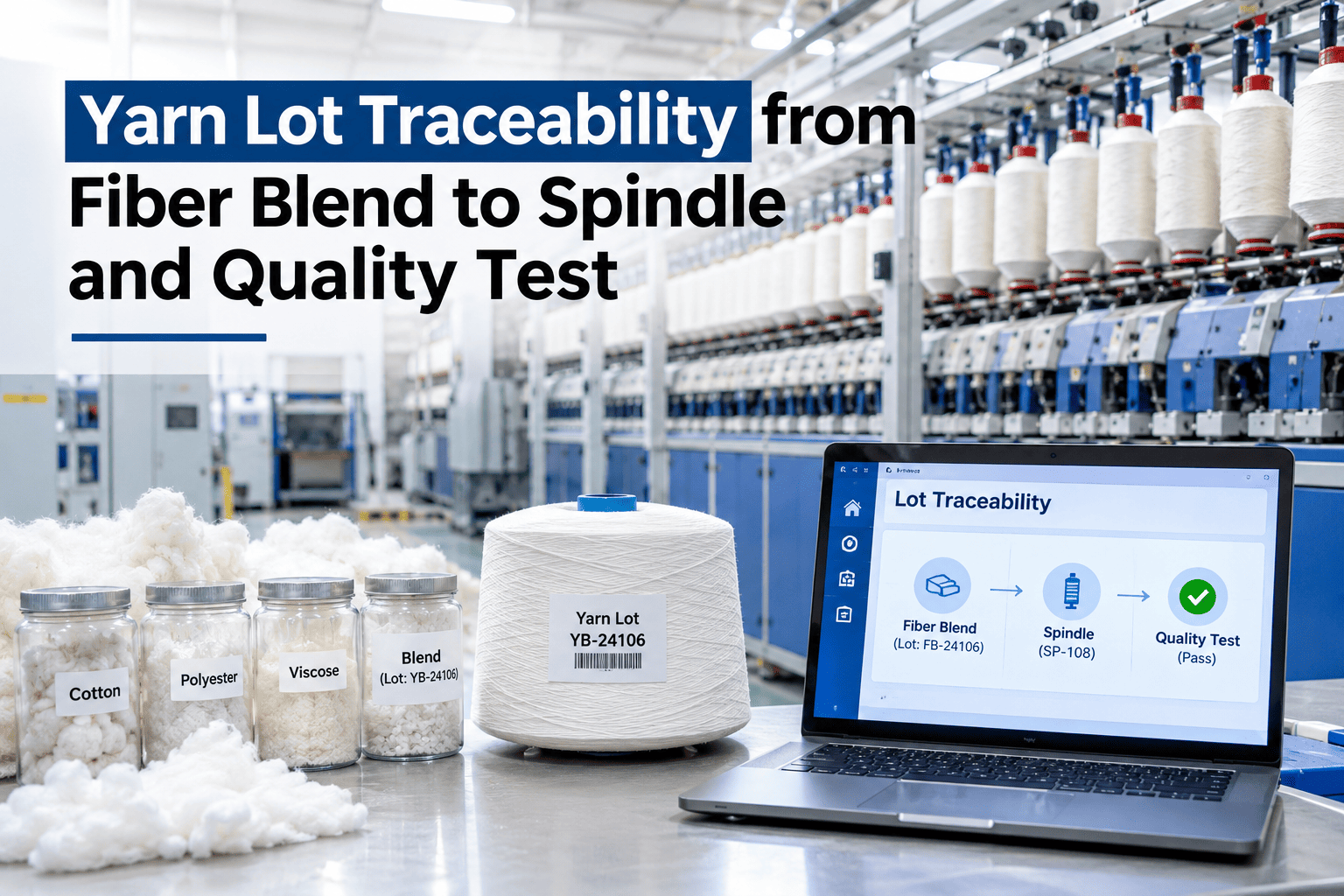
When a customer complains about a yarn lot's strength or evenness, the question that actually matters is which fiber blend went into it, which spinning machine and spindle group produced it, and what the quality test showed before release — and in most spinning mills, answering that means pulling paper batch cards from three different departments and hoping the dates line up. Yarn lot traceability connects fiber blend, spinning, spindle group and quality test into one chain so that investigation takes minutes instead of days. Spinning mills that want their own lots traced this way can review a traceability chain against their current batch records with iFactory AI.
Every Yarn Lot Should Carry Its Full Story From Fiber Blend to Release
iFactory AI links fiber blend, spinning machine, spindle group and quality test results into one traceable chain, so a quality investigation resolves in minutes.
The Chain a Yarn Lot Actually Travels Through
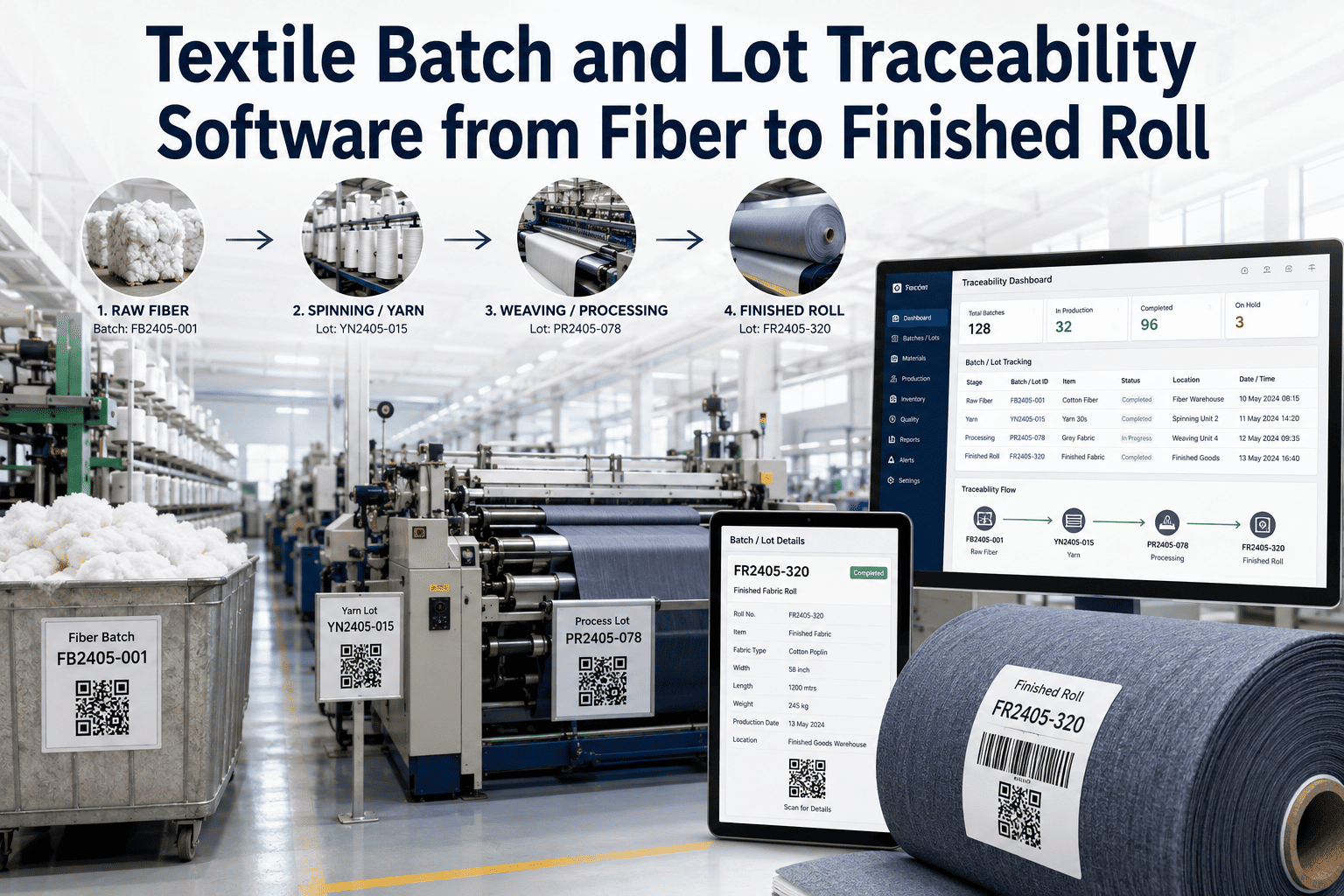
A single yarn lot passes through several distinct process steps before it ever reaches a customer, and each step generates its own record — usually in its own system or on its own paper card, disconnected from the others.
What Gets Lost Without a Connected Chain
| Step | Record without traceability | Record with a connected chain |
|---|---|---|
| Fiber blend | A paper card in the blow room, rarely cross-checked later | Linked directly to the lot number it feeds |
| Spinning | Machine and spindle group noted separately, if at all | Tied to the same lot record automatically |
| Quality test | Uster results filed in a separate lab system | Attached directly to the lot it tested |
| Customer complaint | Investigation starts from scratch across departments | Full chain pulled in one query |
See What a Connected Chain Would Show for a Recent Lot
Walk through a recent quality investigation against your current records to see where the chain breaks today.
How Fast a Quality Investigation Should Actually Be
A Composite Scenario: The Complaint That Used to Take a Week
A mill received a customer complaint about yarn strength on a specific delivery, and the usual investigation process involved contacting the blow room for blend records, the spinning floor for machine logs, and the lab for Uster test results separately, often taking the better part of a week to assemble a full picture. With a connected chain, the same investigation pulled fiber blend, spinning machine, spindle group and quality test data for that lot in one query, immediately showing which other lots shared the same spindle group and should be checked as well — a difference iFactory AI's team can help build against your own mill's current systems.
Why Spindle-Group-Level Tracking Matters More Than Machine-Level Alone
Two lots run on the same spinning machine can still differ meaningfully if they ran on different spindle groups, since wear and calibration can vary within a single machine. Tracking at the spindle group level, not just the machine level, is what lets an investigation narrow in on the actual source rather than flagging an entire machine's output unnecessarily.
Frequently Asked Questions
Make Every Lot's Story Searchable in Minutes, Not Days
iFactory AI connects fiber blend, spinning and quality test data into one traceable chain per lot. Book a walkthrough with your own batch records.