Every quality team knows the feeling of an inspection queue that grows faster than the shift can clear it. Checks pile up behind a changeover, one inspector is pulled to a customer audit, and a first-article check slips past its window. Quality inspection scheduling with autonomous AI agents treats the queue as a live problem: it balances inspector workload, follows the sampling plan and re-plans when production changes, so checks happen on time. This page shows how the agent works, with a worked example and what to bring to a pilot. Plant managers can see it on their own inspection plans in a scheduling demo.
Quality Inspection Scheduling with Autonomous AI Agents
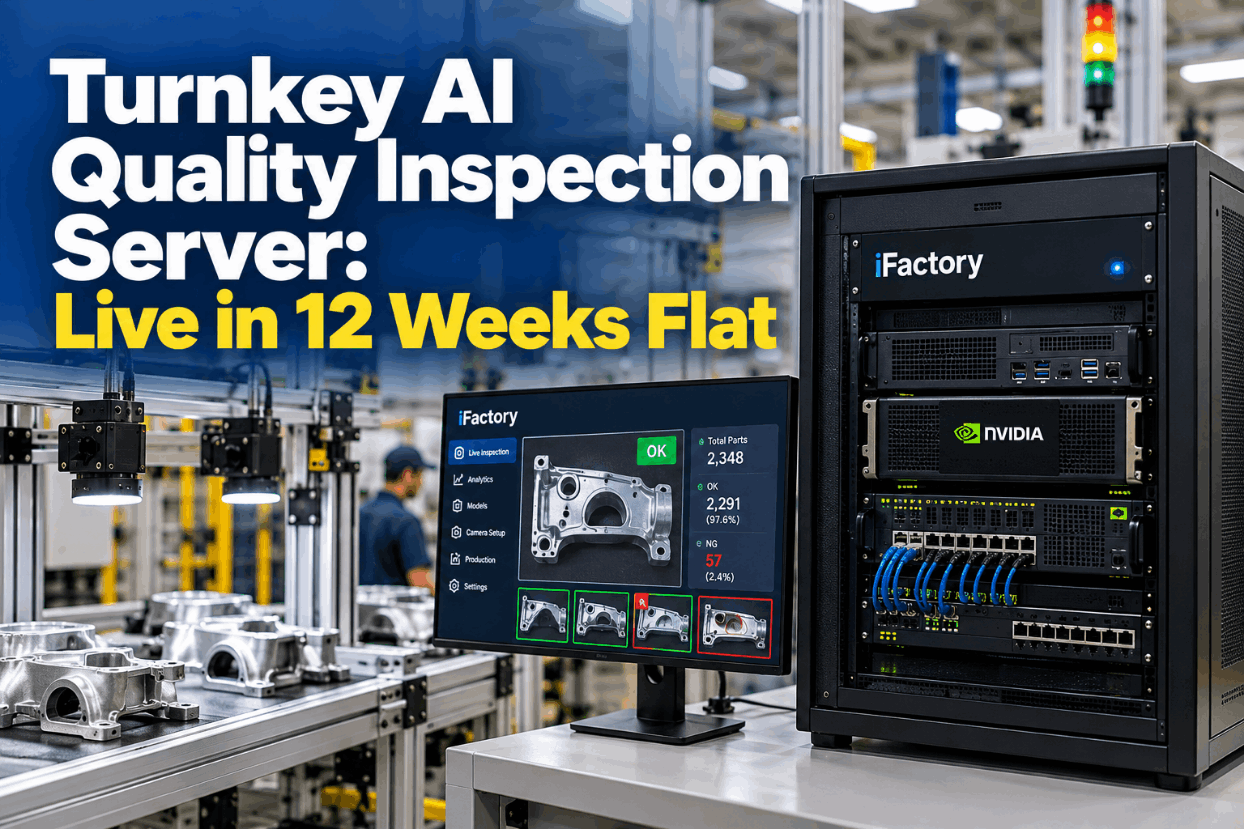
An Inspection Scheduling Agent assigns checks by skill and location, reshuffles the inspection queue when production changes and warns before inspections go overdue. It runs on a turnkey on-prem AI server, next to your quality and production systems.
- Checks assigned by skill, location and workload
- Queue re-planned when production changes
- Warnings before a check goes overdue
Why Inspection Schedules Slip
The plan is made once, but the shift changes all day.
Most inspection rotas are built at the start of a shift and then left alone. A changeover, a rush order or an absence breaks the plan within hours, and the inspection backlog grows quietly until a check is late or skipped. A good schedule is one that keeps adjusting. Our quality scheduling specialists can map where your queue breaks today.
Fixed rotas
Set in advance, blind to production changes.
Uneven workload
One inspector holds most of the queue.
Late discovery
Overdue inspections found after the window closes.
Manual juggling
Supervisors reshuffle by phone and memory.
What the Scheduling Agent Weighs
Five inputs decide who checks what, and when.
The table below shows what the agent reads and how each input shapes the schedule. It starts from information your plant already holds: sampling plans, the production schedule, the roster and the open inspection queue. It assigns and re-plans checks, but the rules stay with quality. Review the inputs for your plant in a working session.
The agent schedules checks; it does not change what the plan requires. Frequencies, sample sizes and hold times stay as quality sets them, and any deferral needs approval from a named person.
A Worked Example: One Shift, 48 Checks
Same shift, same inspectors, two ways of scheduling it.
Take a shift with 48 inspections due across four lines and five inspectors. Mid-shift, a changeover on line 3 pulls two first-article checks forward and one inspector is called away. A fixed rota completes 39 checks on time and leaves 9 overdue. With the agent re-planning as events happen, 46 are done on time and 2 are flagged early for a decision. All figures are illustrative.
See Your Own Queue Re-Planned
Bring your inspection plans, roster and a recent shift, and watch the agent schedule it against the real production changes.
Test the Schedule Against a Bad Shift
A schedule that only works on a quiet day is not ready.
The real test of quality resource planning is the shift that goes wrong. Three common disruptions show how the agent responds, and each one can be rehearsed in the pilot using your own history before it is trusted on the floor.
An inspector is out
Checks move to qualified colleagues. Anything that cannot be covered is flagged for approval.
A line restarts early
First-article checks are pulled forward and assigned to the nearest qualified inspector.
A new batch jumps the queue
The queue is re-ranked by deadline and risk, and the displaced checks are re-timed.
Ask the Agent What If
Ask a question in plain words and get an answer from the live queue.
Quality managers and plant managers can question the schedule during the shift instead of chasing supervisors. The agent answers from the current queue, the roster and the production schedule, and shows which checks it would move. See it on your own queue in a live walk-through.
Dynamic Sampling and Inspection Timing
Right check, right moment, right amount.
Timing matters as much as frequency. A check done too late can mean product has already moved on, and a check done on a stale schedule can miss the run it was meant to cover. The agent ties dynamic sampling to what the line is actually doing, within limits your quality team sets. Discuss the rules with our quality agent team.
Sampling rules
Frequency and size read from your plan.
Hold windows
Checks placed before product moves on.
Event checks
Extra checks after changeovers and restarts.
Set by quality
The agent works inside your approved bounds.
From Open Queue to Assigned Check
Five steps, repeated all shift.
The agent does not build a schedule once. It repeats the same loop whenever something changes, so the inspection queue always reflects the plant as it is now. Plan the rollout with our implementation team.
Read
Plans, roster, schedule and open queue.
Score
Rank checks by deadline and risk.
Assign
Match to skill, location and workload.
Re-plan
Adjust when production changes.
Warn
Flag overdue risk before it happens.
Who Decides What
The agent plans the work, and people own the decisions.
An autonomous agent earns trust by being clear about its limits. It handles the routine scheduling moves and asks a named person before anything that touches the quality plan. Your team sets the boundary during the pilot.
The agent handles
- Assigning checks by skill and location
- Balancing inspector workload
- Re-timing checks after production changes
- Warning before inspections go overdue
People decide
- Changes to sampling plans or hold times
- Deferring or dropping a required check
- Approving cover when no one is qualified
- Review of overdue trends each week
Inspection Scheduling Mistakes to Avoid
A schedule can look balanced and still miss the deadline.
These are common best practice gaps in quality inspection scheduling. A short readiness review can find them before a pilot starts.
What works
- Inspection plans kept as the fixed rule
- Workload visible by person and by shift
- Deferrals approved by a named person
- An overdue baseline taken before the pilot
What fails
- Fixed rotas that ignore production changes
- Sampling cut to fit inspector time
- Certifications ignored when assigning checks
- Warnings that arrive after the deadline
How iFactory Runs the Inspection Scheduling Agent
The agent and the server, delivered together.
iFactory connects your sampling plans, roster, production schedule and inspection records, then runs the Inspection Scheduling Agent on one on-prem server. After the pilot, the results are reviewed against your baseline. Fit questions go to our solutions team.
Scheduling agent
Assigns checks by skill and location.
Workload balance
Queue spread across inspectors.
Dynamic sampling
Checks timed to what the line is doing.
Overdue warnings
Alerts before the deadline passes.
Inspection queue
One live view for the whole plant.
On-prem
Quality data stays in the plant.
The figures and exchanges on this page are illustrative. Your own results depend on your inspection plans, roster, production schedule and systems, and we measure them on your data during the pilot.
Turnkey AI: Delivered, Connected and Live in 6–12 Weeks
You do not build this. It arrives ready.
iFactory ships as a pre-configured NVIDIA AI server with the software pre-loaded, racked and ready. Rack it, plug in power and Ethernet, and the AI is live on your network. Our team handles cabling, network setup, PLC, SCADA, DCS and CMMS integration, quality system links, operator training and 24×7 remote monitoring. Data stays on your network. For an implementation guide and a quote matched to your plant, request a turnkey quote.
Ship, network and baseline
Server installed. Plans and roster connected and the overdue baseline captured.
Setup and pilot
Agent configured to your rules. Live pilot runs on a few lines.
Go-live and measured result
Roll-out across the plant. Teams trained. Results compared with the baseline.
Frequently Asked Questions
What is quality inspection scheduling with autonomous AI agents?
It is an agent that assigns inspections to the right person at the right time, balances inspector workload, follows your sampling plans and re-plans the queue when production changes.
How does the agent choose who does each check?
It matches each check to inspector certifications, current location and open workload, then ranks the queue by deadline and risk so the most urgent checks are covered first.
Does the agent change our sampling plan?
No. Frequencies, sample sizes and hold times stay as quality sets them. The agent schedules within those rules, and any deferral needs approval from a named person.
What happens when production changes mid-shift?
The agent reads the new schedule, moves affected checks, pulls forward event checks such as first-article inspections and warns if any check is likely to go overdue.
How does it reduce the inspection backlog?
It spreads the queue across qualified inspectors, re-plans as things change and flags overdue risk early, so the backlog is handled during the shift and not after it.
What are the best practices for inspection scheduling?
Keep the plan as the rule, show workload by person, assign by skill and location, take an overdue baseline before the pilot and have a named person approve deferrals.
What does it cost and when is the return?
Cost depends on the number of lines, inspectors, integrations and systems, so we issue a turnkey quote after a short scoping call. Return shows up as fewer overdue checks and less manual reshuffling, and the pilot measures it against your baseline.
What do plant managers need to prepare?
Your inspection plans, the inspector roster and certifications, the production schedule and recent overdue records. A short working session turns these into a pilot scope.
How do we start?
Start with a short session to review your plans and queue. A 6-week pilot then connects your records, captures the baseline and runs the agent on a few lines. To plan it, contact our team.
Get Every Inspection Done on Time
In thirty minutes we take your inspection plans and a recent shift through the agent and show how the queue would have been scheduled. You keep the findings either way.
- 1Inspection plans and sampling frequencies
- 2Last month's overdue or missed inspections
- 3Inspector roster and certifications
- 4Production schedule and changeover times
- 5Current inspection records or QMS export