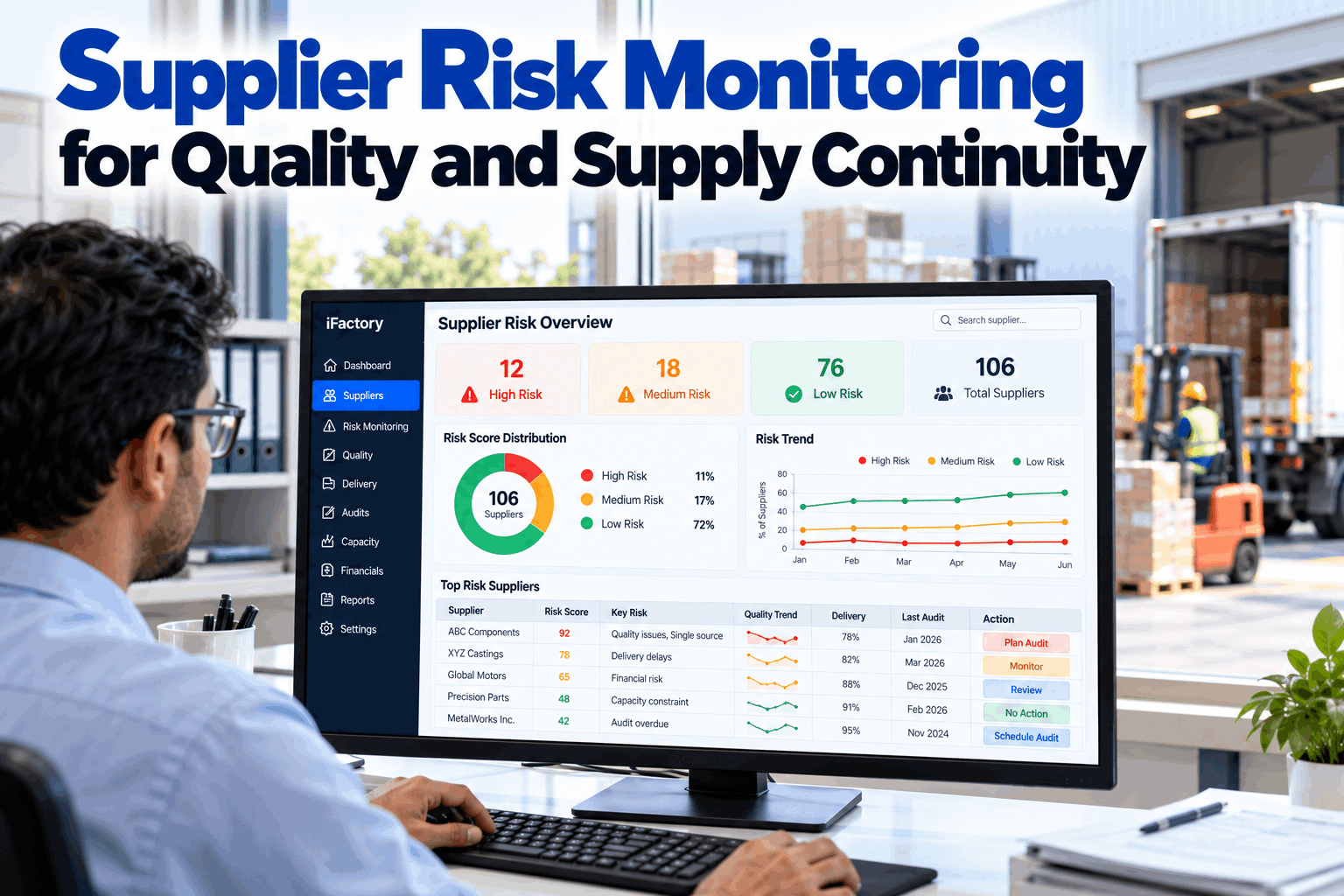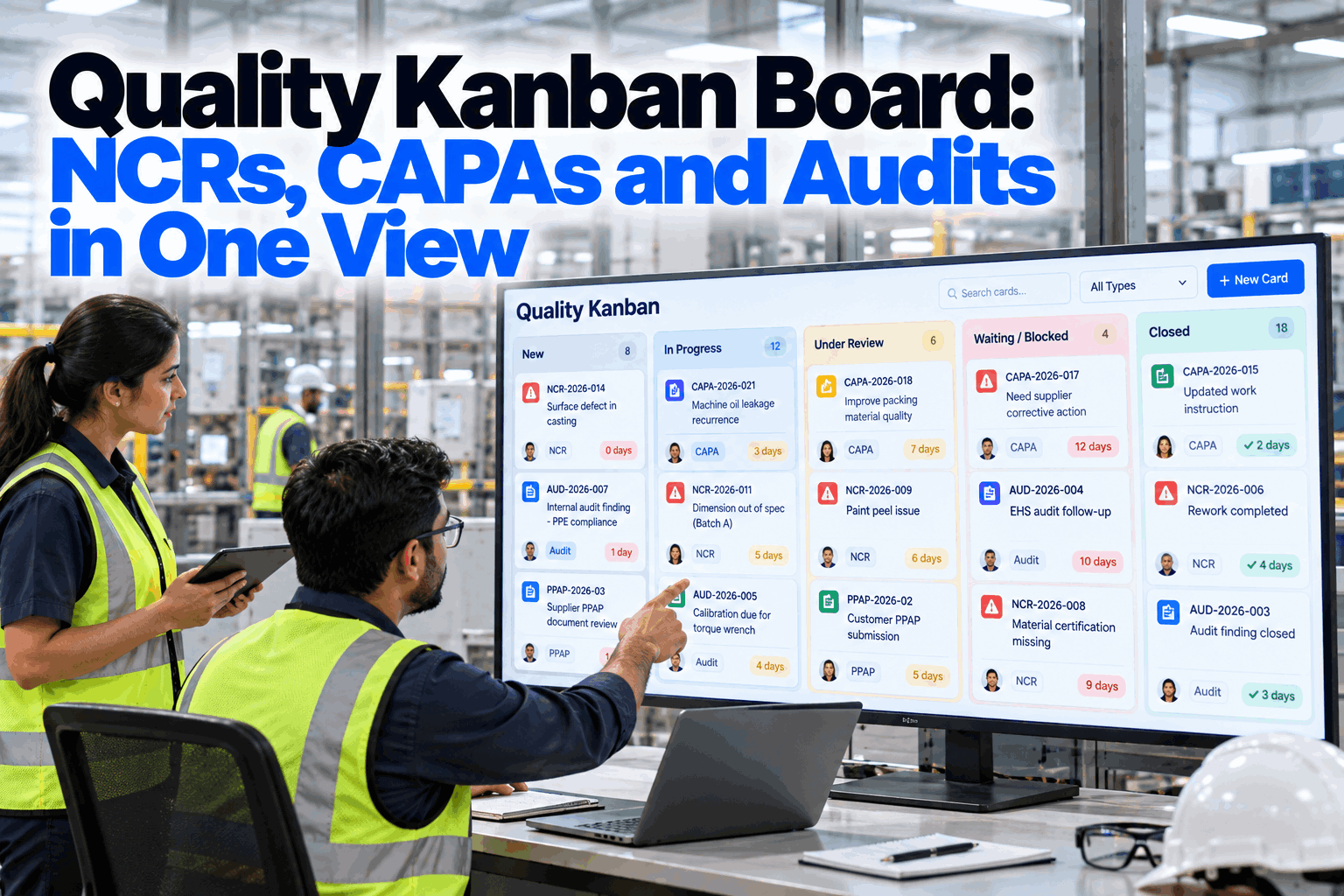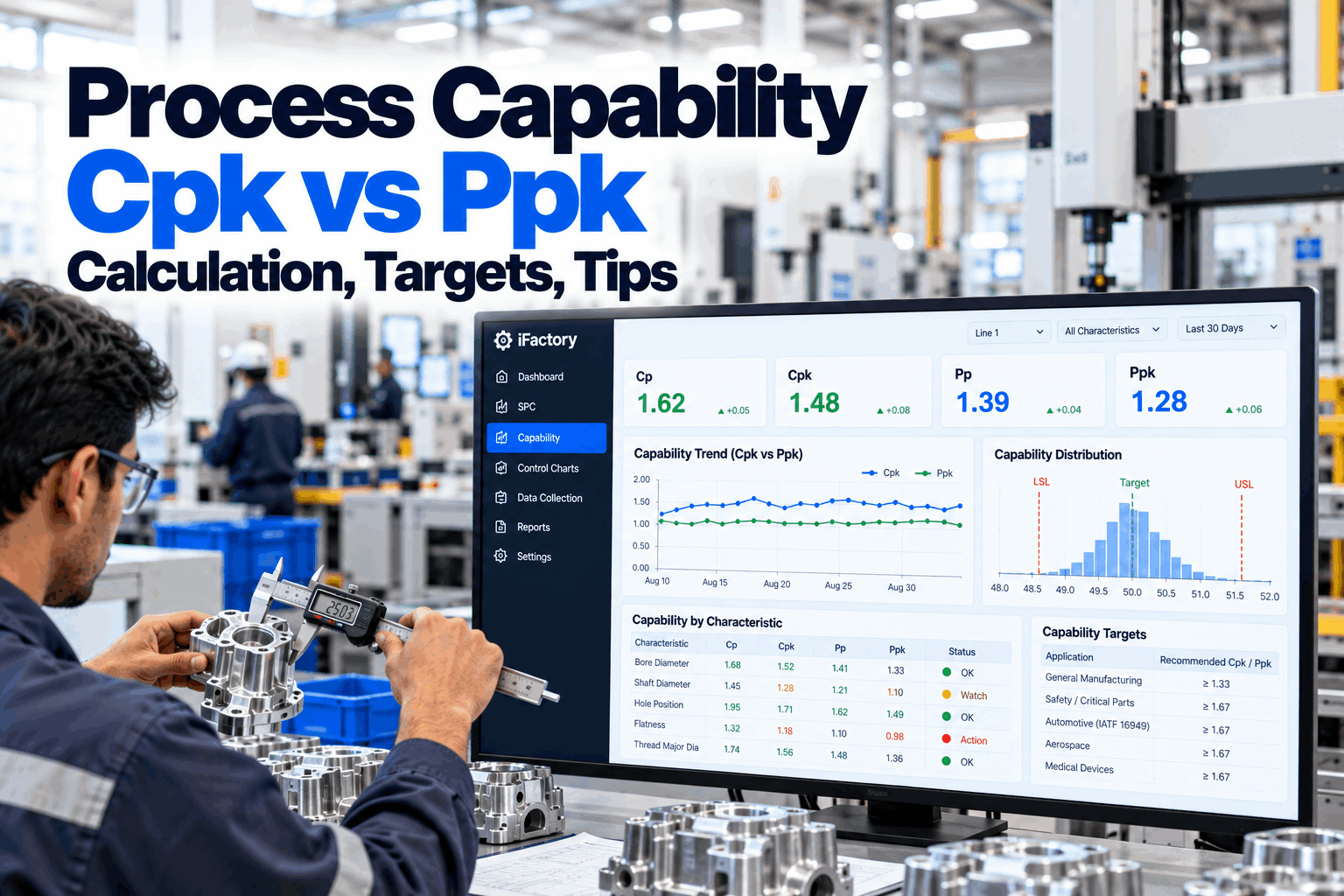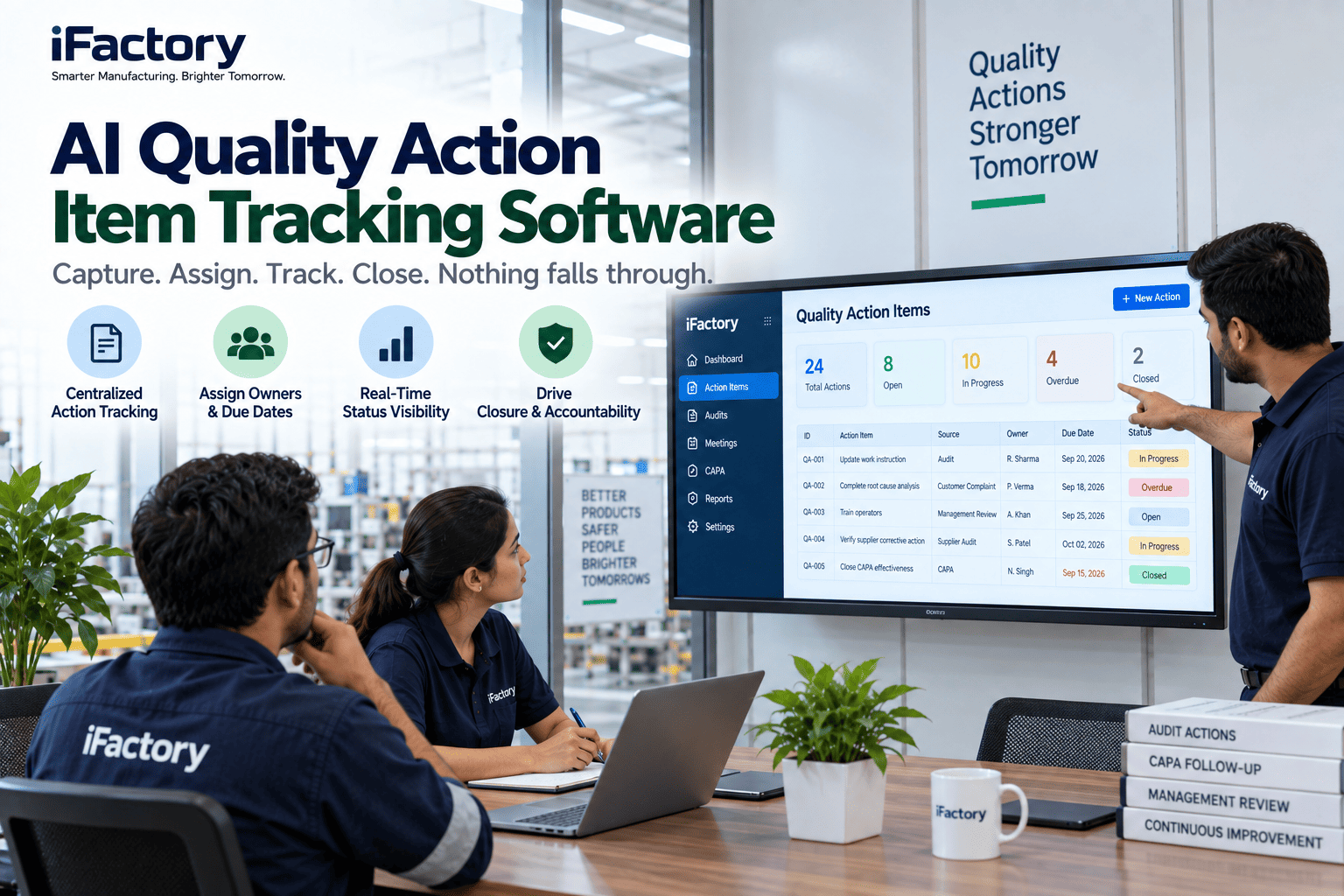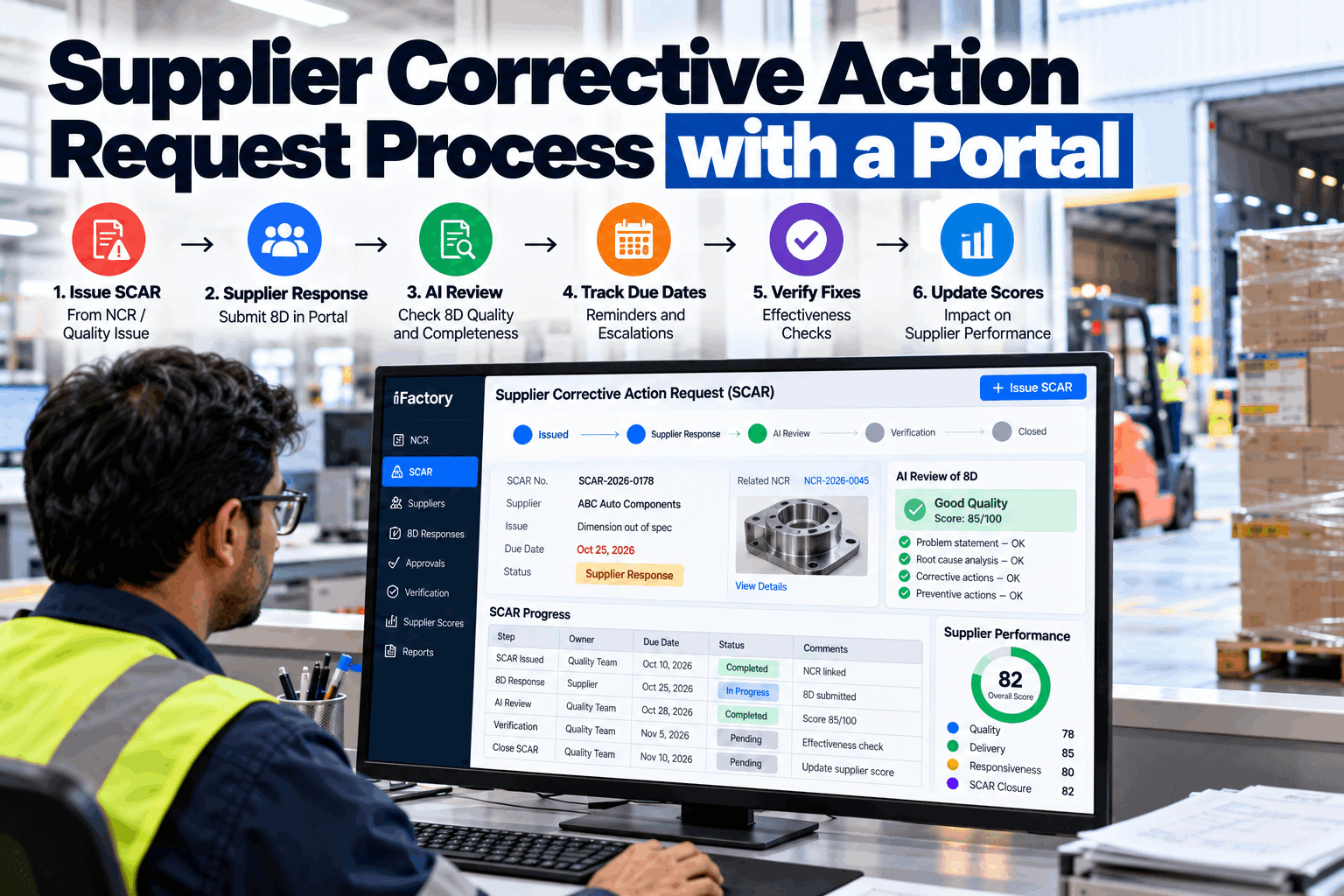
A supplier corrective action request is only as good as the process behind it. Too often the SCAR is emailed as a spreadsheet, the 8D comes back late and thin, nobody checks whether the fix worked, and the same defect returns two months later. A portal-based SCAR process sets due dates, reviews response quality, verifies every fix and feeds the result into the supplier's score, which you can see in a short live demo.
Supplier Corrective Action Requests That Get Fixed, Verified and Scored
iFactory's SCAR Workflow issues SCARs directly from NCRs. Suppliers respond with an 8D in a portal, AI reviews the quality of each response, and supplier scores reflect the outcome once the fix is verified.
Not Every Nonconformance Needs a SCAR, but Some Always Do
Issuing a SCAR for every minor defect buries suppliers in paperwork and devalues the request. Issuing too few lets systemic problems continue. Most supplier quality teams set clear triggers so the decision is consistent and defensible, and then step up the response if the supplier doesn't. The escalation ladder below shows how pressure typically builds. Each rung is reserved for suppliers who haven't responded to the one before, so the strongest measures are used only when they are justified. Our supplier quality team can help you set these triggers.
- Safety, regulatory or customer-affecting defects
- Repeat defects of the same type from the same supplier
- Defects that reached your customer or your line
- Major audit findings at the supplier
- Wrong part, mixed parts or a missing feature
- A first-time cosmetic defect caught at receiving
- An isolated packaging or labeling issue
- A documentation error with no product impact
- A minor deviation already contained and sorted
- Issues with a clear one-time cause
From NCR to Closed SCAR in Seven Steps
A SCAR process works when every step has an owner, a date and a record. When any of those is missing, the request stalls between your team and the supplier, and the defect keeps arriving at receiving. The steps below follow the 8D disciplines most suppliers already know, with your team's review and verification built in at the points where weak responses usually slip through. We can map this flow onto your current procedure in a working session.
The SCAR is raised directly from the nonconformance record, with defect details, photos, quantities and lot numbers carried across, so nothing is retyped.
The supplier receives a portal link, accepts the SCAR and names a team. The clock for each due date starts here.
Suspect stock at the supplier, in transit and at your site is identified and sorted, and the quantities are reported.
The supplier identifies both the occurrence cause and the escape cause, with evidence, rather than restating the defect.
Permanent actions are implemented with dates and proof, and the supplier's PFMEA and control plan are revised where needed.
Your engineer reviews the response and confirms the fix with evidence, such as clean lots, an audit or measurement data.
The SCAR closes only after verification, and its outcome and timeliness feed into the supplier's scorecard.
Typical 8D Response Timelines
Timelines vary by company and by severity, but published supplier procedures follow a similar pattern. Containment comes within about a day, root cause within a couple of weeks, and the full corrective action within a month or so. One manufacturer's 8D procedure, for example, requires containment within 24 hours, root cause within 15 days and corrective action implemented within 30 days. Set your own and apply them consistently. Our support team can configure them by severity.
Every SCAR Needs an Occurrence Cause and an Escape Cause
A defect that reaches you represents two failures. Something in the supplier's process made it, and something in the supplier's controls let it leave. A response that explains only the first will fix today's defect and leave the door open for the next one. Asking for both, separately and with evidence, is the most effective single change you can make to SCAR quality. Our supplier quality team can add this structure to your 8D template.
The process mechanism behind the defect, for example a blocked die vent trapping gas, a worn tool or a wrong material lot. It is fixed by changing the process, the equipment or the material control.
The control gap that let the defect ship, for example a sampling plan too light for the feature, a gauge unable to detect it or a skipped inspection step. It is fixed by strengthening detection.
Stop Accepting 8Ds That Restate the Problem
iFactory's AI reviews each supplier response before your engineer does. It flags restated defects, missing escape causes, "retrain the operator" actions and missing evidence, so weak 8Ds go back to the supplier quickly.
What a Strong 8D Response Looks Like
Most weak SCAR responses fail in the same few ways. Spelling out the difference for suppliers, and checking every response against it, raises the quality of what comes back far more than chasing due dates alone. You can see these checks running on real responses in a short demo.
- The root cause restates the defect: "porosity in casting"
- Only the occurrence is explained, with no escape cause
- The action is "operator retrained" or "reminded"
- No data shows the cause was verified
- The fix is applied to this part number only
- Mechanism stated: "gas entrapment from a blocked die vent"
- Escape found: X-ray sampling plan too light for this feature
- Actions change the system: vent cleaning PM and revised sampling
- Cause switched on and off to prove it
- Rolled out to all dies with similar vents
Close the SCAR When the Fix Works, Not When the Form Is Complete
A completed 8D shows that the supplier did the paperwork. It doesn't prove the defect has stopped. Verification is the step most often skipped, and it is the main reason SCARs repeat. Choose the method that fits the risk and record the evidence on the SCAR. A cosmetic issue might close on evidence review alone, while a safety-related defect should need clean lots and, often, an on-site audit before anyone signs off. Our supplier quality team can help you set verification rules by severity.
Photos, revised documents, PFMEA and control plan changes, training records and capability data uploaded to the portal.
A set number of consecutive lots received with no recurrence, tracked automatically from receiving inspection.
Temporary increased sampling on the affected characteristic until the fix is proven, then a return to normal.
For serious or repeat issues, a process audit at the supplier confirms the actions are in place and working.
How SCAR Outcomes Feed the Supplier Scorecard
When SCAR performance is visible in the supplier's score, response quality improves without constant chasing. A balanced scorecard counts how often SCARs are needed, how fast and how well the supplier responds, and whether fixes hold. Cost recovery is tracked alongside, so the true cost of poor quality is visible in sourcing decisions. Buyers then see a supplier's real cost, not just their unit price, when they award the next contract. We can set up your scorecard weights in a setup session.
Four Gaps That Let the Same Defect Come Back
Most SCAR programs don't fail because suppliers refuse to respond. They fail in the handoffs between your team and theirs, where nobody owns the next step. These four gaps account for most repeat SCARs, and each one is easy to see once every request lives in one system rather than in email threads. You can see how the portal closes them in a guided demo.
SCARs sent as attachments get forwarded, lost or answered on old versions, and nobody can see the overall status.
Deadlines pass quietly because chasing suppliers depends on one engineer remembering to do it.
Under workload pressure, thin 8Ds get accepted to clear the queue, and the real cause is never found.
SCARs close when the form is complete, before anyone confirms the fix worked on incoming parts.
Portal, AI Review and Server Delivered as One Package
iFactory delivers the SCAR Workflow as a turnkey bundle. A pre-configured NVIDIA AI server ships racked and ready with the portal and 8D review models pre-loaded, so supplier data stays under your control. You rack it, plug in power and Ethernet, and the AI is live. To scope it for your supply base, request a turnkey quote.
- Pre-configured NVIDIA AI edge server, racked and ready
- Supplier portal with 8D forms and evidence uploads
- Connections to NCR, receiving inspection and ERP
- Cabling and plant network setup
- Scorecard and chargeback configuration
- Training for supplier quality engineers and suppliers
- 24×7 remote monitoring
Server installed, NCR and supplier records connected, due-date rules configured.
Portal opened to a pilot group of suppliers, with AI review running alongside engineers.
All suppliers onboarded, scorecards live, legacy email SCARs retired.
A SCAR Workflow That Runs From NCR to Scorecard
iFactory connects nonconformance, supplier response, verification and scoring in one flow, so every SCAR has a full, auditable history. Our support team can review your current SCAR procedure before a pilot.
What Supplier Quality Teams Ask About SCARs
Make Every SCAR End in a Verified Fix
Issue SCARs from NCRs, collect 8Ds in a portal, let AI catch weak responses and close only on verified effectiveness, with supplier scores following automatically. The full system is delivered turnkey and goes live in 6 to 12 weeks.