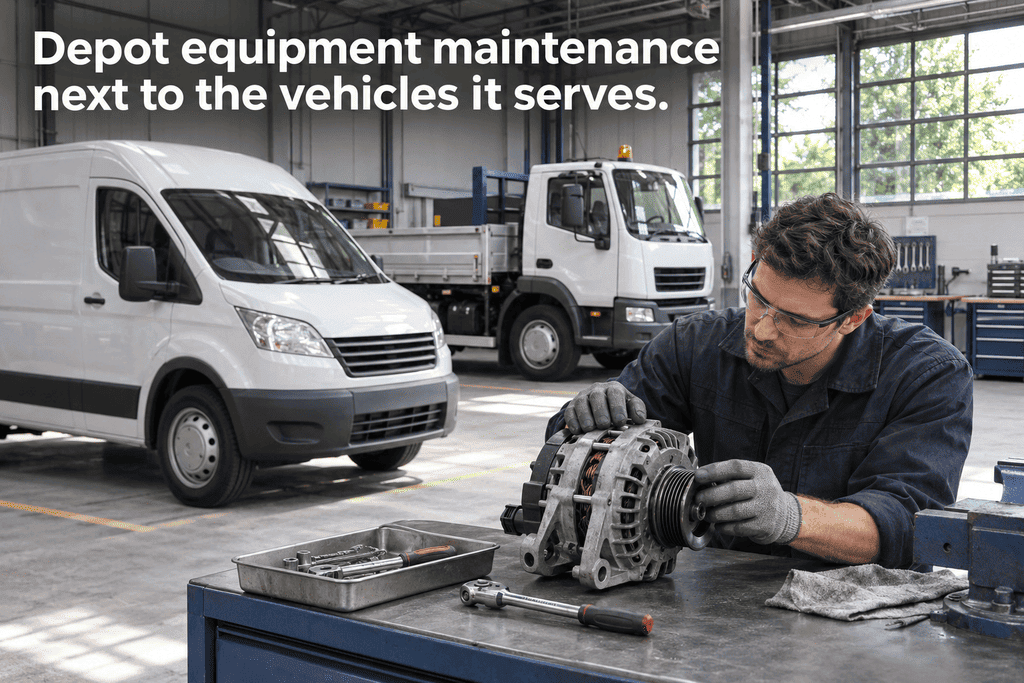
A depot keeps vehicles running only when its own equipment works: the hoist, the compressor, the wash bay, the fuel tank and the charger. Fleet Maintenance, the iFactory micro app, keeps a depot asset register next to the vehicles, so depot equipment is checked and serviced in the same way. See how depot equipment maintenance sits beside the fleet.
Fleet Maintenance · Depot assets · Equipment
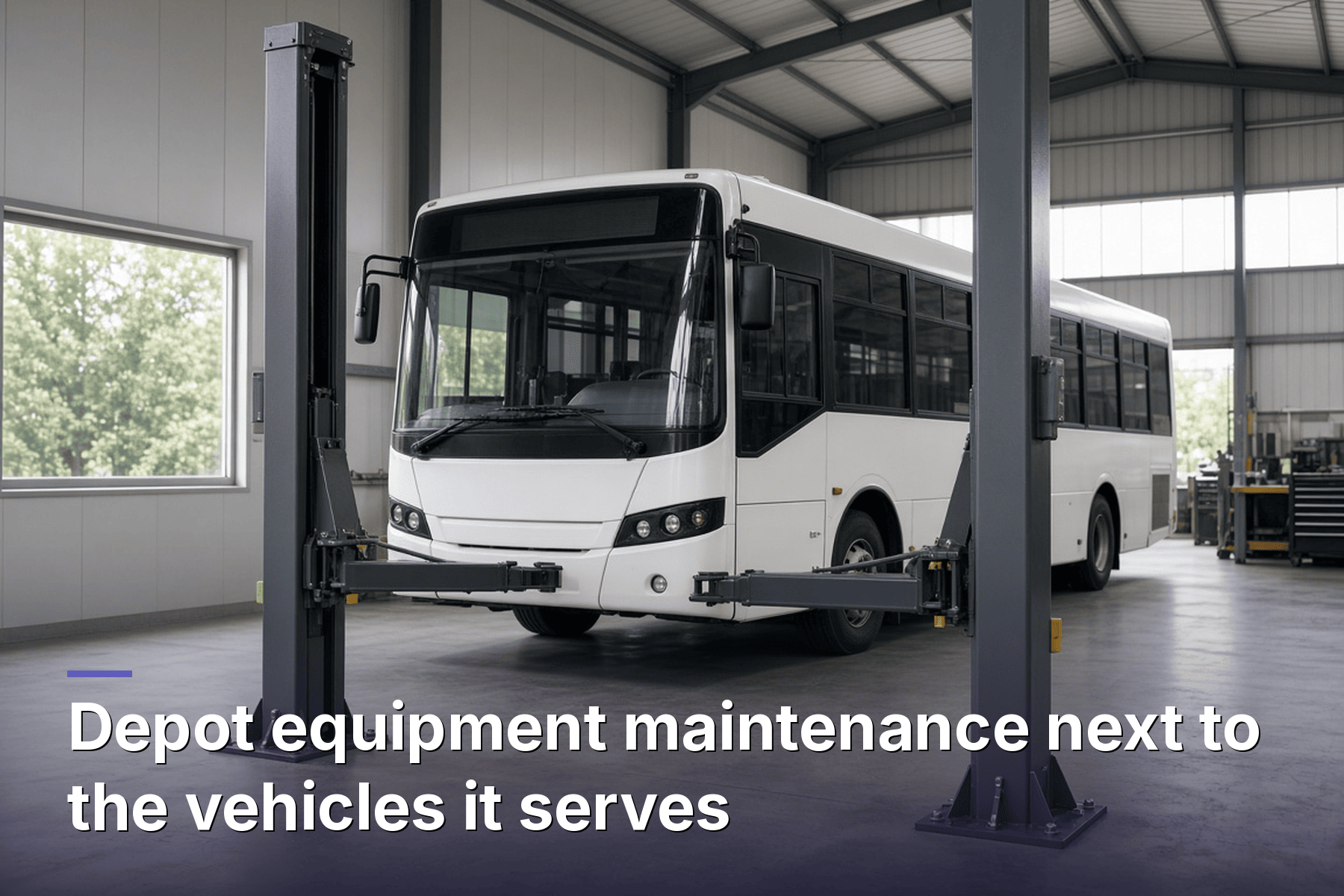
Depot equipment maintenance next to the vehicles it serves
Hoists, compressors, wash bays, fuel tanks, chargers, generators, doors and tools each get a QR label, a meter, service plans and certificate dates. A failed asset can be marked Do not use and taken out of service until it is fixed.
What the depot register can hold
Categories follow the equipment a depot actually has, so the register looks familiar to the people who maintain it.
Workshop
Hoists and lifts, air compressors and tyre machines, the equipment a technician depends on every day.
Yard
The wash bay, fuel bowsers and tanks, EV chargers and generators that keep vehicles clean, fuelled and charged.
Building
The building itself, roller doors, the fire system and lighting, which are easy to forget until a certificate lapses.
Other
IT and radio equipment, tools and other equipment that does not fit the first three groups.
Treat the depot like the fleet
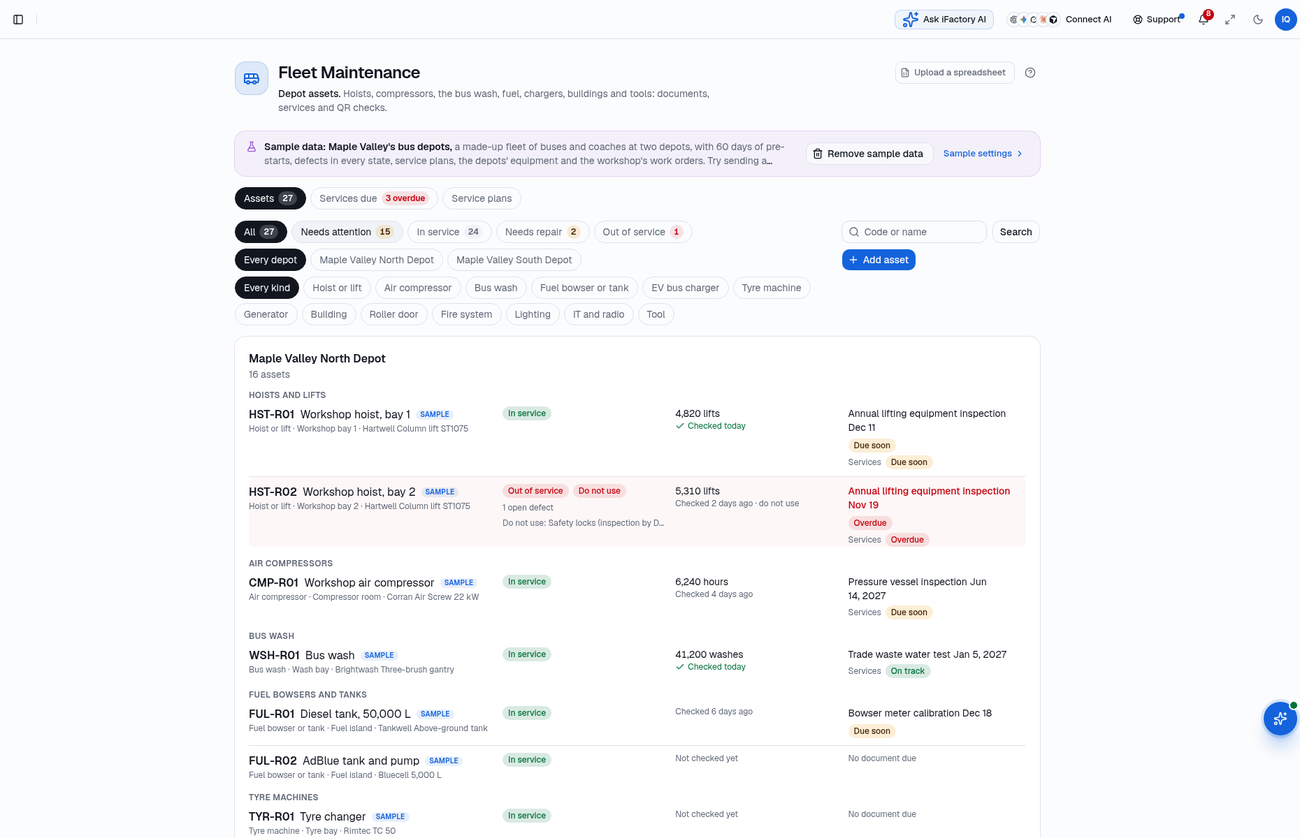
Equipment faults and vehicle faults share one list, so the workshop sees everything that needs attention. Open the sample register of 27 assets to look around.
Where each asset stands
The sample register had 27 assets across two depots, and each one shows a clear status.
24 assets were in service in the sample, which means they are available and need no action beyond their plans.
2 assets needed repair, so they carry a defect and a work order that the workshop can plan.
1 asset, a workshop hoist, was out of service for its safety locks, and Do not use was set until it is fixed.
What each asset carries
Assets use the same building blocks as a vehicle, so the people who know one part of the app can use the other.
Good habits for depot equipment
Equipment fails quietly, so these habits help the register catch problems early.
Label what matters
Start with the hoists, compressors and chargers that stop work when they fail, and add the rest later.
Use Do not use
If an asset is unsafe, mark it Do not use so nobody relies on it, and the status stays until the fault is fixed.
Remember the limits
Check items for assets are generic and not specific to one kind of equipment, so add notes where a certificate or procedure needs detail.
Why depot equipment belongs in the register
A hoist that fails or a certificate that lapses can stop a whole workshop, yet depot equipment is often tracked in a separate notebook.
One list of faults
Equipment faults and vehicle faults are reported and followed in the same way, so the workshop lead reads one queue rather than two.
Dates that do not slip
Certificates for hoists, tanks and fire systems are recorded on the asset, so inspections are planned before the date and not after it.
Frequently asked questions
What can I track as a depot asset?
You can track hoists, compressors, the wash bay, fuel tanks, EV chargers, tyre machines, generators, the building, roller doors, the fire system, lighting, IT and radio equipment, and tools. Each asset has its own record with a QR label, a meter, service plans and certificate dates.
What does Do not use do?
Do not use takes the asset out of service until it is fixed. It works like Do not drive does for a vehicle: the status changes at once and the asset shows as out of service in the register. In the sample, a workshop hoist was out of service this way because of its safety locks.
Does each asset get a QR label?
Yes. Each asset can have its own QR label, which anyone can scan to run a quick check or report a fault from a phone. The check items for assets are generic, so they are not written for one kind of equipment, and notes and photos can describe the particular fault.
Does it read data from chargers or machines?
No. The app does not connect to equipment on its own. Readings such as hours or a counter are entered by people, imported from a CSV file or sent through the API from another system, so the register shows what the depot reports and does not collect data from the machines directly.
Where do vehicle faults go?
Vehicle faults are reported on the vehicle's own check and appear as defects on the same list as depot faults. The vehicle defect reporting app page explains that flow, and the Fleet Maintenance tool page lists every feature available for vehicles and assets.
Can depot assets have service plans?
Yes. An asset can have a service plan based on a date or on its meter, and the plan raises a work order ahead of time just as it does for a vehicle. That suits equipment such as compressors and chargers, which need regular attention but are easy to overlook between vehicle jobs.
Keep the depot running too
Depot equipment, certificates and services in the same app as the vehicles.
- QR label per asset
- Do not use status
- Certificate dates due soon
14-day free trial