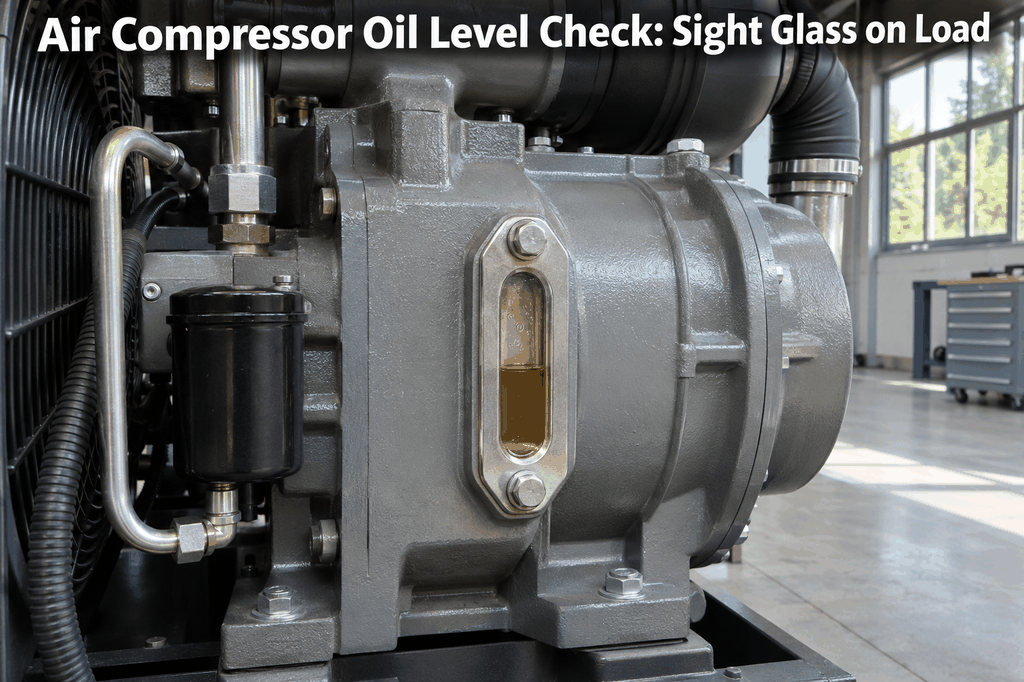
A screw compressor needs the right amount of oil in the right place, and the sight glass is how you check. Too little oil and the compressor runs hot. The ready Air compressor weekly check in iFactory Inspection has an oil level item for a rotary screw compressor, marked High priority. This page covers how it is read, why it is read on load and what to look at on the same round when the level is low. Add the compressor check in your workspace once your company is set up.
Inspection · Compressor oil level
Air Compressor Oil Level Check: Sight Glass on Load
Read the sight glass with the compressor loaded, which means running and delivering air. The item is written for this state, so the reading is directly comparable from week to week.
Loaded or stopped
The item says on load for a reason. On many screw compressors the level in the glass is not the same when the unit is stopped as when it is running.
Loaded
Sight glass
Inside the green band, between min and max
Stopped
On many screw units the glass can read differently once the compressor has stopped and the oil has drained back, so a stopped reading is not the figure the limit is written for.
A stopped reading is useful to note, but it is not what this item compares with the green band, so do not use it to pass or fail the item.
Read it loaded
On many screw units the level reads differently when stopped, which is why the item asks for the reading to be taken with the unit loaded.
What a failure does
The oil level item is High priority, so a level outside the green band raises a work order due in 24 hours. A compressor running low on oil heats up quickly.
Item
Marked Failed
A level above the max mark or below the min mark fails the item. The technician marks it Failed and writes what the glass showed in the note.
Work order
Due in 24 hours
High items are due in 24 hours, a short time that reflects how quickly a low oil level can damage a screw compressor.
Photo
Of the sight glass
A photo of the sight glass, taken while the unit is loaded, shows maintenance the level exactly as the technician saw it and stays with the record.
What low oil affects
Low oil shows up in other items on the weekly round. Reading these in the same visit helps maintenance judge how serious the oil problem is.
- Oil cooler and aftercoolerLook at the face of the oil cooler and the aftercooler. A blocked cooler adds heat to a compressor that may already be short of oil.At least 80% of the fins should be clear. A dirty cooler and a low oil level together will push the compressor towards its trip point.
- Discharge temperatureRead the discharge temperature from the controller at full load. A low oil level is one of the common reasons it climbs.A passing reading is below 100 °C. If the oil level fails and the temperature is also high, tell the supervisor straight away, because the compressor may trip.
- Condensate drainPress the test button on the condensate drain. It is on the same round because oil and water travel together in the system and a faulty drain can leave water in the oil.Water and air should blow out and the drain should then close. A drain that stays open wastes compressed air, and one that does not open leaves water behind.
The dated record
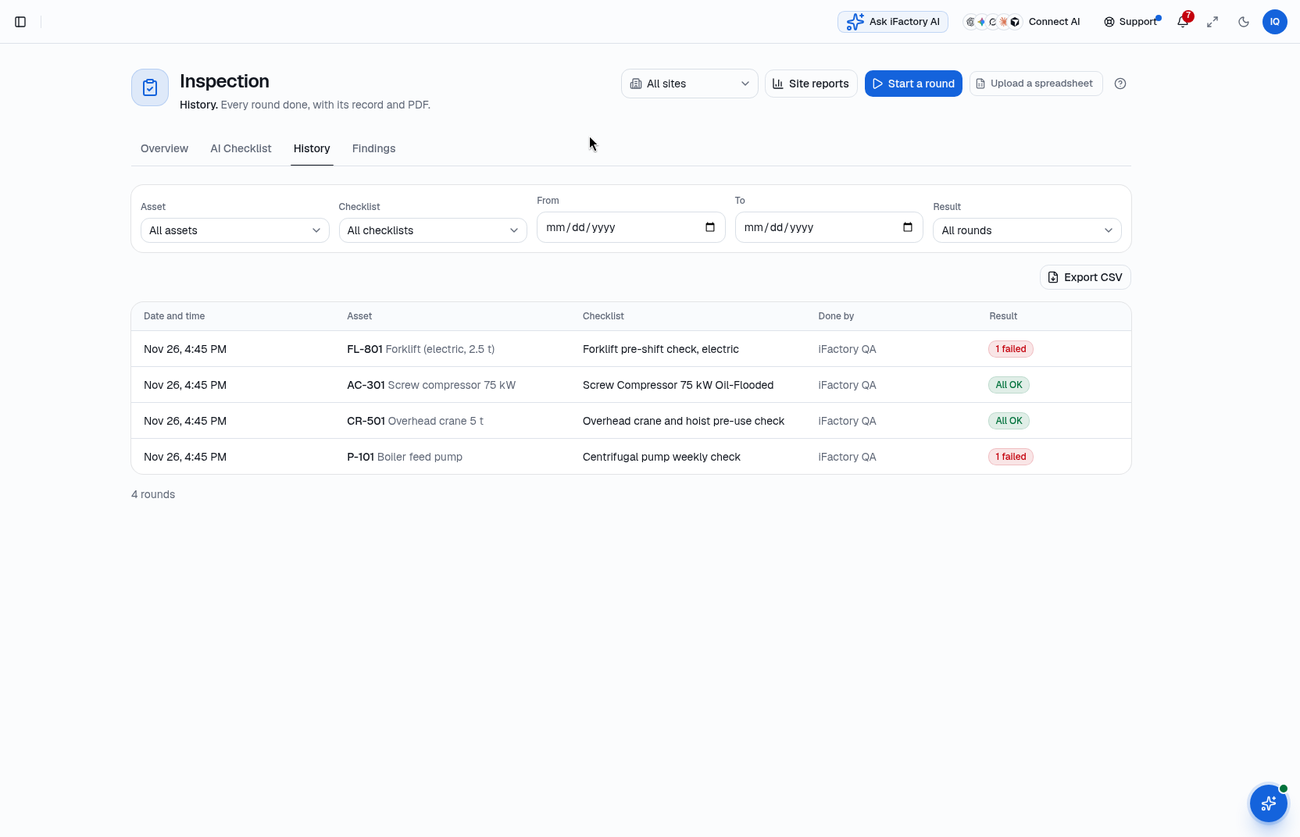
Every round is kept in History with its results, so you can see whether the oil level has failed before and how often.
Cautions
These points are worth settling before the first round, because the app only asks the question and keeps the record. It cannot top up the oil.
Rotary screw
The oil level item is written for a rotary screw compressor. A piston compressor has a different oil system and needs a different item.
OEM manual
The green band and the load state are general. Compare them with your compressor's manual before the first round and edit the item if it says something different.
A record
The app asks the question, keeps the record and raises the work order. Topping up the oil, and using the right grade, stays with maintenance.
Why on load
The oil item says to read the sight glass with the unit loaded, and the level should be inside the green band between the minimum and maximum marks. Reading a stopped machine, or one that has just unloaded, can give a different level because oil is held in the separator and lines when the unit runs.
Pick the same state for each reading. Many sites choose a point shortly after the unit has loaded and stayed there for a few minutes.
What the level tells you
A level below the band means oil is going somewhere: carried over into the air, leaking from a fitting or burned off by high temperature. A level above the band can mean an overfill or a separator that is not draining back. Both fail the item.
Discharge temperature, oil carry-over and an oil film on the cooler face on the same round give context. The low oil level and a high discharge temperature are a pair worth looking at together.
Recording it
The item is High priority, so a failure raises a work order due in 24 hours. Note the position of the level, for example just below the minimum mark, and whether the unit was loaded.
The app records OK or Failed and the note. Each weekly round is a dated record in History that shows who checked it and when, which is useful when a service technician asks when the oil was last at the right level.
Related oil checks on the same round
The oil level item sits with two others in the Lubrication group: the oil cooler and aftercooler fins, which should be at least 80% clear with no oil film or dust mat, and the air lines and fittings. A film of oil on the cooler face and a low sight glass together suggest oil is leaving the system.
The compressor check is a weekly technician round of about 15 minutes, so oil level is read once a week. If the sight glass has been low twice in a row, adding oil without finding the cause is only a delay; raise the failure, note the amount added and let maintenance look for the leak or carry-over.
Use the same sight glass and the same load state each week and the readings are directly comparable.
Reading the green band
The green band on the sight glass is between the minimum and maximum marks. A level at the top of the band right after an oil top-up will settle lower after a few hours of running, so check again on the next round if you have just added oil.
Frequently asked questions
What is the compressor oil level check?
It is a High priority item in the ready Air compressor weekly check in iFactory Inspection. The technician reads the sight glass with the rotary screw compressor loaded and checks the oil is inside the green band, between the min and max marks. A level outside the band fails the item.
Why is the oil level read with the unit loaded?
Because on many screw compressors the level in the glass reads differently when the unit is stopped. The item is written for the loaded state, so the reading is the same every week and comparable. Many sites pick a point shortly after the unit has loaded and stayed there for a few minutes.
How fast is a low oil level due?
It is High priority, so a failure raises a work order due in 24 hours. The technician writes what the glass showed in the note and can add a photo of the sight glass. If the compressor is hot as well, tell the supervisor straight away, because low oil heats a screw compressor quickly.
Which other items give context to a low level?
The oil cooler and aftercooler fins, which should be at least 80% clear; the discharge temperature, which passes below 100 °C; and the condensate drain test. These are on the same round, so a low oil level can be read next to the items that show its effects.
Does the app store the oil level?
No. The app records OK, Failed or N/A with a note and does not store a measurement. A passing check is saved as OK in History. On a failed item, write what the glass showed in the note so the record is clear. The app does not top up the oil, so that stays with maintenance.
How often should the compressor oil level be checked?
Weekly, because it is part of the ready Air compressor weekly check. The frequency is set when you save a checklist, so a compressor running long hours could have a shorter checklist. Use the same sight glass and the same load state each time, so that every reading can be compared directly.
Read the oil level weekly
Add the compressor check and keep a record of each sight glass reading.
- High priority item
- Work order due in 24 hours
- Photo of the sight glass
14-day free trial · no card needed