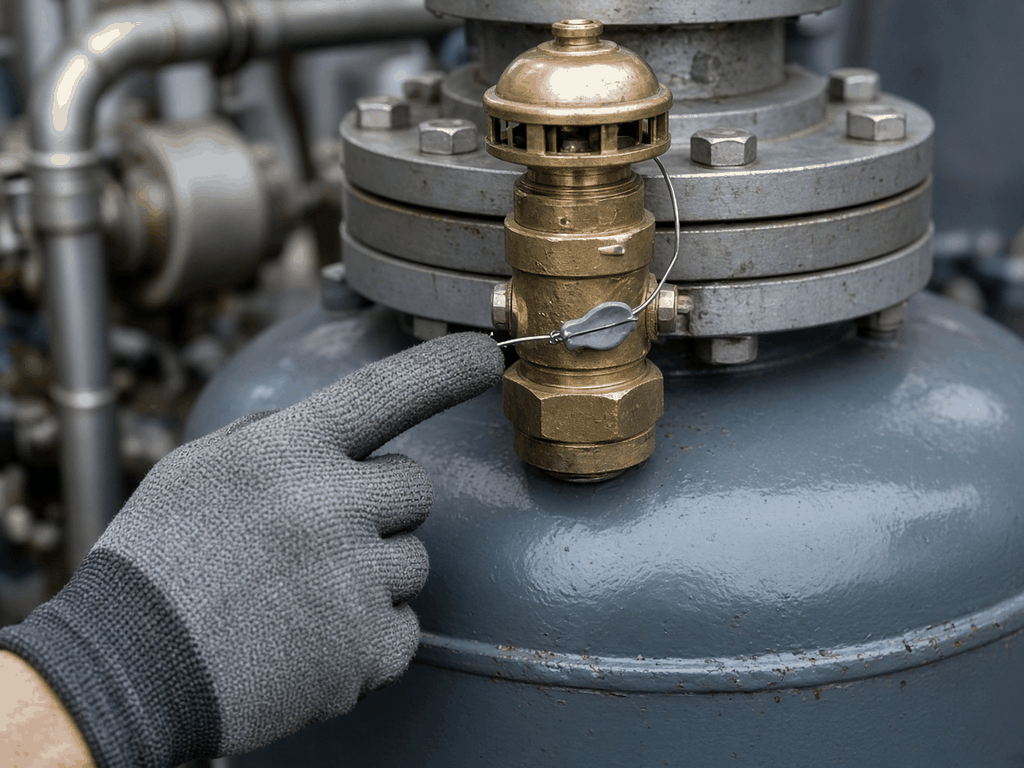
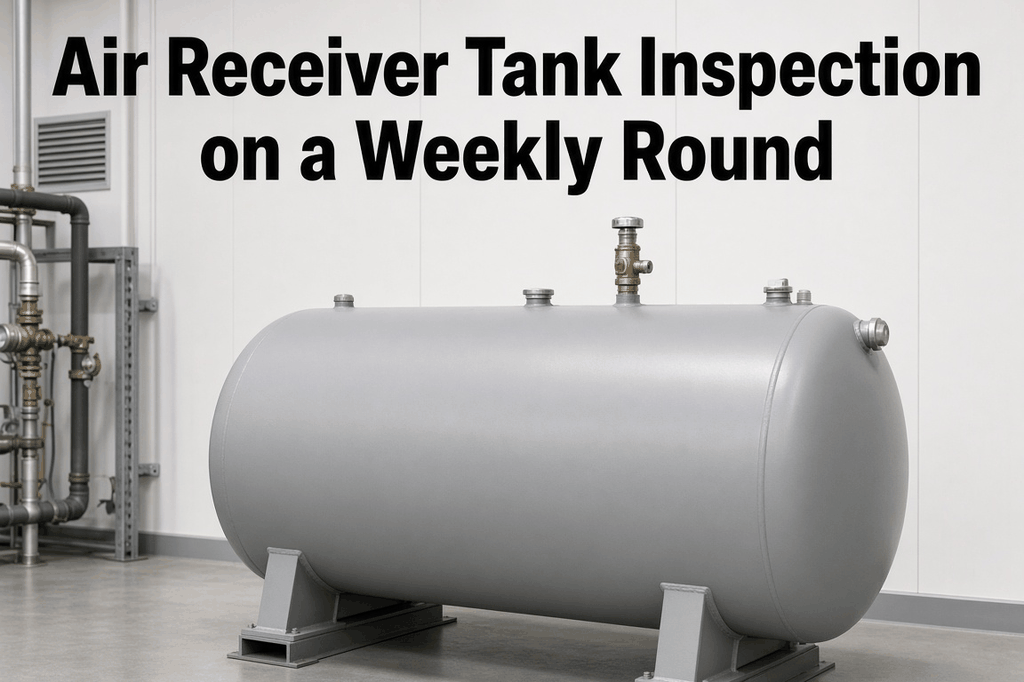
The air receiver is the biggest vessel in most compressor rooms, and the one people look at least. Three items in the ready Air compressor weekly check in iFactory Inspection cover it: the safety valve, the shell and the condensate drain. This page sets out what each one checks, how urgent a failure is and where the routine check stops. It is a visual weekly check. It does not replace any pressure vessel inspection by a competent person that your local rules require; the app keeps the record. Add the compressor check in your workspace once your company is set up.
Inspection · Air receiver
Air receiver tank inspection on a weekly round
Three items, three priorities.
The three items
Each failure raises a work order whose due time follows the item's priority. The three items sit at different levels, so they are due at different speeds.
Three items on one vessel
The safety valve is Urgent, due in 4 hours, the shell is High, due in 24 hours, and the drain is Medium, due in 72 hours. One vessel therefore has three different response times.
What passes
These pass conditions are taken straight from the ready checklist, so a technician can check each one in a few moments with the compressor running or standing.
Safety valve
Look at the valve on the receiver
The seal wire should be intact, the valve should not be hissing and nothing should block the outlet. A broken wire or a hiss means the valve may have lifted or been tampered with.
Receiver shell
Look at the shell, drain and feet
The shell should have no dents, rust patches or weeping welds, and the inspection plate should still be readable. Any one of these fails the item.
Condensate drain
Press the test button
Press the test button. Water and air should blow out and the drain should then close. If it stays open or never opens, the item fails.
Where a failure goes
A failed item raises a work order and appears in the Findings tab, where the team can follow it from the first note to the close-out.

Where the routine check stops
The app is clear about its limits. It records a visual weekly check and does not claim to do the work of a pressure vessel examination.
Not a statutory inspection
A statutory or periodic examination of a pressure vessel by a competent person is a separate duty. The weekly visual check sits alongside it and does not replace it.
A dated record
Every weekly check is kept with its results, who did it and when, so the record is there when someone asks how the receiver has been looked after.
Your local rules
Your local rules decide what examinations your pressure vessels need, and how often. Use the checklist for the routine visual look in between.
The shell, the valve and the drain
Three items on the weekly compressor check look at the air receiver. The first, on the safety valve, asks that the seal wire is intact, that there is no hissing and that nothing blocks the outlet. It is Urgent. The second looks at the receiver itself: the shell, the drain and the feet, for dents, rust patches or weeping welds, with the inspection plate readable. The third is the condensate drain, which should blow water and air out when tested and then close.
Walk round the receiver rather than looking from one side. Weeping welds and rust patches tend to be on the underside or the far face.
What the routine check is and is not
This is a visual check by a technician. It does not replace any statutory examination of a pressure vessel, which is carried out by a competent person under the rules that apply where you are. The inspection plate being readable is a reminder to know when that examination is due.
If you see weeping, deformation or a safety valve that has lost its seal, mark the item Failed, write what you saw and where, and tell your supervisor. The Urgent safety valve item raises a work order due in four hours; a damaged receiver is High, due in 24 hours.
Keeping the record
Each weekly round records the answer for these items, so you can show the receiver was looked at every week. If an item is failed, the work order shows who raised it, when, and what has been done.
The app records OK or Failed with a note and does not store any pressure reading.
What the technician needs on site
Take a torch and a rag. The shell, the drain and the feet need light, and weeping at a weld can be hard to see in a dusty compressor room. Wiping a suspect area and looking again after a few minutes can show a slow weep.
The safety valve check is not a test of the valve. The technician looks at the valve and checks the seal wire is intact, that it is not hissing and that nothing blocks the outlet. A hissing valve is leaking and a broken seal wire suggests someone has been adjusting it, so either one fails the item.
The compressor check is a weekly round, so a receiver is looked at about 52 times a year. A record of those weekly passes is a useful thing to have beside the periodic written examination.
Record the plate
Note the inspection plate's legibility on each round; a plate that has become unreadable should be raised as a failure.
Frequently asked questions
Which items cover the air receiver in the ready checklist?
Three items in the Air compressor weekly check in iFactory Inspection cover it: the safety valve, which is Urgent; the receiver shell, which is High; and the condensate drain, which is Medium. Each one has its own pass condition and how-to-check line, and a photo can be added to any failure.
What passes on the safety valve?
The seal wire is intact, there is no hissing and nothing is blocking the outlet. A broken wire, a hiss or a blocked outlet fails the item. Because it is Urgent, a failure raises a work order due in 4 hours. The technician should tell the supervisor at once and not leave it for the work order.
What passes on the receiver shell?
No dents, no rust patches and no weeping welds, with the inspection plate still readable. The technician walks round the receiver and looks at the shell, the drain and the feet. A failure is High priority, so the work order is due in 24 hours, and a photo is optional.
Does this replace a pressure vessel inspection?
No. It is a visual weekly check. A statutory or periodic examination by a competent person is a separate duty set by your local rules, and the app does not replace it. What the weekly check gives you is a dated record of routine looks between those examinations.
How fast is a failed receiver item due?
It depends on the item. The safety valve is Urgent and due in 4 hours, the shell is High and due in 24 hours, and the drain is Medium and due in 72 hours. Every failure needs a note, and each work order carries the limit and the how-to-check text for the person who responds.
Does the app store a pressure reading for the receiver?
No. The app records OK or Failed with a note and does not store any pressure reading. The receiver items are visual: the valve, the shell and the drain. If your own rules need a pressure log, keep that separately, and use the note on a failed item to record what the technician saw.
Check the receiver every week
Add the compressor check and keep a dated record of each round.
- Urgent safety valve item
- Work order by priority
- Photo with each failure
14-day free trial · no card needed