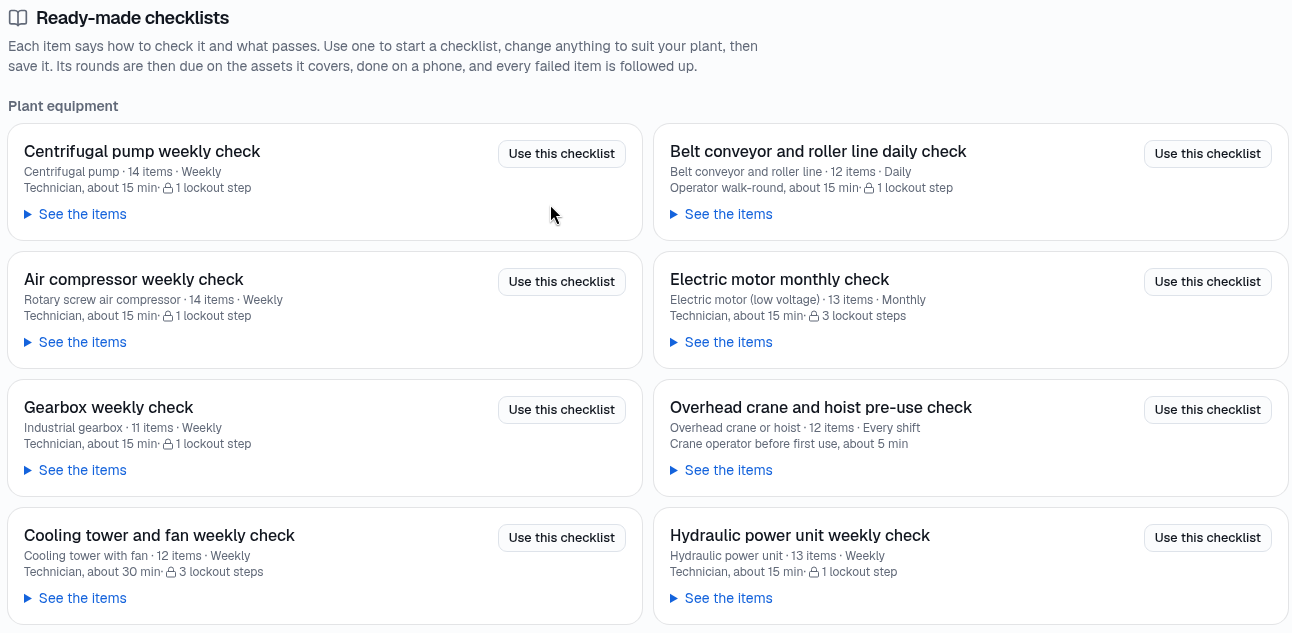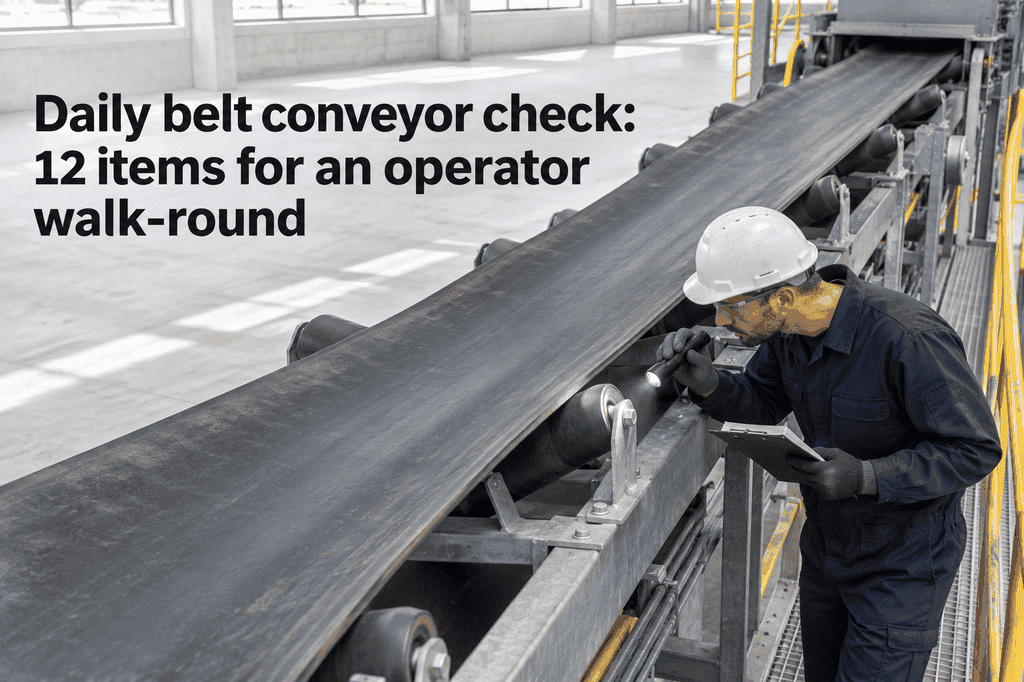
A conveyor that stops suddenly costs a shift; a conveyor whose pull-cord does not stop it costs far more. The daily check that catches both is short, but it only works if the operator does the same things in the same order. The ready Belt conveyor and roller line daily check in iFactory Inspection is written as an operator walk-round of about 15 minutes, with the safety tests first. This page shows the order of the walk, the pull-cord rule and what the checklist leaves to you. Add the conveyor check in your own workspace once your company is set up.
Inspection · Conveyor checklist
Daily belt conveyor check: 12 items for an operator walk-round
Safety first, then belt, rollers, scraper and drive. Each item says what passes.
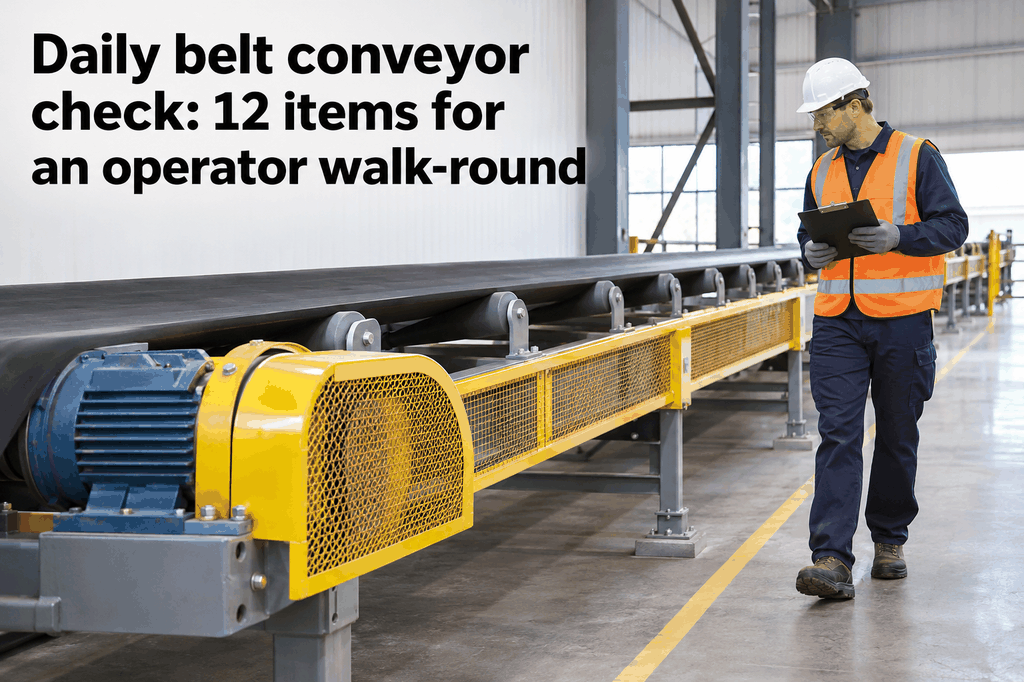
The walk, in checklist order
The twelve items are in the order an operator meets them on the walk, from the safety tests at the start through to the housekeeping at the end.
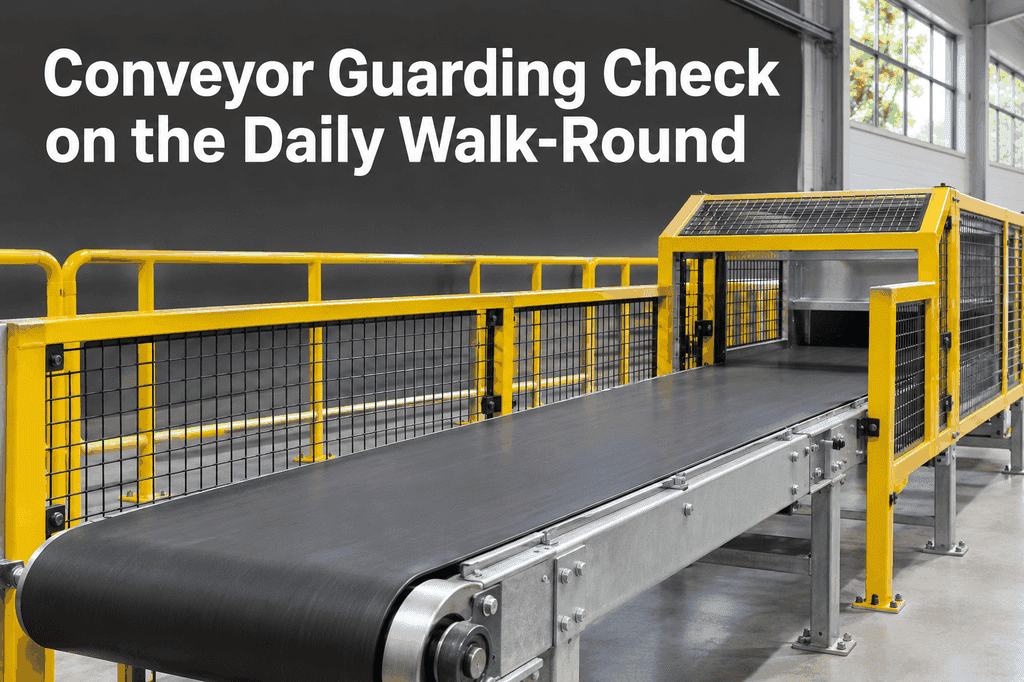
- SafetyTest one pull-cord switch, using a different station each day, then check every guard is fitted and walkways and crossovers are clear.The pull-cord test is Urgent and the guards are High priority, so these two are due fastest if they fail.
- Chain and beltLook at the roller drive chain for tension and wear, then at belt tracking, the belt surface and the splice.The chain check needs the guard off, so it is done locked out and not while the belt is running.
- Rollers and scraperAll idlers and rollers should be turning, and the belt scraper should be in contact with the belt.Listen for squeal along the line. A roller that has seized makes a noise before it wears a flat spot or damages the belt.
- Drive endAt the drive end, check the gearbox for noise and leaks, the pulley bearing temperature and the gearbox oil level.Pulley bearings pass below 70 °C. A warm bearing at the drive end is easy to miss without a reading.
- HousekeepingLook for spillage under the line, which builds up quietly along the return side.Clear it so that nothing touches the return belt. Material that builds up under the line can drag the belt or jam a roller.
Walk the line the same way every day
Each failed item becomes its own work order with the note and the limit, so the fitter knows which part of the line to go to.
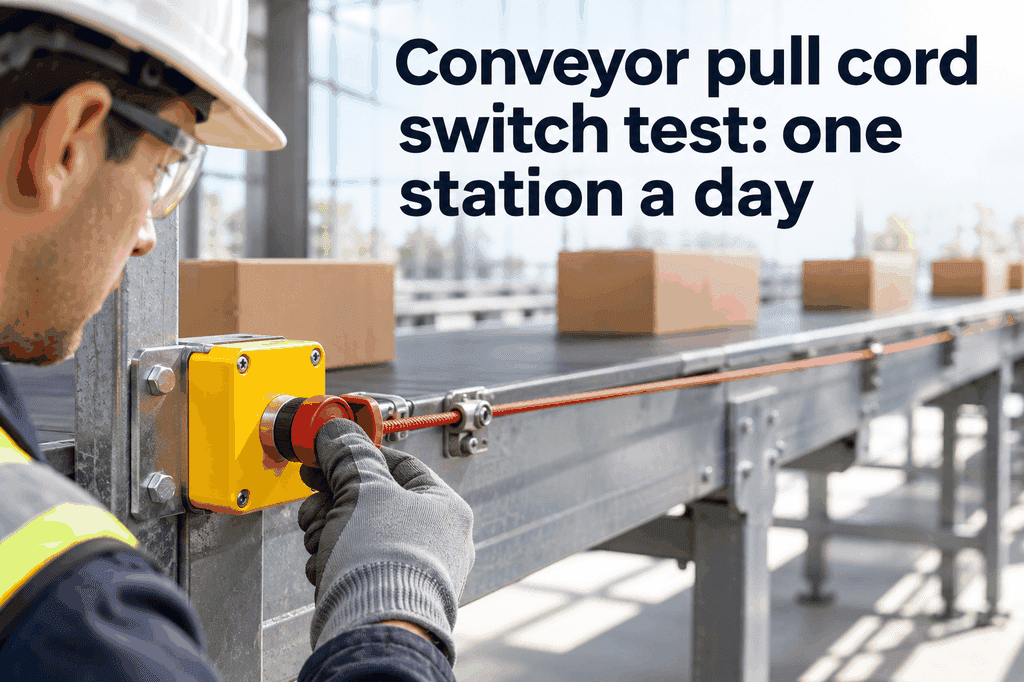
The pull-cord test, as written
The most important item on the round is also one of the quickest, which is why it comes first and why it is never worth skipping.
What the operator does
One station, a different one each day
Pull the cord
What passes
The belt stops at once
It will not restart until reset
The item is Urgent, so a failure raises a work order due in 4 hours. The operator should tell the supervisor straight away, because a pull-cord that does not stop the belt is an emergency.
Limits you will meet on the walk
A few of the numbers written into the items are worth knowing before you walk the line for the first time.
Limits are written in °C and bar in the ready library and shown in your organisation's units in the app. They are general figures, so check every one against the maker's manual.
What the conveyor checklist leaves to you
The checklist is a general belt-conveyor walk. It leaves a few things for you to add, so that it fits your own line.
Not food-specific
Hygiene and washdown items are not part of the check. A food line needs extra items for cleaning and for the materials the belt is made from.
No readings
Results are OK, Failed or N/A, with a note on failures. The app does not store measured readings, so write a figure in the note when an item fails.
Adjust to your OEM
Edit the limits and add items for your own conveyor before the first round, so the checklist reflects the equipment you actually have.
A walk down the line, head to tail
The conveyor round is built to be walked, not stood at. The operator starts at one end with the pull-cord test, then checks each guard at the head, tail, drive and return rollers, then walks the full length looking at the belt as it runs. They watch a full turn of the belt at the head and tail, because tracking only shows up when the belt has gone round.
On the way they listen for idlers that squeal or have seized, look at the belt surface and splice for tears, lifted cover or missing fasteners, glance at the scraper and check that spillage has not built up under the tail or against the return belt. At the drive end the gearbox is checked for sound and oil leaks and the head and tail pulley bearings are checked with an IR gun, passing below 70 °C.
Limits written into the items
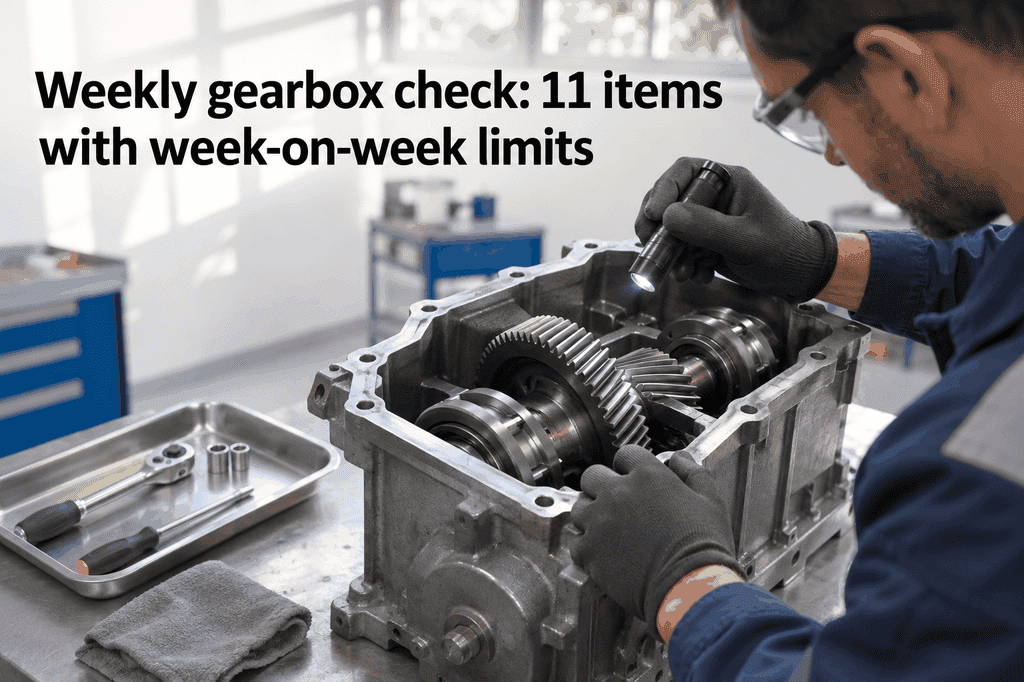
Several conveyor items give a measurable pass. Belt edge should stay at least 25 mm inside the idler ends and not touch the frame. The roller drive chain should sag 2 to 3% of the span with no stiff links and no hooked sprocket teeth, and that item is flagged for lockout because the guard is taken off. Gearbox oil is read at the sight glass with the line stopped for five minutes and should sit between the minimum and maximum marks.
The pull cord is the only Urgent item. Pull it at one station, a different one each day, and the belt must stop at once and stay stopped until reset. If it does not, the item fails and an Urgent work order is due in four hours.
Frequently asked questions
What is on the ready belt conveyor checklist?
The Belt conveyor and roller line daily check in iFactory Inspection has 12 items for an operator walk-round of about 15 minutes. It runs from safety to housekeeping: a pull-cord test, guards and walkways, the chain, belt tracking and surface, idlers and rollers, the scraper, the drive end and spillage. Each item says what passes.
Who is the conveyor checklist written for?
For the operator who runs the line, not for a maintenance technician. It is a daily walk-round, and every item can be answered by looking, listening or doing a simple test such as the pull-cord. The chain check is done locked out, so the operator should follow the site's lockout procedure for that one item.
Why test a different pull-cord each day?
Testing every pull-cord switch daily would take too long, so the item asks for one station a day, a different one each time. Over a few days every station gets tested. The item is Urgent, so a failure raises a work order due in 4 hours, and the operator should tell the supervisor at once.
What does a pass look like on the pull-cord test?
The belt stops at once when the cord is pulled, and it does not restart until the switch is reset. If it keeps running, or restarts by itself, the item fails. That is the most important item on the round and also the quickest. The work order is due in 4 hours because it is Urgent.
Can I use the checklist for a roller line?
Yes. The ready check covers belt conveyors and roller lines, so it already includes idlers and rollers turning, the scraper and the drive. Edit the items before you save it if your line has features the ready check does not mention, such as a food-safe belt, and add items for hygiene or washdown.
Is the chain check done with the line running?
No. The chain check needs the guard off, so it is done with the line locked out. The item is flagged as a lockout step as a reminder, and the guard goes back on before the lockout is released. The rest of the round is done with the line running or stopped, as the how-to-check line says.
Run the daily conveyor walk on a phone
Pick the check, apply it to every conveyor and let the rounds appear daily.
- 12 items, safety first
- Urgent pull-cord test
- Work order on every failure
14-day free trial · no card needed