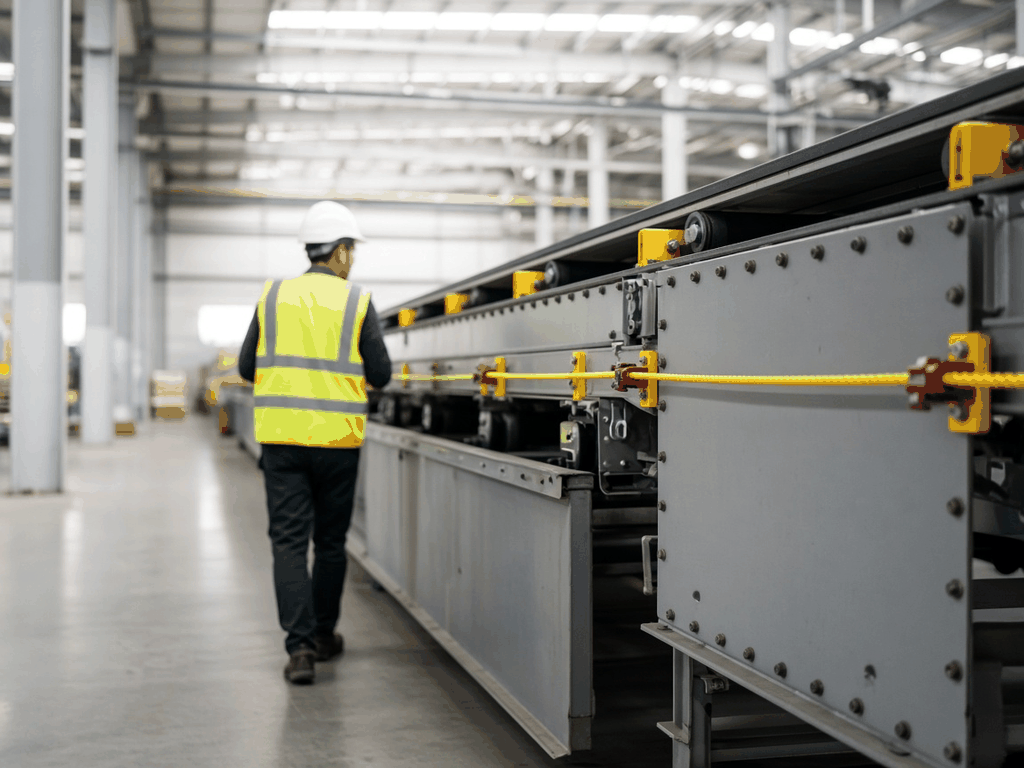
The guard on a conveyor is only as good as the last person who looked at it. Bolts work loose, a panel comes off for a repair and is not put back, and nobody notices until it matters. In iFactory Inspection the guards are a High priority Safety item in the ready Belt conveyor and roller line daily check. The operator walks the full length of the line. This page covers what passes and what the app records. It does not assess a guard design against a standard. Add the conveyor check in your workspace once your company is set up.
Inspection · Conveyor guarding
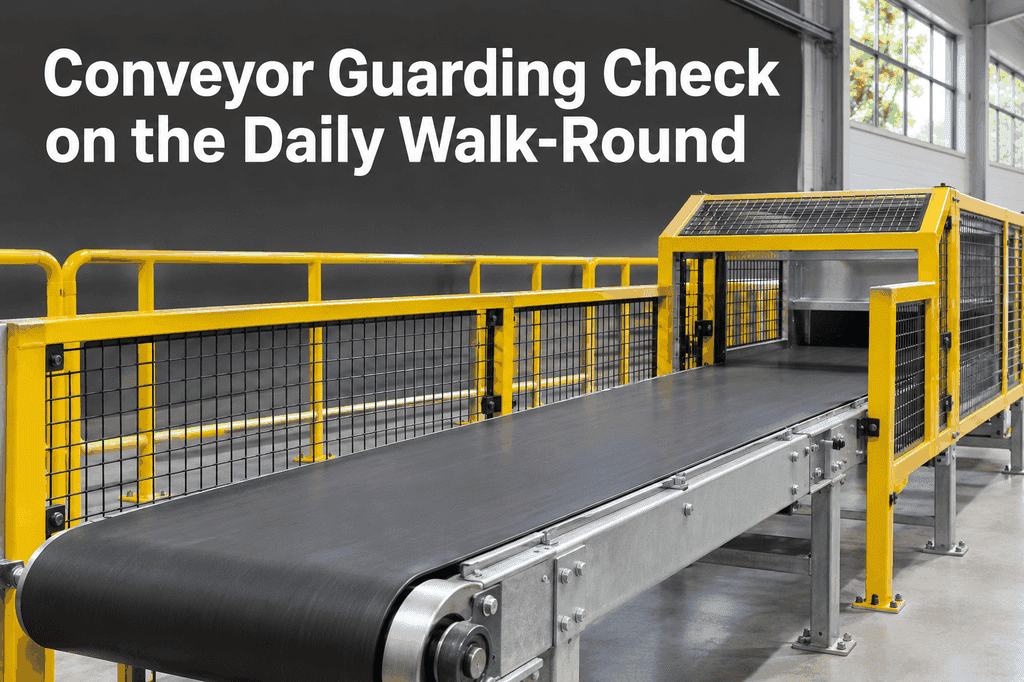
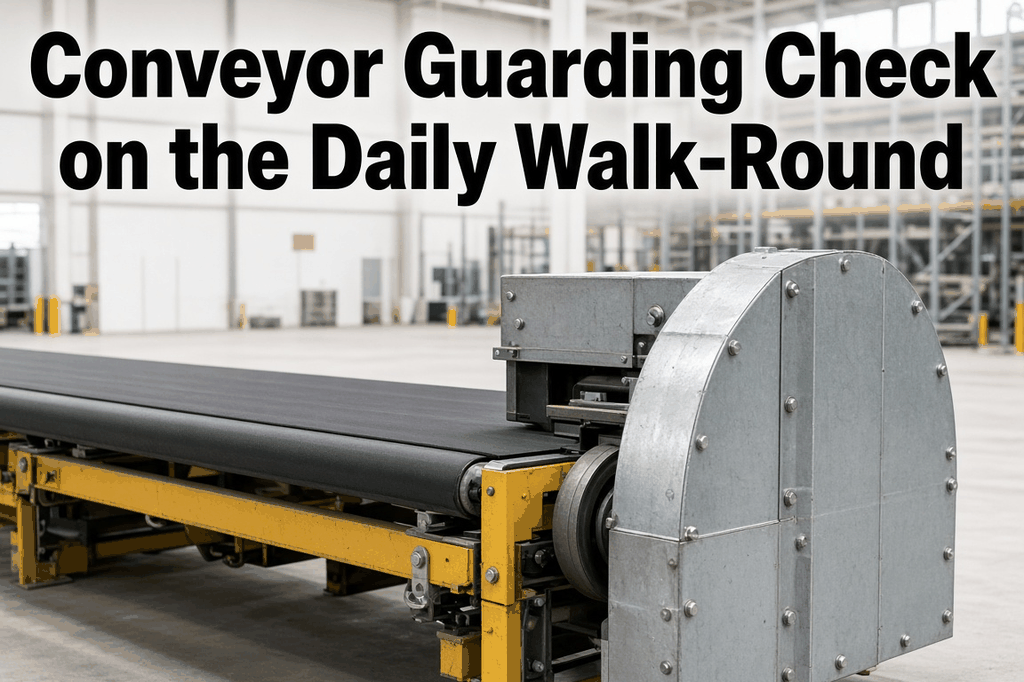
Conveyor guarding check on the daily walk-round
A High priority Safety item on the full-length walk.
On the walk-round
The guard check is one of several Safety items on the daily walk-round. Seen together, they show how the ready checklist tackles the hazards a person can see at ground level.
- Pull-cordThe pull-cord test comes first on the round and is Urgent, because it proves the emergency stop. The operator tests one station each day, a different one every time.Urgent item.
- GuardsThe guard item asks the operator to walk the whole line and look at every guard. It is High priority, so a missing or loose guard is treated as a real problem and not left for later.This item is High, which means a failure raises a work order due in 24 hours, a much shorter time than a typical condition item.
- Walkways and crossoversWalkways and crossovers should be clear of spillage, tools and material, with crossovers and handrails secure. It is a Medium item, but a blocked walkway makes every other check harder.A failed walkway item raises a Medium priority work order, due in 72 hours, with the operator's note about what was in the way or what was loose.
Walk the whole line
Cover the head and tail guards, the drive guard and the return-roller guards. The drive is where there are usually the most guards, so many operators start there and work along the belt.
Pass and fail
The item is judged in one pass along the line. Every guard is either fitted and secure or it is not, and the answer decides whether a work order starts.
Pass
Every guard at this point is in place with all bolts fitted, so it cannot be moved by hand or fall off in use.
Every guard at this point is in place with all bolts fitted, so it cannot be moved by hand or fall off in use.
No opening a hand or arm can pass through to reach a moving part. Check the edges where a guard meets the frame, bent mesh and gaps left after maintenance.
Fail
Marked Failed
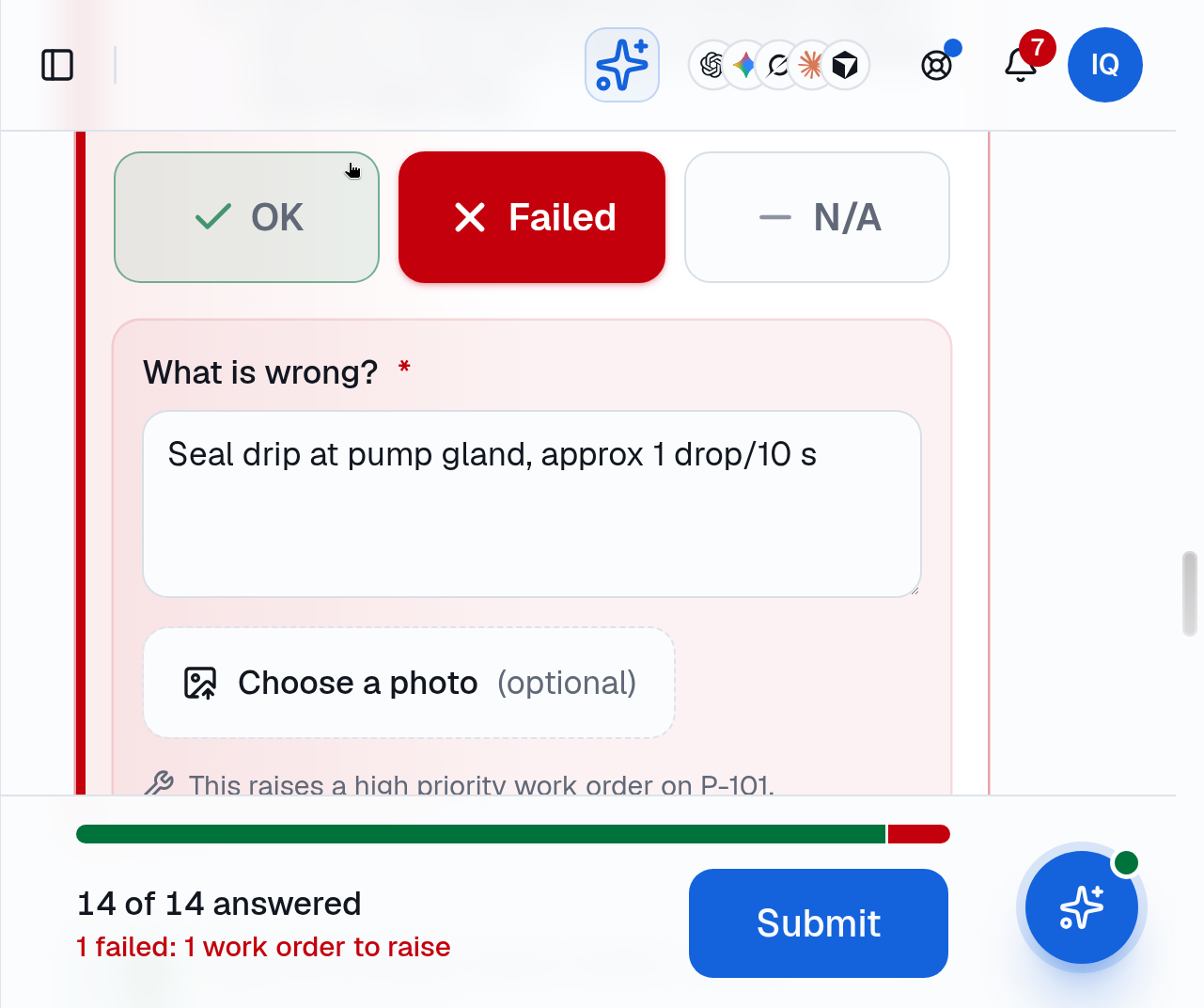
A High work order starts, due in 24 hours, with the note that says which guard and where it is.
A photo of the gap or the missing guard, with the nearby equipment visible, tells the fitter exactly where to go and what to bring.
The walk-round on a phone
On the phone the operator walks the line, taps Failed on the guard item, writes the location in the note and adds a photo. The work order is raised without a trip back to an office.
What the app does not claim
The app records the daily look. It does not judge whether a guard design is adequate, and it is honest about that limit.
No standard assessment
Whether a guard meets a standard is a design and risk question for your own assessment. The checklist only asks whether the guards that should be there are fitted and secure.
Your guarding rules
Your guarding rules decide which parts of the line need a guard. Edit the how-to-check line if your conveyor has guards the ready item does not mention.
A dated record
Every check leaves a dated record with who did it and what they found, so you can show when each guard was last looked at.
Walking the guards
The guarding item asks the operator to walk the full length of the conveyor and look at every guard: head, tail, drive and return-roller guards. Each should be bolted on, with no gaps you can reach through. It is a High item, so a missing or loose guard is treated as a real problem.
Walk it in the same direction each day so you do not miss a section, and look at the places guards are most often left off after maintenance: around the drive and at the tail pulley.
Related items on the same walk
The guard check sits beside the pull-cord test and the walkways and crossovers item, which asks that walkways are clear of spillage, tools and material and that crossovers and handrails are secure. Together they cover most of what a person can see at ground level.
Under the line, the spillage item asks that there is no build-up under the tail, skirts or return belt and that nothing touches the return belt. Spillage left to build up can cover a guard or foul a roller.
Recording a missing guard
If a guard is off or loose, mark the item Failed and say which one in the note. The High priority raises a work order due in 24 hours. Do not run the line unguarded because the work order is open; stopping the belt is a supervisor's decision under your own rules.
The app does not know where your guards are. The how-to-check line tells the operator what to look at and the note tells maintenance which guard.
Fitting the guard check into the daily walk
The belt conveyor round is a daily operator walk-round of about 15 minutes, so the guard check shares its time with tracking, idlers, rollers and the pull-cord test. A sensible order is to start at the drive, because that is where the most guards are, then follow the belt to the tail and come back along the return side.
Because the walk is repeated every day by the same people, a missing guard is usually found within a shift of being left off. That is the main benefit of doing it as a routine rather than waiting for a quarterly audit.
Where more than one person walks the line, the round history shows who checked it and when, which helps if a guard is found missing and you need to know when it was last seen in place.
What counts as a gap
The pass condition says no gaps you can reach through. That means a hand or arm cannot reach a moving part at any point on the guard. Look at the edges where the guard meets the frame, where a mesh panel has been bent, and at openings left after maintenance.
If a guard has been modified to allow access, for example a hole cut for greasing, check the opening is small enough and positioned away from moving parts.
Photographs of any gaps help the person who has to fix them, and a note that names the location, such as the tail pulley on the non-drive side, saves time.
Frequently asked questions
What is the conveyor guarding check?
It is a High priority Safety item in the ready Belt conveyor and roller line daily check in iFactory Inspection. The operator walks the full length of the line and looks at the head, tail, drive and return-roller guards. Each one should be bolted on with no gaps you can reach through.
What counts as a pass?
Every guard is fitted and bolted on, and there are no gaps that a hand or arm could reach through to a moving part. Look at the edges where a guard meets the frame, at mesh that has been bent, and at openings left after maintenance. Anything else fails the item, and the operator notes where.
How fast does a missing guard have to be dealt with?
The item is High priority, so a failure raises a work order due in 24 hours. The work order carries the note that says which guard and where, and the photo if one was taken. Whether the belt runs while it is open is a decision under your own site rules, not one the app makes.
Does the app say a guard meets a standard?
No. The checklist only asks whether the guards that should be there are fitted and secure. Whether a guard design meets a standard is a risk assessment question for your own people. The app keeps the dated record and raises the work order when something is found.
What else is checked on the same round?
The pull-cord test, one station a day, which is Urgent; the walkways and crossovers item, which asks for clear paths and secure handrails; and the chain, belt tracking, idler and roller items.
Does the guard check need lockout?
No. It is a visual check made while walking along the line, so it needs no isolation. The items that do need lockout, such as the roller chain, are flagged separately. If you take a guard off to look behind it, treat that as work on the line and follow your own lockout procedure.
Walk the guards every day
Add the conveyor check and keep a dated guard record.
- High priority safety item
- Work order due in 24 hours
- Photo of the location
14-day free trial · no card needed