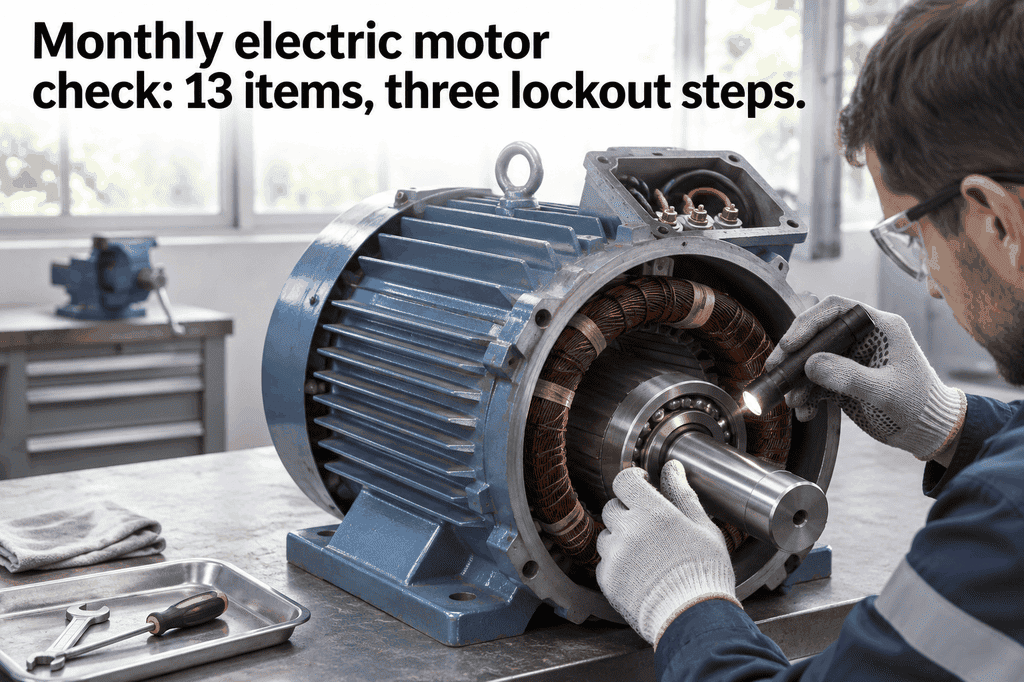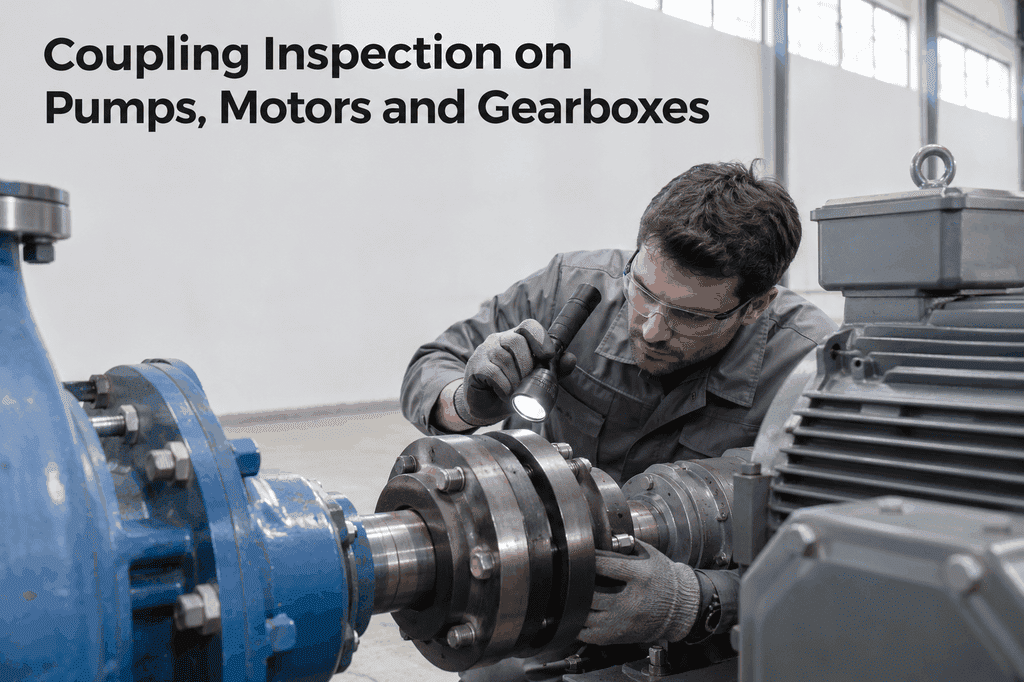
A coupling is easy to forget because it sits behind a guard. It joins a motor to a pump or a gearbox, wears slowly and fails suddenly. Coupling inspection appears in three ready checklists in iFactory Inspection, each marked as a lockout step, so it is done with the machine locked out and the guard off. This page sets out what each checklist looks for, what a failure does and what the check does not cover. Add the checks in your workspace once your company is set up.
Inspection · Couplings
Coupling Inspection on Pumps, Motors and Gearboxes
Three ready checklists, one lockout step each.

What each checklist looks for
The three checks are the ready pump, motor and gearbox checklists. Each has its own coupling item with wording that fits the machine, but the way the item is handled in the round is the same.
Machine locked out first
In every case the machine is locked out first and the guard is removed only after that. Refitting the guard is the last physical step before the lockout is released.
How the round handles it
The coupling item follows the same four steps on each machine, so a technician who has done it on a pump already knows the routine on a motor or a gearbox.
Lock the machine out
Isolate the machine and apply your lockout before the guard comes off. The flag in the checklist is a reminder only, and the lockout itself is a site procedure.
Take the guard off
Remove the coupling guard once the machine is confirmed isolated, so that the coupling and the shafts can be seen and felt without risk of rotation.
Check the coupling
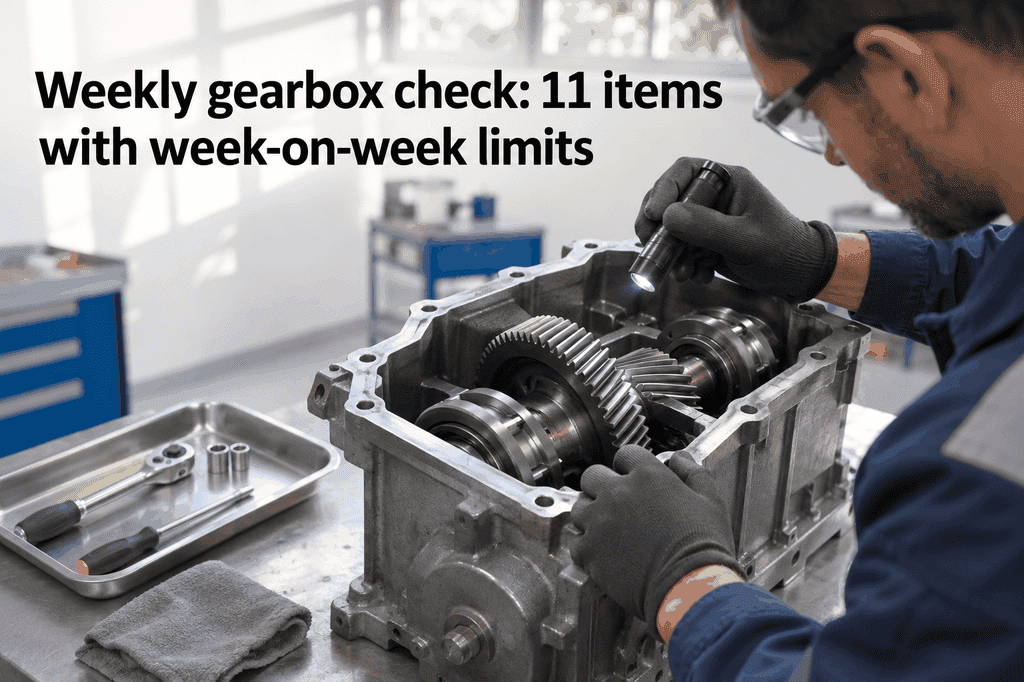
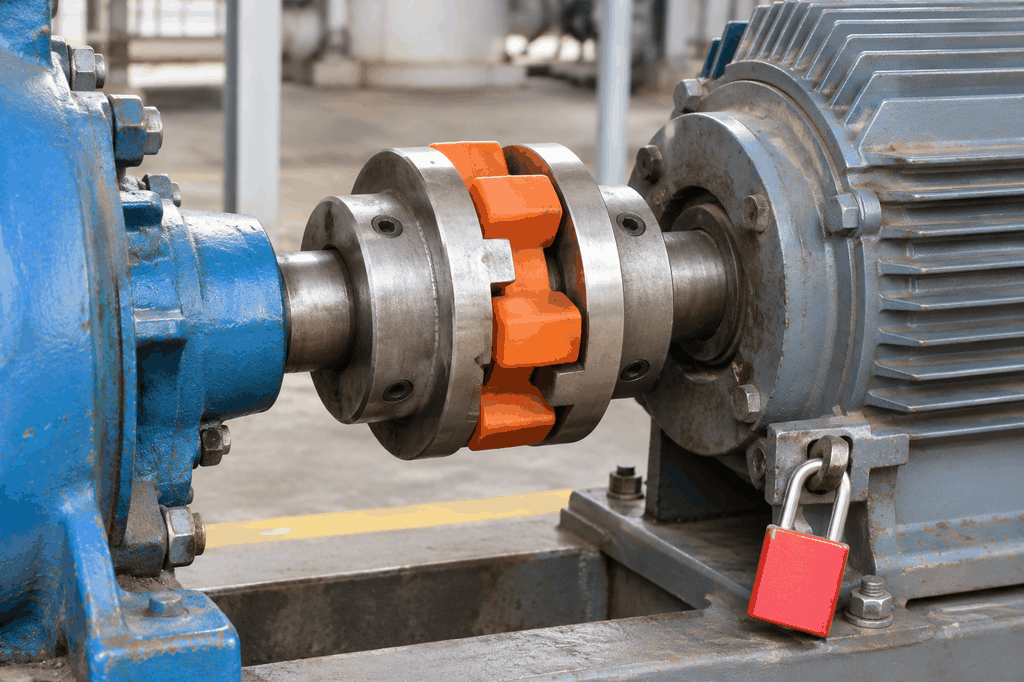
On the pump, look for an insert that is not cracked or missing pieces, no rubber dust and hubs tight on the shafts. On the gearbox, feel for play by hand and check the bolts. On the motor, check the key and set screws.
Put the guard back
The guard has its own High priority Safety item on each checklist, checked with the machine running, which confirms every bolt is in and there are no gaps. It catches a guard left off after this check.
A failure
A failed coupling item is Medium priority, so the work order is due in 72 hours. Maintenance has time to plan the replacement, but the note should say clearly what was found.
Item
Marked Failed
A failed item cannot be saved without a note, so the technician has to say what they saw, such as a cracked insert, rubber dust or a loose set screw.
Work order
Due in 72 hours
Medium items are due in 72 hours, which gives maintenance time to fit a new insert or tighten what is loose before the coupling gets worse.
Photo
Of the coupling
A photo of the insert, the hub or the dust, taken with the guard off, shows the fitter the problem before they open the toolbox and stays with the finding.
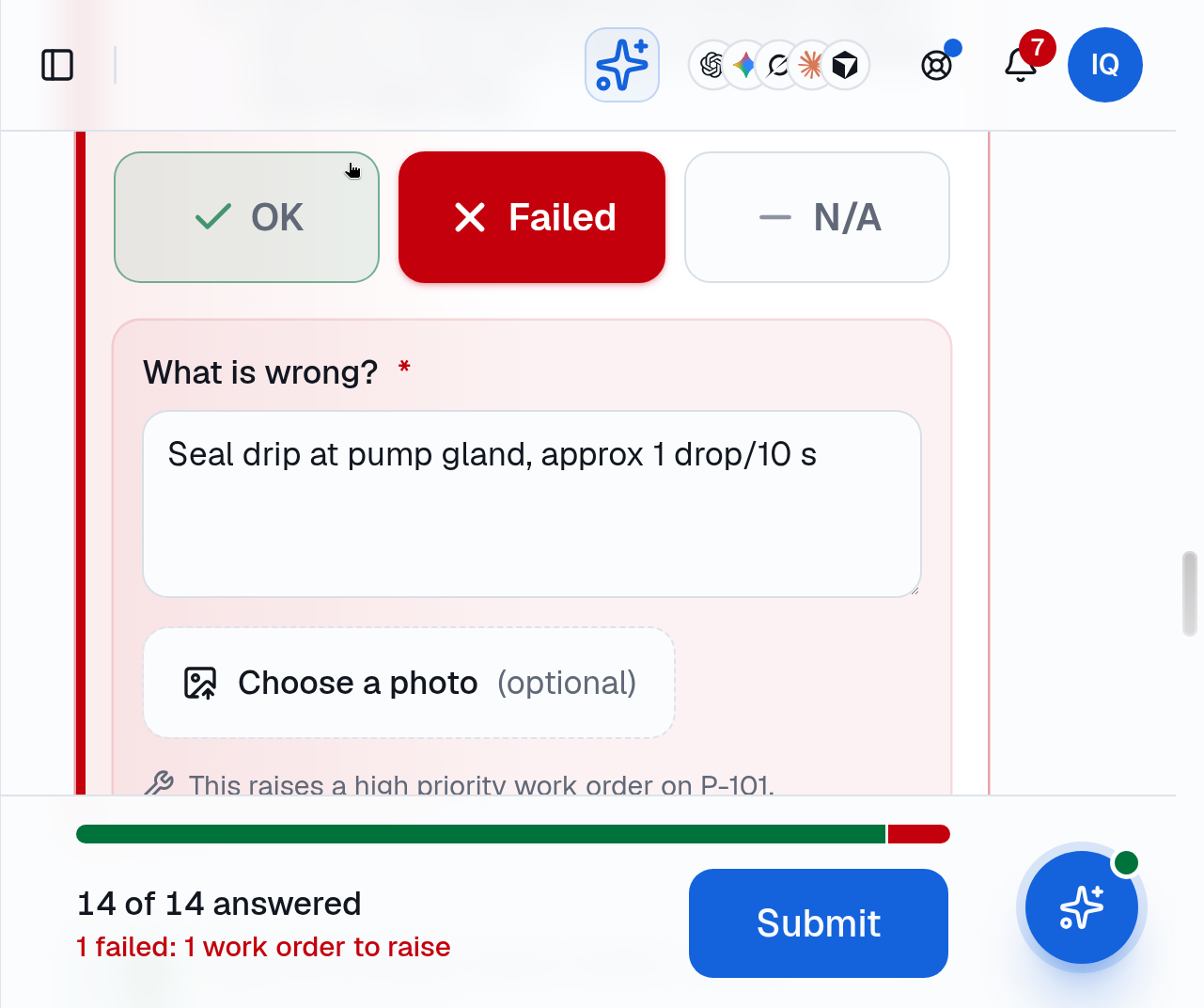
A failed item on the phone
On the phone the technician marks the item Failed, writes a note and can add a photo. The work order is then raised and the round moves on to the next item.
What is not covered
The check looks at the condition of the coupling and its fixings. It is a quick visual and hands-on look, not an engineering assessment of how the machines are lined up.
Alignment
Shaft alignment needs dial indicators or a laser and is not covered by the coupling items. If you suspect misalignment from wear on the insert, raise it in the note for maintenance.
Your lockout rules
The lockout flag only reminds the technician that this step needs isolation. Your own lockout and tagging procedure is what makes the machine safe to work on.
OEM manual
The pass conditions are general. Compare them with the coupling maker's guidance and edit the items if your coupling type has different limits for wear or play.
Where coupling checks appear
Coupling condition items are on the pump, motor and gearbox checks. Each is Medium priority and flagged for lockout, because the machine must be stopped and the guard removed. The pump item looks at the insert and hubs, the motor item at the key, set screws, insert and belt, and the gearbox item at the insert or grid, play by hand and bolts.
Locking out and removing the guard is the biggest part of the job, so doing the coupling and the belt checks on one lockout saves time.
What to look for
On the pump, a pass is an insert that is not cracked or missing pieces, no rubber dust and hubs tight on the shafts. On the motor, the key is in place and set screws are tight. On the gearbox, the insert or grid is intact, there is no play you can feel by hand and the bolts are tight.
A worn insert is cheap to replace. Left alone, it can fail and let the coupling halves hit each other.
The guard
The guard goes back on before the machine is started. Guards have their own High-priority items, for example the pump coupling guard, which should have every bolt in with no gaps, and the gearbox shaft and coupling guards.
Do not rely on the app to know whether the guard is on; the how-to-check line tells the technician to look.
Recording a coupling failure
Mark the item Failed and write what you found: the insert cracked, a bolt loose, the gap off. The condition items are Medium, so the work order is due in 72 hours.
Photos help: the insert, the guard or the rubber dust show maintenance the problem before they open the toolbox.
Doing it on one lockout
A coupling check is more efficient when it shares a lockout with other items. On the pump round, the insert and hubs check goes with the mechanical seal gland if you are already working at the pump end. On the motor, it goes with the hold-down bolts. On the gearbox, it can share a lockout with the shaft seals and joints look.
Keep a list of what you need before you lock out: torch, torque wrench if your procedure uses one and a clear jar for any oil sample. A job that has to be stopped halfway to fetch a tool wastes the downtime.
Refit the guard last and check every bolt before releasing the lockout.
Frequently asked questions
Which ready checklists include a coupling check?
Three do: the Centrifugal pump weekly check, the Electric motor monthly check and the Gearbox weekly check in iFactory Inspection. Each has a coupling condition item flagged as a lockout step and Medium priority, plus a separate guard item checked with the machine running.
Does the machine have to be locked out for the coupling check?
Yes. The condition items need the guard off, so the machine is isolated first and the guard comes off only after that. The checklist flag is a reminder and does not replace your own lockout procedure. The guard is refitted and every bolt checked before the lockout is released.
What does a pass look like on each machine?
On the pump, an insert that is not cracked or missing pieces, no rubber dust and hubs tight on the shafts. On the motor, the key in place, set screws tight, insert not cracked and the belt not glazed. On the gearbox, an insert or grid intact, no play you can feel by hand and bolts tight.
How fast does a failed coupling item need attention?
The condition items are Medium priority, so a failure raises a work order due in 72 hours. The work order carries the note, the how-to-check text and the pass condition, and a photo if the technician added one. A worn insert is usually cheap to replace if it is found in time.
Does the check cover shaft alignment?
No. The coupling items look at the condition of the coupling, its fixings and its guard. Alignment needs proper measuring tools and is a maintenance job in its own right. If wear on the insert makes you suspect misalignment, say so in the failure note so that maintenance can check it.
Should I add a photo to a failed coupling item?
Yes, if you can. A photo of the insert, the hub, the rubber dust or the guard shows maintenance the problem before they open the toolbox. The photo stays attached to the finding and the round record, so anyone looking later can see what the technician saw on the day.
Add the coupling checks
Pick the checks for your pumps, motors and gearboxes.
- Lockout step flagged
- Work order due in 72 hours
- Guard checked running
14-day free trial · no card needed