Oil in a pump bearing tells you things before the bearing does. The level says whether it is being fed, the colour says whether it is still fit and the look of it says whether water or metal has got in. In iFactory Inspection the bearing oil check is one item in the ready Centrifugal pump weekly check. This page covers what the technician reads, what counts as a pass and how a failure is handled. It does not recommend an oil grade; use the pump maker's figure. Add the pump check in your workspace once your company is set up.
Inspection · Pump bearing oil
Pump bearing oil check: level, colour and water
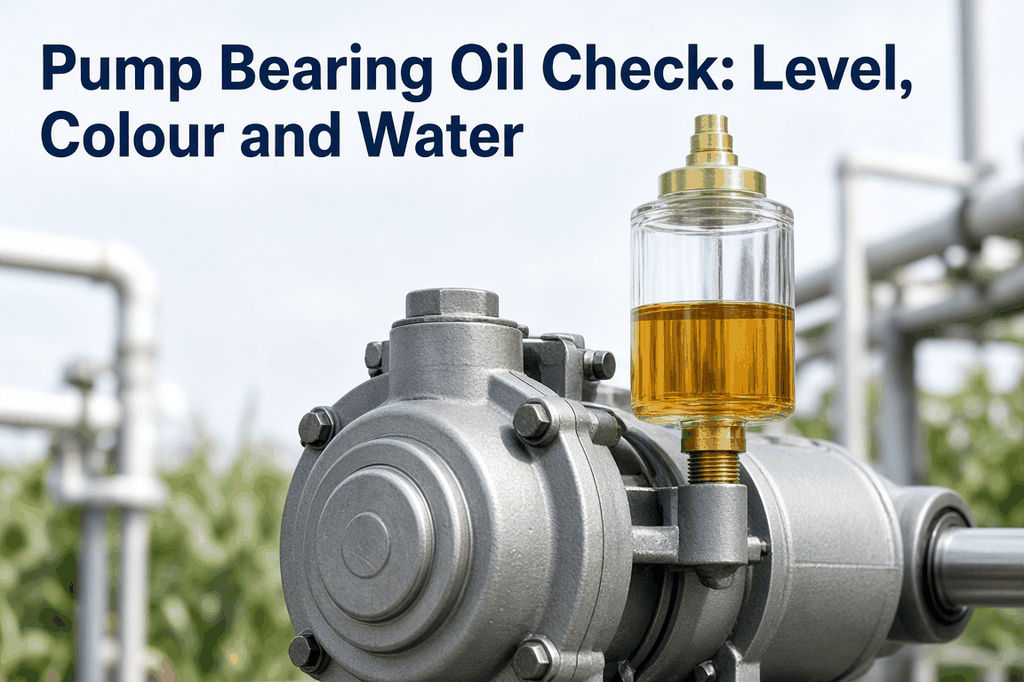
Read the sight glass or the constant-level oiler on each bearing housing, then look at the oil itself and judge whether it is still fit for the job.
What the oil tells you
The item reads the sight glass or the constant-level oiler and then asks three questions about what is seen, one after the other.
Level at the mark
Read the sight glass or oiler
The level sits at the mark on the glass or the oiler. Too low means the bearing is short of oil, and too high can make it run hot.
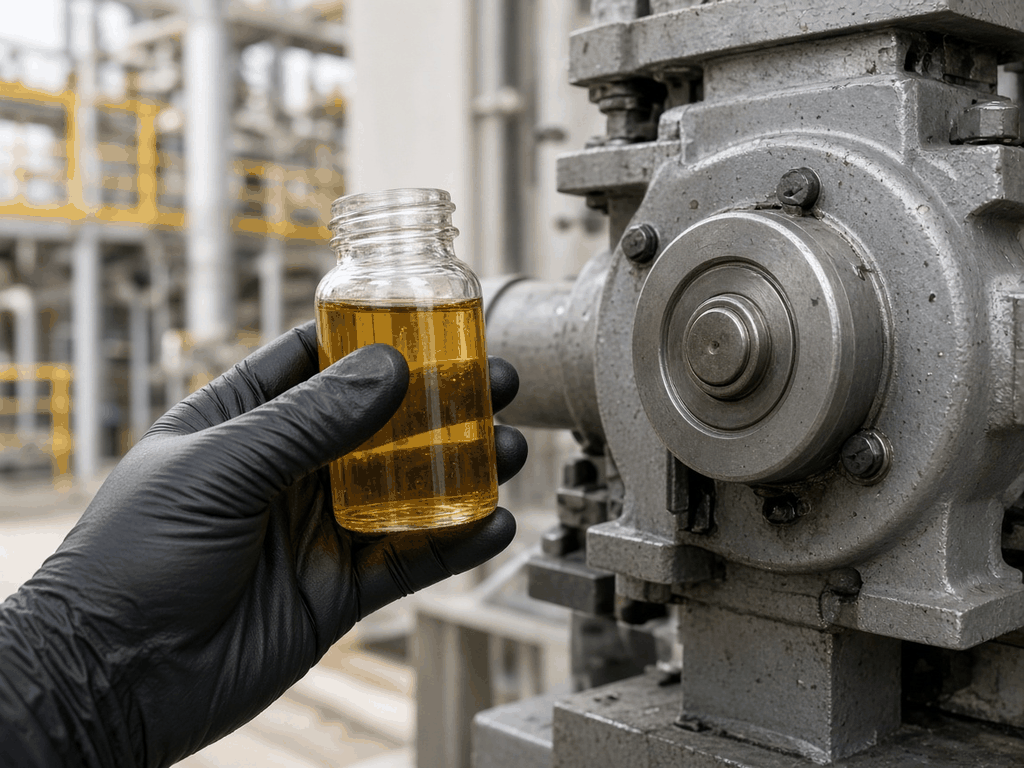
Clear amber oil
Look at the colour and clarity
The oil is clear amber. Oil that has darkened since the last round has started to age, even if it has not yet turned milky.
Milky oil
Look for a cloudy, milk-like look
The oil is not milky. Milky oil means water has got in, from a leaking seal, a washdown or condensation, and it must be dealt with.
Metal flakes
Look for glitter in the oil
There is no glitter or flakes of metal. Metal flakes in the oil mean that the bearing or another part is wearing.
Three things the oil shows
First read the glass for the level, then read the oil for the condition, because a bearing can be full of oil that is no longer doing its job.
Pass and fail
At the glass the technician makes a single decision: pass or fail. The item is answered OK, Failed or N/A, with a note on a failure.
Pass
At the mark
Clear amber
None seen
Fail
Marked Failed
Raised, due in 72 hours
Of the sight glass
Checked together on the same round
Oil trouble rarely shows up on its own, so it helps to read the other items on the same round that point to the same cause.
- Bearing oilThe oil item covers the level and the condition at the glass, which is a few seconds of looking per bearing.This is the item that this page is about, and it sits among the others on the weekly round.
- Both bearing temperaturesBearing temperature is read at the drive end and at the pump end, and a hot bearing with poor oil is a clear sign of trouble.The oil and temperature items are High priority, so a failure raises a work order due in 24 hours.
- VibrationVibration is read on both the pump and the motor bearing housings, and rising vibration often goes with oil that is low or contaminated.Vibration is read with a pen held on each housing, once across the shaft and once up, and compared with the limit.
- Mechanical sealThe seal should be dry or under one drop a minute. A leaking seal is a common route for water to get into bearing oil.The leak check at the seal and the bearing housing is on the same round, so a source of oil loss or water gain can be found in the same visit.
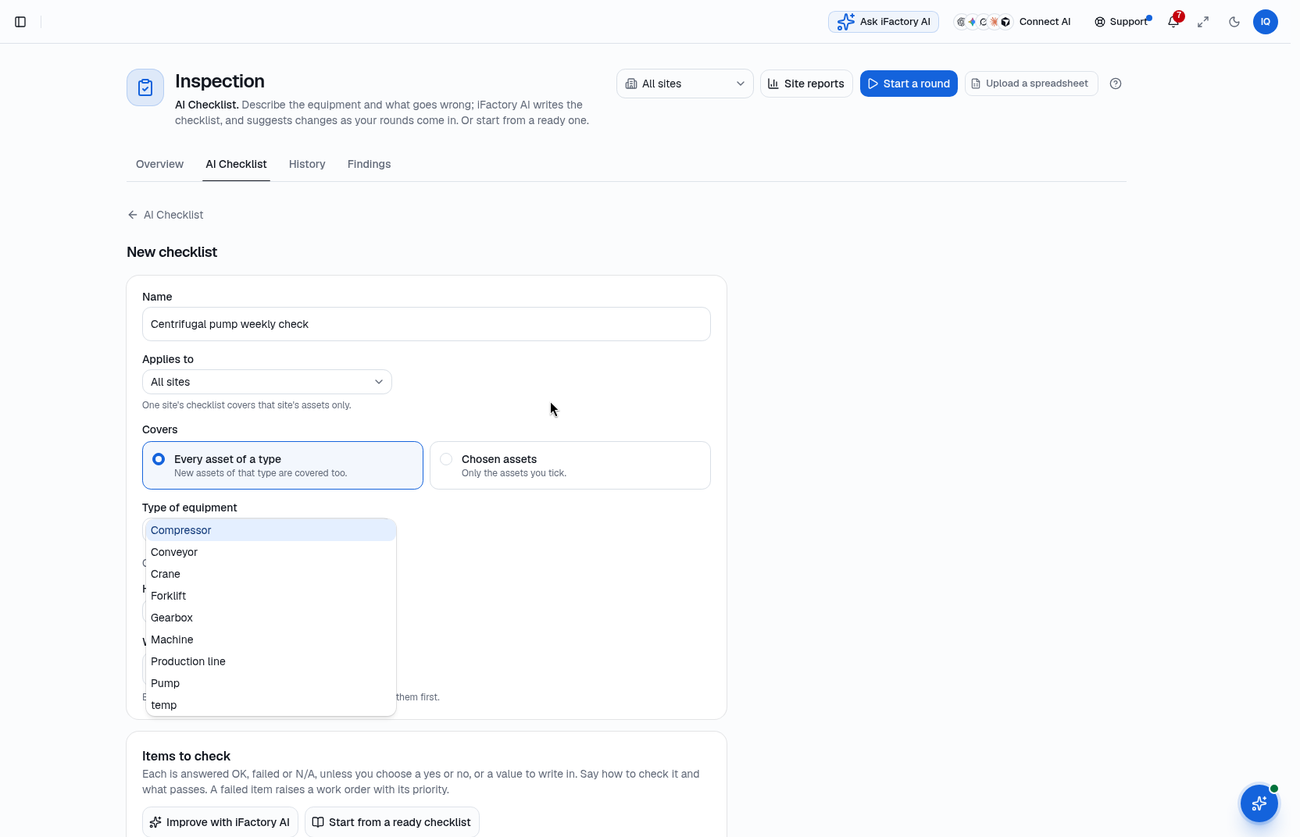
The pump check in the editor
The ready pump check can be started from the library and edited, so the oil item can be adjusted if your pump uses a different oiler.
What the app does not claim
The app keeps a record of the check, so you can see when the oil item last failed and how often.
No oil grade
Where the pump maker gives a different figure for level or oil type, use the maker's figure.
Not an oil analysis
The check does not test the oil in a lab. It is a look at the glass, and doubtful oil should be sent for proper analysis.
OEM manual first
The limits are general figures. Check every limit against the pump maker's manual before the first round.
Looking at the oil, not just the level
The oil item on the pump check asks for level and condition together. Read the sight glass or oiler: the level should be at the mark. Then look at the colour. Oil that is clear amber is fine. Milky oil suggests water has got in, and metal flakes mean something is wearing inside the bearing housing.
The two checks tell you different things. A low level says you are losing oil, perhaps from a leaking seal or a loose drain plug. A milky colour says something is getting in. Both are worth acting on before the bearing runs hot.
What to do about a failure
The item is Medium priority, so a failure raises a work order due in 72 hours. Write what you saw in the note: level below the mark, oil milky, or flakes at the sight glass. The work order carries the item, the note, the how it is checked line and the limit.
Do not top up and move on without noting it. If a pump needs oil every week, that is a leak somewhere, and the history of failed oil checks is how you will see it.
Read it with the bearing temperature
The oil check and the bearing temperature check sit on the same round for a reason. A bearing that is low on oil will run hotter. If the temperature is rising and the oil level is down, the cause is clear. If the oil is milky and the temperature is normal, the water has only just arrived.
The app records OK or Failed and a note. It does not store the level or temperature as numbers, so write them in the note when you fail an item.
Doing it consistently
Read the sight glass at eye level and with the pump in the same state each week, so the level is comparable. Many pumps have a constant-level oiler; check the bottle is above the mark and that oil is visible in the sight glass, not only in the bottle.
For condition, look at the oil in the glass against a white background if you can. Oil that has gone darker than the last time is worth a note, even if it has not yet turned milky.
The pump check has 14 items and takes about 15 minutes, so the oil check is one step in a short, repeated routine.
Frequently asked questions
What is the pump bearing oil check?
It is one item in the ready Centrifugal pump weekly check in iFactory Inspection. The technician reads the sight glass or the constant-level oiler and judges the oil. A pass is a level at the mark, oil that is clear amber, not milky, and no metal flakes.
What counts as a pass?
The level sits at the mark, the oil is clear amber, it is not milky and there are no metal flakes in it. If any one of these is wrong, the item fails. The technician writes what was seen in the note, such as the level or the colour, because the app does not store the level as a number.
What does milky oil mean?
Water has got into the bearing housing. It can come from a leaking seal, a washdown or condensation. Milky oil does not lubricate properly and the bearing will wear quickly, so the item fails. Check the seal at the same visit, and say in the note what you think the source of the water is.
How fast is a failed oil check due?
The item is High priority, so a failure raises a work order due in 24 hours. The work order carries the note and the how-to-check text. Do not top up the oil and move on without noting it. If a pump needs oil every week, there is a leak somewhere, and the history of failed oil checks will show it.
Which oil grade should I use?
Use the pump maker's figure. The app does not recommend an oil grade or an interval, because they depend on the pump, the bearing and the duty. The checklist only asks whether the oil is at the right level and in good condition. Put the grade in the how-to-check text of your copy if you want technicians to see it.
Does the check test the oil in a lab?
No. It is a look at the glass, which tells you the level and the condition by eye. For condition, look at the oil against a white background if you can. If the oil is dark, cloudy or contaminated and you are not sure, take a sample for laboratory analysis instead of relying on the weekly look.
Check the bearing oil weekly
Add the pump check and let a failed oil item become a work order.
- Level and colour in one item
- Photo with the failure
- Work order due in 72 hours
14-day free trial · no card needed