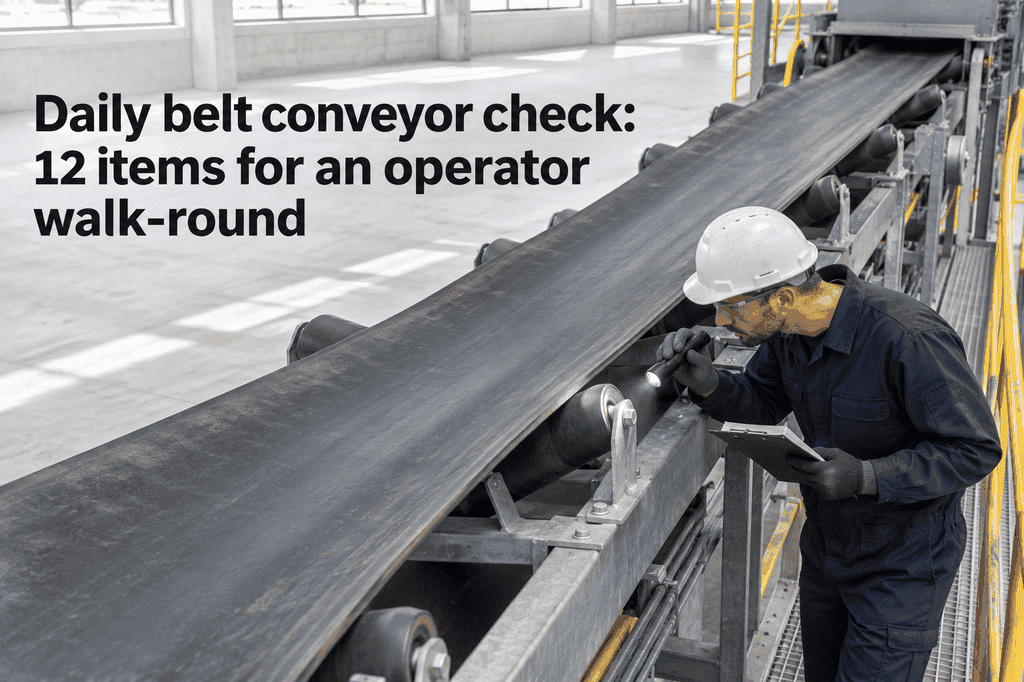
A roller chain tells you its health by how it hangs and how it moves. Too much sag means it has stretched, a link that does not flex is stiff, and a hooked sprocket tooth means the chain is wearing the sprocket. The check has to be done with the line locked out and the guard off, which is why iFactory Inspection flags it as a lockout step. This page covers the item in the ready Belt conveyor and roller line daily check. Add the conveyor check in your workspace once your company is set up.
Inspection · Roller chain
Roller chain inspection: sag, stiff links and sprockets
A lockout item in the daily conveyor check.

How the check goes
The chain check is one written item inside the daily conveyor round, with its own how-to-check line. The operator follows the same sequence each time: lock out, open up, measure, look, and close up again.
Lock out the line
Isolate the line and apply your site lockout before anything else happens. The checklist flag is a reminder that the guard has to come off, and it does not replace the lockout procedure itself.
Take the guard off
Remove the chain guard once the line is confirmed dead, so that the chain and both sprockets can be seen along their length. Keep the bolts together so the guard goes back exactly as it came off.
Check the sag
Check the slack on the free span of the chain: it should sag about 2 to 3% of that span. More than that means the chain has stretched, and much less can mean it is overtight and loading the bearings.
Check links and teeth
Turn the chain by hand where you can and look for a link that does not flex freely. Then look at the sprocket teeth, which should not be hooked, because hooked teeth show the chain and sprocket are wearing together.
Put the guard back
Refit the guard and tighten every bolt before the lockout is removed. A line restarted with the guard off is the exact hazard the daily guard item on the same round is there to catch.
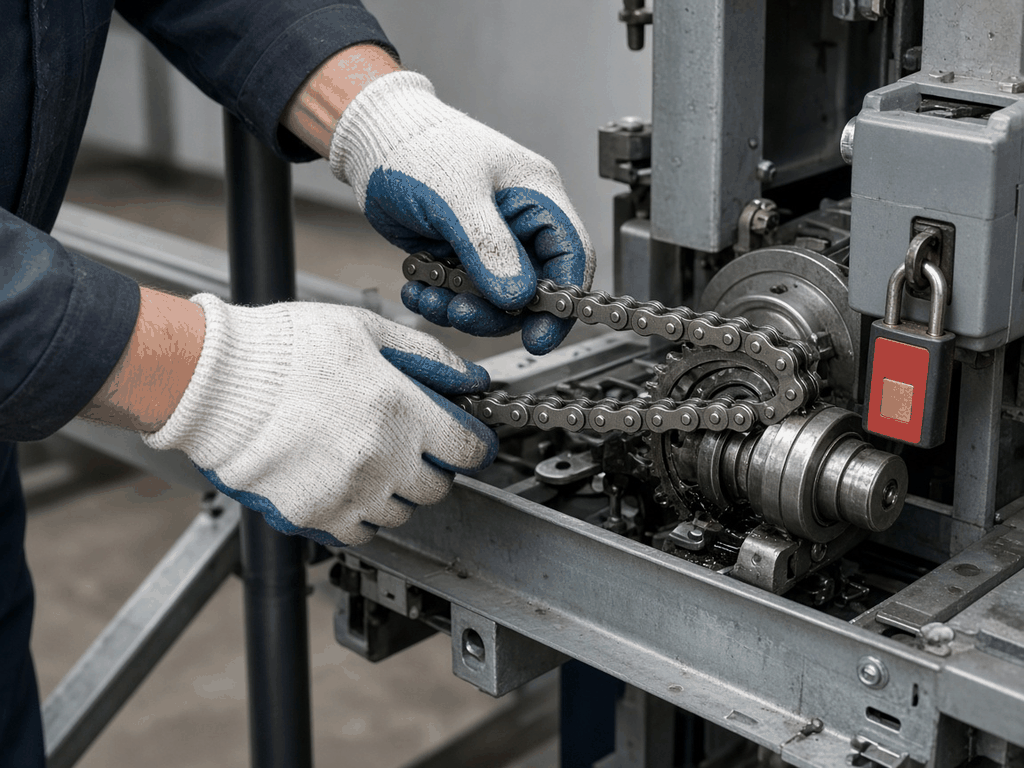
Locked out, checked, guarded
The sequence matters as much as the measurement: nothing is released until the guard is back and the person who locked out is the person who unlocks.
What passes
The item reads three conditions in one pass: the sag, the free movement of the links and the shape of the sprocket teeth. Any one of them failing means the item is marked Failed.
What a failure does
A failed chain item is Medium priority, so the work order is due in 72 hours. That gives maintenance time to plan the repair, but the note should still say clearly what the technician found.
Item
Marked Failed
The work order carries the item, the note, the how-to-check text and the pass condition, so whoever repairs the drive can see how the failure was found and what the limit was.
Due
72 hours
Medium items are due in 72 hours, which is the time maintenance has to inspect the chain and replace it or adjust it.
Photo
Of the chain or sprocket
A photo of the stretched chain or the hooked tooth, taken while the guard is off, shows the fitter the problem before they arrive and stays attached to the finding.
A failed item on the phone
On the phone the operator marks the item Failed, writes a note and can add a photo. Nothing else is needed to start the work order, and the round carries on to the next item.
Cautions
These points are worth settling before the first round, because the app can only ask the question and keep the record. It cannot make the line safe for you.
Your lockout rules
The lockout flag only reminds the operator that this step needs isolation. Your own lockout and tagging procedure is what actually makes the line safe to work on.
Guard check
The guard item on the same round checks every guard is fitted, so a chain guard left off after this check would be caught the next time the round is run.
OEM manual
The 2–3% sag and the other conditions are general. Compare them with the chain maker's instructions and edit the item if your chain has a different recommended slack.
Doing the chain check
The roller drive chain item on the conveyor check is flagged for lockout, because it needs the guard taken off to see the chain. Lock the line out, remove the guard and look along the chain: it should sag 2 to 3% of the span, with no stiff links and sprocket teeth that are not hooked.
A stiff link shows as a point where the chain does not articulate freely. Hooked teeth show as the tips of the sprocket teeth bending in the direction of travel, which means the chain and sprocket are both worn.
Why sag matters
A chain with too much sag runs loose, slaps and can jump the sprocket. One that is too tight loads the bearings and wears faster. The 2 to 3% figure gives the technician a range to aim for rather than a vague feel.
Measure the sag the way you were shown, and record anything outside the range as a failure with the amount in the note.
After the check
A Medium item raises a work order due in 72 hours. Put the guard back before the line is released, and note the chain's condition: how much sag, which link is stiff, which sprocket is worn.
Because the check is part of the daily conveyor round, the history will show a pattern if the chain is wearing quickly. It does not replace the maker's maintenance instructions for chain lubrication or replacement.
Where the chain check fits
The chain item sits among the mechanical items of the belt conveyor and roller line round. Its neighbours cover the belt tracking, the idlers and rollers and the drive gearbox. A chain that has gone loose often shows up first as a noise from the drive, so the listening items on the same round are worth reading with it.
Chain checks need the line locked out, so plan them for a time the line is stopped anyway. In many plants that is the shift change or a planned clean-down. The item stays in the daily list because the checklist is the same each day; the lockout flag tells the operator to check only when it is safe to do so.
If you find that the item is often skipped because the line is never stopped, change the checklist: set a longer frequency for a separate check that only covers locked-out items, and keep the daily list visual.
Lubrication note
A dry chain wears faster. If the chain looks dry or rusty, note it, because lubrication belongs in the preventive maintenance plan and the inspection result is the trigger for it.
Frequently asked questions
What is a roller chain inspection on a conveyor?
It is an item in the ready Belt conveyor and roller line daily check in iFactory Inspection. With the line locked out and the guard off, the operator checks the chain sag, looks for stiff links and checks the sprocket teeth. It is flagged as a lockout step and is Medium priority.
What passes and what fails?
A pass is a chain that sags about 2 to 3% of the span, has no stiff links and sprocket teeth that are not hooked. Too much sag, a link that does not flex or a hooked tooth fails the item. The operator writes what was found in the note, and can add a photo.
Does the line really have to be locked out?
Yes. The guard has to come off to see the chain and sprockets, so the item is flagged as a lockout step. The flag is a prompt in the checklist and does not replace your own lockout procedure, which is what makes the line safe. The guard goes back on before the lockout is released.
How fast is a failed chain item due?
The item is Medium priority, so a failure raises a work order due in 72 hours. The work order carries the item, the note, the how-to-check text and the limit. If the chain looks dangerous, the operator should tell the supervisor straight away rather than waiting for the work order.
Why does chain sag matter?
A chain with too much sag runs loose, can slap and may jump the sprocket, while one that is too tight loads the bearings and wears faster. The 2 to 3% figure gives the operator a range to aim for rather than a vague feel. Write the amount in the note when the item fails.
Can the app lock the line out or replace the maker's instructions?
No. The app asks the question, keeps the record and raises the work order. It cannot isolate the line, and the general limits in the ready item do not replace the chain maker's instructions for tension, lubrication or replacement. Edit the item if your chain has different recommended figures.
Add the chain check to the round
Add the conveyor check and keep the lockout step visible.
- Flagged lockout step
- Work order due in 72 hours
- Photo of the chain
14-day free trial · no card needed