A blocked suction strainer starves a pump long before anything breaks. The pump starts to cavitate, the flow falls and the motor works harder for less. The early sign is on the suction gauge, which reads lower as the strainer fills. In iFactory Inspection the strainer pressure drop is part of the ready Centrifugal pump weekly check. The technician compares the suction gauge with the last reading. This page covers the limit, what a failure does and the readings on the same round that tell the same story. Add the pump check in your workspace once your company is set up.
Inspection · Suction strainer
Strainer Pressure Drop: When to Clean a Suction Strainer
Compare the suction gauge with the last reading. The item is about the change from the normal figure, not about a single number on its own.
How the check goes
The method and the limit are written into the item, so the technician sees what to compare and what counts as acceptable.
Read the suction gauge
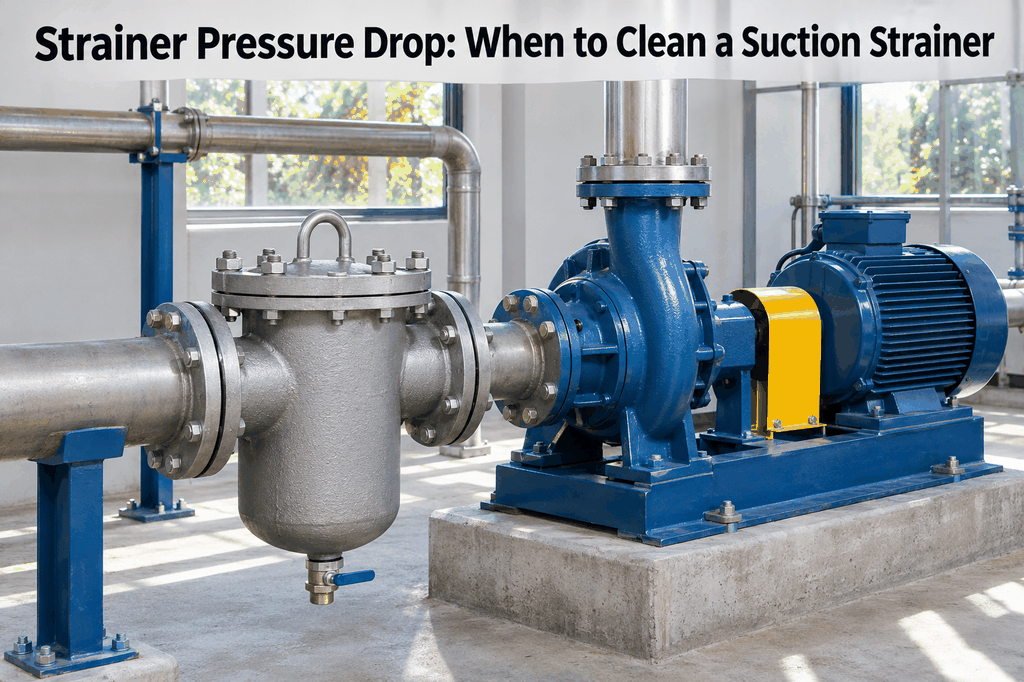
The gauge to read is on the suction side of the pump, before the impeller, where a blocked strainer shows up first.
Compare with last reading
Use the same gauge every week, so that a difference in the reading is a difference in the strainer and not in the instrument.
Check the drop
A passing strainer has a pressure drop under 0.3 bar, or under the value written on the pump tag if there is one.
If it is higher
If the drop is above the limit, clean the strainer. The item fails and the work order asks for it to be cleaned.
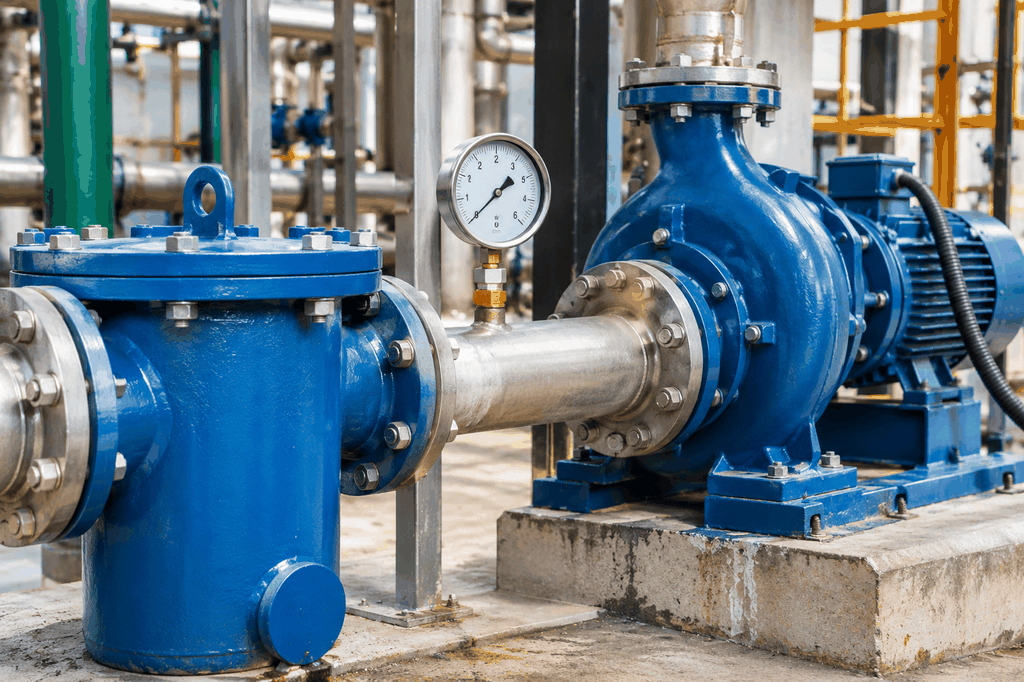
Read the gauge, compare, then clean
A bigger drop means a fuller strainer, so the figure rises steadily between cleans until it reaches the limit.
Pass and fail
Two things decide the item: the size of the drop and how it compares with the normal figure for that pump.
Pass
Under 0.3 bar or the tag value
None
Fail
Marked Failed with a note
Raised, due in 72 hours
Of the gauge
Read together on the same round
Other readings on the weekly pump check help to confirm whether a blocked strainer is the cause of a problem on the pump.
Put the normal readings on the tag
Writing the normal figure on the tag means everyone compares against the same figure and not against a memory.
Suction drop
Value for this pump
Write the normal drop for the pump on the tag, so that it is there for the next technician to see.
Discharge reading
Normal figure
Write the normal drop for the pump on the tag, so that it is there for the next technician to see.
Running current
Normal figure
Write the normal drop for the pump on the tag, so that it is there for the next technician to see.
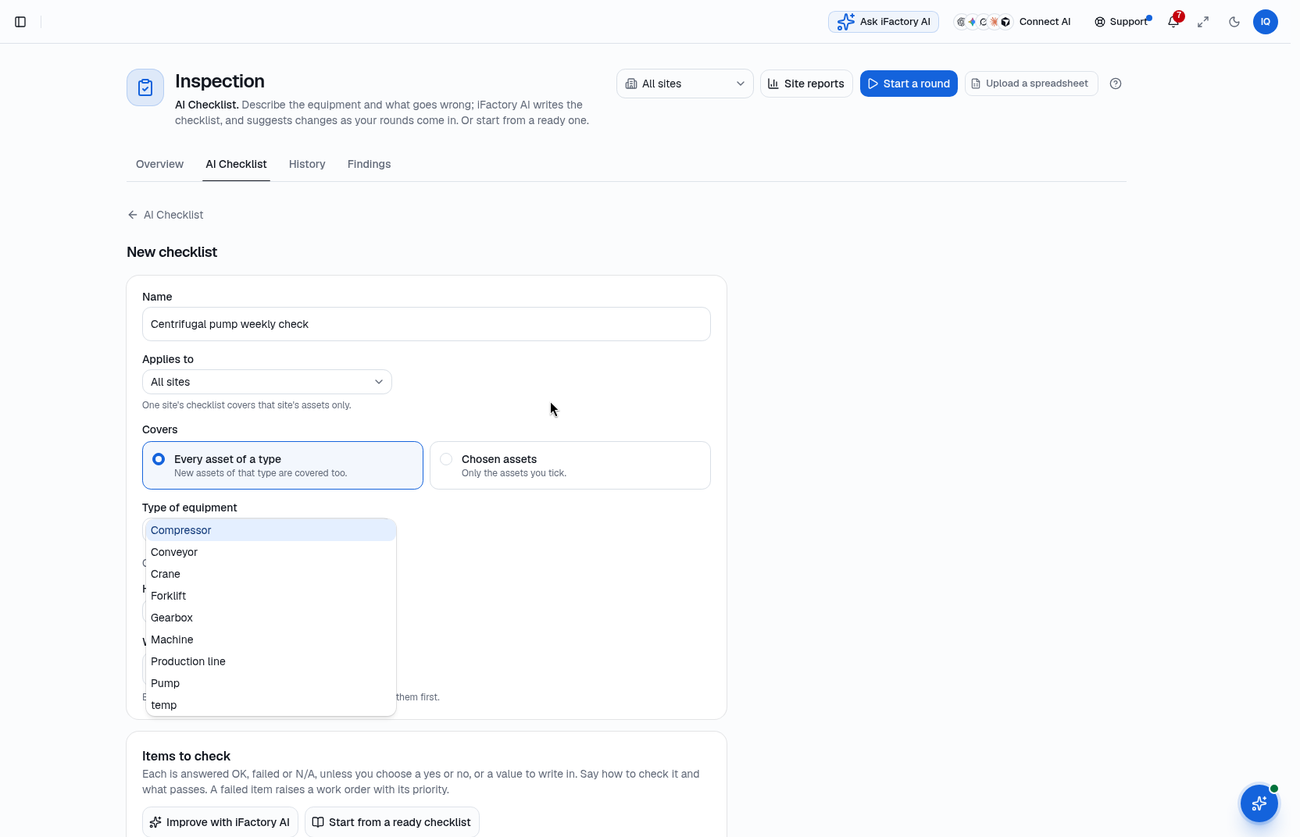
The pump check in the editor
The ready pump check can be started from the library and edited, so the strainer limit can match your own pumps.
Cautions
These points are worth settling before the first round, because the app asks the question and cannot answer it for you.
OEM manual
The limit is a general figure. Check it against the pump maker's manual before the first round.
Same gauge
Compare like with like: the same gauge, with the pump at the same flow, so that the reading from this week means something against last week.
A record
The app keeps the record of the round and raises the work order. It does not clean the strainer, so that stays with maintenance.
Taking the two readings
The strainer item is on the weekly pump check. The technician compares the suction gauge with the last reading and decides whether the drop is under 0.3 bar or the value on the tag. A higher drop means the strainer is clogging and needs cleaning.
The comparison needs a record. Write the normal figure on the tag at the pump, so that whoever does the next round knows what normal is without searching for last week's sheet.
What a clogged strainer does to a pump
A blocked suction strainer starves the pump. Starved pumps cavitate: you hear a gravel sound at the casing, the discharge pressure swings and the bearings and seal take extra load. That is why the strainer item is read together with the casing noise and discharge pressure items on the same round.
If you find the drop high and the pump noisy, clean the strainer before looking elsewhere, and note the readings in the failure note.
Cleaning without a surprise
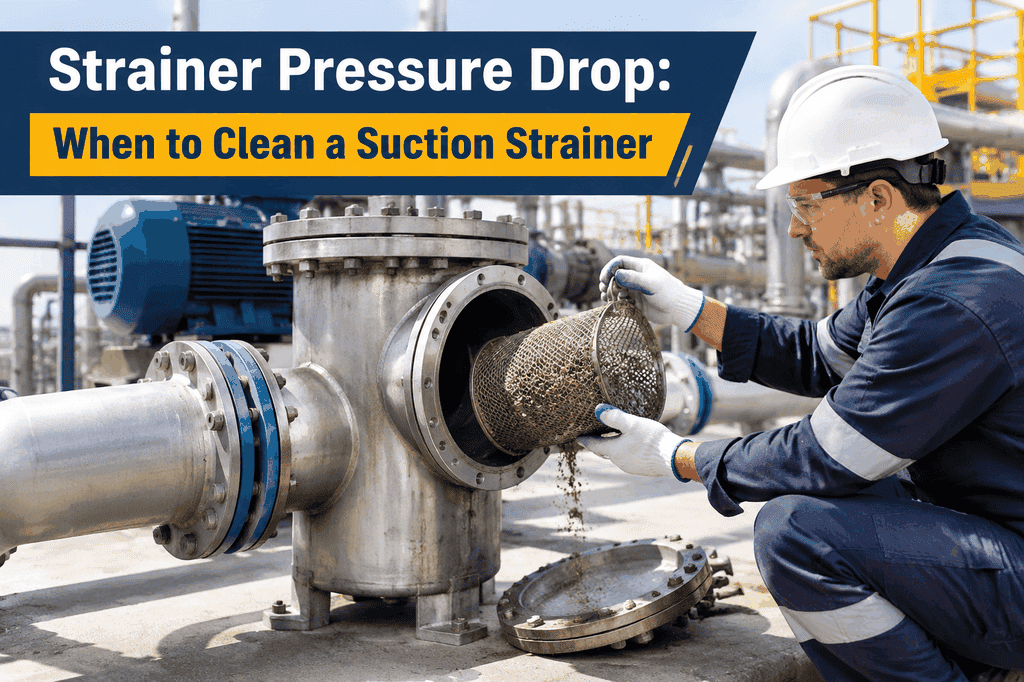
Cleaning a strainer means isolating the line, relieving pressure and opening the housing, so follow your site's isolation procedure. The app does not do this for you.
The item is Medium priority, so a failure raises a work order due in 72 hours. The history shows how often the same pump needs cleaning, which may point to dirt in the system upstream.
A simple routine for the gauge
Read the suction gauge at the start of the pump round, before you do anything else, so the figure reflects normal running. Then read the discharge pressure and compare it with last time. A rising suction drop with falling discharge pressure points the same way.
If you have several pumps, write each pump's normal drop on its tag. The tag value is what the item compares with when there is no last reading, so a new technician can still decide whether the drop is acceptable.
The pump check is a weekly 15 minute round, so the strainer is read every week, which is usually often enough to catch clogging before the pump suffers.
Frequently asked questions
What is the strainer pressure drop check?
It is an item in the ready Centrifugal pump weekly check in iFactory Inspection. The technician compares the suction gauge with the last reading to see how much the strainer has filled. It passes if the drop is under 0.3 bar, or under the value written on the pump tag, and fails if it is above, so the strainer must be cleaned.
What pressure drop passes on a suction strainer?
Under 0.3 bar, or the value on the pump tag if it gives a different one. A bigger drop means a fuller strainer. The limit is a general figure, so check it against the pump maker's manual before the first round and edit the item if your pump has a different value.
Where is the strainer pressure drop read?
On the suction gauge, on the suction side of the pump, with the pump running. Use the same gauge each week and compare like with like, so that a change in the reading is a change in the strainer. The app does not store the reading as a number, so the trend lives in your notes and on the tag.
What does a high drop mean?
The strainer is filling with debris. The pump may start to cavitate, the flow falls and the motor works harder for less. If you find the drop high and the pump noisy, clean the strainer before looking elsewhere. A pump that needs cleaning often may have dirt in the system upstream, which the history of failures can show.
Why write the normal value on the tag?
Because the item compares today's reading with the normal one, and the technician needs to know what normal is without searching for last week's sheet. The tag value is also what the item compares with when there is no last reading, so a new technician can decide whether the drop is acceptable.
How fast is a failed strainer item due, and how is it cleaned?
The item is Medium priority, so a failure raises a work order due in 72 hours. Cleaning means isolating the line, relieving the pressure and opening the housing, so follow your site's isolation procedure. The app does not do this for you. Note the readings in the failure note so that the history is clear.
Catch a clogging strainer early
Add the pump check and keep the suction gauge on the weekly round.
- Weekly suction gauge reading
- Work order due in 72 hours
- Photo of the gauge
14-day free trial · no card needed