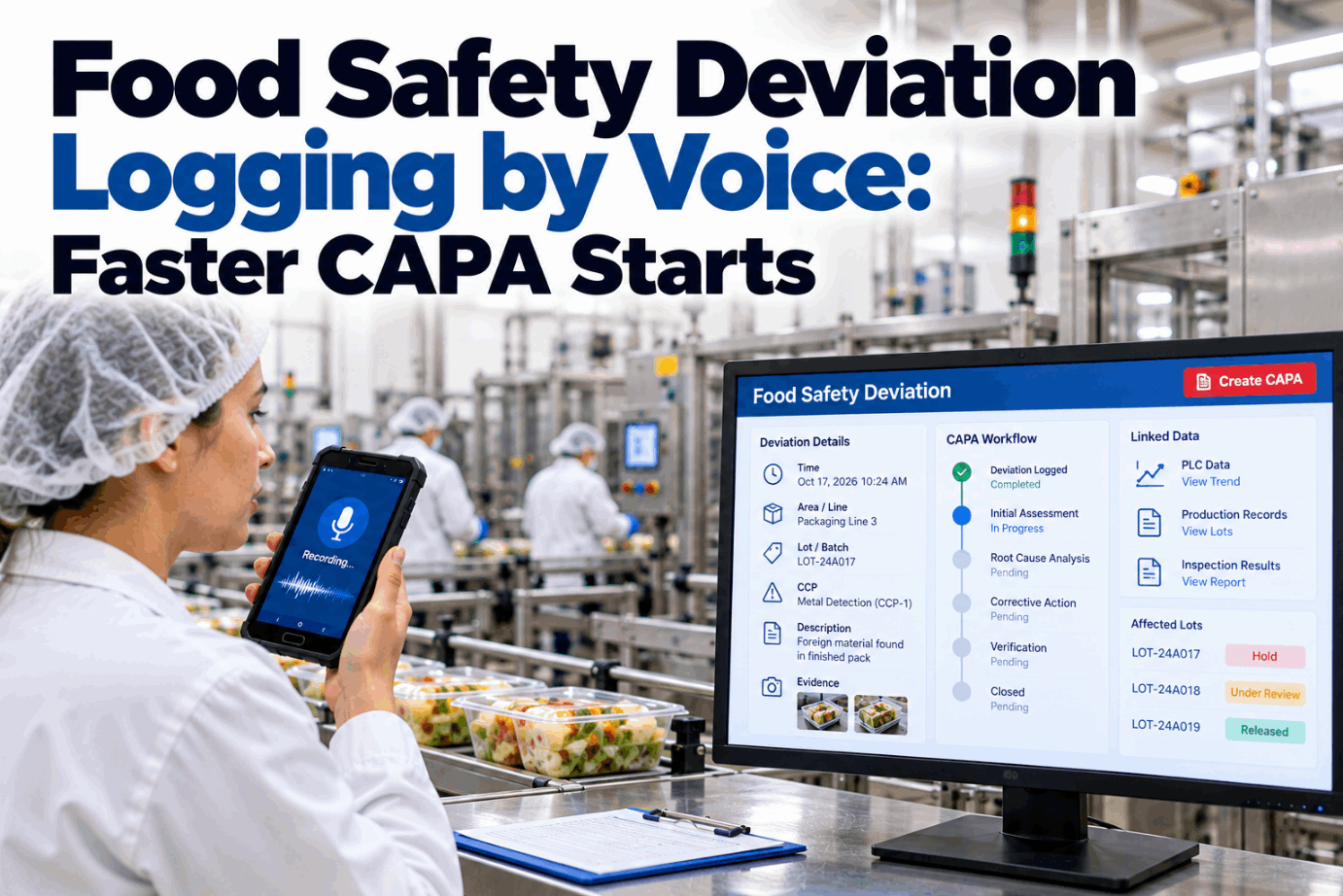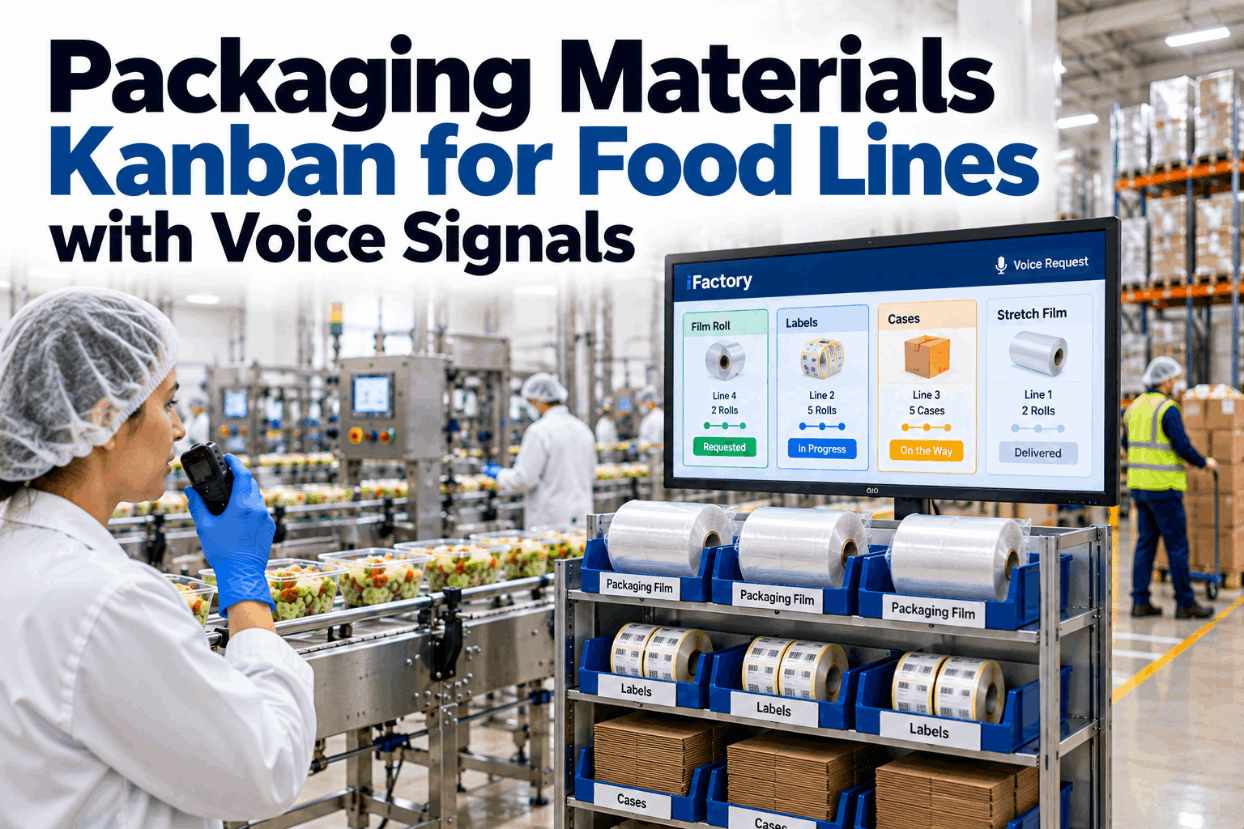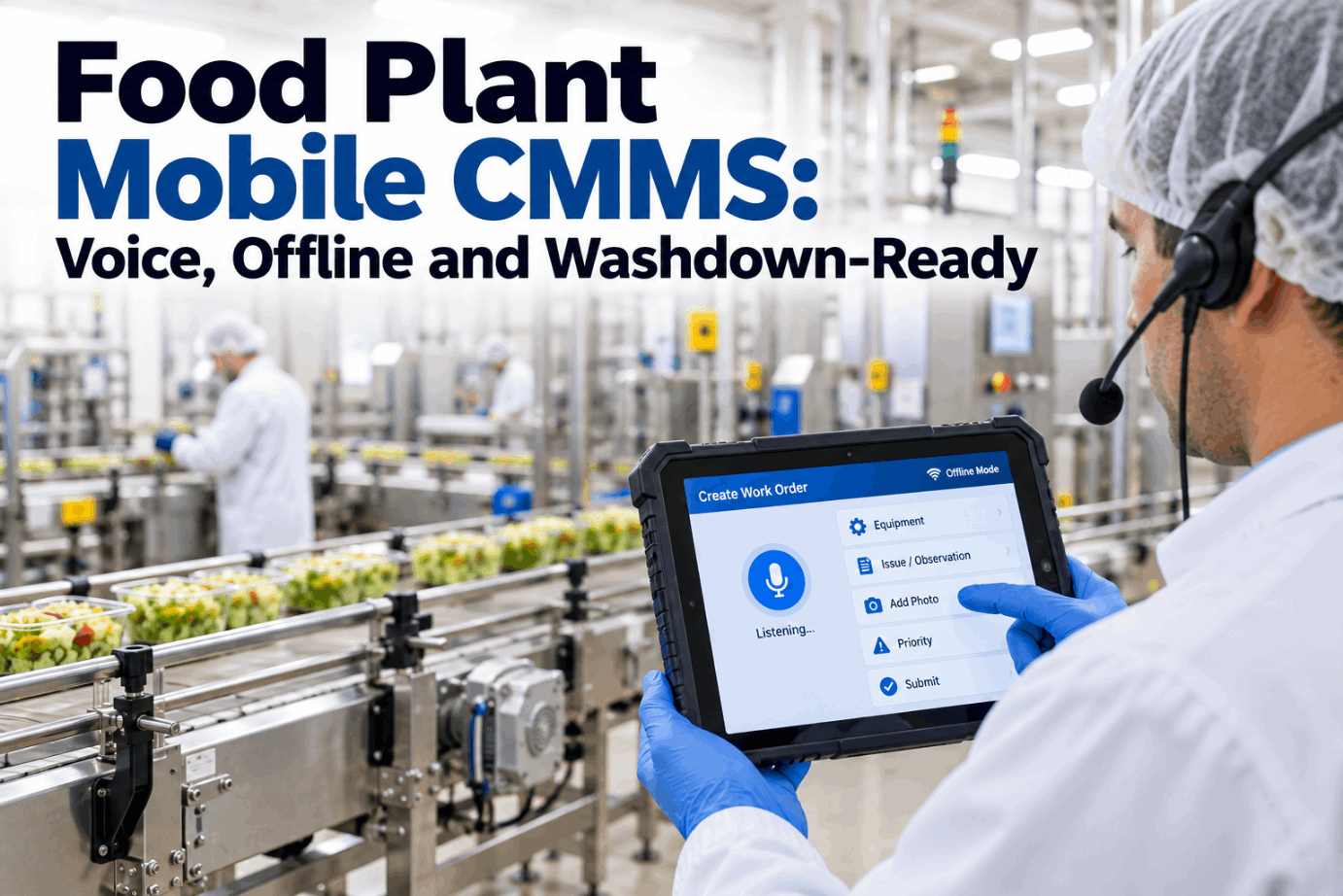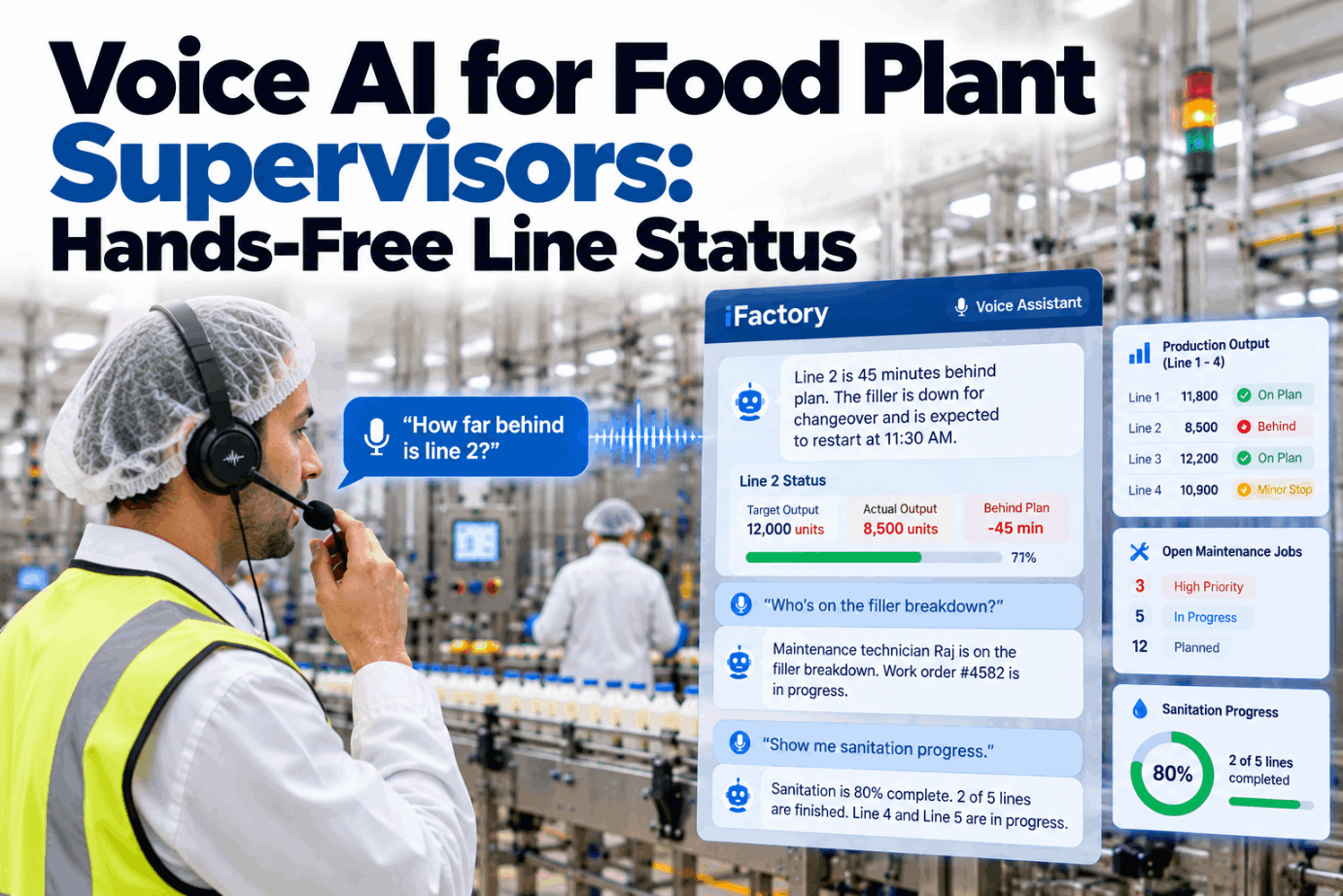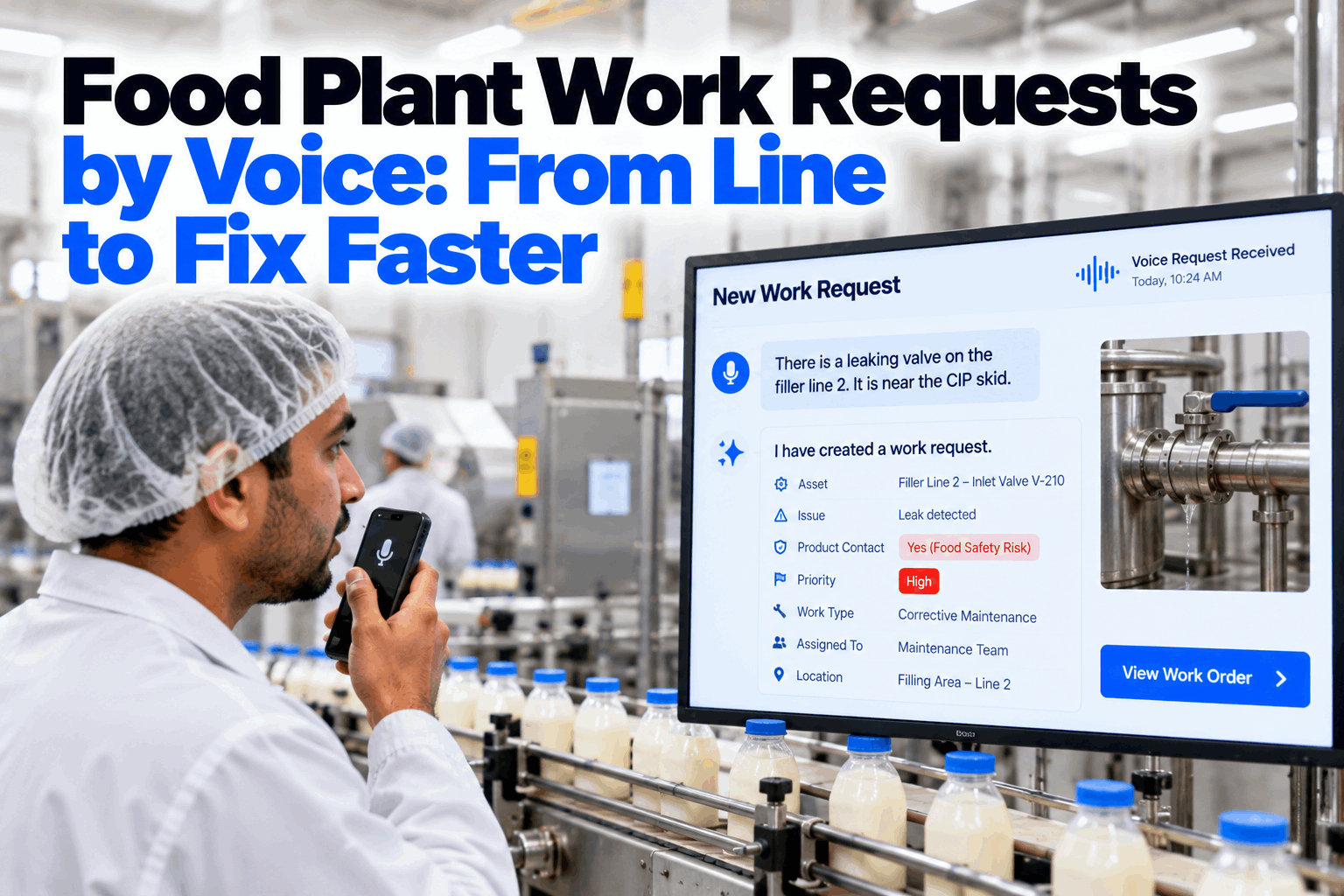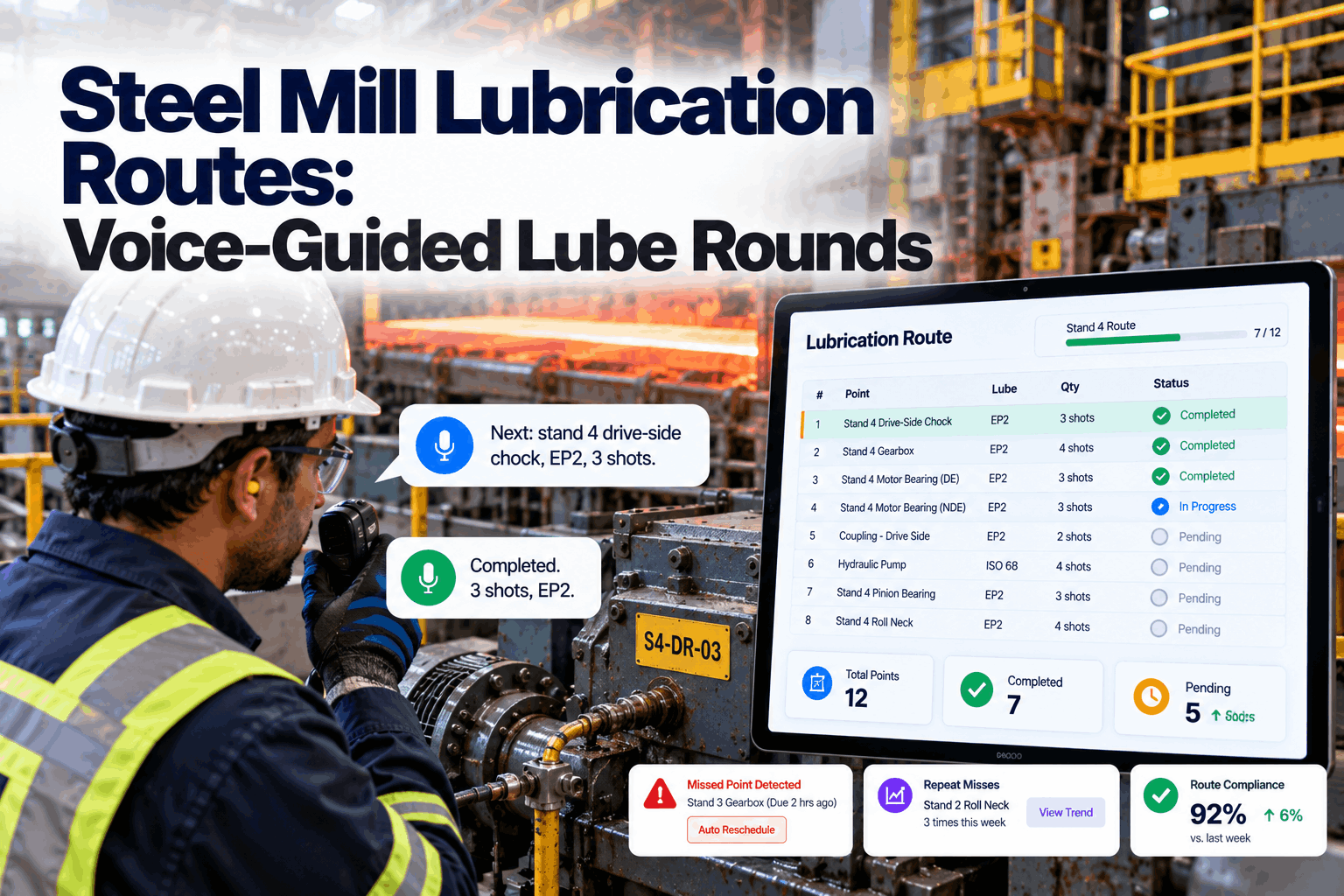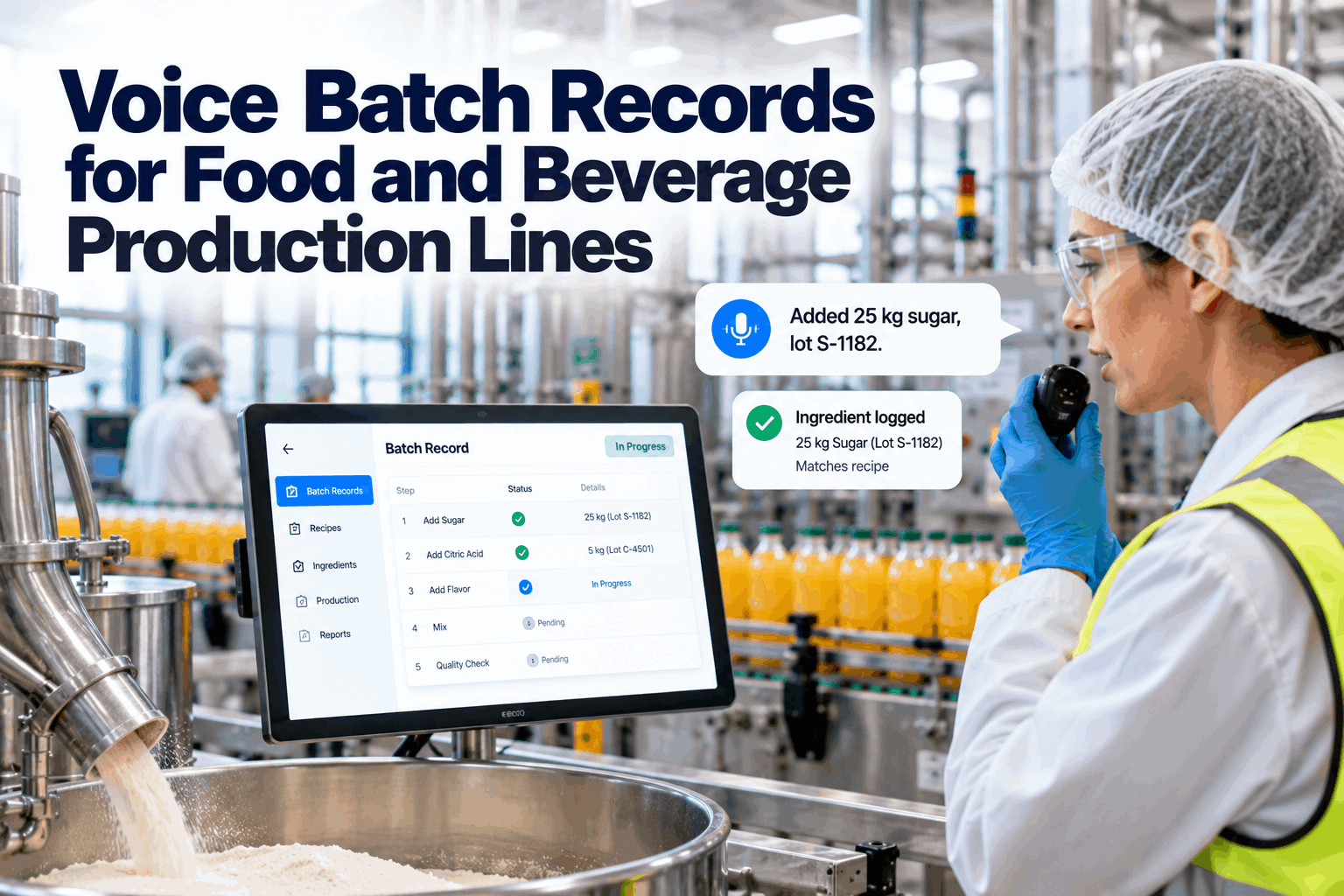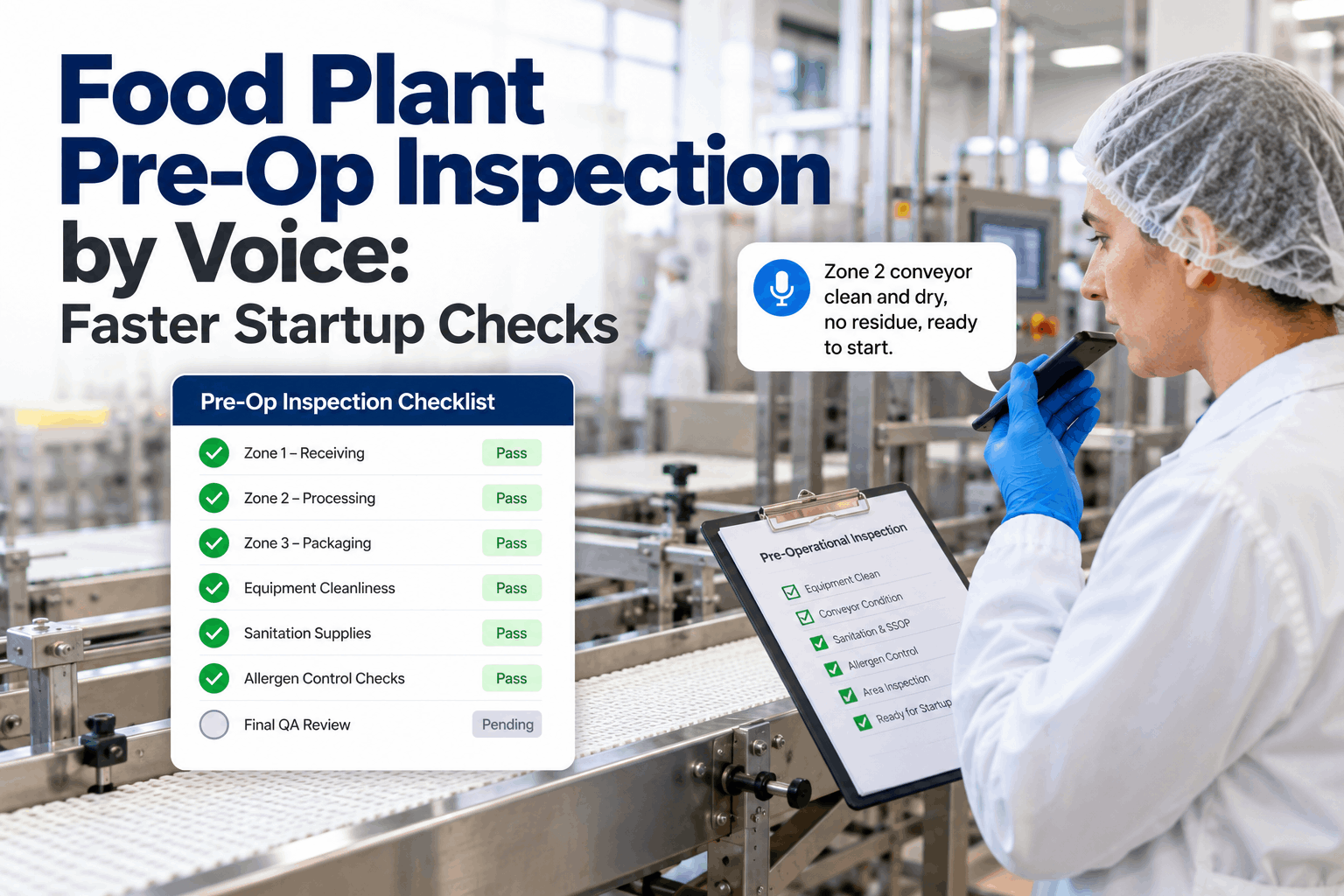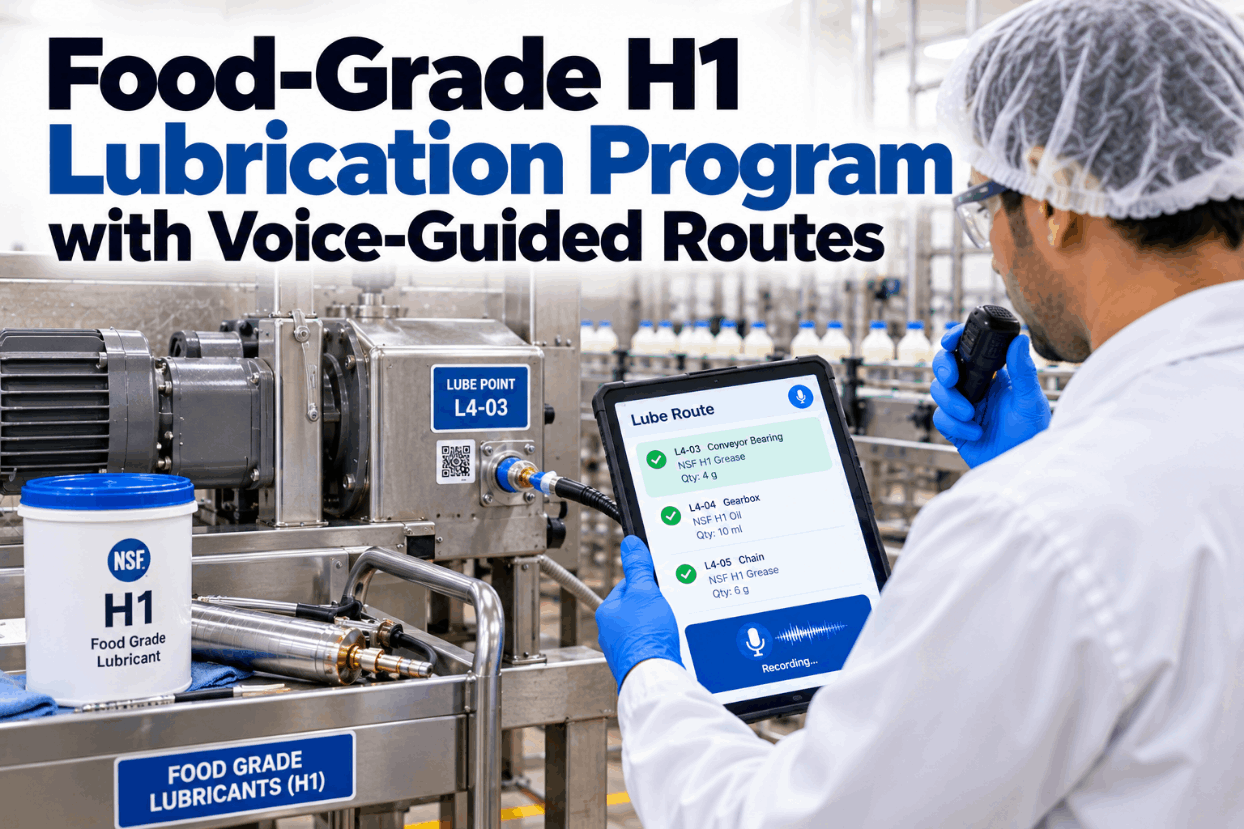
In a food plant, a grease gun can be a food safety tool or a food safety hazard. The difference is which product is in it, where it is used and how much goes into each point. Most lubrication mistakes are not about poor products. They happen when an H2 gear oil reaches a filler, a gun is refilled from the wrong drum, or a bearing above an open conveyor gets three times the grease it needs. A food-grade H1 lubrication program with voice-guided routes checks all three at the point of work. Hear a route run in a short route demo.
The Right H1 Product, the Right Amount, at Every Grease Point
iFactory route points carry the lubricant type for their zone. The technician confirms product and quantity by voice, and an alert fires the moment a non-food-grade product is logged in a food zone.
H1, H2 and H3: What the Codes Mean
NSF registers lubricants for food plants by category, a role the USDA held until it ended its own authorisation programme in 1998. H1 products may be used where incidental food contact is possible. H2 products are for points with no possibility of food contact. H3 products are soluble oils used to clean and prevent rust on items such as hooks and trolleys. Check your current product list with our support team.
NSF also lists related categories, such as HT1 for heat transfer fluids with possible incidental contact and 3H for release agents with direct food contact. Treat each by its own registration, not as a general food-grade label.
Four Layers Behind a Food-Grade Claim
21 CFR 178.3570 lists the substances that may be used in lubricants with incidental food contact, limits many of them to 10 parts per million in food, and says only the minimum amount needed should be used. NSF H1 registration reviews a product's formula against that list. ISO 21469 goes further and audits how the lubricant is made and handled. Your site program is the last layer. Review your layers in a program review.
A Lube Room Laid Out So Mix-Ups Are Hard
BRCGS clause 4.7.5 asks that lubricants which could contact product directly or indirectly are food grade and of known allergen status. That is only as strong as the lube room. Most mix-ups start with a gun refilled from the wrong container. Keep H1 and non-H1 stock apart, label every gun and container with its product, and give each product its own colour tag, chosen by the site. Plan a layout with our lubrication team.
Designing a Route That Respects Zones
A good route is ordered by zone, not just by walking distance. Food zone points come first, with H1 guns only, so non-H1 products never travel into the area. Each point carries its product, amount and interval, so the technician never decides from memory. The route below is an illustrative example. Build your own in a route session.
The Route Knows the Zone, the Voice Agent Checks the Product
The iFactory Lube Route Agent reads out each point, confirms the H1 product and quantity by voice and logs it. If a non-food-grade product is spoken in a food zone, it stops the entry and alerts the supervisor.
How Much Grease Each Point Needs
Over-greasing is a food safety issue as well as a reliability one. Excess grease is pushed out of seals and can reach product, and 21 CFR 178.3570 expects only the minimum needed. A common rule of thumb for bearing replenishment is grams = 0.005 × outside diameter × width, in millimetres. Use the OEM figure where one is given. Check your gun output and point list with our support team.
Lube Program Audit: A Short Checklist
Run this quarterly, or before a customer or certification audit. Tick the boxes here, or speak each answer on a voice round so findings land straight in the work order system. Each "no" should become a corrective job. For a version built around your own points and products, book a short call.
What Happens When a Non-H1 Product Is Logged
An alert is only useful if the next steps are clear. When a non-H1 product is spoken at a food zone point, iFactory stops the entry, tells the technician, alerts the supervisor and QA, and opens a record for the product assessment. Your own procedure decides what happens to product made since. Set up your alert path with our QA specialists.
The Records Auditors Usually Ask For
Auditors want to see that the right product went to the right point, in a controlled amount, by a trained person. Voice-logged routes produce those records as the work is done, with no end-of-week paperwork. Keep them for at least as long as your certification scheme and customers require. See a sample record pack in a live demo.
Three Moments on a Voice-Guided Route
These are illustrations, not case studies. They show how the route agent responds in common situations, and your procedures set the actual response. In each case the technician keeps both hands free and the record is made at the point, not later. Try your own routes with our support team.
Six Habits of a Strong Food-Grade Program
Strong programs keep the choice of product away from the moment of work, so nobody has to decide at the machine. Most of these habits cost little to put in place. They depend on discipline in the lube room and on route cards that are kept current when equipment or products change. Talk through your current program in a review call.
Route Agent, Voice and AI Server, Ready to Rack
iFactory delivers the Lube Route Agent as a turnkey bundle. A pre-configured NVIDIA AI server ships racked and ready with speech and route models pre-loaded, so voice works on site even in noisy, wet areas. You rack it, plug in power and Ethernet, and the AI is live. Scope it for your plant with a turnkey quote.
- Pre-configured NVIDIA AI server, racked and ready
- Lube Route Agent with voice confirm-back
- Grease point register with zone and product per point
- Non-H1 alerts to supervisors and QA
- Route records ready for audits
- Headsets and handheld setup for technicians
- 24×7 remote monitoring and technician training
Server installed, grease points surveyed and tagged by zone and product.
Routes built, voice tuned to your product names, pilot on one area.
All routes live, technicians trained, monthly exception review started.
Food-Grade H1 Lubrication Program Software Built on Voice
iFactory puts the product rule on the grease point itself, so the program works even on a busy shift. See it on one of your routes in a live session.
Food-Grade H1 Lubrication Program for Plant Managers: Common Questions
Keep Every Grease Point Food-Grade and on Record
Give every route point its zone and product, confirm H1 and quantity by voice and catch non-food-grade use the moment it is spoken. The full system is delivered turnkey and goes live in 6 to 12 weeks.