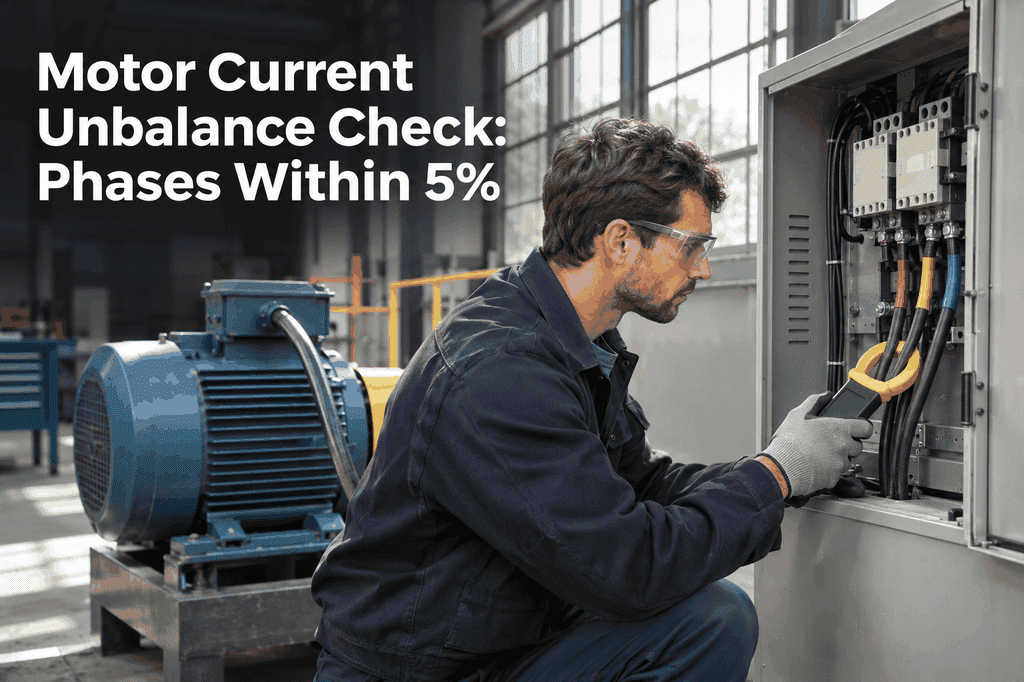
A motor that draws more current on one phase than the others is telling you something about the supply, the windings or the connections. The check is quick with a clamp meter at the starter. In iFactory Inspection it is one item in the ready Electric motor monthly check, marked High priority. This page covers what the technician reads, the 5% limit and why the failure note carries the three readings. Work on live starters only if you are trained and authorised. Add the motor check in your workspace once your company is set up.
Inspection · Motor current
Motor Current Unbalance Check: Phases Within 5%
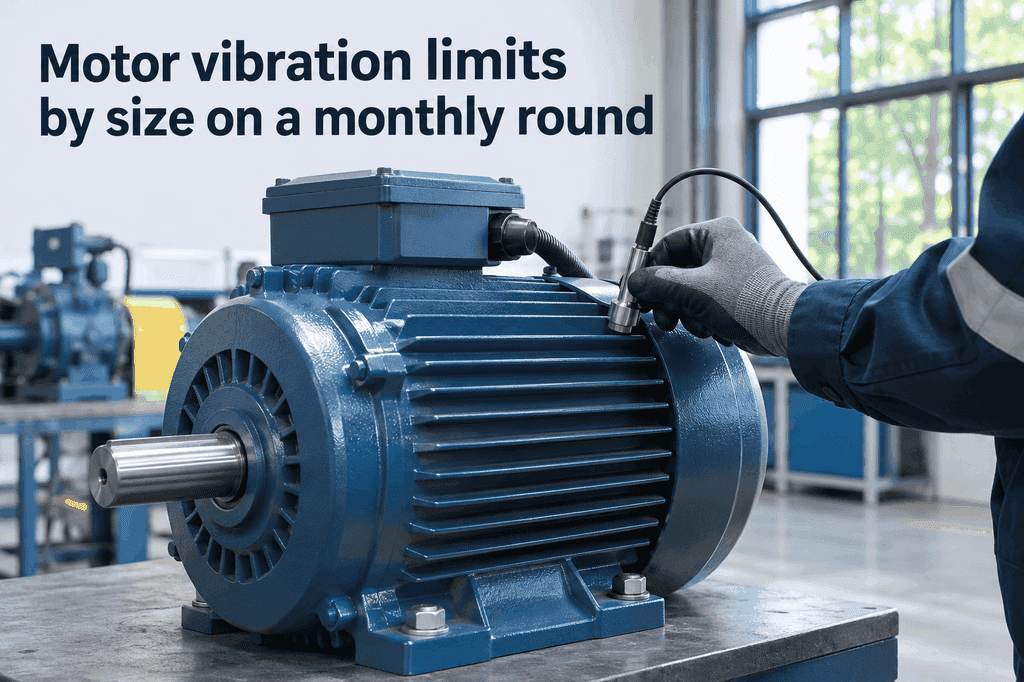
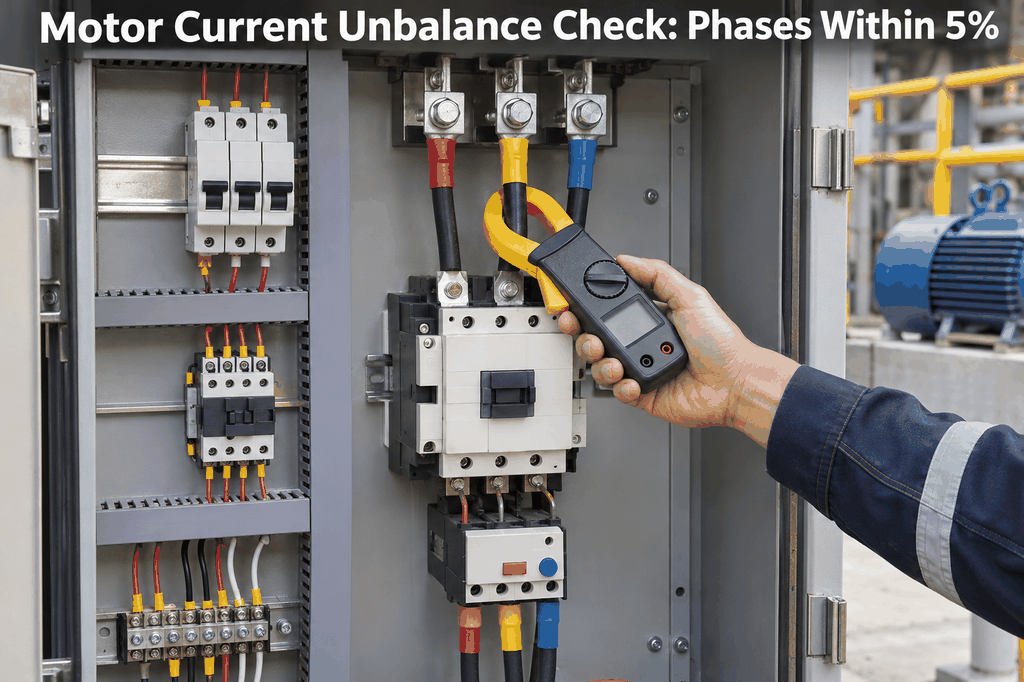
Clamp meter on each phase at the starter.
What passes
Two conditions, read from the checklist.
Three readings, one comparison
Each of the three currents should be at or below the full-load amps on the nameplate, and the three together should be within 5% of each other. Both conditions have to be true for the item to pass.
When the item fails
On this item the note matters more than on most, because the app does not store the readings and the failure note is the only place they are kept.
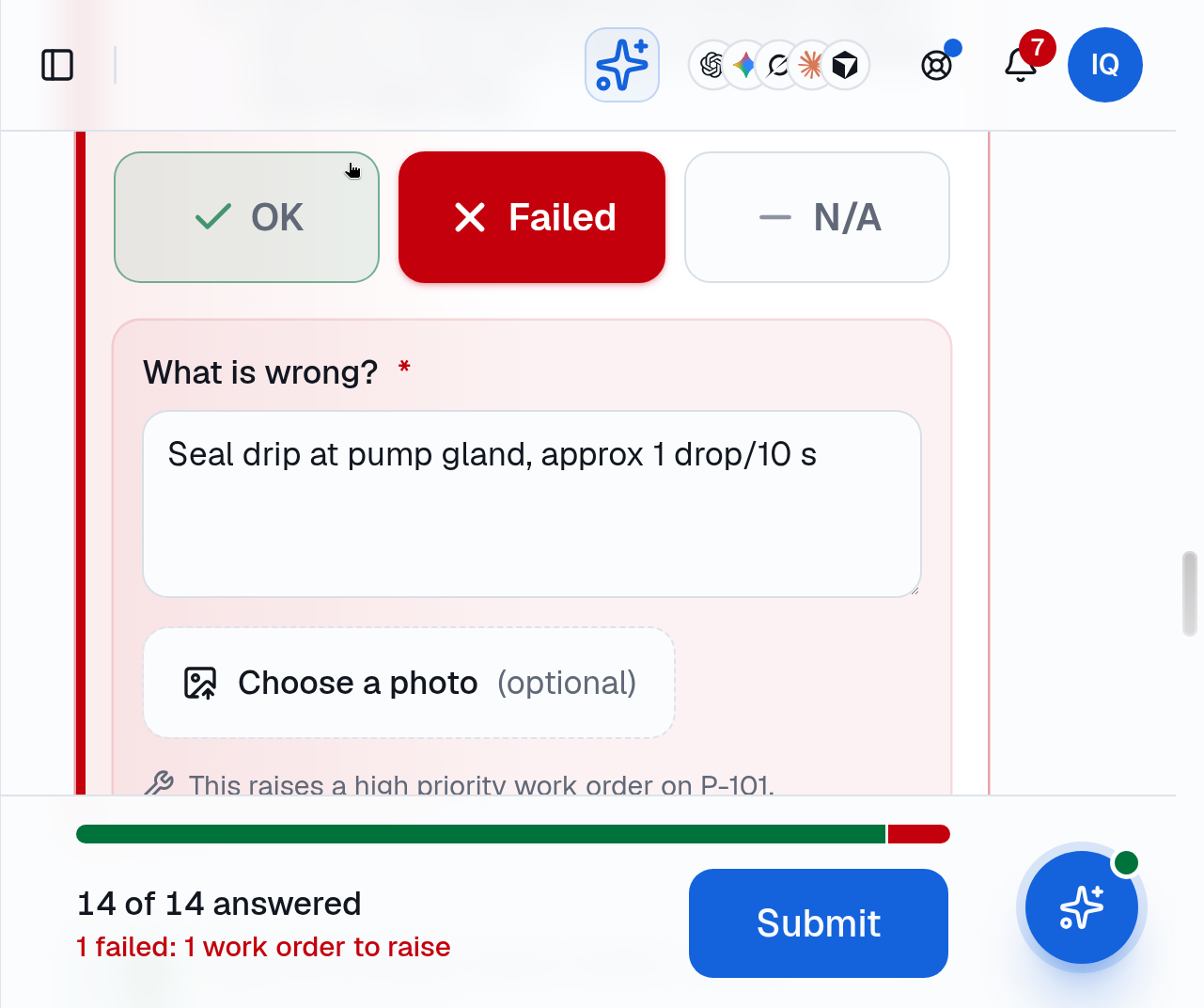
Mark it Failed
The app will not save a failed item without a note, so the technician is prompted to say what they found before the work order can be raised.
Write the three readings
Write the readings for all three phases in the failure note, with the highest and lowest, so the electrician can see the size of the unbalance without re-measuring first.
Work order
The work order is High priority and due in 24 hours. It carries the three readings, the limit and the how-to-check text for whoever picks it up.

Read on the same round
Current unbalance makes a motor run hot, so it helps to read the items that show heat on the same monthly round. They often tell the same story from a different side.
- Frame temperatureRead the frame with an IR gun after the motor has been running for an hour, so the temperature has settled and the reading can be compared with the limit.A passing frame is below 80 °C or less than 40 °C above the room temperature. A warm frame with unbalanced current points to a winding or supply problem.
- Bearing temperatureRead both bearing housings with the IR gun. Heat from an unbalanced motor can travel to the bearings and show up there.Below 80 °C and within 10 °C of each other.
- InsulationThe insulation test is done when it is due and not on every round. It is a separate item and a poor result is a sign of a winding fault.The insulation test needs the motor locked out first, so it cannot be done at the same moment as the live current readings.
The failure note on a phone
On the phone the note field opens when the item is marked Failed, so the technician can type or dictate the three readings straight away.
Cautions
These points are worth settling before the first round, because the app can only ask the question and keep the record. It cannot make the starter safe to work near.
Trained and authorised
Taking a clamp reading at a live starter should only be done by a person who is trained and authorised to do it. If you are not, ask an electrician to take the readings.
OEM manual
The 5% limit and the nameplate comparison are general. Compare them with the motor maker's instructions and your site's electrical rules before using them.
A record
The app records the check and raises the work order. It cannot balance the supply, so the fix for an unbalanced motor stays with your electrician.
Taking the three readings
The current item uses a clamp meter on each phase at the starter. The technician records the three currents and checks two things: that each is at or below the nameplate amps, and that the three are within 5% of each other. If one phase is more than 5% away from the others, the item fails even when every reading is under the nameplate.
Clamp each phase on the motor side of the starter and take the readings at normal load. Do not open live panels; use the starter's external clamp points or a qualified person.
Why unbalance matters
Current unbalance often comes from voltage unbalance, a loose connection, a failing contactor or a winding fault. It heats the motor and shortens its life, and it can show up before the bearing temperature or vibration items on the same round.
The motor check also reads frame temperature, bearing temperature and insulation. A motor with unbalanced current and a warm frame is telling the same story twice.
What the record shows
The item is High priority, so a failure raises a work order due in 24 hours. Write the three readings in the note, for example 41, 42 and 47 A, so the electrician can see the pattern.
The app does not store current as a number, so it will not chart your readings. The note is the record.
Where the reading fits in the monthly round
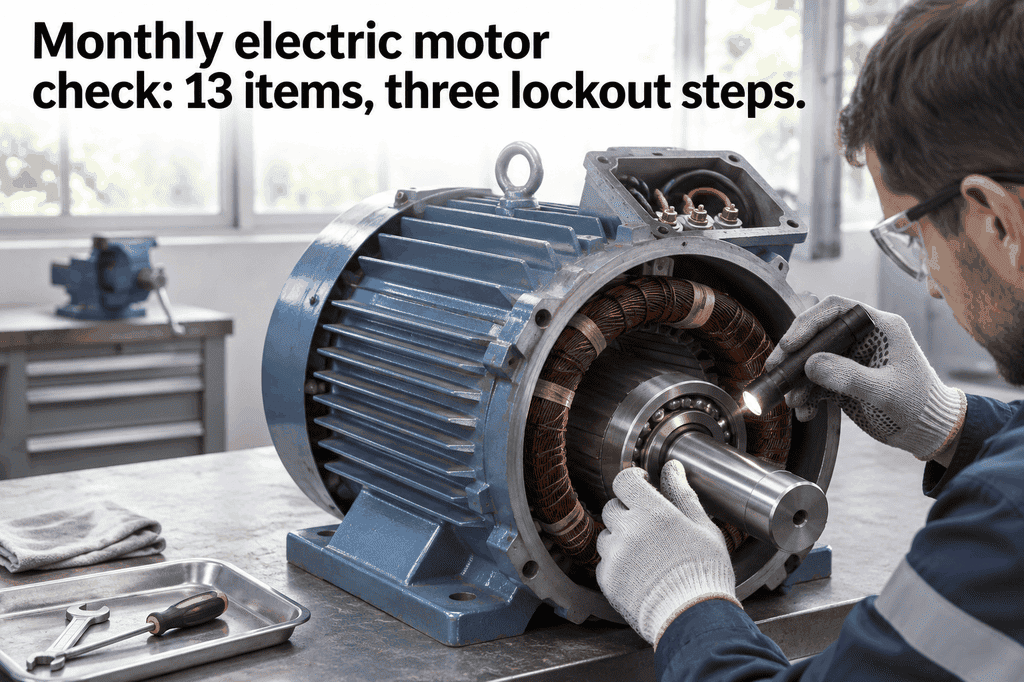
The running current item is near the end of the 13-item monthly motor check, after temperature, vibration and noise. By then the technician has a picture of the motor: if the frame is warm and a phase is high, the current item adds to it.
Because the check is monthly, a developing unbalance has up to a month before it is read. If you have a motor that matters and has shown unbalance before, assign it a more frequent checklist of its own so the current is read weekly.
Frequency is set when you save a checklist, so a short checklist for one critical motor does not change the ready monthly one.
A worked example
Say the nameplate shows 45 A and the three phases read 41, 42 and 47 A. All are below the nameplate, but the high phase is more than 5% from the average of the others, so the item fails. The note should record all three values and the motor's tag number.
The electrician then knows what to check first: connections at the starter and at the motor terminals, the contactor and the supply voltage. Do not open live panels to look; use the clamp points the starter provides.
Frequently asked questions
What is the motor current unbalance check?
It is a High priority item in the ready Electric motor monthly check in iFactory Inspection. The technician reads the current on each of the three phases with a clamp meter at the starter and compares the three readings. A motor passes when the phases are within 5% of each other and at or below nameplate amps.
What does a pass look like?
Two conditions have to be true: the three phase currents are within 5% of each other, and each is at or below the full-load amps on the nameplate. If either one fails, the item fails. The technician then writes all three readings in the failure note so the electrician can see the size of the problem.
How fast is a failed current item due?
The item is High priority, so a failure raises a work order due in 24 hours. The work order carries the note with the three readings, the limit and the how-to-check wording. A photo of the clamp meter display is optional. The same work order can cover the electrician's repair and the follow-up reading.
Why check temperatures on the same round?
Unbalanced current heats a motor, so the monthly round also reads frame temperature, bearing temperature and the insulation test when it is due. A warm frame with unbalanced phases tells the same story twice. Reading them together helps maintenance decide whether to look first at the supply or the motor.
Should I open the terminal box?
No, not for this check. Take the readings with the clamp meter at the starter, and only if you are trained and authorised to work near live equipment. If you are not, ask an electrician to take them. Any work inside the terminal box needs the motor locked out under your own lockout procedure.
Why does the note carry the readings?
Because the app does not store current as a number. A passing item is saved as OK and nothing more. The failure note is therefore the record, so the three readings go there. If you also want a monthly history of the figures, keep it yourself alongside the app.
Check the phases monthly
Add the motor check and keep the three readings with the failure.
- High priority item
- Readings in the failure note
- Work order due in 24 hours
14-day free trial · no card needed