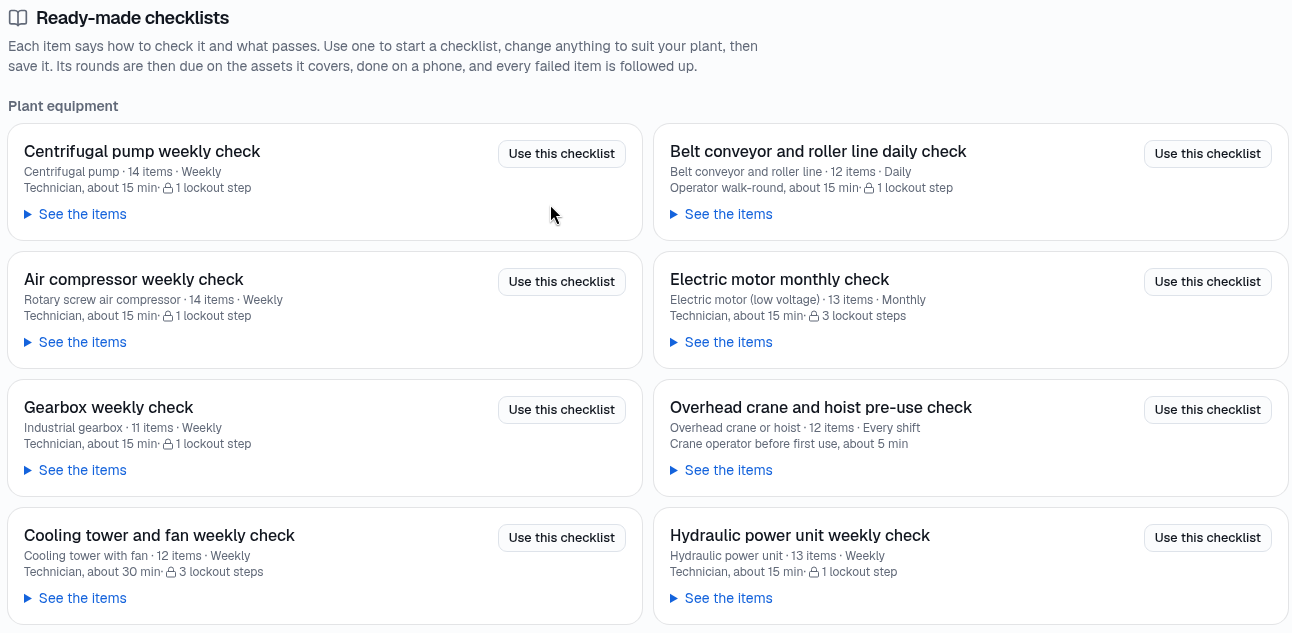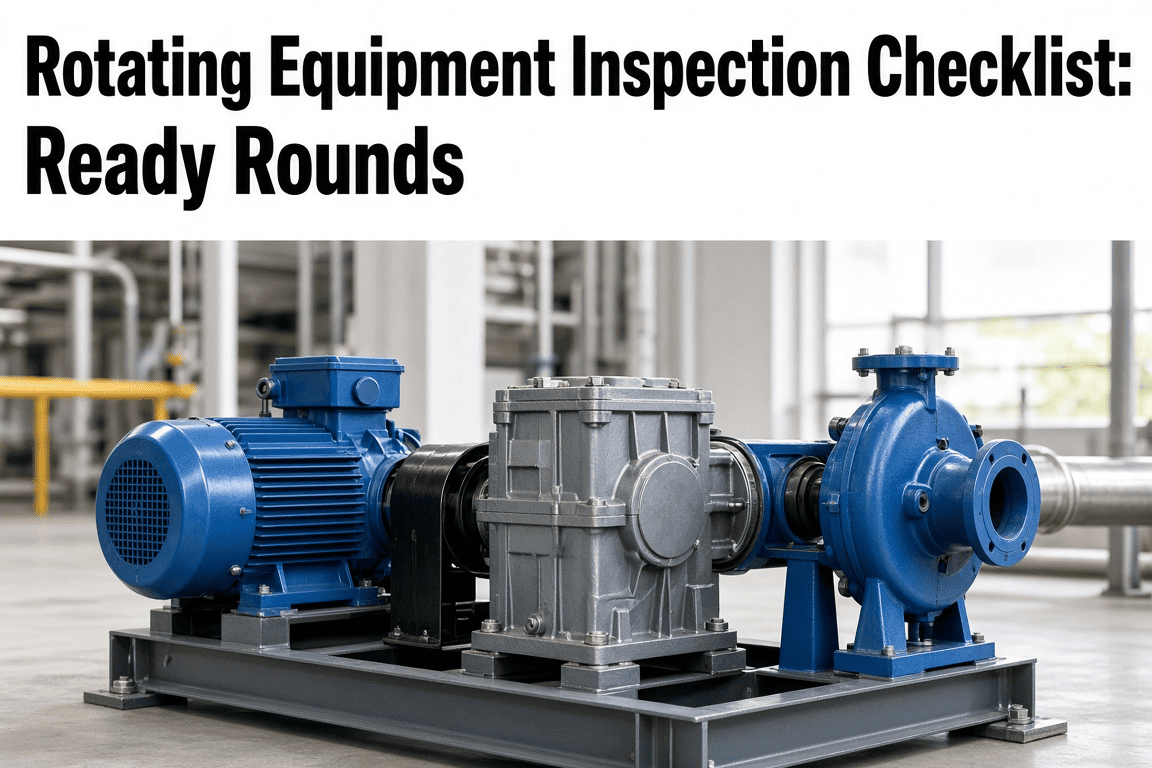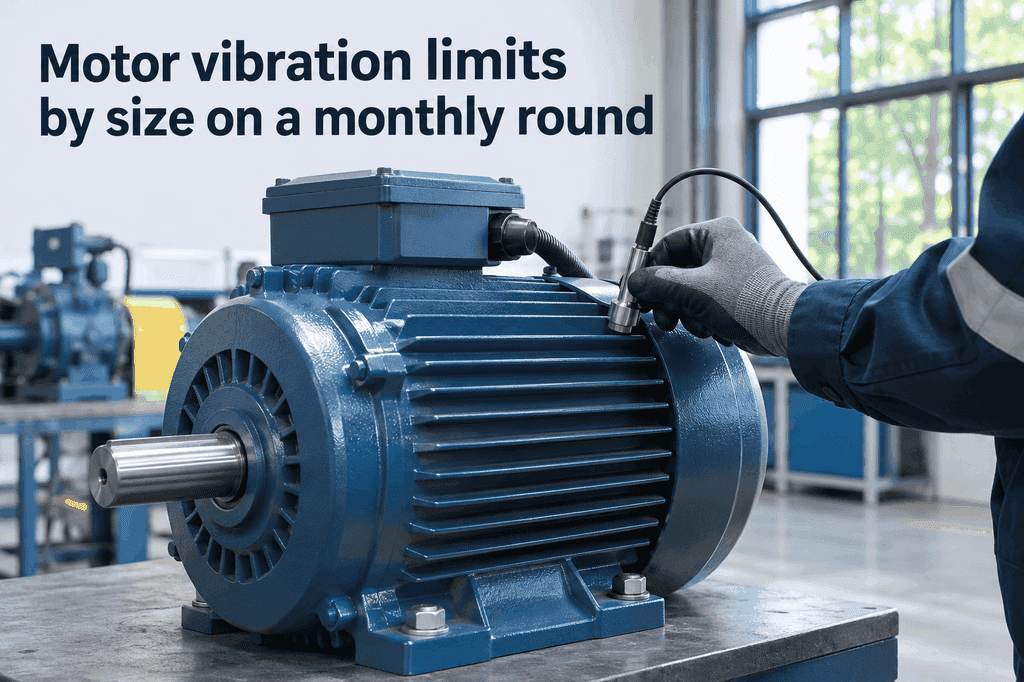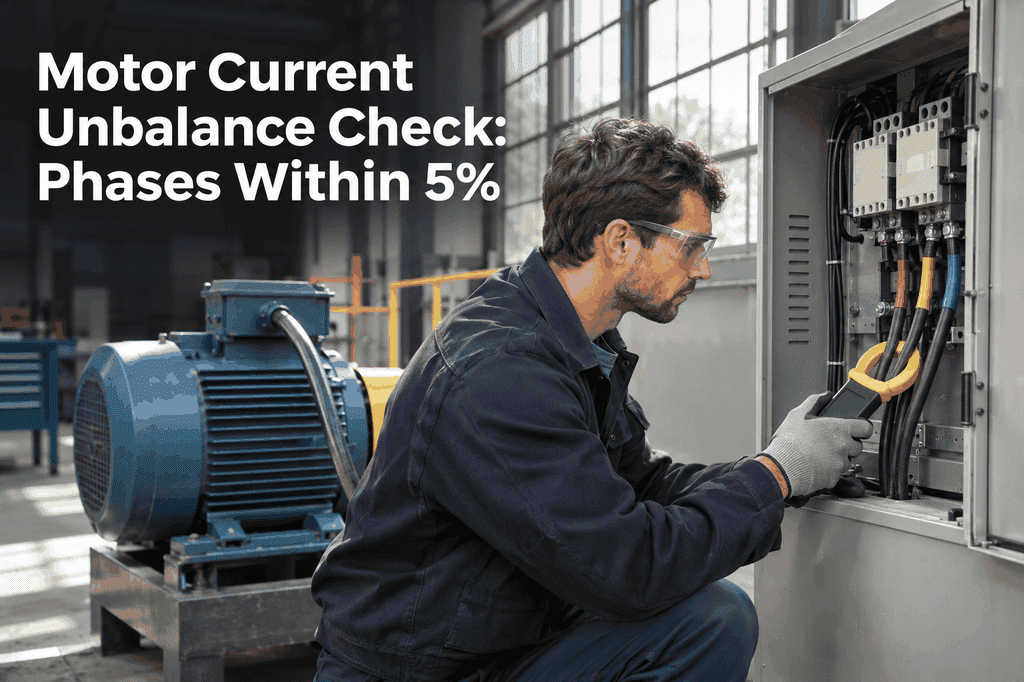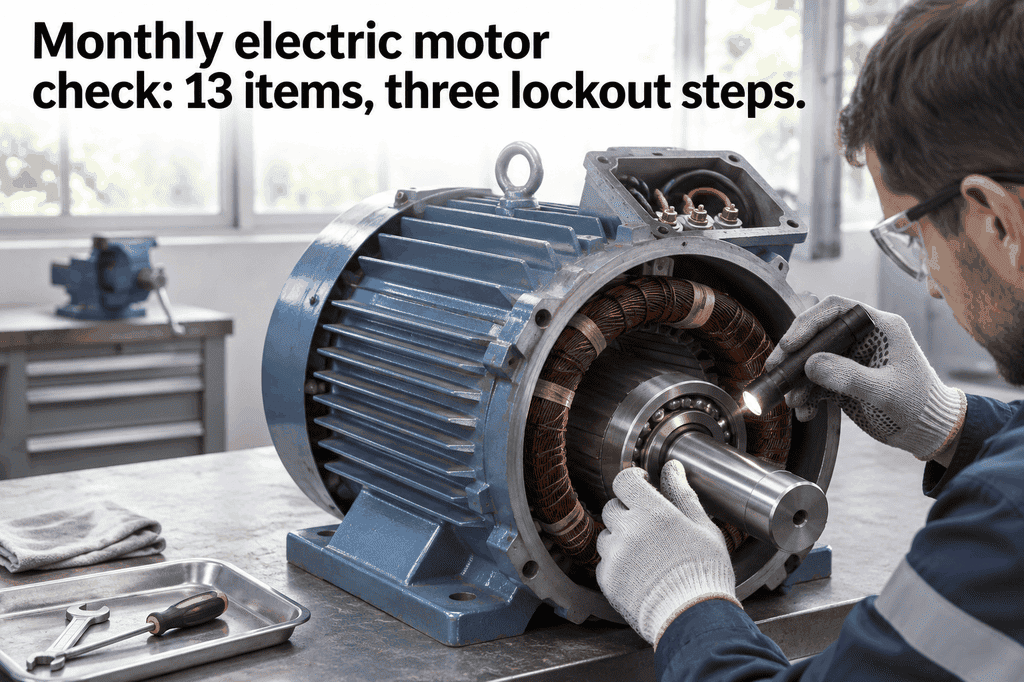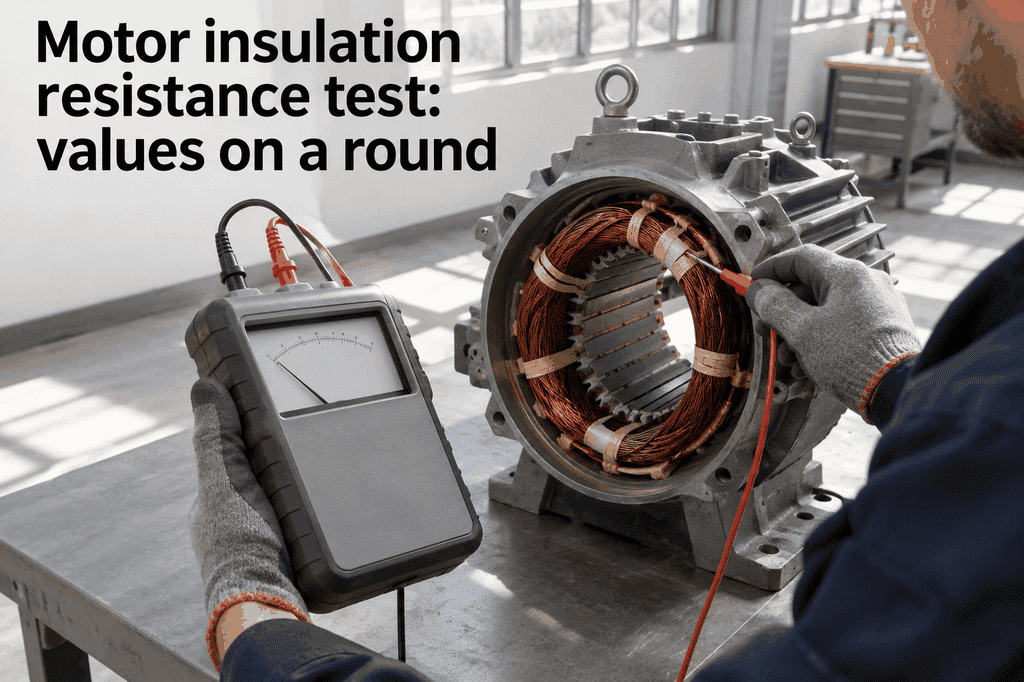
The insulation test is the one item on the monthly motor round that is not done every month. It is marked "when due", it is a lockout step, and it is the item where a wrong move is most costly: a motor with low insulation resistance must not be started. The ready Electric motor monthly check in iFactory Inspection writes the method and the three limits into one item. This page lays them out, says who should do the test, and says what the app records. See the motor check in your workspace once your company is set up.
Inspection · Insulation test
Motor insulation resistance test: values on a round
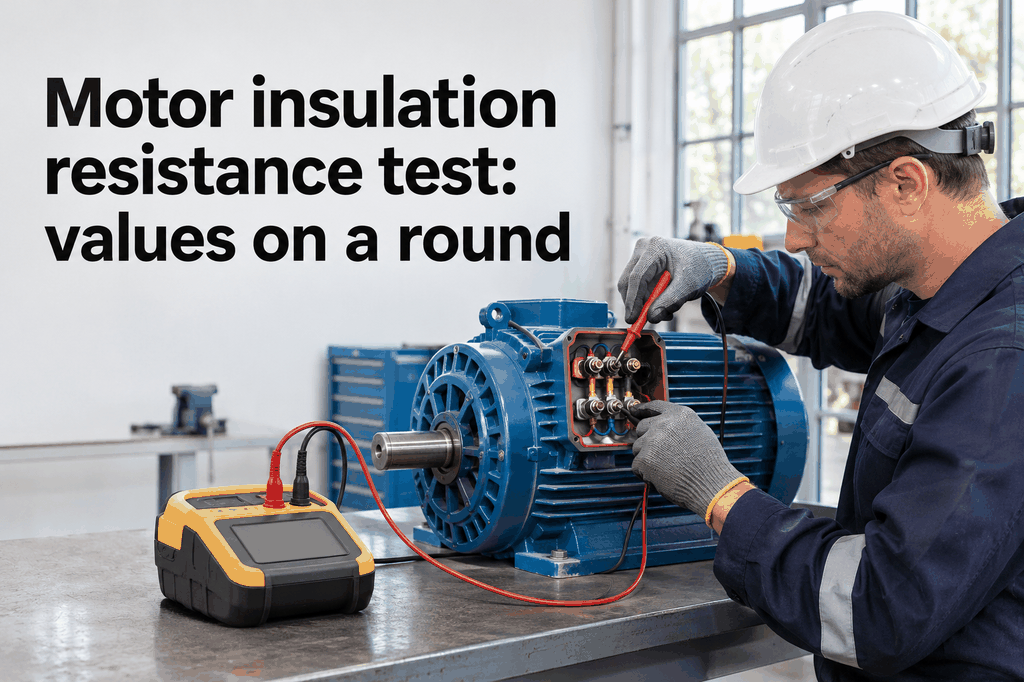
The test is run with the motor locked out and the cables off at the starter. A 500 V tester is applied for one minute so the reading reflects the winding itself, not the cable or the starter around it.
The three limits
The item asks for the result of the one-minute, 500 V test, and gives three bands. Which band the reading falls into decides whether the item is OK, reported or a hard stop on starting the motor.
Reading
Passes
Report it
Do not start the motor
Action
Record OK
Mark Failed with the reading in the note
The motor must not be started
Read the number, then decide
Above 100 MΩ passes, below 10 MΩ is reported, and below 1 MΩ means the motor must not be started. Putting all three limits into the item stops each technician from deciding for themselves.
How the test is set up
The method comes straight from the item's how-to-check line: motor locked out, cables off at the starter, 500 V tester for one minute. It is the same wording every time the item comes round.
Lock out the motor
The item is flagged for lockout because the motor must be isolated and the cables disconnected before the tester is connected. The flag is a prompt in the checklist and does not replace your site's own lockout procedure.
Take the cables off at the starter
Disconnecting the cables at the starter means the tester sees only the windings. If the cables were left on, a poor reading could come from the cable or the starter, and it would be hard to say where the fault was.
Apply 500 V for 1 minute
With the insulation tester.
Read and judge
Against the three limits.
What a failure sets in motion
A failed item raises a work order due in 72 hours. A reading below 1 MΩ is different in practice: the motor must not be started, so it should be treated as a stop and told to your supervisor straight away.
Scope and safety
The ready limits are general and the item is written for low-voltage motors tested at 500 V. Read them before using the item and adjust them if your motors or your electrical standard call for something else.
Low-voltage motors
Higher-voltage or special motors may need a different test voltage and different limits. Take those from the maker or your electrical standard and edit the item before it goes on a round.
Competent electrician
The test involves isolating a motor and connecting a high-voltage tester to its windings. It should be done by a competent electrician following your site procedure, not by whoever happens to be on the round.
Reading goes in the note
The app records OK or Failed with a note. Write the reading, the tester voltage and the motor tag in the note so that a later test can be compared with this one.
Setting the test up safely
The insulation test is the one electrical item on the monthly motor round that is not a quick look. It is flagged for lockout. The motor is isolated and locked out, the cables are taken off at the starter, and a 500 V tester is applied for one minute. Do not test with the cables connected, since you would be testing the cable and the starter too.
The item is marked when due, which means that on most monthly rounds the technician will mark it N/A. The log or the grease plate tells you when the last test was done, and the checklist wording points to it.
Reading the three bands
Above 100 MΩ is OK. Below 10 MΩ report it. Below 1 MΩ do not start the motor. The three bands give a technician a clear action for each outcome, with the last one being a stop rather than a note.
A reading between 10 and 100 MΩ is not a pass either. It is a prompt to look at the motor's history and the conditions, such as damp or dirt, before deciding. Mark the item Failed if it is below the OK limit and write the value in the note.
What the app records
The result is OK or Failed with a note. The app does not store the megohm value as a number, so write it in the note when you fail the item, and keep the tester's own record if you need a trend over the years.
A Medium item raises a work order due in 72 hours. The tester, the voltage and the limits should be confirmed against the manual and your site's electrical procedure before use. This page is not a substitute for a qualified electrician's judgement.
The test, step by step
The insulation item is on the monthly motor check and is marked "when due", so it is not done every round. Lock the motor out, take the cables off at the starter, connect a 500 V tester and run it for one minute. A reading above 100 MΩ passes. Below 10 MΩ should be reported, and below 1 MΩ means do not start the motor.
The cables are taken off at the starter because the tester must measure the winding and not the cable and starter around it. Discharge the winding after the test, as it holds a charge.
The item is flagged for lockout and is Medium priority. A failed test raises a work order due in 72 hours; a reading under 1 MΩ should be treated as a stop on the motor, not as something to wait three days for.
Recording the result
Write the reading, the tester voltage and the motor tag in the note, because the app records only OK or Failed. A later test can then be compared with this one, and a motor with a falling trend can be flagged before it reaches the report level.
Frequently asked questions
What does the motor insulation resistance test involve?
The motor is locked out, the cables are taken off at the starter, and a 500 V insulation tester is applied to the windings for one minute. The reading is judged against three written limits. The item is part of the ready Electric motor monthly check in iFactory Inspection and is flagged for lockout.
What readings pass, get reported or stop the motor?
Above 100 MΩ is OK. Below 10 MΩ should be reported. Below 1 MΩ means the motor must not be started. These are the limits written into the ready item; check them against the motor's maker or your electrical standard and edit the item if your figures are different.
How often is the test done?
It is done when due, not on every monthly round. The item sits on the monthly motor check, and on rounds where the test is not due it is marked N/A. The log or grease plate shows when the last test was done, so the technician knows whether the item applies that month.
Who should carry out the test?
A competent electrician should do it. The test needs the motor isolated and a high-voltage tester connected to the windings, which is not a job for someone who has not been trained. The app flags the item for lockout but does not replace your site lockout procedure or electrical permit rules.
Does the app store the insulation reading?
No. It records OK, Failed or N/A and a note, not the reading as a number. When the item fails, write the reading, the tester voltage and the motor tag in the note. That note travels with the work order, and a later test can be compared with it by reading the history.
What priority is a failed test, and what should happen to the motor?
The item is Medium priority, so a failure raises a work order due in 72 hours. A reading below 1 MΩ is different in practice: the motor must not be started, so tell your supervisor at once and keep the motor locked out. The app records the failure but cannot stop anyone starting the motor.
Put the insulation test on your motor check
Use the ready motor check and edit the values to match your motors.
- Three limits in one item
- Lockout step flagged
- Work order on failure
14-day free trial · no card needed